DEPARTMENT OF WAR, The Secretary of War, by direction of the President of the United States, announces to the Army the painful intelligence of the decease (the 24th of February) of Major-General Brown. To say that he was one of the men who have rendered most important services to his country would fall far short of the tribute due to his character. Uniting with the most unaffected simplicity the highest degree of personal valor and of intellectual energy, he stands preeminent before the world and for after ages in that band of heroic spirits who upon the ocean and the land formed and sustained during the second war with Great Britain the martial reputation of their country. To this high and honorable purpose General Brown may be truly said to have sacrificed his life, for the disease which abridged his days and has terminated his career at a period scarcely beyond the meridian of manhood undoubtedly originated in the hardships of his campaigns on the Canada frontier, and in that glorious wound which, though desperate, could not remove him from the field of battle till it was won. Quick to perceive, sagacious to anticipate, prompt to decide, and daring in execution, he was born with the qualities which constitute a great commander. His military coup d'oceil , his intuitive penetration, his knowledge of men and his capacity to control them were known to all his companions in arms, and commanded their respect; while the gentleness of his disposition, the courtesy of his deportment, his scrupulous regard to their rights, his constant attention to their wants, and his affectionate attachment to their persons universally won their hearts and bound them to him as a father. Calm and collected in the presence of the enemy, he was withal tender of human life; in the hour of battle more sparing of the blood of the soldier than his own. In the hour of victory the vanquished enemy found in him a humane and compassionate friend. Not one drop of blood shed in wantonness or cruelty sullies the purity of his fame. Defeat he was never called to endure, but in the crisis of difficulty and danger he displayed untiring patience and fortitude not to be overcome. Such was the great and accomplished captain whose loss the Army has now, in common with their fellow-citizens of all classes, to deplore. While indulging the kindly impulses of nature and yielding the tribute of a tear upon his grave, let it not be permitted to close upon his bright example as it must upon his mortal remains. Let him be more nobly sepulchered in the hearts of his fellow-soldiers, and his imperishable monument be found in their endeavors to emulate his virtues. The officers of the Army will wear the badge of mourning for six months on the left arm and hilt of the sword. Guns will be fired at each military post at intervals of thirty minutes from the rising to the setting of the sun on the day succeeding the arrival of this order, during which the National flag will be suspended at half-mast. JAMES BARBOUR.
Presidential Order
⚖️✨ Zone 2: Zone of Twilight Constitutional Neutral (+0.02)
📜 Art. II §2: Commander-in-Chief Supervisory Authority
Executive Order
Executive Brief • At a Glance
⏱️ 3 min read (522 words) •
● In Effect
🎯 Primary Mandate
To this high and honorable purpose General Brown may be truly said to have sacrificed his life, for the disease which abridged his days and has terminated his career at a period scarcely beyond the meridian of manhood undoubtedly originated in the hardships of his campaigns on the Canada frontier, and in that glorious wound which, though desperate, could not remove him from the field of battle till it was won.
⚖️ Constitutional Footing
⚖️✨ Zone 2: Zone of Twilight
Concurrent Authority / Congressional Silence
📜 Art. II §2: Commander-in-Chief Supervisory Authority
🏛️ Scope & Affected Sectors
Armed Forces & Military Establishments Executive Departments & Federal Civil Servants Private Citizens & Property Owners
Plain-English Translation & Framers' Constitutional Analysis
Early Statesman synthesis distilling legal jargon into practical meaning, statutory anchors, and structural constitutional impacts.
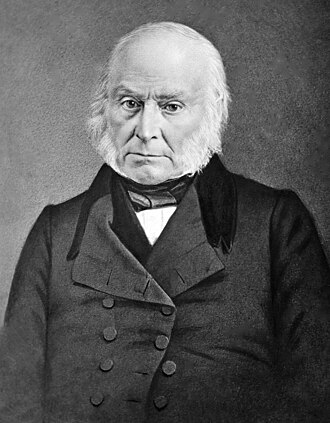
Signed by President John Quincy Adams on February 28, 1828, this order reads: The Secretary of War, by direction of the President of the United States, announces to the Army the painful intelligence of the decease (the 24th of February) of Major-General Brown. To say that he was one of the men who have rendered most important services to his country would fall far short of the tribute due to his character.
Constitutional Assessment: Scrutinized through Article II, Section 2, this action exercises the President's constitutional role as Commander in Chief. Early Framers recognized broad executive discretion in commanding military forces during conflict, provided it remains bounded by congressional declarations and respects civilian domestic courts.
Key Directives & Operative Actions
▪
To this high and honorable purpose General Brown may be truly said to have sacrificed his life, for the disease which abridged his days and has terminated his career at a period scarcely beyond the meridian of manhood undoubtedly originated in the hardships of his campaigns on the Canada frontier, and in that glorious wound which, though desperate, could not remove him from the field of battle till it was won.
▪
His military coup d'oceil , his intuitive penetration, his knowledge of men and his capacity to control them were known to all his companions in arms, and commanded their respect; while the gentleness of his disposition, the courtesy of his deportment, his scrupulous regard to their rights, his constant attention to their wants, and his affectionate attachment to their persons universally won their hearts and bound them to him as a father.
▪
Guns will be fired at each military post at intervals of thirty minutes from the rising to the setting of the sun on the day succeeding the arrival of this order, during which the National flag will be suspended at half-mast.
Constitutional & Societal Entities Impacted
🏛️ Armed Forces & Military Establishments
🏛️ Executive Departments & Federal Civil Servants
🏛️ Private Citizens & Property Owners
Policy Areas & Topics
🏛️
The Framers' Constitutional Council
1787 PrismEvaluating this order against the constitutional debates of 1787 and the limits of Article II executive power.
⚖️✨ Zone 2 (Zone of Twilight)
§
"When the President acts in absence of either a congressional grant or denial of authority, he can only rely upon his own independent powers, but there is a zone of twilight in which he and Congress may have concurrent authority."
— Justice Robert H. Jackson, Youngstown Sheet & Tube Co. v. Sawyer (1952) Concurrent Authority / Congressional Silence
JM
James Madison
Separation of Powers & Legislative Primacy
"Power is of an encroaching nature, and it ought to be effectually restrained from passing the limits assigned to it." — Federalist No. 48 (1788)
Madison would view this order with watchful scrutiny. Operating in the 'Zone of Twilight' where Congress is silent, each such directive establishes an administrative precedent that steadily expands the executive perimeter at the expense of legislative primacy.
Madisonian Stance: Vigilant / Cautionary
AH
Alexander Hamilton
The Energetic Executive & Unified Command
"The direction of war implies the direction of the common strength; and the power of directing and employing the common strength must be under the direction of the single hand of the Executive." — Federalist No. 74 (1788)
Hamilton would forcefully champion executive discretion here. For foreign entanglements, commerce defense, and national security, deliberative assemblies are too slow and faction-ridden. A unified, energetic Executive exercising swift command is precisely what the Philadelphia Convention intended for national preservation.
Hamiltonian Stance: Strong Prerogative Support
GM
George Mason
Bill of Rights, Due Process & 10th Amendment
"The president will be surrounded by flatterers and sycophants... and the great powers of the executive will gradually absorb the liberties of the people." — Cato IV (Anti-Federalist, 1787)
The Anti-Federalist prism advises continuous democratic vigilance. Even routine administrative directives aggregate centralized federal power away from town halls and state assemblies toward a distant executive apparatus.
Anti-Federalist Stance: Eternal Vigilance Required
📐
Five Measurable "Constitutional Friction" Dimensions
An objective audit measuring potential separation-of-powers tension against the United States Constitution and established Supreme Court doctrine.
⚖️ Discretionary Twilight Zone
41 / 100 friction index
Dimension 1 • Art. I, §1 & §8
Low Friction
Legislative Encroachment & Purse
Operates within delegated statutory execution without modifying legislative appropriations or taxing powers.
Benchmark: Power of the purse, taxes/tariffs, and rule of law reserved to Congress.
Dimension 2 • Art. II, §1 & §3
Low Friction
Executive Scope & Faithfulness
Exercises standard supervisory executive authority to faithfully execute existing statutes.
Benchmark: Faithfully execute laws enacted by Congress vs. unilateral decree.
Dimension 3 • 10th Amendment
High Friction
Federalism & State Sovereignty
Creates friction with the Tenth Amendment by conditioning state grants, mandating local compliance, or preempting state police powers.
Benchmark: Police powers and un-delegated responsibilities reserved to the States.
Dimension 4 • 5th & 14th Amendments
Moderate Friction
Due Process & Individual Rights
Applies regulatory or compliance standards to private contractors or commercial entities.
Benchmark: Protection of private property, contracts, liberty, and procedural justice.
Dimension 5 • Separation of Powers
Moderate Friction
Youngstown Jacksonian Tier
The order relies on inherent Article II executive discretion, civil service management, or foreign diplomacy where Congress has neither expressly approved nor prohibited action.
Benchmark: Concurrent Authority / Congressional Silence
⚖️
Audit Synthesis
This order operates within Justice Jackson’s Zone of Twilight, resting upon concurrent presidential authority or congressional silence.
Weighted composite: Art. I (25%), Art. II (25%), Federalism (15%), Due Process (15%), Youngstown (20%).
ℹ️
How to read these dimensions: Executive power expands whenever an administration acts without explicit statutory authorization from Congress (Article I), touches upon police powers historically reserved to the states (Tenth Amendment), or limits private rights and property without judicial process. A low friction score indicates strict concordance with enacted law; a high friction score highlights orders testing the limits of presidential discretion.
Total Words
522
3,012 characters
Estimated Read Time
3 min
@ 200 words / min
Flesch-Kincaid
16.3
Post-Graduate Legal
Text size:
Related Executive Orders
Other executive actions signed by John Quincy Adams around this period.
Order
Jul 11, 1826
⚖️✨ Zone 2 (Zone of Twilight) Constitutional Neutral
Executive Order [on the deaths of Thomas Jefferson and John Adams]
📜 Art. II §2: Commander-in-Chief Supervisory Authority
The General in Chief has received from the Department of War the following orders: The President with deep regret announces to the Army that it has pleased the Disposer of All Human Events, in whose hands are the issues of life, to remove from the scene of earthly existence our…
 John Quincy Adams
College Level • 5m
📜
Scholarly & Legal Citations
Exec. Order (Feb. 28, 1828), https://executiveordersarchive.org/orders/app-executive-order.
