★
Executive Orders Historical Archive
Cite
Executive Order 10006 🏛️✅ Zone 1: Maximum Authority Constitutional Fidelity (+0.33) 📜 Art. II §3: Administrative Management & Civil Service

Executive Order 10006—Preparation, Presentation, Filing, and Publicaton of Executive Orders and Proclamations

•
Saturday, October 9, 1948
•
4 min read (725 words)

Executive Brief • At a Glance

⏱️ 4 min read (725 words) • ● In Effect
🎯 Primary Mandate

The following regulations shall govern the preparation, presentation, filing, and publication of Executive orders and proclamations, and shall constitute §§ 1.91 through 1.97 of Chapter I of Title 1 of the Code of Federal Regulations: § 1.91 Form.

⚖️ Constitutional Footing
🏛️✅ Zone 1: Maximum Authority
Express or Implied Congressional Authorization
📜 Art. II §3: Administrative Management & Civil Service
🏛️ Scope & Affected Sectors
Executive Branch Departments General Body of the People

Plain-English Translation & Framers' Constitutional Analysis

Early Statesman synthesis distilling legal jargon into practical meaning, statutory anchors, and structural constitutional impacts.

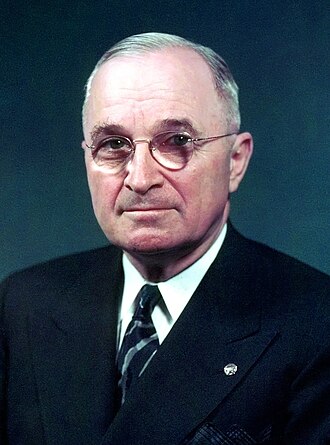
Signed by President Harry S Truman on October 9, 1948, this order concerns Preparation, Presentation, Filing, and Publicaton of Executive Orders and Proclamations. The following regulations shall govern the preparation, presentation, filing, and publication of Executive orders and proclamations, and shall constitute §§ 1.91 through 1.97 of Chapter I of Title 1 of the Code of Federal Regulations: § 1.91 Form. Proposed Executive orders and proclamations shall be prepared in accordance with the following requirements: (a) The order or proclamation shall be given a suitable title.

Constitutional Assessment: This action represents an orderly exercise of Article II administrative discretion, managing the internal machinery and personnel of the executive branch without abridging the ancient liberties of the people.

Key Directives & Operative Actions

▪

The following regulations shall govern the preparation, presentation, filing, and publication of Executive orders and proclamations, and shall constitute §§ 1.91 through 1.97 of Chapter I of Title 1 of the Code of Federal Regulations: § 1.91 Form.

▪

Proposed Executive orders and proclamations shall be prepared in accordance with the following requirements: (a) The order or proclamation shall be given a suitable title.

▪

The authority under which the order or proclamation is issued shall be cited in the body thereof.

▪

Punctuation, capitalization, orthography, and other matters of style shall, in general, conform to the most recent edition of the Style Manual of the United States Government Printing Office.

Constitutional & Societal Entities Impacted

🏛️ Executive Branch Departments 🏛️ General Body of the People
🏛️

The Framers' Constitutional Council

1787 Prism

Evaluating this order against the constitutional debates of 1787 and the limits of Article II executive power.

🏛️✅ Zone 1 (Maximum Authority)
§

"When the President acts pursuant to an express or implied authorization of Congress, his authority is at its maximum, for it includes all that he possesses in his own right plus all that Congress can delegate."

— Justice Robert H. Jackson, Youngstown Sheet & Tube Co. v. Sawyer (1952) Express or Implied Congressional Authorization
JM

James Madison

Separation of Powers & Legislative Primacy

"The constitutional magistracy was designed not to invent policy, but to be the faithful instrument of the laws passed by the people's representatives." — Speech in the First Congress (1789)

Madison would approve the structural posture of this order. The President acts strictly in subordination to statutory authority granted under Article II, Section 3 ("take Care that the Laws be faithfully executed"). The checks and balances hold firm because the policy origin remains with the legislature.

Madisonian Stance: Concurring (Statutory)
AH

Alexander Hamilton

The Energetic Executive & Unified Command

"A feeble Executive implies a feeble execution of the government; and a government ill executed, whatever it may be in theory, must be, in practice, a bad government." — Federalist No. 70 (1788)

Hamilton would view this directive as the natural and indispensable functioning of administrative leadership. Without the power to coordinate agencies, manage personnel, and resolve operational ambiguities, the modern presidency would be reduced to an impotent figurehead.

Hamiltonian Stance: Supportive of Execution
GM

George Mason

Bill of Rights, Due Process & 10th Amendment

"The president will be surrounded by flatterers and sycophants... and the great powers of the executive will gradually absorb the liberties of the people." — Cato IV (Anti-Federalist, 1787)

The Anti-Federalist prism advises continuous democratic vigilance. Even routine administrative directives aggregate centralized federal power away from town halls and state assemblies toward a distant executive apparatus.

Anti-Federalist Stance: Eternal Vigilance Required
📐

Five Measurable "Constitutional Friction" Dimensions

An objective audit measuring potential separation-of-powers tension against the United States Constitution and established Supreme Court doctrine.

🛡️ High Constitutional Concordance
30 / 100 friction index
Dimension 1 • Art. I, §1 & §8

Legislative Encroachment & Purse

Low Friction

Operates within delegated statutory execution without modifying legislative appropriations or taxing powers.

Benchmark: Power of the purse, taxes/tariffs, and rule of law reserved to Congress.
Dimension 2 • Art. II, §1 & §3

Executive Scope & Faithfulness

Low Friction

Exercises standard supervisory executive authority to faithfully execute existing statutes.

Benchmark: Faithfully execute laws enacted by Congress vs. unilateral decree.
Dimension 3 • 10th Amendment

Federalism & State Sovereignty

High Friction

Creates friction with the Tenth Amendment by conditioning state grants, mandating local compliance, or preempting state police powers.

Benchmark: Police powers and un-delegated responsibilities reserved to the States.
Dimension 4 • 5th & 14th Amendments

Due Process & Individual Rights

Low Friction

Focuses on internal governmental operations with no direct impairment of private rights or property.

Benchmark: Protection of private property, contracts, liberty, and procedural justice.
Dimension 5 • Separation of Powers

Youngstown Jacksonian Tier

Low Friction

The President operates strictly as the constitutional Chief Executive, carrying out policy established by Congress with strong statutory backing.

Benchmark: Express or Implied Congressional Authorization
⚖️ Audit Synthesis

This order operates in close harmony with statutory authority and standard Article II supervisory execution.

Weighted composite: Art. I (25%), Art. II (25%), Federalism (15%), Due Process (15%), Youngstown (20%).
ℹ️
How to read these dimensions: Executive power expands whenever an administration acts without explicit statutory authorization from Congress (Article I), touches upon police powers historically reserved to the states (Tenth Amendment), or limits private rights and property without judicial process. A low friction score indicates strict concordance with enacted law; a high friction score highlights orders testing the limits of presidential discretion.
Total Words
725
4,508 characters
Estimated Read Time
4 min
@ 200 words / min
Flesch-Kincaid
12.9
High School
Language Tone Score
+0.33
Constitutional Fidelity
How is this scored?
Text size:

Official Archival Text

View Source Document

By virtue of authority vested in me by the Federal Register Act (49 Stat. 500, as amended; 44 U.S.C. 301 et seq.), and as President of the United States, it is hereby ordered as follows: 1. The following regulations shall govern the preparation, presentation, filing, and publication of Executive orders and proclamations, and shall constitute §§ 1.91 through 1.97 of Chapter I of Title 1 of the Code of Federal Regulations: § 1.91 Form. Proposed Executive orders and proclamations shall be prepared in accordance with the following requirements: (a) The order or proclamation shall be given a suitable title. (b) The authority under which the order or proclamation is issued shall be cited in the body thereof. (c) Punctuation, capitalization, orthography, and other matters of style shall, in general, conform to the most recent edition of the Style Manual of the United States Government Printing Office. (d) The spelling of geographic names shall conform to the most recent official decisions of the Board on Geographic Names established pursuant to the act of July 25, 1947, 61 Stat. 456 (43 U.S.C. 364 et seq.). (e) Descriptions of tracts of land shall conform, so far as practicable, to the most recent edition of the "Specifications for Descriptions of Tracts of Land for Use in Executive Orders and Proclamations," published by, or other the direction of, the Director of the Bureau of the Budget. (f) Proposed Executive orders and proclamations shall be typewritten on paper approximately 8 x 12 ½ inches, shall have a left-hand margin of approximately 1 ½ inches and a right-hand margin of approximately 1 inch, and shall be double-spaced, except that quotations, tabulations, and descriptions of land may be single-spaced. § 1.92 Routing and approval of drafts. A proposed Executive order or proclamation shall first be submitted, with seven copies thereof, to the Director of the Bureau of the Budget. If the Director of the Bureau of the Budget approves it, he shall transmit it to the Attorney General for his consideration as to both form and legality. If the Attorney General approves it, he shall transmit it to the Director of the Division of the Federal Register, the National Archives. After determining that it conforms to the requirements of § 1.91 and is free from typographical or clerical error, the Director of the Division of the Federal Register shall transmit it and three copies thereof to the President. If it is disapproved by the Director of the Bureau of the Budget or by the Attorney General, it shall not thereafter be presented to the President unless it is accompanied by a statement of the reasons for such disapproval. § 1.93 Routing of originals and copies; seal. If the order or proclamation is signed by the President, the original and two copies thereof shall be forwarded to the Director of the Division of the Federal Register for appropriate action in conformity with the provisions of the Federal Register Act: Provided, That the seal of the United States shall be affixed, pursuant to direction of the President, to the originals of all proclamations prior to such forwarding. § 1.94 Numbering and certification. The Division of the Federal Register shall number chronologically all Executive orders and proclamations and shall cause to be placed upon the copies thereof the following notation, to be signed by the Director or by some person authorized by him: "Certified to be a true copy of the original". § 1.95 Disposition of originals. The Division of the Federal Register from time to time shall file in the National Archives the originals of all Executive orders and proclamations. § 1.96 Publication and distribution. The Division of the Federal Register shall publish currently in the FEDERAL REGISTER all Executive orders and proclamations and shall supervise the promulgation and distribution thereof. § 1.97 Proclamations of treaties excluded. Consonant with the provisions of section 12 of the Federal Register Act (49 Stat. 503; 44 U.S.C. 312), nothing in this chapter shall be construed to apply to treaties, conventions, protocols, or other international agreements, or proclamations thereof by the President. 2. This order shall become effective upon publication in the FEDERAL REGISTER, and shall thereupon supersede Executive Order No. 7298 of February 28, 1936, entitled "Regulations Governing the Preparation, Presentation, Filing, and Distribution of Executive Orders and Proclamations". HARRY S. TRUMAN

THE WHITE HOUSE, #signature

October 9, 1948
🔗

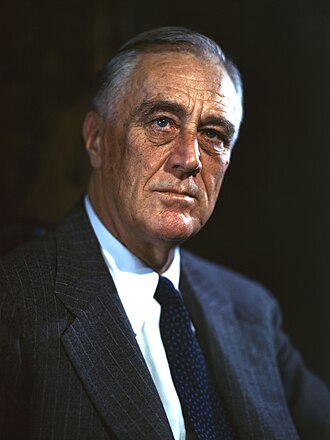
Referenced By Later Executive Orders (1)

Subsequent presidents who cited, amended, continued, or revoked this directive in later orders.

📜

Scholarly & Legal Citations

Exec. Order No. 10,006 (Oct. 9, 1948), https://executiveordersarchive.org/orders/app-executive-order-10006-preparation-presentation-filing-and-publicaton-executive-orders-and.