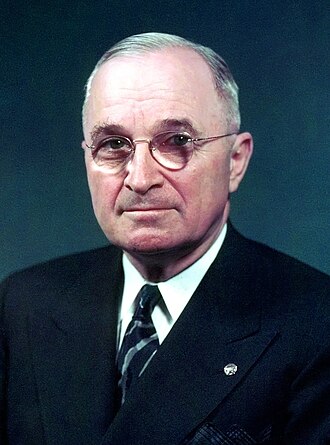
By virtue of and pursuant to the authority vested in me by sections 204 and 501(d) of the Career Compensation Act of 1949, approved October 12, 1949 (Public Law 351, 81st Congress), and as President of the United States and Commander in Chief of the armed forces of the United States, I hereby prescribe the following regulations relating to the right of members of the uniformed services to receive incentive pay for the performance of hazardous duty required by competent orders: SECTION 1. For the purposes of these regulations: (a) The terms defined in section 102 of the said Career Compensation Act of 1949 shall have the meanings prescribed therein. (b) The term "aerial flight" shall be construed to mean flight in an aircraft or glider; and a flight shall be deemed to begin when the aircraft or glider takes off from rest at any point of support and to terminate when it next comes to a complete stop at a point of support. (c) The term "aviation accident" shall be construed to mean an accident in which a member who is required to participate frequently and regularly in aerial flight is injured or otherwise incapacitated as the result, as attested by the appropriate medical authority of the uniformed service concerned, of (1) jumping from, being thrown from, or being struck by, an aircraft or any part or auxiliary thereof, or (2) participation in any duly authorized aerial flight or other aircraft or glider operations. SEC. 2. Under such regulations as the Secretary concerned may prescribe, any member of the uniformed services, including members assigned to special, administrative, or school duties, may be required by competent orders to perform hazardous duty. SEC. 3 (a) Each member who is required by competent orders to participate frequently and regularly in aerial flights, other than glider flights, shall make the flights required as a crew member or as a non-crew member as directed by competent authority. (b) Determinations as to what constitutes duty as a crew member and duty as a non-crew member shall be made in accordance with regulations prescribed by the Secretary concerned: Provided, that such determinations shall be uniform for all the services to the fullest extent practicable. SEC. 4. Under such regulations as the Secretary concerned may prescribe, members who are required by competent orders to participate frequently and regularly in aerial flights, other than glider flights, shall be required to meet the following minimum flight requirements, except as otherwise provided in section 10 hereof, in order to be entitled to receive incentive pay for the performance of hazardous duty. (a) Minimum flight requirements for members on active duty who may qualify for incentive pay under the provisions of section 204 of the Career Compensation Act of 1949: (1) During one calendar month: 4 hours of aerial flight. (2) During any two consecutive calendar months when the requirements of subdivision (1) above have not been met: 8 hours of aerial flight. (3) During any three consecutive calendar months when the requirements of subdivision (2) above have not been met: 12 hours of aerial flight. (4) For fractions of a calendar month, the time of aerial flight required shall bear the same ratio to the time required for a full calendar month as the period in question bears to a full calendar month. (5) For fractions of two consecutive calendar months, the period in question shall be considered as a unit and the time of aerial flight required shall bear the same ratio to the time required for a full calendar month as the period in question bears to a full calendar month. (6) Whenever, under authority conferred by the Secretary concerned, the commanding officer of any member who has been required by competent orders to participate frequently and regularly in aerial flights, other than glider flights, certifies that on account of military operations of the particular command or on account of the unavailability of aircraft such member was unable to perform the aerial flights required by this section, such member may comply with the minimum flight requirements by performing at least 24 hours of aerial flight over a period of six consecutive calendar months, and such requirements may be met at any time during such period. (b) Minimum flight requirements for members of reserve components of the uniformed services on inactive-duty training who may qualify for incentive pay under the provisions of section 501(d) of the Career Compensation Act of 1949: (1) During one calendar month: 2 hours of aerial flight. (2) During any two consecutive calendar months, when the requirements of subdivision (1) have not been met: 4 hours of aerial flight. (3) During any three consecutive calendar months when the requirements of subdivision (2) above have not been met: 6 hours of aerial flight. (4) For fractions of a calendar month, the time of aerial flight required shall bear the same ratio to the time required for a full calendar month as the period in question bears to a full calendar month. (5) For fractions of two consecutive calendar months, the period in question shall be considered as a unit and the time of aerial flight required shall bear the same ratio to the time required for a full calendar month as the period in question bears to a full calendar month. SEC. 5. Members shall not be entitled to receive incentive pay for the participation in aerial flights for any period while suspended from such participation, unless such suspension is subsequently removed and the minimum flight requirements prescribed in section 4 hereof have been complied with, except as otherwise provided in section 10 hereof. SEC. 6. Members who, pursuant to competent orders, are attached to a submarine which is in an active status, including a submarine under construction from the time builders' trials commence, shall be entitled to receive incentive pay for the performance of submarine duty. The term "builders' trials" shall be construed to mean trials conducted underway or in free route. SEC. 7. (a) Members who are qualified as glider personnel under such regulations as the Secretary concerned may prescribe, or who are undergoing training for such qualification, and who are required by competent orders to participate frequently and regularly in glider flights shall be required to perform one or more glider flights, without regard to duration thereof, during any three consecutive calendar months in order to be entitled to receive incentive pay for such period. (b) Whenever, under authority conferred by the Secretary concerned, the commanding officer of any member who has been required by competent orders to participate frequently and regularly in glider flights certifies that on account of the absence or inadequacy of glider equipment or towing aircraft or other means of propulsion, or on account of military operations of the particular command, such member may comply with the minimum flight requirements by performing four or more glider flights, without regard to duration thereof, during a period of twelve consecutive calendar months, and such requirements may be met at any time during such period. (c) Members of reserve components of the uniformed services who have complied with the requirement prescribed in this section shall be entitled to receive incentive pay for both active-duty and inactive-duty training performed during such period. SEC. 8. (a) As used in section 204(a) of the Career Compensation Act of 1949, the term "duty involving parachute jumping as an essential part of military duty" shall be construed to mean duty performed by members who are not in a flying-pay status and who, under such regulations as the Secretary concerned may prescribe, have received a rating as a parachutist or parachute rigger, or are undergoing training for such a rating, and who are required by competent orders to engage in parachute jumping from an aircraft in aerial flight. (b) Members required by competent orders to engage in parachute jumping shall be required to perform one or more parachute jumps from an airplane in flight during any three consecutive calendar months in order to be entitled to receive incentive pay for such period. (c) Whenever, under authority conferred by the Secretary concerned, the commanding officer of any member who has been required by competent orders to participate in parachute jumping certifies that on account of the absence of jump equipment or aircraft or on account of military operations of the particular command such member was unable to make the jumps required by this paragraph, such member may comply with the minimum requirements by performing four jumps during a period of twelve consecutive calendar months, and such requirements may be met at any time during such period. (d) Members of reserve components of the uniformed services who have complied with the requirements prescribed in this section shall be entitled to receive incentive pay for both active-duty and inactive-duty training performed during such period. SEC. 9. As used in section 204(a) of the Career Compensation Act of 1949- (a) The term "duty involving intimate contact with persons afflicted with leprosy" shall be construed to mean duty performed by any member who is assigned by competent orders to a leprosarium for the performance of duty for a period of thirty days or more or for a period of instruction, whether or not such leprosarium is under the jurisdiction of one of the uniformed services. (b) The term "duty involving the demolition of explosives" shall be construed to mean duty performed by members, including members in training for such duties, who, pursuant to competent orders and as a primary duty, demolish by the use of explosives under-water objects, obstacles, or explosives, or recover and render harmless, by disarming or demolition, explosives which, having been projected, launched, dropped, or laid in a normal manner, have failed to explode as intended. (c) The term "duty at a submarine escape training tank, when such duty involves participation in the training" shall be construed to mean duty performed by members who are regularly assigned to duty involving diving at a submarine escape training tank when such duty is primarily for the purpose of training personnel in the methods of escape from a submerged submarine. (d) The term "duty at the Navy Deep Sea Diving School or the Navy Experimental Diving Unit, when such duty involves participation in training" shall be construed to mean duty performed by members who are regularly assigned to duty involving diving at the Navy Deep Sea Diving School or the Navy Experimental Diving Unit when such diving is primarily for the purpose of training divers. SEC. 10. Any member who is required by competent orders to perform hazardous duty and who becomes injured or otherwise incapacitated as a result of the performance of such duty, by aviation accident or otherwise, shall be deemed to have fulfilled all of the requirements for the performance of hazardous duty during such incapacity for a period not to exceed three months following the date as of which such incapacity is determined by the appropriate medical authority. SEC. 11. Members required by competent orders to perform hazardous duty shall, upon compliance with the requirements of these regulations, be entitled to receive incentive pay during authorized leave of absence. SEC. 12. The Secretaries concerned are hereby authorized to prescribe such supplementary regulations not inconsistent herewith as they may deem necessary or desirable for carrying out these regulations, and such supplementary regulations shall be uniform for all the services to the fullest extent practicable. SEC. 13. This order shall become effective on September 1, 1950, except that so much thereof as may be necessary to authorize the payment of incentive pay for hazardous duty under sections 9 and 10 of the order shall be effective as of October 1, 1949. HARRY S. TRUMAN
THE WHITE HOUSE, #signature
August 17, 1950
