★
Executive Orders Historical Archive
Cite
Executive Order 10194 ⚖️✨ Zone 2: Zone of Twilight Constitutional Neutral (+0.02) 📜 5th Amend: Regulatory Execution with Due Process

Executive Order 10194—Establishing the Federal Safety Council

•
Tuesday, December 19, 1950
•
3 min read (564 words)

Executive Brief • At a Glance

⏱️ 3 min read (564 words) • ● In Effect
🎯 Primary Mandate

There is hereby established in the Department of Labor the Federal Safety Council, hereinafter referred to as the Council, to serve in an advisory capacity to the Secretary of Labor in matters relating to the safety of civilian employees of the Federal Government and the furtherance of the safety program carried out by the Secretary pursuant to section 33 of the aforesaid Federal Employees Compensation Act, as amended.

⚖️ Constitutional Footing
⚖️✨ Zone 2: Zone of Twilight
Concurrent Authority / Congressional Silence
📜 5th Amend: Regulatory Execution with Due Process
🏛️ Scope & Affected Sectors
Merchants, Importers & Commercial Enterprises Executive Departments & Federal Civil Servants Private Citizens & Property Owners

Plain-English Translation & Framers' Constitutional Analysis

Early Statesman synthesis distilling legal jargon into practical meaning, statutory anchors, and structural constitutional impacts.

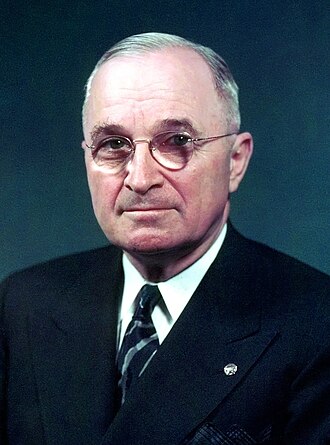
Signed by President Harry S Truman on December 19, 1950, this order concerns Establishing the Federal Safety Council. There is hereby established in the Department of Labor the Federal Safety Council, hereinafter referred to as the Council, to serve in an advisory capacity to the Secretary of Labor in matters relating to the safety of civilian employees of the Federal Government and the furtherance of the safety program carried out by the Secretary pursuant to section 33 of the aforesaid Federal Employees Compensation Act, as…

Constitutional Assessment: Evaluated against the Fifth Amendment, this action touches upon property or economic rights. An early statesman would insist upon strict adherence to due process of law and the constitutional guarantee that private holdings shall not be encumbered or taken for public purposes without just compensation and lawful process.

Key Directives & Operative Actions

▪

There is hereby established in the Department of Labor the Federal Safety Council, hereinafter referred to as the Council, to serve in an advisory capacity to the Secretary of Labor in matters relating to the safety of civilian employees of the Federal Government and the furtherance of the safety program carried out by the Secretary pursuant to section 33 of the aforesaid Federal Employees Compensation Act, as amended.

▪

The Council shall be composed of one qualified representative of each of the several executive departments and agencies, and of the Government of the District of Columbia.

▪

Such representatives shall be designated by the heads of the respective departments and agencies, who may also designate suitable alternate representatives.

▪

The members of the Council shall serve without additional compensation. 2.

Constitutional & Societal Entities Impacted

🏛️ Merchants, Importers & Commercial Enterprises 🏛️ Executive Departments & Federal Civil Servants 🏛️ Private Citizens & Property Owners
🏛️

The Framers' Constitutional Council

1787 Prism

Evaluating this order against the constitutional debates of 1787 and the limits of Article II executive power.

⚖️✨ Zone 2 (Zone of Twilight)
§

"When the President acts in absence of either a congressional grant or denial of authority, he can only rely upon his own independent powers, but there is a zone of twilight in which he and Congress may have concurrent authority."

— Justice Robert H. Jackson, Youngstown Sheet & Tube Co. v. Sawyer (1952) Concurrent Authority / Congressional Silence
JM

James Madison

Separation of Powers & Legislative Primacy

"Power is of an encroaching nature, and it ought to be effectually restrained from passing the limits assigned to it." — Federalist No. 48 (1788)

Madison would view this order with watchful scrutiny. Operating in the 'Zone of Twilight' where Congress is silent, each such directive establishes an administrative precedent that steadily expands the executive perimeter at the expense of legislative primacy.

Madisonian Stance: Vigilant / Cautionary
AH

Alexander Hamilton

The Energetic Executive & Unified Command

"A feeble Executive implies a feeble execution of the government; and a government ill executed, whatever it may be in theory, must be, in practice, a bad government." — Federalist No. 70 (1788)

Hamilton would view this directive as the natural and indispensable functioning of administrative leadership. Without the power to coordinate agencies, manage personnel, and resolve operational ambiguities, the modern presidency would be reduced to an impotent figurehead.

Hamiltonian Stance: Defends Vigor & Dispatch
GM

George Mason

Bill of Rights, Due Process & 10th Amendment

"The purse and the sword ought never to be in the same hands... nor the liberties of the citizen placed at the pleasure of a single magistrate." — Virginia Ratifying Convention (1788)

George Mason and the Anti-Federalists would sound a fierce warning. They feared that Article II would inevitably evolve into an elective monarchy. When an executive order impacts private rights, property, or civil liberties without individualized judicial process, Mason would see their darkest predictions verified.

Anti-Federalist Stance: High Bill of Rights Scrutiny
📐

Five Measurable "Constitutional Friction" Dimensions

An objective audit measuring potential separation-of-powers tension against the United States Constitution and established Supreme Court doctrine.

⚖️ Discretionary Twilight Zone
52 / 100 friction index
Dimension 1 • Art. I, §1 & §8

Legislative Encroachment & Purse

High Friction

Touches upon core congressional prerogatives: raises appropriations reallocation, tariff imposition, or statutory preemption questions.

Benchmark: Power of the purse, taxes/tariffs, and rule of law reserved to Congress.
Dimension 2 • Art. II, §1 & §3

Executive Scope & Faithfulness

Moderate Friction

Directs internal executive branch machinery, agency workflows, and federal personnel.

Benchmark: Faithfully execute laws enacted by Congress vs. unilateral decree.
Dimension 3 • 10th Amendment

Federalism & State Sovereignty

Moderate Friction

Engages state and local partners in cooperative federalism programs.

Benchmark: Police powers and un-delegated responsibilities reserved to the States.
Dimension 4 • 5th & 14th Amendments

Due Process & Individual Rights

Low Friction

Focuses on internal governmental operations with no direct impairment of private rights or property.

Benchmark: Protection of private property, contracts, liberty, and procedural justice.
Dimension 5 • Separation of Powers

Youngstown Jacksonian Tier

Moderate Friction

The order relies on inherent Article II executive discretion, civil service management, or foreign diplomacy where Congress has neither expressly approved nor prohibited action.

Benchmark: Concurrent Authority / Congressional Silence
⚖️ Audit Synthesis

This order operates within Justice Jackson’s Zone of Twilight, resting upon concurrent presidential authority or congressional silence.

Weighted composite: Art. I (25%), Art. II (25%), Federalism (15%), Due Process (15%), Youngstown (20%).
ℹ️
How to read these dimensions: Executive power expands whenever an administration acts without explicit statutory authorization from Congress (Article I), touches upon police powers historically reserved to the states (Tenth Amendment), or limits private rights and property without judicial process. A low friction score indicates strict concordance with enacted law; a high friction score highlights orders testing the limits of presidential discretion.
Total Words
564
3,557 characters
Estimated Read Time
3 min
@ 200 words / min
Flesch-Kincaid
19.1
Post-Graduate Legal
Language Tone Score
+0.02
Constitutional Neutral
How is this scored?
Text size:

Official Archival Text

View Source Document

WHEREAS by section 33(c) of the Federal Employees Compensation Act (5 U.S.C. 784), as amended by section 209 of the act of October 14, 1949 (Public Law 357, 81st Congress), the Congress declared its purpose to reduce the number of accidents and injuries among Government officers and employees, encourage safe practices, eliminate work hazards and health risks, and reduce compensable injuries; and WHEREAS by the said act, as amended and as modified by Reorganization Plan No. 19 of 1950, effective May 24, 1950 (15 F.R. 3178), the heads of Government departments and agencies are directed to develop, support, and foster organized safety promotion, and to keep such records of injuries and accidents to persons covered by the said act, and to make such statistical and other reports, as the Secretary of labor may prescribe; and WHEREAS the President is authorized by the said act, as amended, to establish by Executive order a safety council composed of representatives of Government departments and agencies to serve as an advisory body to the Secretary of Labor in furtherance of the safety program carried out by the Secretary pursuant to section 33 of the aforesaid act, as amended, and to undertake such other measures as he deems proper to prevent injuries and accidents to persons covered by the said act:

NOW, THEREFORE, #now-therefore

by virtue of the authority vested in me by section 33(c) of the aforesaid Federal Employees Compensation Act, as amended, and as President of the United States, it is hereby ordered as follows: 1. There is hereby established in the Department of Labor the Federal Safety Council, hereinafter referred to as the Council, to serve in an advisory capacity to the Secretary of Labor in matters relating to the safety of civilian employees of the Federal Government and the furtherance of the safety program carried out by the Secretary pursuant to section 33 of the aforesaid Federal Employees Compensation Act, as amended. The Council shall be composed of one qualified representative of each of the several executive departments and agencies, and of the Government of the District of Columbia. Such representatives shall be designated by the heads of the respective departments and agencies, who may also designate suitable alternate representatives. The members of the Council shall serve without additional compensation. 2. The Council shall advise the Secretary of Labor with respect to the development and maintenance of adequate and effective safety organizations and programs in the several Federal departments and agencies and with respect to criteria, standards, and procedures designed to eliminate work hazards and health risks and to prevent injuries and accidents in Federal employment. 3. The Secretary of Labor shall prescribe appropriate regulations governing the activities and functions of the Council, and shall designate the Chairman thereof. The Council may choose such other officers, and establish such committees as it finds necessary for carrying out its functions. 4. The Secretary of Labor is hereby authorized and directed to provide, within the limits of funds available to him for this purpose, such staff and other services and supplies as may be required by the Council in the performance of its duties. 5. Executive Order No. 8071 of March 21, 1939, establishing the Federal interdepartmental Safety Council, is hereby revoked. The records of the said Federal Interdepartmental Safety Council shall be transferred to the Federal Safety Council. HARRY S. TRUMAN

THE WHITE HOUSE, #signature

December 19, 1950
🔗

Referenced By Later Executive Orders (1)

Subsequent presidents who cited, amended, continued, or revoked this directive in later orders.

📜

Scholarly & Legal Citations

Exec. Order No. 10,194 (Dec. 19, 1950), https://executiveordersarchive.org/orders/app-executive-order-10194-establishing-the-federal-safety-council.