★
Executive Orders Historical Archive
Cite
Executive Order 10210 🏛️✅ Zone 1: Maximum Authority Constitutional Fidelity (+0.33) 📜 Art. II §2: Commander-in-Chief Supervisory Authority

Executive Order 10210—Authorizing the Department of Defense and the Department of Commerce to Exercise the Functions and Powers Set Forth in Title Ii of the First War Powers Act, 1941, as Amended by the Act of January 12, 1951, and Prescribing Regulations for the Exercise of Such Functions and Powers

•
Friday, February 2, 1951
•
7 min read (1,418 words)

Executive Brief • At a Glance

⏱️ 7 min read (1,418 words) • ● In Effect
🎯 Primary Mandate

Under such regulations, which shall be uniform to the extent practicable, as may be prescribed or approved by the Secretary of Defense: 1.

⚖️ Constitutional Footing
🏛️✅ Zone 1: Maximum Authority
Express or Implied Congressional Authorization
📜 Art. II §2: Commander-in-Chief Supervisory Authority
🏛️ Scope & Affected Sectors
Armed Forces & Military Establishments Executive Departments & Federal Civil Servants Private Citizens & Property Owners Financial Institutions & Monetary Authorities

Plain-English Translation & Framers' Constitutional Analysis

Early Statesman synthesis distilling legal jargon into practical meaning, statutory anchors, and structural constitutional impacts.

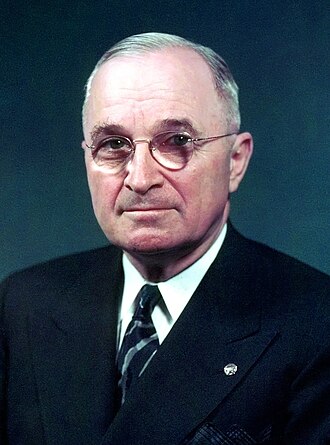
Signed by President Harry S Truman on February 2, 1951, this order concerns Authorizing the Department of Defense and the Department of Commerce to Exercise the Functions and Powers Set Forth in Title Ii of the First War Powers Act, 1941, as Amended by the Act of January 12, 1951, and Prescribing Regulations for the Exercise of Such Functions and Powers. Under such regulations, which shall be uniform to the extent practicable, as may be prescribed or approved by the Secretary of Defense: 1. The Department of Defense is authorized, within the limits of the amounts appropriated and the contract authorization provided therefor, to enter into contracts and into amendments or modifications of contracts heretofore or hereafter made, and to make advance, progress, and…

Constitutional Assessment: Scrutinized through Article II, Section 2, this action exercises the President's constitutional role as Commander in Chief. Early Framers recognized broad executive discretion in commanding military forces during conflict, provided it remains bounded by congressional declarations and respects civilian domestic courts.

Key Directives & Operative Actions

▪

Under such regulations, which shall be uniform to the extent practicable, as may be prescribed or approved by the Secretary of Defense: 1.

▪

The Department of Defense is authorized, within the limits of the amounts appropriated and the contract authorization provided therefor, to enter into contracts and into amendments or modifications of contracts heretofore or hereafter made, and to make advance, progress, and other payments thereon, without regard to the provisions of law relating to the making, performance, amendment, or modification of contracts. 2.

▪

The Secretaries of Defense, the Army, the Navy, and the Air Force may exercise the authority herein conferred and, in their discretion and by their direction may delegate such authority to any other military or civilian officers or officials of their respective departments, and may confer upon any such military or civilian officers or officials the power to make further delegations of such authority within their respective departments. 3.

▪

The contracts hereby authorized to be made include agreements of all kinds (whether in the form of letters of intent, purchase orders, or otherwise) for all types and kinds of things and services necessary, appropriate or convenient for the national defense, or for the invention, development, or production of, or research concerning any such things, including, but not limited to, aircraft, buildings, vessels, arms, armament, equipment, or supplies of any kind, or any portion thereof, including plans, spare parts and equipment therefor, materials, supplies, facilities, utilities, machinery, machine tools, and any other equipment without any restriction of any kind, either as to type, character, location, or form. 4.

Constitutional & Societal Entities Impacted

🏛️ Armed Forces & Military Establishments 🏛️ Executive Departments & Federal Civil Servants 🏛️ Private Citizens & Property Owners 🏛️ Financial Institutions & Monetary Authorities
🏛️

The Framers' Constitutional Council

1787 Prism

Evaluating this order against the constitutional debates of 1787 and the limits of Article II executive power.

🏛️✅ Zone 1 (Maximum Authority)
§

"When the President acts pursuant to an express or implied authorization of Congress, his authority is at its maximum, for it includes all that he possesses in his own right plus all that Congress can delegate."

— Justice Robert H. Jackson, Youngstown Sheet & Tube Co. v. Sawyer (1952) Express or Implied Congressional Authorization
JM

James Madison

Separation of Powers & Legislative Primacy

"The constitutional magistracy was designed not to invent policy, but to be the faithful instrument of the laws passed by the people's representatives." — Speech in the First Congress (1789)

Madison would approve the structural posture of this order. The President acts strictly in subordination to statutory authority granted under Article II, Section 3 ("take Care that the Laws be faithfully executed"). The checks and balances hold firm because the policy origin remains with the legislature.

Madisonian Stance: Concurring (Statutory)
AH

Alexander Hamilton

The Energetic Executive & Unified Command

"The direction of war implies the direction of the common strength; and the power of directing and employing the common strength must be under the direction of the single hand of the Executive." — Federalist No. 74 (1788)

Hamilton would forcefully champion executive discretion here. For foreign entanglements, commerce defense, and national security, deliberative assemblies are too slow and faction-ridden. A unified, energetic Executive exercising swift command is precisely what the Philadelphia Convention intended for national preservation.

Hamiltonian Stance: Strong Prerogative Support
GM

George Mason

Bill of Rights, Due Process & 10th Amendment

"The president will be surrounded by flatterers and sycophants... and the great powers of the executive will gradually absorb the liberties of the people." — Cato IV (Anti-Federalist, 1787)

The Anti-Federalist prism advises continuous democratic vigilance. Even routine administrative directives aggregate centralized federal power away from town halls and state assemblies toward a distant executive apparatus.

Anti-Federalist Stance: Eternal Vigilance Required
📐

Five Measurable "Constitutional Friction" Dimensions

An objective audit measuring potential separation-of-powers tension against the United States Constitution and established Supreme Court doctrine.

⚖️ Discretionary Twilight Zone
55 / 100 friction index
Dimension 1 • Art. I, §1 & §8

Legislative Encroachment & Purse

High Friction

Touches upon core congressional prerogatives: raises appropriations reallocation, tariff imposition, or statutory preemption questions.

Benchmark: Power of the purse, taxes/tariffs, and rule of law reserved to Congress.
Dimension 2 • Art. II, §1 & §3

Executive Scope & Faithfulness

Moderate Friction

Directs internal executive branch machinery, agency workflows, and federal personnel.

Benchmark: Faithfully execute laws enacted by Congress vs. unilateral decree.
Dimension 3 • 10th Amendment

Federalism & State Sovereignty

High Friction

Creates friction with the Tenth Amendment by conditioning state grants, mandating local compliance, or preempting state police powers.

Benchmark: Police powers and un-delegated responsibilities reserved to the States.
Dimension 4 • 5th & 14th Amendments

Due Process & Individual Rights

Moderate Friction

Applies regulatory or compliance standards to private contractors or commercial entities.

Benchmark: Protection of private property, contracts, liberty, and procedural justice.
Dimension 5 • Separation of Powers

Youngstown Jacksonian Tier

Low Friction

The President operates strictly as the constitutional Chief Executive, carrying out policy established by Congress with strong statutory backing.

Benchmark: Express or Implied Congressional Authorization
⚖️ Audit Synthesis

This order operates within Justice Jackson’s Zone of Twilight, resting upon concurrent presidential authority or congressional silence.

Weighted composite: Art. I (25%), Art. II (25%), Federalism (15%), Due Process (15%), Youngstown (20%).
ℹ️
How to read these dimensions: Executive power expands whenever an administration acts without explicit statutory authorization from Congress (Article I), touches upon police powers historically reserved to the states (Tenth Amendment), or limits private rights and property without judicial process. A low friction score indicates strict concordance with enacted law; a high friction score highlights orders testing the limits of presidential discretion.
Total Words
1,418
8,884 characters
Estimated Read Time
7 min
@ 200 words / min
Flesch-Kincaid
24
Post-Graduate Legal
Language Tone Score
+0.33
Constitutional Fidelity
How is this scored?
Text size:

Official Archival Text

View Source Document

By virtue of the authority vested in me by the First War Powers Act, 1941, as amended by the act of January 12, 1951, entitled "An Act To amend and extend title II of the first War Powers Act, 1941" (Public Law 921, 81st Congress), hereinafter called the Act, and as President of the United States and Commander in Chief of the armed forces of the United States, and deeming that such action will facilitate the national defense, it is hereby ordered as follows: PART I Under such regulations, which shall be uniform to the extent practicable, as may be prescribed or approved by the Secretary of Defense: 1. The Department of Defense is authorized, within the limits of the amounts appropriated and the contract authorization provided therefor, to enter into contracts and into amendments or modifications of contracts heretofore or hereafter made, and to make advance, progress, and other payments thereon, without regard to the provisions of law relating to the making, performance, amendment, or modification of contracts. 2. The Secretaries of Defense, the Army, the Navy, and the Air Force may exercise the authority herein conferred and, in their discretion and by their direction may delegate such authority to any other military or civilian officers or officials of their respective departments, and may confer upon any such military or civilian officers or officials the power to make further delegations of such authority within their respective departments. 3. The contracts hereby authorized to be made include agreements of all kinds (whether in the form of letters of intent, purchase orders, or otherwise) for all types and kinds of things and services necessary, appropriate or convenient for the national defense, or for the invention, development, or production of, or research concerning any such things, including, but not limited to, aircraft, buildings, vessels, arms, armament, equipment, or supplies of any kind, or any portion thereof, including plans, spare parts and equipment therefor, materials, supplies, facilities, utilities, machinery, machine tools, and any other equipment without any restriction of any kind, either as to type, character, location, or form. 4. The Department of Defense may by agreement modify or amend or settle claims under contracts heretofore or hereafter made, may make advance, progress, and other payments upon such contracts of any per centum of the contract price, and may enter into agreements with contractors or obligors, modifying or releasing accrued obligations of any sort, including accrued liquidated damages or liability under surety or other bonds, whenever, in the judgment of the Secretaries of Defense, the Army, the Navy, or the Air Force, respectively, or their duly authorized representatives, the national defense will be thereby facilitated. Amendments and modifications of contracts may be utilized to accomplish the same things as any original contract could have accomplished hereunder, irrespective of the time or circumstances of the making, or the form, of the contract amended or modified, or of the amending or modifying contract, and irrespective of rights which may have accrued under the contract or the amendments or modifications thereof. 5. Advertising, competitive bidding, and bid, payment, performance or other bonds or other forms of security need not be required. 6. Complete data shall be maintained by the Department of Defense as to all contracts and purchases made pursuant to the Act and this order. The Secretaries of Defense, the Army, the Navy, and the Air Force shall make available for public inspection so much of such data as they may respectively deem compatible with the public interest and as does not cover classified contracts or purchases. 7. There shall be no discrimination in any act performed hereunder against any person on the ground of race, creed, color or national origin, and all contracts hereunder shall contain a provision that the contractor and any subcontractors thereunder shall not so discriminate. 8. No claim against the Untied States arising under any purchase or contract made under the authority of the Act and this order shall be assigned except in accordance with the Assignment of Claims Act of 1940 (54 Stat. 1029). 9. Advance payments shall be made hereunder only after careful scrutiny to determine that such payments will promote the national defense. 10. Every contract entered into, amended, or modified pursuant to this order shall contain a warranty by the contractor in substantially the following terms: The Contractor warrants that no person or selling agency has been employed or retained to solicit or secure this contract upon an agreement or understanding for a commission, percentage, brokerage, or contingent fee, excepting bona fide employees or bona fide established commercial or selling agencies maintained by the Contractor for the purpose of securing business. For breach or violation of this warranty the Government shall have the right to annul this contract without liability or in its discretion to deduct from the contract price or consideration the full amount of such commission, percentage, brokerage, or contingent fee. 11. All contracts entered into, amended, or modified pursuant to authority of this order shall include a clause to the effect that the Comptroller General of the Untied states or any of his duly authorized representatives shall have access to and the right to examine any pertinent books, documents, papers, and records of the contractor or any of his subcontractors engaged in the performance of and involving transactions related to such contracts or subcontracts. 12. Nothing herein shall be construed to authorize the cost-plus-a-percentage-of-cost system of contracting. 13. Nothing herein shall be construed to authorize any contracts in violation of existing law relating to limitation of profits, or the payment of a fee in excess of such limitation as may be specifically set forth in the act appropriating the funds or granting the contract authorization obligated by a contract. In the absence of such limitation, the fixed fee to be paid the contractor as a result of any cost-plus-a-fixed-fee contract entered into under the authority of this order shall not exceed 10 per centum of the estimated cost of the contract, exclusive of the fee as determined by the Secretary of Defense, the Army, the Navy, or the Air Force at the time of entering into such contract (except that such estimated cost is authorized in any such contract for experimental, developmental, or research work, and that a fee inclusive of the contractor's costs and not in excess of 6 per centum of the estimated cost, exclusive of fees, as determined by the Secretary of Defense, the Army, the Navy, or the Air Force at the time of entering into the contract, of the project to which such fee is applicable, is authorized in contracts for architectural or engineering services relating to any public works or utility project). 14. No contract or modification or amendment thereof shall be exempt from the provisions of the Walsh-Healey Act (49 Stat. 2036), as amended, because of being entered into without advertising or competitive bidding, and the provisions of such act, the Davis-Bacon Act (49 Stat. 1011), as amended, the Copeland Act (48 Stat. 948), as amended, and the Eight Hour Law (37 Stat. 137), as amended, if otherwise applicable shall apply to contracts made and performed under the authority of this order. 15. Nothing herein contained shall prejudice anything heretofore done under Executive Order No. 9001 of December 27, 1941, or any amendments or extensions thereof, or the continuance in force of an action heretofore taken under the said order or any amendments or extensions thereof. 16. Nothing herein contained shall prejudice any authority to utilize the provision of the Armed Services Procurement Act of 1947 (62 Stat. 26) and regulations thereunder. PART II The provisions of Part I of this order are hereby extended to the Department of Commerce; and, subject to the limitations and regulations contained in such part, and under such regulations as he may prescribe, the Secretary of Commerce is authorized to perform and exercise, as to the Department of Commerce, all the functions and authority vested in and granted by Part I of this order to the Secretaries named therein: Provided, That the regulations of the Secretary of Commerce need not be approved by the Secretary of Defense but shall, to the extent practicable, be uniform with the regulations prescribed or approved by the Secretary of Defense pursuant to Part I hereof: And provided further, That nothing contained herein shall prejudice any other authority which the Department of Commerce or the Secretary of Commerce may have with respect to procurement. HARRY S. TRUMAN

THE WHITE HOUSE, #signature

February 2, 1951

🔗

Referenced By Later Executive Orders (6)

Subsequent presidents who cited, amended, continued, or revoked this directive in later orders.

📜

Scholarly & Legal Citations

Exec. Order No. 10,210 (Feb. 2, 1951), https://executiveordersarchive.org/orders/app-executive-order-10210-authorizing-the-department-defense-and-the-department-commerce.