★
Executive Orders Historical Archive
Cite
Executive Order 10700 🏛️✅ Zone 1: Maximum Authority Constitutional Fidelity (+0.33) 📜 Art. II §2: Commander-in-Chief Supervisory Authority

Executive Order 10700—Further Providing for the Operations Coordinating Board

•
Monday, February 25, 1957
•
5 min read (1,090 words)

Executive Brief • At a Glance

⏱️ 5 min read (1,090 words) • ● In Effect
🎯 Primary Mandate

In order to assist in the effective coordination among certain agencies of certain functions relating to the national security and to provide for the integrated implementation of national security policies by the said agencies, there is hereby established within the structure of the National Security Council the Operations Coordinating Board, hereinafter referred to as the Board, which shall report to the National Security Council.

⚖️ Constitutional Footing
🏛️✅ Zone 1: Maximum Authority
Express or Implied Congressional Authorization
📜 Art. II §2: Commander-in-Chief Supervisory Authority
🏛️ Scope & Affected Sectors
Armed Forces & Military Establishments Sovereign State Governments & Localities Executive Departments & Federal Civil Servants

Plain-English Translation & Framers' Constitutional Analysis

Early Statesman synthesis distilling legal jargon into practical meaning, statutory anchors, and structural constitutional impacts.

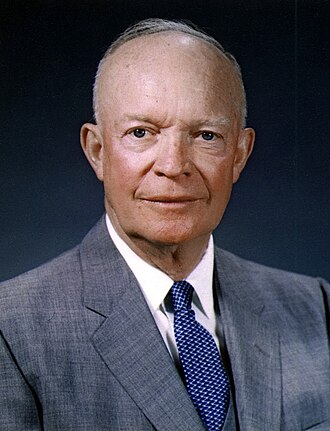
Signed by President Dwight D. Eisenhower on February 25, 1957, this order concerns Further Providing for the Operations Coordinating Board. In order to assist in the effective coordination among certain agencies of certain functions relating to the national security and to provide for the integrated implementation of national security policies by the said agencies, there is hereby established within the structure of the National Security Council the Operations Coordinating Board, hereinafter referred to as the Board, which shall report to the National…

Constitutional Assessment: Scrutinized through Article II, Section 2, this action exercises the President's constitutional role as Commander in Chief. Early Framers recognized broad executive discretion in commanding military forces during conflict, provided it remains bounded by congressional declarations and respects civilian domestic courts.

Key Directives & Operative Actions

▪

In order to assist in the effective coordination among certain agencies of certain functions relating to the national security and to provide for the integrated implementation of national security policies by the said agencies, there is hereby established within the structure of the National Security Council the Operations Coordinating Board, hereinafter referred to as the Board, which shall report to the National Security Council.

▪

The Board shall have as members the following: (1) the Under Secretary of State, who shall represent the Secretary of State, (2) the Deputy Secretary of Defense, who shall represent the Secretary of Defense, (3) the Director of Central Intelligence, (4) the Director of the United States Information Agency, (5) the Director of the International Cooperation Administration, and (6) one or more representatives of the President to be designated by the President.

▪

The Board shall have a chairman and a vice chairman, each of whom shall be designated by the President from among its members.

▪

Each head of agency referred to in items 1 to 5, inclusive, in this subsection may provide for an alternate member who shall serve as a member of the Board in lieu of the regular member representing the agency concerned whenever such regular member is, for reasons beyond his control, unable to attend any meeting of the Board.

Constitutional & Societal Entities Impacted

🏛️ Armed Forces & Military Establishments 🏛️ Sovereign State Governments & Localities 🏛️ Executive Departments & Federal Civil Servants
🏛️

The Framers' Constitutional Council

1787 Prism

Evaluating this order against the constitutional debates of 1787 and the limits of Article II executive power.

🏛️✅ Zone 1 (Maximum Authority)
§

"When the President acts pursuant to an express or implied authorization of Congress, his authority is at its maximum, for it includes all that he possesses in his own right plus all that Congress can delegate."

— Justice Robert H. Jackson, Youngstown Sheet & Tube Co. v. Sawyer (1952) Express or Implied Congressional Authorization
JM

James Madison

Separation of Powers & Legislative Primacy

"The constitutional magistracy was designed not to invent policy, but to be the faithful instrument of the laws passed by the people's representatives." — Speech in the First Congress (1789)

Madison would approve the structural posture of this order. The President acts strictly in subordination to statutory authority granted under Article II, Section 3 ("take Care that the Laws be faithfully executed"). The checks and balances hold firm because the policy origin remains with the legislature.

Madisonian Stance: Concurring (Statutory)
AH

Alexander Hamilton

The Energetic Executive & Unified Command

"The direction of war implies the direction of the common strength; and the power of directing and employing the common strength must be under the direction of the single hand of the Executive." — Federalist No. 74 (1788)

Hamilton would forcefully champion executive discretion here. For foreign entanglements, commerce defense, and national security, deliberative assemblies are too slow and faction-ridden. A unified, energetic Executive exercising swift command is precisely what the Philadelphia Convention intended for national preservation.

Hamiltonian Stance: Strong Prerogative Support
GM

George Mason

Bill of Rights, Due Process & 10th Amendment

"The president will be surrounded by flatterers and sycophants... and the great powers of the executive will gradually absorb the liberties of the people." — Cato IV (Anti-Federalist, 1787)

The Anti-Federalist prism advises continuous democratic vigilance. Even routine administrative directives aggregate centralized federal power away from town halls and state assemblies toward a distant executive apparatus.

Anti-Federalist Stance: Eternal Vigilance Required
📐

Five Measurable "Constitutional Friction" Dimensions

An objective audit measuring potential separation-of-powers tension against the United States Constitution and established Supreme Court doctrine.

⚖️ Discretionary Twilight Zone
43 / 100 friction index
Dimension 1 • Art. I, §1 & §8

Legislative Encroachment & Purse

Moderate Friction

Administers commerce or fiscal programs requiring ongoing statutory delegation and legislative oversight.

Benchmark: Power of the purse, taxes/tariffs, and rule of law reserved to Congress.
Dimension 2 • Art. II, §1 & §3

Executive Scope & Faithfulness

Moderate Friction

Directs internal executive branch machinery, agency workflows, and federal personnel.

Benchmark: Faithfully execute laws enacted by Congress vs. unilateral decree.
Dimension 3 • 10th Amendment

Federalism & State Sovereignty

High Friction

Creates friction with the Tenth Amendment by conditioning state grants, mandating local compliance, or preempting state police powers.

Benchmark: Police powers and un-delegated responsibilities reserved to the States.
Dimension 4 • 5th & 14th Amendments

Due Process & Individual Rights

Low Friction

Focuses on internal governmental operations with no direct impairment of private rights or property.

Benchmark: Protection of private property, contracts, liberty, and procedural justice.
Dimension 5 • Separation of Powers

Youngstown Jacksonian Tier

Low Friction

The President operates strictly as the constitutional Chief Executive, carrying out policy established by Congress with strong statutory backing.

Benchmark: Express or Implied Congressional Authorization
⚖️ Audit Synthesis

This order operates within Justice Jackson’s Zone of Twilight, resting upon concurrent presidential authority or congressional silence.

Weighted composite: Art. I (25%), Art. II (25%), Federalism (15%), Due Process (15%), Youngstown (20%).
ℹ️
How to read these dimensions: Executive power expands whenever an administration acts without explicit statutory authorization from Congress (Article I), touches upon police powers historically reserved to the states (Tenth Amendment), or limits private rights and property without judicial process. A low friction score indicates strict concordance with enacted law; a high friction score highlights orders testing the limits of presidential discretion.
Total Words
1,090
6,599 characters
Estimated Read Time
5 min
@ 200 words / min
Flesch-Kincaid
20.1
Post-Graduate Legal
Language Tone Score
+0.33
Constitutional Fidelity
How is this scored?
Text size:

Official Archival Text

View Source Document

By virtue of the authority vested in me by the Constitution and statutes, and as President of the United States, it is hereby ordered as follows: SECTION 1. (a) In order to assist in the effective coordination among certain agencies of certain functions relating to the national security and to provide for the integrated implementation of national security policies by the said agencies, there is hereby established within the structure of the National Security Council the Operations Coordinating Board, hereinafter referred to as the Board, which shall report to the National Security Council. (b) The Board shall have as members the following: (1) the Under Secretary of State, who shall represent the Secretary of State, (2) the Deputy Secretary of Defense, who shall represent the Secretary of Defense, (3) the Director of Central Intelligence, (4) the Director of the United States Information Agency, (5) the Director of the International Cooperation Administration, and (6) one or more representatives of the President to be designated by the President. The Board shall have a chairman and a vice chairman, each of whom shall be designated by the President from among its members. Each head of agency referred to in items 1 to 5, inclusive, in this subsection may provide for an alternate member who shall serve as a member of the Board in lieu of the regular member representing the agency concerned whenever such regular member is, for reasons beyond his control, unable to attend any meeting of the Board. (c) The head of any agency (other than any agency represented under section 1 (b) hereof) to which the President from time to time assigns responsibilities for the implementation of national security policies shall assign a representative to serve on the Board when the Board is dealing with subjects bearing directly upon the responsibilities of such head. Each such representative shall be an Under Secretary or corresponding official. Each such head may provide for an alternate representative of his agency who shall attend any meeting of the Board, requiring representation of such agency, in lieu of the representative when the latter is, for reasons beyond his control, unable to attend. (d) Any alternate member of the Board serving under section 1 (b) of this order, and any representative or alternate representative serving under section 1 (c) of this order, shall, while so serving, have in all respects the same status on the Board as the members of the Board provided for in section 1 (b) hereof. SEC. 2. The President having approved any national security policy after receiving the advice of the National Security Council thereon, the Board shall (1) whenever the President shall hereafter so direct, advise with the agencies concerned as to (a) their detailed operational planning responsibilities respecting such policy, (b) the coordination of the interdepartmental aspects of the detailed operational plans developed by the agencies to carry out such policy, (c) the timely and coordinated execution of such policy and plans, and (d) the execution of each security action or project so that it shall make its full contribution to the attainment of national security objectives and to the particular climate of opinion the United States is seeking to achieve in the world, and (2) initiate new proposals for action within the framework of national security policies in response to opportunity and changes in the situation. The Board shall perform such other advisory functions as the President may assign to it and shall from time to time make reports to the National Security Council with respect to the carrying out of this order. SEC. 3. Subject to the provisions of section 101 (c) of the National Security Act of 1947, as amended (50 U.S.C. 402 (c)): (a) (1) The Board shall have, within the staff of the National Security Council, such staff as may be necessary to assist the Board in the performance of its functions, (2) the said staff of the Board shall be headed by an Executive Officer of the Board, and (3) employees of agencies may, consonant with law, be detailed to the aforesaid staff of the Board. (b) Members of the staff of the Operations Coordinating Board provided for in Executive Order No. 10483, as amended, who are immediately prior to the taking effect of this order receiving compensation directly out of funds available to the said Board shall be transferred to the staff of the Board referred to in paragraph (a) of this section as of the effective date of this order. The said transfers shall be accomplished in consonance with applicable law, including the last proviso of section 12 of the Veterans Preference Act of 1944, as amended (5 U.S.C. 861). (c) Appropriate arrangements may be made for the detail to the staff of the Board referred to in paragraph (a) of this section of employees of agencies who are immediately prior to the taking effect of the provisions of this order detailed to the staff of the Operations Coordinating Board provided for in Executive Order No. 10483, as amended. SEC. 4. As used herein, the word "agency" may be construed to mean any instrumentality of the executive branch of the Government, including any executive department. SEC. 5. Nothing in this order shall be construed either to confer upon the Board any function with respect to internal security or to abrogate or restrict in any manner any function vested by law in, or assigned pursuant to law to, any agency or head of agency (including the Office of Defense Mobilization and the Director of the Office of Defense Mobilization). SEC. 6. This order supersedes Executive Order No. 10483 of September 2, 1953, and provisions amendatory thereof contained in other Executive orders (including, to the extent that it relates to the Operations Coordinating Board provided for in Executive Order No. 10483, the proviso of section 303 (b) of Executive Order No. 10610 of May 9, 1955). Subject to the provisions of this order (including the limitations imposed by section 3 hereof), the Board may be deemed to be a continuation of the Operations Coordinating Board provided for in Executive Order No. 10483, as amended. SEC. 7. The foregoing provisions of this order shall become effective on July 1, 1957, except that if funds appropriated for the National Security Council shall not have become available on that date for the support of the Board in consonance with this order, the said provisions shall become effective on such later date as funds so appropriated become so available. DWIGHT D. EISENHOWER

THE WHITE HOUSE, #signature

February 25, 1957.

🔗

Referenced By Later Executive Orders (3)

Subsequent presidents who cited, amended, continued, or revoked this directive in later orders.

📜

Scholarly & Legal Citations

Exec. Order No. 10,700 (Feb. 25, 1957), https://executiveordersarchive.org/orders/app-executive-order-10700-further-providing-for-the-operations-coordinating-board.