★
Executive Orders Historical Archive
Cite
Executive Order 10765 🏛️✅ Zone 1: Maximum Authority Constitutional Neutral (+0.02) 📜 10th Amend: Intergovernmental Federalism Cooperation

Executive Order 10765—Regulations Governing the Award of Life-Saving Medals Under the Medals of Honor Act

•
Thursday, April 24, 1958
•
5 min read (1,096 words)

Executive Brief • At a Glance

⏱️ 5 min read (1,096 words) • ● In Effect
🎯 Primary Mandate

The following regulations shall govern the award of life-saving medals under the said Medals of Honor Act, as amended, and shall constitute §§ 9.1 through 9.7 of Chapter I of Title 49 of the Code of Federal Regulations: § 9.1 Applications and affidavits.

⚖️ Constitutional Footing
🏛️✅ Zone 1: Maximum Authority
Express or Implied Congressional Authorization
📜 10th Amend: Intergovernmental Federalism Cooperation
🏛️ Scope & Affected Sectors
Merchants, Importers & Commercial Enterprises Sovereign State Governments & Localities Private Citizens & Property Owners

Plain-English Translation & Framers' Constitutional Analysis

Early Statesman synthesis distilling legal jargon into practical meaning, statutory anchors, and structural constitutional impacts.

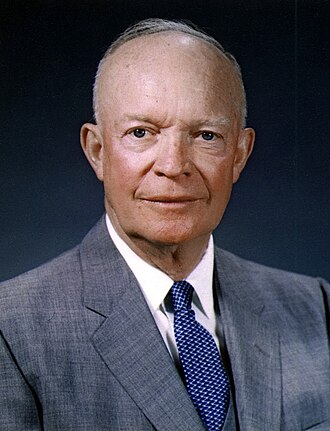
Signed by President Dwight D. Eisenhower on April 24, 1958, this order concerns Regulations Governing the Award of Life-Saving Medals Under the Medals of Honor Act. The following regulations shall govern the award of life-saving medals under the said Medals of Honor Act, as amended, and shall constitute §§ 9.1 through 9.7 of Chapter I of Title 49 of the Code of Federal Regulations: § 9.1 Applications and affidavits.

Constitutional Assessment: Reviewed under the Tenth Amendment and the principle of dual federalism, this order touches upon domains traditionally reserved to the sovereign States. The Framers would caution against any attempt to commandeer state officers or displace local police powers through federal executive fiat.

Key Directives & Operative Actions

▪

The following regulations shall govern the award of life-saving medals under the said Medals of Honor Act, as amended, and shall constitute §§ 9.1 through 9.7 of Chapter I of Title 49 of the Code of Federal Regulations: § 9.1 Applications and affidavits.

▪

Applications for medals under the Medals of Honor Act, 33 Stat. 743, as amended by the act of June 13, 1957, 71 Stat. 69 (45 U. S. C. 44 et seq.), shall be prepared in accordance with, and contain the information called for in, the form of application prescribed by the Interstate Commerce Commission consistent with these regulations, or any instructions which may be issued by the Commission with respect to the filing of an application.

▪

The affidavits should be made before an officer duly authorized to administer oaths, and should be accompanied by the certificate of a United States official of the district in which the affiants reside, such as a judge or clerk of a United States court, a district attorney, or a postmaster, to the effect that the affiants are reputable and credible persons.

▪

These regulations shall not be construed as applicable to any motor-vehicle incident with respect to which no part of the directly related events takes place on a public highway, road, or street. § 9.3 Investigation by Commission.

Constitutional & Societal Entities Impacted

🏛️ Merchants, Importers & Commercial Enterprises 🏛️ Sovereign State Governments & Localities 🏛️ Private Citizens & Property Owners
🏛️

The Framers' Constitutional Council

1787 Prism

Evaluating this order against the constitutional debates of 1787 and the limits of Article II executive power.

🏛️✅ Zone 1 (Maximum Authority)
§

"When the President acts pursuant to an express or implied authorization of Congress, his authority is at its maximum, for it includes all that he possesses in his own right plus all that Congress can delegate."

— Justice Robert H. Jackson, Youngstown Sheet & Tube Co. v. Sawyer (1952) Express or Implied Congressional Authorization
JM

James Madison

Separation of Powers & Legislative Primacy

"The constitutional magistracy was designed not to invent policy, but to be the faithful instrument of the laws passed by the people's representatives." — Speech in the First Congress (1789)

Madison would approve the structural posture of this order. The President acts strictly in subordination to statutory authority granted under Article II, Section 3 ("take Care that the Laws be faithfully executed"). The checks and balances hold firm because the policy origin remains with the legislature.

Madisonian Stance: Concurring (Statutory)
AH

Alexander Hamilton

The Energetic Executive & Unified Command

"A feeble Executive implies a feeble execution of the government; and a government ill executed, whatever it may be in theory, must be, in practice, a bad government." — Federalist No. 70 (1788)

Hamilton would view this directive as the natural and indispensable functioning of administrative leadership. Without the power to coordinate agencies, manage personnel, and resolve operational ambiguities, the modern presidency would be reduced to an impotent figurehead.

Hamiltonian Stance: Supportive of Execution
GM

George Mason

Bill of Rights, Due Process & 10th Amendment

"The powers not delegated to the United States by the Constitution, nor prohibited by it to the States, are reserved to the States respectively, or to the people." — 10th Amendment to the US Constitution (1791)

Mason would scrutinize whether this federal directive intrudes into police powers, land stewardship, or municipal domains historically reserved to local citizens. The Anti-Federalist demand is that federal administration must never supplant state self-governance.

Anti-Federalist Stance: Eternal Vigilance Required
📐

Five Measurable "Constitutional Friction" Dimensions

An objective audit measuring potential separation-of-powers tension against the United States Constitution and established Supreme Court doctrine.

🛡️ High Constitutional Concordance
30 / 100 friction index
Dimension 1 • Art. I, §1 & §8

Legislative Encroachment & Purse

Low Friction

Operates within delegated statutory execution without modifying legislative appropriations or taxing powers.

Benchmark: Power of the purse, taxes/tariffs, and rule of law reserved to Congress.
Dimension 2 • Art. II, §1 & §3

Executive Scope & Faithfulness

Low Friction

Exercises standard supervisory executive authority to faithfully execute existing statutes.

Benchmark: Faithfully execute laws enacted by Congress vs. unilateral decree.
Dimension 3 • 10th Amendment

Federalism & State Sovereignty

High Friction

Creates friction with the Tenth Amendment by conditioning state grants, mandating local compliance, or preempting state police powers.

Benchmark: Police powers and un-delegated responsibilities reserved to the States.
Dimension 4 • 5th & 14th Amendments

Due Process & Individual Rights

Low Friction

Focuses on internal governmental operations with no direct impairment of private rights or property.

Benchmark: Protection of private property, contracts, liberty, and procedural justice.
Dimension 5 • Separation of Powers

Youngstown Jacksonian Tier

Low Friction

The President operates strictly as the constitutional Chief Executive, carrying out policy established by Congress with strong statutory backing.

Benchmark: Express or Implied Congressional Authorization
⚖️ Audit Synthesis

This order operates in close harmony with statutory authority and standard Article II supervisory execution.

Weighted composite: Art. I (25%), Art. II (25%), Federalism (15%), Due Process (15%), Youngstown (20%).
ℹ️
How to read these dimensions: Executive power expands whenever an administration acts without explicit statutory authorization from Congress (Article I), touches upon police powers historically reserved to the states (Tenth Amendment), or limits private rights and property without judicial process. A low friction score indicates strict concordance with enacted law; a high friction score highlights orders testing the limits of presidential discretion.
Total Words
1,096
6,575 characters
Estimated Read Time
5 min
@ 200 words / min
Flesch-Kincaid
13.7
College Level
Language Tone Score
+0.02
Constitutional Neutral
How is this scored?
Text size:

Official Archival Text

View Source Document

By virtue of authority vested in me by the Medals of Honor Act, 33 Stat. 743, as amended by the act of June 13, 1957, 71 Stat. 69 (45 U.S.C. 44 et seq.), and as President of the United States, it is hereby ordered as follows: 1. The following regulations shall govern the award of life-saving medals under the said Medals of Honor Act, as amended, and shall constitute §§ 9.1 through 9.7 of Chapter I of Title 49 of the Code of Federal Regulations: § 9.1 Applications and affidavits. Applications for medals under the Medals of Honor Act, 33 Stat. 743, as amended by the act of June 13, 1957, 71 Stat. 69 (45 U. S. C. 44 et seq.), shall be prepared in accordance with, and contain the information called for in, the form of application prescribed by the Interstate Commerce Commission consistent with these regulations, or any instructions which may be issued by the Commission with respect to the filing of an application. Applications should be addressed to and filed with the Interstate Commerce Commission, Washington, D.C. The acts relied upon in the application must be of such a nature that the applicant would not be expected or required to perform such acts in performing the duties of his regular work or vocation. Satisfactory evidence of the facts upon which the application is based must be filed in each case. Such evidence should be in the form of affidavits made by witnesses of good repute and standing, testifying of their own knowledge. The affidavits should be made before an officer duly authorized to administer oaths, and should be accompanied by the certificate of a United States official of the district in which the affiants reside, such as a judge or clerk of a United States court, a district attorney, or a postmaster, to the effect that the affiants are reputable and credible persons. If the affidavits are taken before an officer without an official seal, his official character must be certified by the proper officer of a court of record under the seal thereof. § 9.2 Character of evidence. The expression by a witness, or witnesses, of the opinion that the person for whom an award is sought acted with extreme daring and endangered his life is not sufficient basis for an award, but the affidavits or testimony should set forth the pertinent facts in detail, and show clearly in what manner and to what extent the life of the applicant was endangered and extreme daring manifested by him The affidavits or testimony should also state the name of the city, town, or village in or near which the incident occurred, the railroad, public highway, road, or street, and the place thereon where the incident occurred, the date, time of day, and condition of the weather, the names and addresses of (1) the carrier or carriers, or person or persons, involved, (2) the police, fire, or other public officials who investigated the incident, and (3) all persons present, when practicable, and any other pertinent circumstances. These regulations shall not be construed as applicable to any motor-vehicle incident with respect to which no part of the directly related events takes place on a public highway, road, or street. § 9.3 Investigation by Commission. In addition to considering applications filed with it, the Interstate Commerce Commission may, upon its own motion, initiate proceedings for award of medals under the Medals of Honor Act and cause investigations to be made. Sworn testimony of witnesses taken before an officer or employee of the Commission designated by the Commission for the purpose of taking such testimony shall become a part of the record in the case. § 9.4 Review of evidence; recommendations. Applications for medals, together with all affidavits, testimony, and other evidence received in connection therewith, and the records developed in connection with investigations initiated by the Commission, shall be referred to a committee of three persons, consisting of the Secretary of the Commission and two Commission staff officials designated by the Chairman of the Commission. One of such staff officials shall be directly concerned with railroad safety, and the other with motor-carrier safety. The committee shall carefully consider each application or record, and after thoroughly weighing the evidence shall prepare an abstract or brief covering the case, and file it, together with the committee's recommendation, with the Commission for consideration. After due consideration, the Commission shall transmit its recommendation, together with a statement of the facts in the case, to the Secretary of Commerce, acting for the President, for his consideration. The Commission, or the committee with the approval of the Commission, may direct any inspector in the employ of the Commission to proceed to the locality where the act or acts in question were performed and to make a personal investigation of the matter, and to make a report upon the facts of the case. Such report shall be filed and shall be made a part of the evidence to be considered. In any case in which the Commission recommends that an award be made posthumously, its recommendation shall designate the relative or other person to whom the medal should be presented. § 9.5 Recommendation effective as directed by the Secretary of Commerce, acting for the President. Upon approval of the recommendation in any case by the Secretary of Commerce, acting for the President, the award of the medal shall be made by the Chairman of the Interstate Commerce Commission in the name and on behalf of the President. § 9.6 Preparation of designs; approval by the Secretary of Commerce, acting for the President. The Commission shall cause designs to be prepared for the medal, rosette, and ribbon provided for by the act, and such designs shall be submitted to, and become effective when approved by, the Secretary of Commerce, acting for the President. § 9.7 Time limits for filing. No application for a medal shall be considered unless it is filed within two years from the date of the occurrence of the incident upon which it is based: Provided, that no application based solely upon an incident involving a motor vehicle shall be considered in any event if the incident occurred prior to June 13, 1957. 2. This order shall become effective upon publication thereof in the FEDERAL REGISTER, and shall thereupon supersede the regulations which were approved by the President on June 21, 1926, and which now constitute §§ 9.1 through 9.6 of Chapter I of Title 49 of the Code of Federal Regulations. DWIGHT D. EISENHOWER

THE WHITE HOUSE, #signature

April 24, 1958.

🔗

Referenced By Later Executive Orders (1)

Subsequent presidents who cited, amended, continued, or revoked this directive in later orders.

📜

Scholarly & Legal Citations

Exec. Order No. 10,765 (Apr. 24, 1958), https://executiveordersarchive.org/orders/app-executive-order-10765-regulations-governing-the-award-life-saving-medals-under-the-medals.