★
Executive Orders Historical Archive
Cite
Executive Order 10804 ⚖️✨ Zone 2: Zone of Twilight Constitutional Neutral (+0.02) 📜 Art. II §3: Administrative Management & Civil Service

Executive Order 10804—Delegating to the Civil Service Commission the Authority of the President To Prescribe Regulations Under the Federal Employees International Organization Service Act

•
Thursday, February 12, 1959
•
1 min read (224 words)

Executive Brief • At a Glance

⏱️ 1 min read (224 words) • ● In Effect
🎯 Primary Mandate

There is hereby delegated to the United States Civil Service Commission the authority vested in the President by section 5 of the Federal Employees International Organization Service Act (72 Stat. 961).

⚖️ Constitutional Footing
⚖️✨ Zone 2: Zone of Twilight
Concurrent Authority / Congressional Silence
📜 Art. II §3: Administrative Management & Civil Service
🏛️ Scope & Affected Sectors
Executive Departments & Federal Civil Servants

Plain-English Translation & Framers' Constitutional Analysis

Early Statesman synthesis distilling legal jargon into practical meaning, statutory anchors, and structural constitutional impacts.

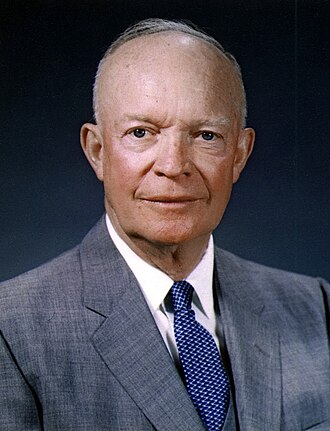
Signed by President Dwight D. Eisenhower on February 12, 1959, this order concerns Delegating to the Civil Service Commission the Authority of the President To Prescribe Regulations Under the Federal Employees International Organization Service Act. There is hereby delegated to the United States Civil Service Commission the authority vested in the President by section 5 of the Federal Employees International Organization Service Act (72 Stat. 961). SEC. 2.

Constitutional Assessment: This action represents an orderly exercise of Article II administrative discretion, managing the internal machinery and personnel of the executive branch without abridging the ancient liberties of the people.

Key Directives & Operative Actions

▪

There is hereby delegated to the United States Civil Service Commission the authority vested in the President by section 5 of the Federal Employees International Organization Service Act (72 Stat. 961).

▪

Executive Order No. 9721 ' of May 10, 1946; Executive Order No. 10103 of February 1, 1950; and Executive Order No. 10774 of July 25, 1958, insofar as it affects any employee covered by section 6 (a) of the International Atomic Energy Agency Participation Act of 1957 prior to the repeal of that section by the Federal Employees International Organization Service Act, are revoked except that each shall be considered to remain in effect with respect to any employee subject thereto serving with an international organization on the date of enactment of the Federal Employees International Organization Service Act who does not elect to have coverage under the latter Act pursuant to the provisions of section 6 of that Act, and for the purposes of…

Constitutional & Societal Entities Impacted

🏛️ Executive Departments & Federal Civil Servants
🏛️

The Framers' Constitutional Council

1787 Prism

Evaluating this order against the constitutional debates of 1787 and the limits of Article II executive power.

⚖️✨ Zone 2 (Zone of Twilight)
§

"When the President acts in absence of either a congressional grant or denial of authority, he can only rely upon his own independent powers, but there is a zone of twilight in which he and Congress may have concurrent authority."

— Justice Robert H. Jackson, Youngstown Sheet & Tube Co. v. Sawyer (1952) Concurrent Authority / Congressional Silence
JM

James Madison

Separation of Powers & Legislative Primacy

"Power is of an encroaching nature, and it ought to be effectually restrained from passing the limits assigned to it." — Federalist No. 48 (1788)

Madison would view this order with watchful scrutiny. Operating in the 'Zone of Twilight' where Congress is silent, each such directive establishes an administrative precedent that steadily expands the executive perimeter at the expense of legislative primacy.

Madisonian Stance: Vigilant / Cautionary
AH

Alexander Hamilton

The Energetic Executive & Unified Command

"A feeble Executive implies a feeble execution of the government; and a government ill executed, whatever it may be in theory, must be, in practice, a bad government." — Federalist No. 70 (1788)

Hamilton would view this directive as the natural and indispensable functioning of administrative leadership. Without the power to coordinate agencies, manage personnel, and resolve operational ambiguities, the modern presidency would be reduced to an impotent figurehead.

Hamiltonian Stance: Defends Vigor & Dispatch
GM

George Mason

Bill of Rights, Due Process & 10th Amendment

"The president will be surrounded by flatterers and sycophants... and the great powers of the executive will gradually absorb the liberties of the people." — Cato IV (Anti-Federalist, 1787)

The Anti-Federalist prism advises continuous democratic vigilance. Even routine administrative directives aggregate centralized federal power away from town halls and state assemblies toward a distant executive apparatus.

Anti-Federalist Stance: Eternal Vigilance Required
📐

Five Measurable "Constitutional Friction" Dimensions

An objective audit measuring potential separation-of-powers tension against the United States Constitution and established Supreme Court doctrine.

⚖️ Discretionary Twilight Zone
35 / 100 friction index
Dimension 1 • Art. I, §1 & §8

Legislative Encroachment & Purse

Low Friction

Operates within delegated statutory execution without modifying legislative appropriations or taxing powers.

Benchmark: Power of the purse, taxes/tariffs, and rule of law reserved to Congress.
Dimension 2 • Art. II, §1 & §3

Executive Scope & Faithfulness

Moderate Friction

Directs internal executive branch machinery, agency workflows, and federal personnel.

Benchmark: Faithfully execute laws enacted by Congress vs. unilateral decree.
Dimension 3 • 10th Amendment

Federalism & State Sovereignty

Moderate Friction

Engages state and local partners in cooperative federalism programs.

Benchmark: Police powers and un-delegated responsibilities reserved to the States.
Dimension 4 • 5th & 14th Amendments

Due Process & Individual Rights

Low Friction

Focuses on internal governmental operations with no direct impairment of private rights or property.

Benchmark: Protection of private property, contracts, liberty, and procedural justice.
Dimension 5 • Separation of Powers

Youngstown Jacksonian Tier

Moderate Friction

The order relies on inherent Article II executive discretion, civil service management, or foreign diplomacy where Congress has neither expressly approved nor prohibited action.

Benchmark: Concurrent Authority / Congressional Silence
⚖️ Audit Synthesis

This order operates within Justice Jackson’s Zone of Twilight, resting upon concurrent presidential authority or congressional silence.

Weighted composite: Art. I (25%), Art. II (25%), Federalism (15%), Due Process (15%), Youngstown (20%).
ℹ️
How to read these dimensions: Executive power expands whenever an administration acts without explicit statutory authorization from Congress (Article I), touches upon police powers historically reserved to the states (Tenth Amendment), or limits private rights and property without judicial process. A low friction score indicates strict concordance with enacted law; a high friction score highlights orders testing the limits of presidential discretion.
Total Words
224
1,337 characters
Estimated Read Time
1 min
@ 200 words / min
Flesch-Kincaid
17.9
Post-Graduate Legal
Language Tone Score
+0.02
Constitutional Neutral
How is this scored?
Text size:

Official Archival Text

View Source Document

By virtue of the authority vested in me by section 301 of title 3 of the United States Code, and as President of the United States, it is ordered as follows: SECTION 1. There is hereby delegated to the United States Civil Service Commission the authority vested in the President by section 5 of the Federal Employees International Organization Service Act (72 Stat. 961). SEC. 2. Executive Order No. 9721 ' of May 10, 1946; Executive Order No. 10103 of February 1, 1950; and Executive Order No. 10774 of July 25, 1958, insofar as it affects any employee covered by section 6 (a) of the International Atomic Energy Agency Participation Act of 1957 prior to the repeal of that section by the Federal Employees International Organization Service Act, are revoked except that each shall be considered to remain in effect with respect to any employee subject thereto serving with an international organization on the date of enactment of the Federal Employees International Organization Service Act who does not elect to have coverage under the latter Act pursuant to the provisions of section 6 of that Act, and for the purposes of any rights and benefits vested under each such order prior to the date of the enactment of the Federal Employees International Organization Service Act. DWIGHT D. EISENHOWER

THE WHITE HOUSE, #signature

February 12, 1959.
🔗

Referenced By Later Executive Orders (1)

Subsequent presidents who cited, amended, continued, or revoked this directive in later orders.

📜

Scholarly & Legal Citations

Exec. Order No. 10,804 (Feb. 12, 1959), https://executiveordersarchive.org/orders/app-executive-order-10804-delegating-the-civil-service-commission-the-authority-the-president.