★
Executive Orders Historical Archive
Cite
Executive Order 10936 ⚖️✨ Zone 2: Zone of Twilight Constitutional Neutral (+0.02) 📜 Art. II §2: Commander-in-Chief Supervisory Authority

Executive Order 10936—Reports of Identical Bids

•
Monday, April 24, 1961
•
8 min read (1,520 words)

Executive Brief • At a Glance

⏱️ 8 min read (1,520 words) • ● In Effect
🎯 Primary Mandate

Whenever, in connection with a procurement of property or services exceeding $10,000 in total amount and made pursuant to an advertisement or other public invitation for bids, a department, agency or instrumentality of the Government shall hereafter receive two or more bids (a) which are identical as to unit price or total amount, or (b) which, after giving effect to discounts and all other relevant factors, the department, agency or instrumentality shall consider to be identical as to unit price or total amount, then such department, agency, or instrumentality shall make a report of the bid proceedings to the Attorney General not later than 20 days following the award.

⚖️ Constitutional Footing
⚖️✨ Zone 2: Zone of Twilight
Concurrent Authority / Congressional Silence
📜 Art. II §2: Commander-in-Chief Supervisory Authority
🏛️ Scope & Affected Sectors
Armed Forces & Military Establishments Merchants, Importers & Commercial Enterprises Sovereign State Governments & Localities Executive Departments & Federal Civil Servants

Plain-English Translation & Framers' Constitutional Analysis

Early Statesman synthesis distilling legal jargon into practical meaning, statutory anchors, and structural constitutional impacts.

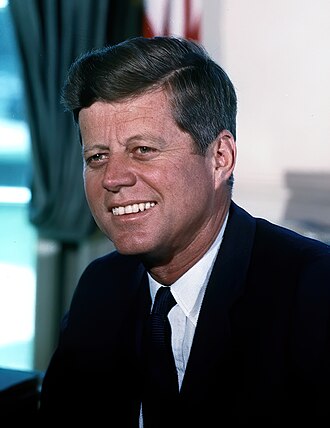
Signed by President John F. Kennedy on April 24, 1961, this order concerns Reports of Identical Bids. Whenever, in connection with a procurement of property or services exceeding $10,000 in total amount and made pursuant to an advertisement or other public invitation for bids, a department, agency or instrumentality of the Government shall hereafter receive two or more bids (a) which are identical as to unit price or total amount, or (b) which, after giving effect to discounts and all other relevant factors, the…

Constitutional Assessment: Scrutinized through Article II, Section 2, this action exercises the President's constitutional role as Commander in Chief. Early Framers recognized broad executive discretion in commanding military forces during conflict, provided it remains bounded by congressional declarations and respects civilian domestic courts.

Key Directives & Operative Actions

▪

Whenever, in connection with a procurement of property or services exceeding $10,000 in total amount and made pursuant to an advertisement or other public invitation for bids, a department, agency or instrumentality of the Government shall hereafter receive two or more bids (a) which are identical as to unit price or total amount, or (b) which, after giving effect to discounts and all other relevant factors, the department, agency or instrumentality shall consider to be identical as to unit price or total amount, then such department, agency, or instrumentality shall make a report of the bid proceedings to the Attorney General not later than 20 days following the award.

▪

Whenever two or more bids of the nature described in clauses (a) and (b) hereof are received in bid proceedings which result for any reason in the rejection of all bids and the total value of the property or services bid upon is estimated by the department, agency or instrumentality to be in excess of $10,000 it shall make a report of such proceedings to the Attorney General not later than 20 days following the rejection.

▪

Notwithstanding the preceding provisions of this section, a report shall not be made of bid proceedings in which only foreign sources have participated and in connection with which delivery and performance is to take place outside the United States. 2.

▪

The reports required by section 1 shall be in a form prescribed by the Attorney General and shall include the following information or such other information as he may prescribe: (a) The name and location of the particular component of the department agency or instrumentality which advertised for the bids; (b) the amount and a description of the Property or services for which bids were solicited, and the proposed date of delivery or performance; (c) the date of opening of the bids; and (d) the names and addresses of all bidders and as to the bid of each: (1) the unit price and terms of discount, if any, together with a notation of the point of origin specified by the bidder and a statement whether freight and any other costs of…

Constitutional & Societal Entities Impacted

🏛️ Armed Forces & Military Establishments 🏛️ Merchants, Importers & Commercial Enterprises 🏛️ Sovereign State Governments & Localities 🏛️ Executive Departments & Federal Civil Servants 🏛️ Private Citizens & Property Owners
🏛️

The Framers' Constitutional Council

1787 Prism

Evaluating this order against the constitutional debates of 1787 and the limits of Article II executive power.

⚖️✨ Zone 2 (Zone of Twilight)
§

"When the President acts in absence of either a congressional grant or denial of authority, he can only rely upon his own independent powers, but there is a zone of twilight in which he and Congress may have concurrent authority."

— Justice Robert H. Jackson, Youngstown Sheet & Tube Co. v. Sawyer (1952) Concurrent Authority / Congressional Silence
JM

James Madison

Separation of Powers & Legislative Primacy

"Power is of an encroaching nature, and it ought to be effectually restrained from passing the limits assigned to it." — Federalist No. 48 (1788)

Madison would view this order with watchful scrutiny. Operating in the 'Zone of Twilight' where Congress is silent, each such directive establishes an administrative precedent that steadily expands the executive perimeter at the expense of legislative primacy.

Madisonian Stance: Vigilant / Cautionary
AH

Alexander Hamilton

The Energetic Executive & Unified Command

"The direction of war implies the direction of the common strength; and the power of directing and employing the common strength must be under the direction of the single hand of the Executive." — Federalist No. 74 (1788)

Hamilton would forcefully champion executive discretion here. For foreign entanglements, commerce defense, and national security, deliberative assemblies are too slow and faction-ridden. A unified, energetic Executive exercising swift command is precisely what the Philadelphia Convention intended for national preservation.

Hamiltonian Stance: Strong Prerogative Support
GM

George Mason

Bill of Rights, Due Process & 10th Amendment

"The president will be surrounded by flatterers and sycophants... and the great powers of the executive will gradually absorb the liberties of the people." — Cato IV (Anti-Federalist, 1787)

The Anti-Federalist prism advises continuous democratic vigilance. Even routine administrative directives aggregate centralized federal power away from town halls and state assemblies toward a distant executive apparatus.

Anti-Federalist Stance: Eternal Vigilance Required
📐

Five Measurable "Constitutional Friction" Dimensions

An objective audit measuring potential separation-of-powers tension against the United States Constitution and established Supreme Court doctrine.

⚖️ Discretionary Twilight Zone
47 / 100 friction index
Dimension 1 • Art. I, §1 & §8

Legislative Encroachment & Purse

Moderate Friction

Administers commerce or fiscal programs requiring ongoing statutory delegation and legislative oversight.

Benchmark: Power of the purse, taxes/tariffs, and rule of law reserved to Congress.
Dimension 2 • Art. II, §1 & §3

Executive Scope & Faithfulness

Moderate Friction

Directs internal executive branch machinery, agency workflows, and federal personnel.

Benchmark: Faithfully execute laws enacted by Congress vs. unilateral decree.
Dimension 3 • 10th Amendment

Federalism & State Sovereignty

Moderate Friction

Engages state and local partners in cooperative federalism programs.

Benchmark: Police powers and un-delegated responsibilities reserved to the States.
Dimension 4 • 5th & 14th Amendments

Due Process & Individual Rights

Moderate Friction

Applies regulatory or compliance standards to private contractors or commercial entities.

Benchmark: Protection of private property, contracts, liberty, and procedural justice.
Dimension 5 • Separation of Powers

Youngstown Jacksonian Tier

Moderate Friction

The order relies on inherent Article II executive discretion, civil service management, or foreign diplomacy where Congress has neither expressly approved nor prohibited action.

Benchmark: Concurrent Authority / Congressional Silence
⚖️ Audit Synthesis

This order operates within Justice Jackson’s Zone of Twilight, resting upon concurrent presidential authority or congressional silence.

Weighted composite: Art. I (25%), Art. II (25%), Federalism (15%), Due Process (15%), Youngstown (20%).
ℹ️
How to read these dimensions: Executive power expands whenever an administration acts without explicit statutory authorization from Congress (Article I), touches upon police powers historically reserved to the states (Tenth Amendment), or limits private rights and property without judicial process. A low friction score indicates strict concordance with enacted law; a high friction score highlights orders testing the limits of presidential discretion.
Total Words
1,520
9,322 characters
Estimated Read Time
8 min
@ 200 words / min
Flesch-Kincaid
26.2
Post-Graduate Legal
Language Tone Score
+0.02
Constitutional Neutral
How is this scored?
Text size:

Official Archival Text

View Source Document

WHEREAS it is in the interest of the United States to obtain truly competitive bids in connection with its procurement, and sale of property and services pursuant to public invitations for bids and, the prevalence of identical bidding is harmful to the effective functioning of a system of competitive bids; WHEREAS identical bidding may constitute evidence of the existence of conspiracies to monopolize or restrain trade or commerce; and WHEREAS the collection and dissemination of information with regard to identical bids submitted to the Federal Government will discourage future submissions of such bids, aid in the enforcement of the antitrust laws and the maintenance of a competitive economy and serve to reduce the costs of the Government,

NOW, THEREFORE, #now-therefore

by virtue of the authority vested in me by the Constitution and statutes, and as President of the United States, I hereby order and direct: 1. Whenever, in connection with a procurement of property or services exceeding $10,000 in total amount and made pursuant to an advertisement or other public invitation for bids, a department, agency or instrumentality of the Government shall hereafter receive two or more bids (a) which are identical as to unit price or total amount, or (b) which, after giving effect to discounts and all other relevant factors, the department, agency or instrumentality shall consider to be identical as to unit price or total amount, then such department, agency, or instrumentality shall make a report of the bid proceedings to the Attorney General not later than 20 days following the award. Whenever two or more bids of the nature described in clauses (a) and (b) hereof are received in bid proceedings which result for any reason in the rejection of all bids and the total value of the property or services bid upon is estimated by the department, agency or instrumentality to be in excess of $10,000 it shall make a report of such proceedings to the Attorney General not later than 20 days following the rejection. Notwithstanding the preceding provisions of this section, a report shall not be made of bid proceedings in which only foreign sources have participated and in connection with which delivery and performance is to take place outside the United States. 2. The reports required by section 1 shall be in a form prescribed by the Attorney General and shall include the following information or such other information as he may prescribe: (a) The name and location of the particular component of the department agency or instrumentality which advertised for the bids; (b) the amount and a description of the Property or services for which bids were solicited, and the proposed date of delivery or performance; (c) the date of opening of the bids; and (d) the names and addresses of all bidders and as to the bid of each: (1) the unit price and terms of discount, if any, together with a notation of the point of origin specified by the bidder and a statement whether freight and any other costs of transportation to the point of delivery are included or excluded, and (2) in the case of an accepted bid identical, or considered to be identical, as to unit price or total amount with another, the method by which selected. 3. Whenever, in connection with a sale of property for more than $10,000 in total amount pursuant to an advertisement or other public invitation for bids, a department, agency or instrumentality of the Government shall receive two or more bids (a) which are identical as to unit price or total amount, or (b) which, after giving effect to all relevant factors, the department, agency or instrumentality shall consider to be identical as to unit price or total amount, then such department, agency or instrumentality shall make a report of the bid proceedings to the Attorney General not later than 20 days following the award to the purchaser. Whenever two or more bids of the nature described in clauses (a) and (b) hereof are received in bid proceedings which result for any reason in the rejection of all bids and the total sales value of the offered property is estimated by the department, agency or instrumentality to be in excess of $10,000, it shall make a report of such proceedings to the Attorney General not later than 20 days following the rejection. The reports required by this section shall be in a form prescribed by the Attorney General and shall include information similar to that prescribed by section 2. Notwithstanding the preceding provisions of this section, a report shall not be made of bid proceedings in which only foreign sources have participated and in connection with which delivery and performance is to take place outside the United States. 4. The Attorney General is granted authority to establish reasonable exemptions and variations from the requirements of section 1 or of section 3 from time to time based upon his experience in connection with this order, including authority to take the following actions: (a) exclude any category of property or services from the reporting requirements of section 1 or of section 3, and (b) increase or decrease the $10,000 limit prescribed in section 1 or in section 3. 5. The Attorney General shall consult with the Secretary of Defense, the Administrator of General Services and the heads of such other departments, agencies and instrumentalities of the Government as he may deem advisable for the purpose of obtaining information in a feasible manner with regard to identical bidding in publicly advertised procurement and sale proceedings completed by these departments, agencies and instrumentalities during periods prior to the date of execution of this order. The Secretary of Defense, the Administrator of General Services and the other heads of departments, agencies or instrumentalities consulted by the Attorney General shall cause the submission of reports to him in respect of such categories of these proceedings and for such periods as may be agreed upon. The reports shall conform to the requirements of section 2. 6. The Attorney General shall formulate and put into effect procedures whereby State and local governments are invited to transmit reports to him of identical bids received by such governments similar to the reports required by sections 1, 3 and 5. 7. From time to time, as he shall find suitable, the Attorney General shall make a report to the President consolidating the information he has received pursuant to this order, and he shall transmit copies thereof to the President of the Senate and the Speaker of the House of Representatives. However, there shall be excluded from such report any information submitted by a department, agency or instrumentality of the Government which it has requested to be withheld for reasons of national security. 8. The principal purpose of this order is to make more effective the enforcement of the antitrust laws by insuring that the Attorney General has at his disposal all information which may tend to establish the presence of a conspiracy in restraint of trade and which may warrant further investigation with a view to preferring civil or criminal charges. In exercising the discretionary authority granted under the provisions of this order, the Attorney General shall be mindful of this purpose and shall exercise such authority in a manner which insures that programs of reporting and analysis hereunder shall not by their magnitude interfere with his enforcement of those laws but instead shall contribute thereto. The heads of the departments, agencies and instrumentalities of the Government shall cooperate with and aid the Attorney General in analyzing the data reported to him and shall make available to him to the fullest extent possible any facilities they may have which would expedite that work. In particular, they should bring to his attention any further information which, in their judgment, may constitute additional evidence of collusion among Government contractors. 9. The heads of the departments, agencies and instrumentalities of the Government are directed to give particular attention to compliance with the provisions of 41 U.S.C. § 252(d) and 10 U.S.C. § 2305(d) requiring referral to the Attorney General of bids received in an advertised procurement proceeding which appear to them to evidence a violation of the antitrust laws. It is to be noted that the bids which must be referred to the Attorney General under those statutes as evidencing collusion include, although they are not limited to, identical bids. Nothing in this order shall be construed to mean that a report submitted hereunder to the Attorney General in connection with identical bids evidencing collusion in a procurement proceeding shall constitute a referral satisfying the requirements of those statutes or of the regulations issued pursuant thereto. Similarly, nothing in this order shall be construed to mean that a report submitted hereunder in connection with identical bids evidencing collusion in a sale proceeding shall satisfy the requirements of 40 U.S.C. § 488 in certain cases, or of the regulations issued pursuant to that statute, that specified information be supplied to the Attorney General for his use in considering the applicability of the antitrust laws to the sale. JOHN F. KENNEDY

THE WHITE HOUSE, #signature

April 24, 1961

🔗

Referenced By Later Executive Orders (1)

Subsequent presidents who cited, amended, continued, or revoked this directive in later orders.

Ronald Reagan • 1983-07-06
📜

Scholarly & Legal Citations

Exec. Order No. 10,936 (Apr. 24, 1961), https://executiveordersarchive.org/orders/app-executive-order-10936-reports-identical-bids.