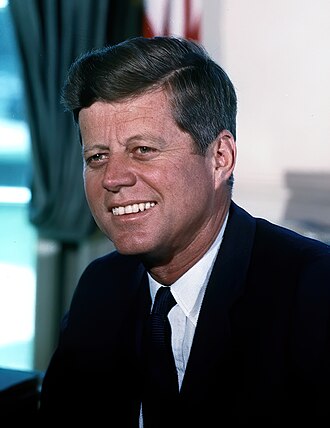
By virtue of the authority vested in me as President of the United States, including authority vested in me by Reorganization Plan No. 1 of 1958 (72 Stat. 1799), it is hereby ordered as follows: SECTION 1. Scope. The Administrator of General Services (hereinafter referred to as the Administrator) shall prepare national emergency plans and develop preparedness programs designed to permit modification or expansion of the activities of the General Services Administration under the Federal Property and Administrative Services Act of 1949, as amended, and other statutes prescribing the duties and responsibilities of the Administrator. These plans and programs shall include, but not be limited to: (1) operation, maintenance, and protection of Federal buildings and their sites; construction, alteration, and repair of public buildings; and acquisition, utilization, and disposal of real and personal properties; (2) public utilities service management for Federal agencies; (3) telecommunications to meet the essential administrative requirements of civilian activities of executive departments and agencies; (4) transportation management to meet the traffic service requirements of civilian activities of Federal agencies; (5) records management; (6) emergency Federal Register; (7) government-wide supply support; (8) service to survival item stockpiles; (9) national industrial reserve; (10) guidance and consultation to government agencies regarding facilities protection measures; (11) administration of assigned functions under the Defense Production Act; and (12) administration and operation of the stockpile of strategic and critical materials. These plans and programs shall be designed to develop a state of readiness in these areas with respect to all conditions of national emergency, including attack upon the United States. SEC. 2. Functions. The Administrator shall: (a) Public buildings. Develop emergency plans and procedures for the operation, maintenance, and protection of both existing and new Federally-owned and Federally-occupied buildings, and construction, alteration, and repair of public buildings. Develop emergency operating procedures for the control, acquisition, assignment, and priority of occupancy of real property by the Federal Government and by State and local governments to the extent they may be performing functions as agents of the Federal Government. (b) Public utility service management. Develop emergency operational plans and procedures for the claimancy, procurement, and use of public utility services for emergency activities of executive agencies of the government. (c) Communications. Plan for and provide, operate, and maintain appropriate telecommunications facilities designed to meet the essential administrative requirements of Federal civilian departments and agencies during an emergency. Plans and programs of the Administrator shall be in consonance with national telecommunication policies, plans, and programs developed pursuant to Executive Order No. 10705, Executive Order No. 10995, Executive Order No. 11051, or other appropriate authority. (d) Transportation. Develop plans and procedures for providing: (1) general transportation and traffic management services to civilian activities of Federal agencies in connection with movement of property and supplies, including the claimancy, contracting, routing, and accounting for government shipments by commercial transportation in time of emergency; and (2) motor vehicle service to meet the administrative needs of Federal agencies, including dispatch and scheduled government motor service at and between headquarters, field offices, relocation sites, and other installations of the Federal and State Governments. (e) Records. Provide instructions and advice on appraisal, selection, preservation, arrangement, references, reproduction, storage, and salvage of essential records needed for the operation of the Federal Government after attack, on an emergency basis including a decentralized system. (f) Federal Register. Develop emergency procedures for providing and making available, on a decentralized basis, a Federal Register of Presidential Proclamations and Executive Orders, Federal administrative regulations, Federal emergency notices and actions, and appropriate Acts of Congress during a civil defense emergency. (g) Government-wide procurement and supply. Prepare plans and procedures for the coordination and/or operation of government-wide supply programs to meet the requirements of Federal agencies under emergency conditions, including the development of policies, methods, and procedures for emergency procurement and for emergency requisitioning of private property when authorized by law and competent authority; identification of essential civil agency supply items under the Federal catalog system; development of emergency Federal specifications and standards; determination of sources of supply; procurement of personal property and non-personal services; furnishing appropriate inspection and contract administration services; and establishment, coordination and/or operation of emergency storage and distribution facilities. (h) Claimancy. Prepare plans to claim materials, manpower, equipment, supplies, and services needed in support of assigned responsibilities and other essential functions of the General Services Administration before the appropriate agencies, and work with such agencies in developing programs to insure availability of such resources in an emergency. (i) Survival item stockpiles. Assist the Department of Health, Education, and Welfare, insofar as civil defense medical stockpile items under its jurisdiction are concerned, and the Department of Defense, insofar as survival items under its jurisdiction are concerned, in formulating plans and programs for service activity support relating to stockpiling of such supplies and equipment. The Administrator shall arrange for the procurement, storage, maintenance, inspection, survey, withdrawal, and disposal of supplies and equipment in accordance with the provisions of interagency agreements with the departments concerned. (j) National industrial reserve and machine tool program. Develop plans for the custody of the industrial plants and production equipment in the national industrial reserve and assist the Department of Defense, in collaboration with the Department of Commerce, in the development of plans and procedures for the disposition, emergency reactivation, and utilization of the plants and equipment of this reserve in the custody of the Administrator. Assist the Department of Commerce in developing plans and programs for providing for emergency requirements and production of machine tools and other industrial equipment. (k) Excess and surplus real and personal property. Develop plans and emergency operating procedures for the utilization of excess and surplus real and personal property by Federal Government agencies with emergency assignments or by State and local governmental units as directed, including review of the property holdings of Federal agencies which do not possess emergency functions to determine the availability of property for emergency use, and including the disposal of real and personal property and the rehabilitation of personal property. SEC. 3. Cooperation with Department of Defense. In consonance with national civil defense plans, programs, and operations of the Department of Defense under Executive Order No. 10952, the Administrator shall: (a) Facilities protection and building and warden service. In accordance with guidance from the Department of Defense, promote, with respect to Federal buildings and installations, a government-wide program (1) to stimulate protection, preparedness, and control in emergencies in order to minimize the effects of overt or covert attack, including dispersal of facilities; and (2) to establish warden organizations, including safety and service personnel, warden service, first aid, police, and evacuation service. (b) Damage assessment. Maintain a capability to assess the effects of attack on Federal buildings, facilities, and resources, both at the national and field levels, and to provide data to the Department of Defense. SEC. 4. Defense Production. The Administrator shall assist the Office of Emergency Planning in the formulation of plans and programs relating to the certification of procurement programs, subsidy payments, and plant improvement programs provided for by the Defense Production Act of 1950, as amended. SEC. 5. Strategic and Critical Materials Stockpiles. The Administrator shall assist the Office of Emergency Planning, in formulating plans, programs, and reports relating to the stockpiling of strategic and critical materials. Within these plans and programs, the Administrator shall provide for the procurement (for this purpose, procurement includes upgrading, rotation, and beneficiation), storage, security, maintenance, inspection, withdrawal, and disposal of materials, supplies, and equipment. SEC. 6. Research. Within the framework of Federal research objectives, the Administrator shall conduct or supervise research in areas directly concerned with carrying out emergency preparedness responsibilities, designate representatives for necessary ad hoc or task force groups, and provide advice and assistance to other agencies in planning for research in areas involving the Administrator's interest. SEC. 7. Functional Guidance. The Administrator, in carrying out the functions assigned in this order, shall be guided by the following: (a) Interagency cooperation. The Administrator shall assume the initiative in developing joint plans for the coordination of emergency preparedness functions outlined above in consultation with those departments and agencies which have responsibilities for any segment of such activities. He shall utilize to the maximum those capabilities of other agencies qualified to perform or assist in the performance of assigned functions by contractual or other agreements. (b) Presidential coordination. The Director of the Office of Emergency Planning shall advise and assist the President in determining policy for the performance of functions under this order and in coordinating the performance of such functions with the total national preparedness program. (c) Emergency planning. Emergency plans and programs, and emergency organization structure required thereby, shall be developed as an integral part of the continuing activities of the Administrator on the basis that he will have the responsibility for carrying out such programs during an emergency. The Administrator shall be prepared to implement all appropriate plans developed under this order. Modifications and temporary organizational changes, based on emergency conditions, will be in accordance with policy determinations by the President. SEC. 8. Resources Evaluation. The Administrator shall provide appropriate participation in the national resources evaluation program administered by the Office of Emergency Planning. SEC. 9. Emergency Actions. Nothing in this order shall be construed as conferring authority under Title III of the Federal Civil Defense Act of 1950, as amended, or otherwise, to put into effect any emergency plan, procedure, policy, program, or course of action prepared or developed pursuant to this order. Such authority is reserved to the President. SEC 10. Redelegation. The Administrator is hereby authorized to redelegate within the General Services Administration the functions hereinabove assigned to him. SEC. 11. Prior Actions. To the extent of any inconsistency between the provisions of any prior order and the provisions of this order, the latter shall control. JOHN F. KENNEDY
THE WHITE HOUSE, #signature
February 26, 1963