By virtue of the authority vested in me as President of the United States, it is ordered as follows: SECTION 1. Establishment of Committee. (a) There is hereby established the President's Committee on Food and Fiber (hereinafter referred to as the "Committee"). (b) The Committee shall be composed of the Secretary of Agriculture, who shall be the Chairman of the Committee; the Secretary of State; the Secretary of Commerce; and the Secretary of Labor. Each member of the Committee may designate an alternate member, who shall serve as a member of the Committee whenever the regular member is unable to attend any meeting of the Committee. SEC. 2. Duties of the Committee. (a) The Committee shall: (1) Appraise existing and alternative agricultural policies and foreign trade policies related thereto in terms of the national interest, the welfare of farmers, workers, consumers, rural Americans, and the general public; their effects on the performance of the economy and on foreign relations; and their implications for the optimum allocation of Federal resources among national objectives; and (2) Develop such recommendations for action by Government or by private enterprise as it deems most appropriate to advance the general public interest. (b) Such recommendations shall take into account the final report of the National Advisory Commission on Food and Fiber established by section 3 of this order, which report shall be transmitted to the President with the recommendations of the Committee. SEC. 3. Establishment of Commission. (a) To assist the Committee in carrying out its functions under section 2 of this order, there is hereby established the National Advisory Commission on Food and Fiber (hereinafter referred to as the "Commission"). (b) The Commission shall be composed of members appointed by the President. The President shall designate the Chairman of the Commission from among its members. (c) The Commission shall meet on call of the Chairman. (d) Each member of the Commission may be compensated for each day such member is engaged upon the work of the Commission, and shall be reimbursed for travel expenses, including per diem in lieu of subsistence, as authorized by law (5 U.S.C. 55a; 5 U.S.C. 73b-2) for persons in the Government service employed intermittently. (e) The Commission shall have an Executive Director, who shall be designated by the President. Under the direction and supervision of the Chairman, the Executive Director shall direct and supervise staff assigned to assist the Commission in carrying out its responsibilities under this order. SEC. 4. Duties of the Commission. (a) The Commission shall transmit to the Committee its independent analysis, evaluation, and recommendations with respect to all matters assigned to the Committee for study and recommendations. (b) In carrying out its duties under subsection (a) above, the Commission shall: (1) Make a comprehensive study and appraisal of the current economic situation and trends in American farming, including productivity, costs, prices, incomes, farm employment, labor standards, foreign trade, and related matters. (2) Evaluate existing and alternative agriculture policies and foreign trade policies related thereto in terms of the national interest, the welfare of farmers, workers, consumers, rural Americans, and the general public; their effects on the performance of the economy and on foreign relations; and their implications for the optimum allocation of Federal resources among national objectives; and (3) Develop such recommendations for action by Government or private enterprise as it deems appropriate to advance the general public interest. (c) The Commission shall submit its final report and recommendations to the Committee no later than 18 months after the date of its first meeting and may make any interim reports which it deems would expedite the work of the Committee. SEC. 5. Federal departments and agencies. (a) The Committee or the Commission is authorized to request from any Federal department, agency or independent instrumentality of the Government any information deemed necessary to carry out its functions under this order; and each department, agency, or instrumentality is authorized, to the extent permitted by law and within the limits of available funds, to furnish such information to the Committee or the Commission. (b) Each department the head of which is named in section 1 (b) of this order shall, as may be necessary, furnish assistance to the Committee or the Commission in accordance with the provisions of section 214 of the act of May 3, 1945 (59 Stat. 134; 31 U.S.C. 691), or as otherwise permitted by law. (c) The General Services Administration is hereby designated as the agency which shall, on a reimbursable basis, provide administrative services for the Commission. SEC. 6. Termination of the Committee and the Commission. The Committee and the Commission shall terminate ninety days after the submission of the final report of the Commission. SEC. 7. Revocation of Orders. Executive Order 10472 of July 20, 1953, and Executive Order 10937 of May 3, 1961, are hereby revoked.
Executive Order 11256 🏛️✅ Zone 1: Maximum Authority Constitutional Fidelity (+0.29)
📜 10th Amend: Intergovernmental Federalism Cooperation
Executive Order 11256—Establishing the President's Committee on Food and Fiber and the National Advisory Commission on Food and Fiber
Executive Brief • At a Glance
⏱️ 4 min read (804 words) •
● In Effect
🎯 Primary Mandate
There is hereby established the President's Committee on Food and Fiber (hereinafter referred to as the "Committee").
⚖️ Constitutional Footing
🏛️✅ Zone 1: Maximum Authority
Express or Implied Congressional Authorization
📜 10th Amend: Intergovernmental Federalism Cooperation
🏛️ Scope & Affected Sectors
Merchants, Importers & Commercial Enterprises Sovereign State Governments & Localities Executive Departments & Federal Civil Servants Private Citizens & Property Owners
Plain-English Translation & Framers' Constitutional Analysis
Early Statesman synthesis distilling legal jargon into practical meaning, statutory anchors, and structural constitutional impacts.
Signed by President Lyndon B. Johnson on November 4, 1965, this order concerns Establishing the President's Committee on Food and Fiber and the National Advisory Commission on Food and Fiber. Establishment of Committee. (a) There is hereby established the President's Committee on Food and Fiber (hereinafter referred to as the "Committee"). (b) The Committee shall be composed of the Secretary of Agriculture, who shall be the Chairman of the Committee; the Secretary of State; the Secretary of Commerce; and the Secretary of Labor.
Constitutional Assessment: Reviewed under the Tenth Amendment and the principle of dual federalism, this order touches upon domains traditionally reserved to the sovereign States. The Framers would caution against any attempt to commandeer state officers or displace local police powers through federal executive fiat.
Key Directives & Operative Actions
▪
There is hereby established the President's Committee on Food and Fiber (hereinafter referred to as the "Committee").
▪
The Committee shall be composed of the Secretary of Agriculture, who shall be the Chairman of the Committee; the Secretary of State; the Secretary of Commerce; and the Secretary of Labor.
▪
Each member of the Committee may designate an alternate member, who shall serve as a member of the Committee whenever the regular member is unable to attend any meeting of the Committee.
▪
The Committee shall: (1) Appraise existing and alternative agricultural policies and foreign trade policies related thereto in terms of the national interest, the welfare of farmers, workers, consumers, rural Americans, and the general public; their effects on the performance of the economy and on foreign relations; and their implications for the optimum allocation of Federal resources among national objectives; and (2) Develop such recommendations for action by Government or by private enterprise as it deems most appropriate to advance the general public interest.
Constitutional & Societal Entities Impacted
🏛️ Merchants, Importers & Commercial Enterprises
🏛️ Sovereign State Governments & Localities
🏛️ Executive Departments & Federal Civil Servants
🏛️ Private Citizens & Property Owners
🏛️ Foreign Nations & International Entities
Policy Areas & Topics
🏛️
The Framers' Constitutional Council
1787 PrismEvaluating this order against the constitutional debates of 1787 and the limits of Article II executive power.
🏛️✅ Zone 1 (Maximum Authority)
§
"When the President acts pursuant to an express or implied authorization of Congress, his authority is at its maximum, for it includes all that he possesses in his own right plus all that Congress can delegate."
— Justice Robert H. Jackson, Youngstown Sheet & Tube Co. v. Sawyer (1952) Express or Implied Congressional Authorization
JM
James Madison
Separation of Powers & Legislative Primacy
"The constitutional magistracy was designed not to invent policy, but to be the faithful instrument of the laws passed by the people's representatives." — Speech in the First Congress (1789)
Madison would approve the structural posture of this order. The President acts strictly in subordination to statutory authority granted under Article II, Section 3 ("take Care that the Laws be faithfully executed"). The checks and balances hold firm because the policy origin remains with the legislature.
Madisonian Stance: Concurring (Statutory)
AH
Alexander Hamilton
The Energetic Executive & Unified Command
"A feeble Executive implies a feeble execution of the government; and a government ill executed, whatever it may be in theory, must be, in practice, a bad government." — Federalist No. 70 (1788)
Hamilton would view this directive as the natural and indispensable functioning of administrative leadership. Without the power to coordinate agencies, manage personnel, and resolve operational ambiguities, the modern presidency would be reduced to an impotent figurehead.
Hamiltonian Stance: Supportive of Execution
GM
George Mason
Bill of Rights, Due Process & 10th Amendment
"The powers not delegated to the United States by the Constitution, nor prohibited by it to the States, are reserved to the States respectively, or to the people." — 10th Amendment to the US Constitution (1791)
Mason would scrutinize whether this federal directive intrudes into police powers, land stewardship, or municipal domains historically reserved to local citizens. The Anti-Federalist demand is that federal administration must never supplant state self-governance.
Anti-Federalist Stance: Eternal Vigilance Required
📐
Five Measurable "Constitutional Friction" Dimensions
An objective audit measuring potential separation-of-powers tension against the United States Constitution and established Supreme Court doctrine.
⚖️ Discretionary Twilight Zone
35 / 100 friction index
Dimension 1 • Art. I, §1 & §8
Moderate Friction
Legislative Encroachment & Purse
Administers commerce or fiscal programs requiring ongoing statutory delegation and legislative oversight.
Benchmark: Power of the purse, taxes/tariffs, and rule of law reserved to Congress.
Dimension 2 • Art. II, §1 & §3
Low Friction
Executive Scope & Faithfulness
Exercises standard supervisory executive authority to faithfully execute existing statutes.
Benchmark: Faithfully execute laws enacted by Congress vs. unilateral decree.
Dimension 3 • 10th Amendment
Moderate Friction
Federalism & State Sovereignty
Engages state and local partners in cooperative federalism programs.
Benchmark: Police powers and un-delegated responsibilities reserved to the States.
Dimension 4 • 5th & 14th Amendments
Moderate Friction
Due Process & Individual Rights
Applies regulatory or compliance standards to private contractors or commercial entities.
Benchmark: Protection of private property, contracts, liberty, and procedural justice.
Dimension 5 • Separation of Powers
Low Friction
Youngstown Jacksonian Tier
The President operates strictly as the constitutional Chief Executive, carrying out policy established by Congress with strong statutory backing.
Benchmark: Express or Implied Congressional Authorization
⚖️
Audit Synthesis
This order operates within Justice Jackson’s Zone of Twilight, resting upon concurrent presidential authority or congressional silence.
Weighted composite: Art. I (25%), Art. II (25%), Federalism (15%), Due Process (15%), Youngstown (20%).
ℹ️
How to read these dimensions: Executive power expands whenever an administration acts without explicit statutory authorization from Congress (Article I), touches upon police powers historically reserved to the states (Tenth Amendment), or limits private rights and property without judicial process. A low friction score indicates strict concordance with enacted law; a high friction score highlights orders testing the limits of presidential discretion.
Total Words
804
5,146 characters
Estimated Read Time
4 min
@ 200 words / min
Flesch-Kincaid
15.1
College Level
Text size:
🔗
Referenced By Later Executive Orders (1)
Subsequent presidents who cited, amended, continued, or revoked this directive in later orders.
Ronald Reagan • 1982-08-17
Related Executive Orders
2 orders cited directly in this text, plus related actions from this administration.
EO 10472 Jul 20, 1953
⚖️✨ Zone 2 (Zone of Twilight) Constitutional Neutral
Executive Order 10472—Establishing the National Agricultural Advisory Commission
📜 Art. II §1: Executive Discretion & Internal Operations
There is hereby established the National Agricultural Advisory Commission, hereinafter referred to as the Commission, which shall be composed of eighteen members who shall be appointed by the President, not more than nine of whom shall be members of a single political party.
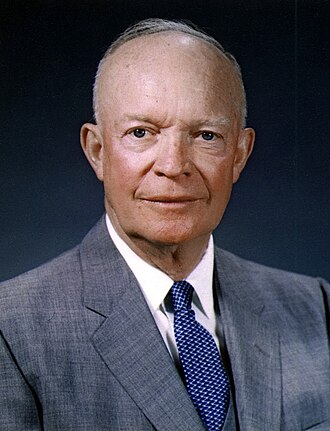 Dwight D. Eisenhower
Post-Graduate Legal • 2m
EO 10937 May 3, 1961
⚖️✨ Zone 2 (Zone of Twilight) Constitutional Neutral
Executive Order 10937—Amendment of Executive Order No. 10472, Establishing the National Agricultural Advisory Commission
📜 Art. II §1: Executive Discretion & Internal Operations
Of Executive Order No. 10472 of July 20, 1953, be, and it is hereby, amended to read as follows: "SECTION 1. There is hereby established the National Agricultural Advisory Commission, hereinafter referred to as the Commission, which shall be composed of twenty-five members who…
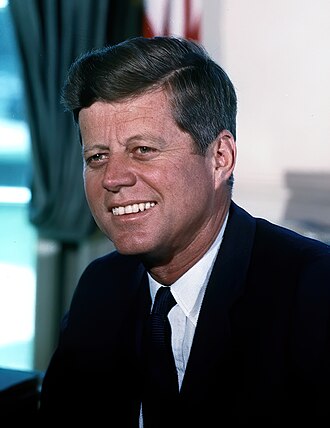 John F. Kennedy
Post-Graduate Legal • 2m
EO 11255 Nov 1, 1965
⚖️✨ Zone 2 (Zone of Twilight) Constitutional Neutral
Executive Order 11255—Designation of Vietnam and Waters Adjacent Thereto as an Overseas Combat Area for Purposes of Armed Forces Mailing Privileges
📜 Art. II §2: Commander-in-Chief Supervisory Authority
I hereby designate for the purposes of those sections, as an overseas combat area where the Armed Forces of the United States are engaged in military operations involving armed conflict with a hostile foreign force: Vietnam, including the waters adjacent thereto within the…
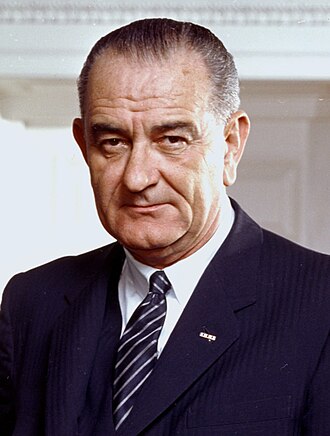 Lyndon B. Johnson
Grade 5 • 1m
EO 11257 Nov 13, 1965
⚖️✨ Zone 2 (Zone of Twilight) Constitutional Neutral
Executive Order 11257—Delegating to the Civil Service Commission Certain Authority Relating to Severance Pay Under the Federal Employees Salary Act of 1965
📜 Art. II §3: Administrative Management & Civil Service
Executive Order No. 11228 of June 14, 1965, entitled "Providing for the performance by the Civil Service Commission of certain functions vested in or subject to the approval of the President," be, and it is hereby, amended by inserting the following at the end of Section 1…
Lyndon B. Johnson Post-Graduate Legal • 1m
EO 11258 Nov 17, 1965
⚖️✨ Zone 2 (Zone of Twilight) Constitutional Neutral
Executive Order 11258—Prevention, Control, and Abatement of Water Pollution by Federal Activities
📜 Art. II §2: Commander-in-Chief Supervisory Authority
Policy. The heads of the departments, agencies, and establishments of the Executive Branch of the Government shall provide leadership in the nationwide effort to improve water quality through prevention, control, and abatement of water pollution from Federal Government…
Lyndon B. Johnson Post-Graduate Legal • 10m
EO 11254 Oct 21, 1965
🏛️✅ Zone 1 (Maximum Authority) Constitutional Neutral
Executive Order 11254—Establishing the Automotive Agreement Adjustment Assistance Board
📜 Art. I §8: Delegated Tariff & Commerce Execution
There is hereby established the Automotive Agreement Adjustment Assistance Board (hereinafter referred to as the "Board"), which shall consist of the Secretary of the Treasury, the Secretary of Commerce, and the Secretary of Labor.
Lyndon B. Johnson College Level • 2m
📜
Scholarly & Legal Citations
Exec. Order No. 11,256 (Nov. 4, 1965), https://executiveordersarchive.org/orders/app-executive-order-11256-establishing-the-presidents-committee-food-and-fiber-and-the.
