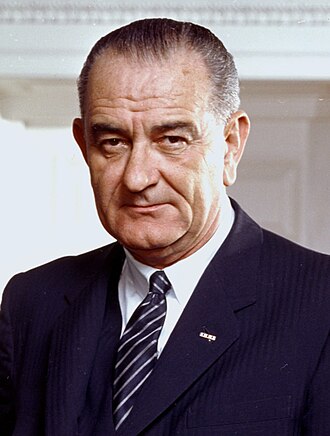
WHEREAS, the increasing complexities of Government require personnel of the highest attainable qualifications who are capable of assuming and discharging efficiently major and varied duties and responsibilities in the Executive Branch in response to present and future needs; and WHEREAS, this need for high quality can best be met by the establishment of an executive assignment system for the top three grades of the General Schedule, extending and adapting merit principles in recruitment, selection, and development, combined with improvements in the identification, assignment and utilization of key personnel: Now, THEREFORE, by virtue of the authority vested in me by the Constitution of the United States, by 5 U.S.C. 3301 and 3302, and as President of the United States, it is ordered as follows: PART I. CIVIL SERVICE RULES
Section 1. #sec-1
The Civil Service Rules are amended by the addition of Civil Service Rule IX reading as follows: RULE IX. EXECUTIVE ASSIGNMENT SYSTEM FOR POSITIONS IN GRADES GS-16, 17, AND 18 OF THE GENERAL SCHEDULE. In General
Section 9. #sec-9
1 Coverage. Except as otherwise provided by law, this Rule applies to: (a) positions in grades 16, 17, and 18 of the General Schedule that are in the Executive Branch, except positions excluded from the coverage of 5 U.S.C. 3324(a) by paragraphs (1), (2), and (4) thereof and any position now or hereafter excepted under Civil Service Rule VI so long as that exception remains in effect; and (b) persons who are given executive assignments to these positions.
Section 9. #sec-9-2
2 Filling positions covered by this Rule. An appointing officer shall fill a position covered by this Rule by Career Executive Assignment, unless the Commission authorizes a Limited Executive Assignment under section 9.6 of this Rule or a Noncareer Executive Assignment under section 9.20 of this Rule. Career Executive Assignments
Section 9. #sec-9-3
3 Qualifications required for a Career Executive Assignment. After appropriate consultation with the agency concerned the Commission shall establish specific qualification standards for assignment to a Career Executive Assignment.
Section 9. #sec-9-4
4 Recruitment for Career Executive Assignments. (a) Before selecting any person for a Career Executive Assignment the appointing officer shall first consider fully employees under his agency's merit promotion program and available employees of other Federal agencies qualified pursuant to paragraph (b) of this section. Only after this consideration may the appointing officer elect to recruit applicants from outside the Federal service pursuant to paragraph (b) of this section. (b) The Commission shall be responsible for the establishment of special facilities, including special boards and panels, to recruit well-qualified persons for Career Executive Assignments in the Federal service from among employees holding Career Executive Assignments, other eligible employees, and persons outside the Federal service. The appointing officer shall use these special facili ties, including special boards and panels, to recruit applicants from outside the Federal service. (c) The procedures in this section do not apply when the Commission authorizes the movement of an incumbent Career Executive to a Career Executive Assignment at the same or lower grade.
Section 9. #sec-9-5
5 Career Executive Assignments; selection and assignment. (a) An appointing officer shall select a person for a Career Executive Assignment solely on the basis of merit and fitness. He shall not permit or consider any political test, qualification, clearance, or recommendation, and shall not discriminate on the basis of race, religion, national origin, sex, age, or physical disability. (b) The appointing officer may make a Career Executive Assignment only after the Commission has finally approved the qualifications and suitability of the person selected.
Section 9. #sec-9-6
6 Authorization of Limited Executive Assignments. (a) The Commission may authorize agencies to fill a position covered by this Rule by a Limited Executive Assignment when: (1) the position is expected to be of limited duration; or (2) the agency concerned establishes an unusual need for urgent staffing that cannot adequately be met under the procedures required for Career Executive Assignments. (b) The Commission shall specify a time limit within which an agency may use this authority and may revoke this authority at any time.
Section 9. #sec-9-7
7 Qualifications required for a Limited Executive Assignment. After appropriate consultation with the agency concerned the Commission shall establish specific qualification standards for assignment to a Limited Executive Assignment.
Section 9. #sec-9-8
8 Limited Executive Assignment; selection and assignment. An appointing officer may make a Limited Executive Assignment only after the Commission has finally approved the qualifications of the person selected.
Section 9. #sec-9-9
9 Removal from a Limited Executive Assignment. An appointing officer may remove a person from a Limited Executive Assignment when, in his judgment, the purpose of the assignment has been served or conditions warrant discontinuance of the assignment.
Section 9. #sec-9-10
10 Limited Executive Assignment; change to other type of appointment. If a person completes five years of continuous service in an agency in a Limited Executive Assignment the appointing officer shall: (a) convert his assignment to a Career Executive Assignment, or to a Noncareer Executive Assignment; (b) give him a career appointment to a continuing position in the competitive service in grade GS-15, or below; or (c) separate him from the service. Noncareer Executive Assignments
Section 9. #sec-9-11
20 Exception of positions to be filled by Noncareer Executive Assignments. (a) After consulting the agency concerned, the Commission may except a position from the procedures required for making Career Executive Assignments and authorize an agency to fill the position by a Noncareer Executive Assignment when it determines that there is a need for filling the position by a person who will: (1) be deeply involved in the advocacy of Administration programs and support of their controversial aspects; (2) participate significantly in the determination of major political policies of the Administration; or (3) serve principally as personal assistant to or adviser of a Presidential appointee or other key political figure. (b) In determining the positions to be excepted under paragraph (a) of this section the Commission shall: (1) limit the number of positions excepted to a relatively small proportion of the positions in the agency in grades 16, 17, and 18, taking into consideration the size of the agency and the nature of its program; and (2) define the area of the agency's activity in which Noncareer Executive Assignments would be appropriate and specify organizational levels, as distinguished from grade levels, below which Noncareer Executive Assignments would be inappropriate. (c) The Commission shall not except a position which has as its principal responsibility the internal management of an agency, or a position involving long-standing recognized professional duties and responsibilities resting on a body of knowledge essentially politically neutral in nature. However, a position concerned with the direction of a scientific program could be appropriately excepted when it meets the criteria set forth in paragraph (a) (1), (2), or (3) of this section. (d) The Commission shall review periodically the exceptions made under this section and after consulting the agency concerned, shall revoke an exception when the position no longer meets the criteria for exception. Civil Service Rule III, providing for the noncompetitive acquisition of competitive status, shall not apply in such a case. (e) Notice of the Commission's decision to grant or revoke authority to make Noncareer Executive Assignments shall be published in the Federal Register.
Section 9. #sec-9-12
21 Qualifications required for a Noncareer Executive Assignment. After appropriate consultation with the agency concerned the Commission shall establish specific qualification standards for assignment to a Non-career Executive Assignment. In addition, as a qualification for continuance in a Noncareer Executive Assignment, the incumbent must continue to maintain the qualifications and relationships that are required for the particular Noncareer Executive Assignment.
Section 9. #sec-9-13
22 Noncareer Executive Assignment; selection and assignment. An appointing officer may make a Noncareer Executive Assignment only after the Commission has finally approved the qualifications of the person selected. He shall inform each person selected of the qualifications required under section 9.21 of this Rule for assignment to and continuance in a Noncareer Executive Assignment.
Section 9. #sec-9-14
23 Removal from a Noncareer Executive Assignment. An appointing officer shall remove a person from a Noncareer Executive Assignment when the person's qualifications or relationships required for the assignment change or cease to exist. Civil Service Rule VI
Section 2. #sec-2
Civil Service Rule VI is amended in pertinent part as follows: (a)
Section 6. #sec-6
1 (a) is amended to read as follows: "(a) The Commission may except positions from the competitive service when it determines that appointments thereto through competitive examination are not practicable. These positions shall be listed in the Commission's annual report for the fiscal year in which the exceptions are made. The exception from the competitive service is effective on publication in the Federal Register." (b)
Section 6. #sec-6-2
6 is amended to read as follows: "Section 6.6 Revocation of exceptions. The Commission may remove any position from or may revoke in whole or in part any provision of Schedule A, B, or C. These changes are effective on publication in the Federal Register." PART II. SPECIAL PROVISIONS FOR TRANSITION TO THE FULL ESTABLISHMENT OF EXECUTIVE ASSIGNMENTS UNDER RULE IX
Section 3. #sec-3
Effective dates. This order, except section 1, is effective upon filing for publication in the Federal Register. Section 1 of this order is effective not later than one year from the date of this order, or at such earlier dates as the Civil Service Commission may specify for individual agencies or positions.
Section 4. #sec-4
Interim appointments. After the date of this order and before Civil Service Rule IX has become effective as to a position, an appointing officer may fill the position in accordance with the appointment system in effect on the day of the appointment.
Section 5. #sec-5
Conversion of incumbents. On the day Civil Service Rule IX becomes effective as to a position, the appointment of the incumbent of that position shall be changed as follows: (a) If he is serving under a career or career-conditional appointment in the competitive service, he shall be converted to a Career Executive Assignment; (b) If he is serving in the excepted service under a nontemporary appointment, he shall be converted to a Noncareer Executive Assignment; (c) If he is serving in the competitive service under an indefinite or temporary appointment without definite time limit and: (1) if he has served under this type of appointment for at least five years, he shall be: (i) converted to a Career Executive Assignment, or appointed to a continuing position in the competitive service in grade GS-15, or below; (ii) converted to a Noncareer Executive Assignment; or (iii) separated from the service; or (2) if he has served under this type of appointment for less than five years, he shall be: (i) converted to a Noncareer Executive Assignment; (ii) separated from the service; or (iii) allowed to continue to serve until he has served five years, at which time the appointing officer shall take one of the actions provided for in subparagraph (1) of this paragraph. An incumbent who is serving under any other type of appointment shall continue under that appointment until it is terminated. PART III. ADMINISTRATION
Section 6. #sec-6-3
Commission responsibilities. The Civil Service Commission is responsible to the President for the effective implementation and administration of the executive assignment system established by this Order. The Commission shall continuously review operations under this system, shall recommend promptly to the President any changes that are necessary to improve this system, and shall report periodically to the President any significant developments in the operation of the system. The Commission shall recommend to the President a program of special honors and awards for the recognition of persons assigned to Career Executive Assignments and a program for the development and training of persons assigned to Career Executive Assignments. The training program shall include the establishment of special training and educational facilities, and provide for the relevant use of outside training facilities.
Section 7. #sec-7
Responsibilities of the agencies. The head of each agency in which there are positions covered by Civil Service Rule IX shall periodically review with the Civil Service Commission his plans for staffing. The head of a newly established agency shall initially review with the Commission his plans for staffing as soon as practicable after the establishment of the agency. The head of each agency shall cooperate fully with the Commission in the establishment of special facilities and special boards and panels that are required under Civil Service Rule IX as a means of recruiting persons of the highest quality.
Section 8. #sec-8
Regulations. The Civil Service Commission shall prescribe such regulations as may be necessary to carry out the purpose and intent of this Order. LYNDON B. JOHNSON THE WHITE HOUSE November 17, 1966
