WHEREAS disputes exist between the carriers represented by the National Railway Labor Conference, designated in List A attached hereto and made a part hereof, and certain of their employees represented by the International Association of Machinists and Aerospace Workers; International Brotherhood of Boilermakers, Iron Shipbuilders, Blacksmiths, Forgers & Helpers; Sheet Metal Workers' International Association; International Brotherhood of Electrical Workers; Brotherhood Railway Carmen of America; International Brotherhood of Firemen and Oilers functioning through the Railway Employees' Department, AFL-CIO, labor organizations; and WHEREAS these disputes have not heretofore been adjusted under the provisions of the Railway Labor Act, as amended; and WHEREAS these disputes, in the judgment of the National Mediation Board, threaten substantially to interrupt interstate commerce to a degree such as to deprive the country of essential transportation service: Now, THEREFORE, by virtue of the authority vested in me by section 10 of the Railway Labor Act, as amended (45 U.S.C. 160), I hereby create a board of three members, to be appointed by me, to investigate these disputes. No member of the board shall be pecuniarily or otherwise interested in any organization of railroad employees or any carrier. The board shall report its findings to the President with respect to the disputes within thirty days from the date of this order. As provided by section 10 of the Railway Labor Act, as amended, from this date and for thirty days after the board has made its report to the President, no change, except by agreement, shall be made by the carriers represented by the National Railway Labor Conference, or by their employees, in the conditions out of which the disputes arose. LYNDON B. JOHNSON The White House January 28, 1967 LIST A EASTERN RAILROADS Akron, Canton & Youngstown Railroad Ann Arbor Railroad Baltimore & Ohio Railroad (Incl. S.C. & M.RR) Baltimore & Ohio Chicago Terminal Railroad Staten Island Rapid Transit Company Bangor & Aroostook Railroad Bessemer & Lake Erie Railroad Boston & Maine Railroad Brooklyn Eastern District Terminal Buffalo Creek Railroad Canadian National Lines in United States St. Lawrence Region Great Lakes Region Canadian Pacific Lines in Maine & Vermont Central Railroad Company of New Jersey New York & Long Branch R.R. Central Vermont Railway Chicago Union Station Company Cincinnati Union Terminal Company Dayton Union Railway Delaware & Hudson Railroad Detroit & Toledo Shore Line Railroad Detroit Terminal Railroad Detroit, Toledo & Ironton Railroad Erie-Lackawanna Railroad Grand Trunk Western Railroad Indianapolis Union Railway Lehigh & Hudson River Railway Lehigh & New England Railway Lehigh Valley Railroad Maine Central Railroad Portland Terminal Company (Maine) Monon Railroad Monongahela Railway Montour Railroad Newburgh & South Shore Railway New York Central System: New York Central Railroad New York District Grand Central Terminal Eastern District Boston & Albany Div. Western District Northern District Southern District (Incl. P. & E. Rwy. L&JBRR and Ohio Central Div.) Indiana Harbor Belt Railroad Chicago River and Indiana Railroad (Incl. Chicago Junction Ry.) Pittsburgh & Lake Erie Railroad Lake Erie and Eastern Ry. Cleveland Union Terminal New York Dock Railway New York, New Haven & Hartford Railroad New York, Susquehanna & Western Railroad Pennsylvania Railroad Pennsylvania-Reading Seashore Lines Reading Company Philadelphia, Reading & Pottsville Telegraph Co. Toledo Terminal Railroad Washington Terminal Company Western Maryland Railway SOUTHEASTERN RAILROADS Atlanta & West Point Railroad Western Railway of Alabama Atlanta Joint Terminals Atlantic Coast Line Railroad Central of Georgia Railway Chesapeake & Ohio Railway Clinchfield Railroad Georgia Railroad Gulf, Mobile & Ohio Railroad Jacksonville Terminal Company Kentucky & Indiana Terminal Railway Louisville & Nashville Railroad Mississippi Central Railroad New Orleans Public Belt Railroad Norfolk & Portsmouth Belt Line Railroad Norfolk & Western Railway Norfolk Southern Railway Richmond, Fredericksburg & Potomac Railroad Potomac Yard Seaboard Air Line Railway Southern Railway Alabama, Great Southern Railway Cincinnati, New Orleans & Texas Pacific Railroad Georgia, Southern & Florida Railway Harriman & Northeastern Railroad New Orleans & Northeastern Railroad New Orleans Terminal Company St. Johns River Terminal Company Tennessee Central Railway Terminal Railway-Alabama State Docks WESTERN RAILROADS Alton & Southern Railroad Atchison, Topeka & Santa Fe Railway Gulf, Colorado & Santa Fe Railway Panhandle & Santa Fe Railway Belt Railway of Chicago Butte, Anaconda & Pacific Railway Camas Prairie Railroad Chicago & Eastern Illinois Railroad Chicago & Illinois Midland Railway Chicago & North Western Railway (Incl. Omaha & M & St. L Div.) Chicago & Western Indiana Railroad Chicago, Burlington & Quincy Railroad Chicago Great Western Railway Chicago, Milwaukee, St. Paul & Pacific R.R. Chicago, Rock Island & Pacific Railroad Chicago South Shore and South Bend Railroad Chicago, West Pullman & Southern Railway Colorado & Southern Railway Colorado & Wyoming Railroad Davenport, Rock Island & North Western R.R. Denver & Rio Grande Western Railroad Des Moines Union Railway Duluth, Missabe & Iron Range Railway Duluth Union Depot & Transfer Company Duluth, Winnipeg & Pacific Railway East St. Louis Junction Railway Elgin, Joliet 8c Eastern Railway Ft. Worth & Denver Railway Galveston, Houston & Henderson Railroad Great Northern Railway Green Bay & Western Railroad Houston Belt & Terminal Railway Illinois Central Railroad Barge Illinois Northern Railway Illinois Terminal Railroad Joint Texas Division, CRI&P & FWAD Ry. Kansas City Southern Railway Kansas City Terminal Railway Lake Superior & Ishpeming Railroad Lake Superior Terminal Sc Transfer Railway LaSalle Street Station Longview, Portland & Northern Railroad Los Angeles Junction Railway Louisiana & Arkansas Railway Manufacturers Railway Midland Valley Railroad Kansas, Oklahoma & Gulf Railway Milwaukee, Kansas City Southern Joint Agency Minneapolis, Northfield & Southern Railway Minnesota Transfer Railway Missouri-Kansas-Texas Railroad Company Missouri Pacific Railroad Missouri Illinois Railroad Sedalia Reclamation Plant Northern Pacific Railway Northwestern Pacific Railroad Ogden Union Railway & Depot Company Peoria & Pekin Union Railway Port Terminal Railroad Association (Houston) Portland Terminal Railroad Pueblo Joint Car Interchange & Insp. Bureau St. Joseph Terminal Railroad Company St. Louis-San Francisco Railway St. Louis-San Francisco & Texas St. Louis Southwestern Railway St. Paul Union Depot Company San Diego & Arizona Eastern Railway Sioux City Terminal Railway Company Soo Line Railroad South Omaha Terminal Railway Southern Pacific Company (Pacific Lines) Southern Pacific Company (Texas & Louisiana Lines) Spokane, Portland & Seattle Railway Oregon Electric Railway Oregon Trunk Railway Terminal Railroad Association of St. Louis Texas & Pacific Railway Abilene & Southern Railway Ft. Worth Belt Railway Texas and New Mexico Railway Weatherford, Mineral Wells & Northwestern Texas Mexican Railway Company TP—MP Terminal of New Orleans Toledo, Peoria & Western Railroad Union Pacific Railroad Union Railway Company (Memphis) Union Terminal Company (Dallas) Western Pacific Railroad Wichita Terminal Association
Executive Order 11324 🏛️✅ Zone 1: Maximum Authority Constitutional Neutral (+0.02)
📜 10th Amend: Intergovernmental Federalism Cooperation
Executive Order 11324—Creating an Emergency Board to Investigate Disputes Between the Carriers Represented by the National Railway Labor Conference and Certain of Their Employees
Executive Brief • At a Glance
⏱️ 5 min read (1,074 words) •
● In Effect
🎯 Primary Mandate
I hereby create a board of three members, to be appointed by me, to investigate these disputes.
⚖️ Constitutional Footing
🏛️✅ Zone 1: Maximum Authority
Express or Implied Congressional Authorization
📜 10th Amend: Intergovernmental Federalism Cooperation
🏛️ Scope & Affected Sectors
Sovereign State Governments & Localities Executive Departments & Federal Civil Servants Private Citizens & Property Owners
Plain-English Translation & Framers' Constitutional Analysis
Early Statesman synthesis distilling legal jargon into practical meaning, statutory anchors, and structural constitutional impacts.
Signed by President Lyndon B. Johnson on January 28, 1967, this order concerns Creating an Emergency Board to Investigate Disputes Between the Carriers Represented by the National Railway Labor Conference and Certain of Their Employees. I hereby create a board of three members, to be appointed by me, to investigate these disputes. No member of the board shall be pecuniarily or otherwise interested in any organization of railroad employees or any carrier. The board shall report its findings to the President with respect to the disputes within thirty days from the date of this order.
Constitutional Assessment: Reviewed under the Tenth Amendment and the principle of dual federalism, this order touches upon domains traditionally reserved to the sovereign States. The Framers would caution against any attempt to commandeer state officers or displace local police powers through federal executive fiat.
Key Directives & Operative Actions
▪
I hereby create a board of three members, to be appointed by me, to investigate these disputes.
▪
The board shall report its findings to the President with respect to the disputes within thirty days from the date of this order.
▪
As provided by section 10 of the Railway Labor Act, as amended, from this date and for thirty days after the board has made its report to the President, no change, except by agreement, shall be made by the carriers represented by the National Railway Labor Conference, or by their employees, in the conditions out of which the disputes arose.
Constitutional & Societal Entities Impacted
🏛️ Sovereign State Governments & Localities
🏛️ Executive Departments & Federal Civil Servants
🏛️ Private Citizens & Property Owners
Policy Areas & Topics
🏛️
The Framers' Constitutional Council
1787 PrismEvaluating this order against the constitutional debates of 1787 and the limits of Article II executive power.
🏛️✅ Zone 1 (Maximum Authority)
§
"When the President acts pursuant to an express or implied authorization of Congress, his authority is at its maximum, for it includes all that he possesses in his own right plus all that Congress can delegate."
— Justice Robert H. Jackson, Youngstown Sheet & Tube Co. v. Sawyer (1952) Express or Implied Congressional Authorization
JM
James Madison
Separation of Powers & Legislative Primacy
"The constitutional magistracy was designed not to invent policy, but to be the faithful instrument of the laws passed by the people's representatives." — Speech in the First Congress (1789)
Madison would approve the structural posture of this order. The President acts strictly in subordination to statutory authority granted under Article II, Section 3 ("take Care that the Laws be faithfully executed"). The checks and balances hold firm because the policy origin remains with the legislature.
Madisonian Stance: Concurring (Statutory)
AH
Alexander Hamilton
The Energetic Executive & Unified Command
"A feeble Executive implies a feeble execution of the government; and a government ill executed, whatever it may be in theory, must be, in practice, a bad government." — Federalist No. 70 (1788)
Hamilton would view this directive as the natural and indispensable functioning of administrative leadership. Without the power to coordinate agencies, manage personnel, and resolve operational ambiguities, the modern presidency would be reduced to an impotent figurehead.
Hamiltonian Stance: Supportive of Execution
GM
George Mason
Bill of Rights, Due Process & 10th Amendment
"The powers not delegated to the United States by the Constitution, nor prohibited by it to the States, are reserved to the States respectively, or to the people." — 10th Amendment to the US Constitution (1791)
Mason would scrutinize whether this federal directive intrudes into police powers, land stewardship, or municipal domains historically reserved to local citizens. The Anti-Federalist demand is that federal administration must never supplant state self-governance.
Anti-Federalist Stance: Eternal Vigilance Required
📐
Five Measurable "Constitutional Friction" Dimensions
An objective audit measuring potential separation-of-powers tension against the United States Constitution and established Supreme Court doctrine.
🛡️ High Constitutional Concordance
23 / 100 friction index
Dimension 1 • Art. I, §1 & §8
Low Friction
Legislative Encroachment & Purse
Operates within delegated statutory execution without modifying legislative appropriations or taxing powers.
Benchmark: Power of the purse, taxes/tariffs, and rule of law reserved to Congress.
Dimension 2 • Art. II, §1 & §3
Low Friction
Executive Scope & Faithfulness
Exercises standard supervisory executive authority to faithfully execute existing statutes.
Benchmark: Faithfully execute laws enacted by Congress vs. unilateral decree.
Dimension 3 • 10th Amendment
Moderate Friction
Federalism & State Sovereignty
Engages state and local partners in cooperative federalism programs.
Benchmark: Police powers and un-delegated responsibilities reserved to the States.
Dimension 4 • 5th & 14th Amendments
Low Friction
Due Process & Individual Rights
Focuses on internal governmental operations with no direct impairment of private rights or property.
Benchmark: Protection of private property, contracts, liberty, and procedural justice.
Dimension 5 • Separation of Powers
Low Friction
Youngstown Jacksonian Tier
The President operates strictly as the constitutional Chief Executive, carrying out policy established by Congress with strong statutory backing.
Benchmark: Express or Implied Congressional Authorization
⚖️
Audit Synthesis
This order operates in close harmony with statutory authority and standard Article II supervisory execution.
Weighted composite: Art. I (25%), Art. II (25%), Federalism (15%), Due Process (15%), Youngstown (20%).
ℹ️
How to read these dimensions: Executive power expands whenever an administration acts without explicit statutory authorization from Congress (Article I), touches upon police powers historically reserved to the states (Tenth Amendment), or limits private rights and property without judicial process. A low friction score indicates strict concordance with enacted law; a high friction score highlights orders testing the limits of presidential discretion.
Total Words
1,074
7,457 characters
Estimated Read Time
5 min
@ 200 words / min
Flesch-Kincaid
20.6
Post-Graduate Legal
Text size:
Related Executive Orders
Other executive actions signed by Lyndon B. Johnson around this period.
EO 11325 Jan 30, 1967
⚖️✨ Zone 2 (Zone of Twilight) Constitutional Neutral
Executive Order 11325—Prescribing a New Part of the Selective Service Regulations
📜 Art. II §2: Commander-in-Chief Supervisory Authority
I hereby prescribe the following Selective Service Regulations, which shall constitute Part 1643 of Chapter XVI of Title 32 of the Code of Federal Regulations: PART 1643—PAROLE Sec. 1643.1 Parole—general. 1643.2 Authority to grant parole. 1643.3 Application for parole and…
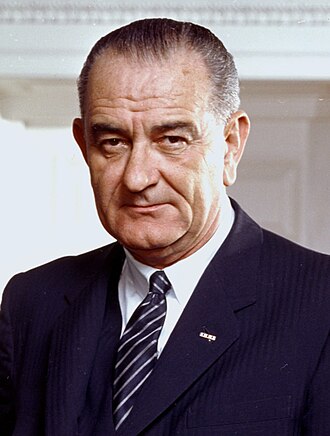 Lyndon B. Johnson
Post-Graduate Legal • 10m
EO 11323 Jan 20, 1967
⚖️✨ Zone 2 (Zone of Twilight) Constitutional Neutral
Executive Order 11323—Placing an Additional Position in Level V of the Federal Executive Salary Schedule
📜 Art. II §1: Executive Discretion & Internal Operations
Section 2 of Executive Order No. 11248 of October 10, 1965, as amended, is further amended by adding thereto the following: (11) Deputy Commissioner of Social Security, Department of Health, Education, and Welfare.
Lyndon B. Johnson College Level • 1m
EO 11326 Feb 13, 1967
🏛️✅ Zone 1 (Maximum Authority) Fidelity (+0.33)
Executive Order 11326—Providing for the Regulation of Air Transportation in the Ryukyu Islands
📜 Art. II §2: Commander-in-Chief Supervisory Authority
As used in this order, (a) "Ryukyu Islands" means the territory, including territorial waters and overlying airspace, to which Executive Order No. 10713 of June 5, 1957, as amended, applies.
Lyndon B. Johnson High School • 2m
EO 11327 Feb 15, 1967
⚖️✨ Zone 2 (Zone of Twilight) Constitutional Neutral
Executive Order 11327—Assigning Authority to Order Certain Persons in the Ready Reserve to Active Duty
📜 Art. II §2: Commander-in-Chief Supervisory Authority
The Secretary of Defense, and, when designated by him for this purpose, any of the Secretaries of the military departments of the Department of Defense, are hereby authorized and empowered to exercise the authority vested in the President until June 30, 1968, by Title I of the…
Lyndon B. Johnson Post-Graduate Legal • 2m
EO 11328 Feb 20, 1967
🏛️✅ Zone 1 (Maximum Authority) Constitutional Neutral
Executive Order 11328—Modifying Executive Order No. 11198, Relating to the Interest Equalization Tax on Certain Commercial Bank Loans
📜 Art. I §8: Delegated Tariff & Commerce Execution
Executive Order No. 11198 be, and it is hereby, modified to read as follows: SECTION 1. The provisions of section 4931 of the Internal Revenue Code of 1954, as amended, shall apply to acquisitions by commercial banks of debt obligations of foreign obligors to the extent set…
Lyndon B. Johnson Post-Graduate Legal • 2m
EO 11322 Jan 5, 1967
⚖️✨ Zone 2 (Zone of Twilight) Constitutional Neutral
Executive Order 11322—Relating to Trade and Other Transactions Involving Southern Rhodesia
📜 Art. II §2: Commander-in-Chief Supervisory Authority
The following are prohibited effective immediately, notwithstanding any contracts entered into or licenses granted before the date of this Order: (a) The importation into the United States of asbestos, iron ore, chrome, pig-iron, sugar, tobacco, copper, meat and meat products…
Lyndon B. Johnson Post-Graduate Legal • 5m
📜
Scholarly & Legal Citations
Exec. Order No. 11,324 (Jan. 28, 1967), https://executiveordersarchive.org/orders/app-executive-order-11324-creating-emergency-board-investigate-disputes-between-the-carriers.
