WHEREAS, the national interest requires a steady level of construction activity; and WHEREAS, labor-management relations in the construction industry reflect numerous signs of strife and tensions and the national interest requires an improvement in the procedures and performance of collective bargaining in this vital sector; and WHEREAS, the continuation of these problems tends to encourage widespread public demand for governmental regulation and controls; and WHEREAS, the achievement of greater stability in the flow of construction volume is essential; and WHEREAS, the Federal government and local and State governments, being major industry consumers, have a substantial interest in construction activity; and WHEREAS, the labor and management organizations in the construction industry recognize that industrial strife tends to disrupt construction operations and adversely to affect other sectors, including the public; and WHEREAS, the Commission hereinafter provided for is designed to develop voluntary tripartite procedures to be followed in the settlement of disputes over the terms of collective bargaining agreements in the construction industry involving the standard labor and management organizations, and to engage in such related activities as will facilitate industrial peace and stability in the construction industry but the establishment of the Commission is not intended to provide for compulsory arbitration or for any compulsory limitation on the right to strike or lockout; Now, THEREFORE, by virtue of the authority vested in me as the President of the United States, it is ordered as follows: SECTION 1. There is hereby established a Construction Industry Collective Bargaining Commission (hereinafter referred to as the Commission). The Commission shall be composed of twelve members as follows: (1) The Secretary of Labor, who is hereby designated as the Chairman of the Commission, (2) the Director of the Federal Mediation and Conciliation Service, and (3) the following members, all of whom shall be appointed by the President: (i) two members representative of the public, (ii) four representatives of labor organizations in the construction industry, and (iii) four representatives of employers in that industry. Representatives of the labor organizations and the employers shall be appointed after consultation with various national labor organizations and contractor associations in the construction industry. Alternate members also may be designated. SEC. 2. The Commission shall have an Executive Director, designated by the Chairman, who shall assist the Chairman and the Commission in the performance of their functions as they may direct. The staff to be made available to the Commission shall include a person drawn from the Federal Mediation and Conciliation Service to assist in coordination of mediation activities of the Service and the work of the Commission, a person from Department of Labor staff engaged in the administration of the Davis-Bacon Act, and such research and other personnel as may be necessary. SEC. 3. The general objectives of the Commission shall include, but need not be limited to, the following: (a) To study relevant private and public policies; (i) to upgrade the skills of, and to increase the labor force engaged in the construction industry and improve training procedures; (ii) to reduce the instability of demand for construction labor, and (iii) to provide a greater number of weeks of work per year to those engaged in the industry. (b) To strengthen the role of the national labor organizations and the national associations of contractors in the dispute settlement process, and to enhance their responsibility for the results of collective bargaining in the industry. (c) To establish more effective machinery for the resolution of disputes over the terms of collective bargaining agreements which at the same time recognizes the interests of each branch of the industry and preserves existing procedures that have been effective. (d) To identify means to improve and adapt the structure of collective bargaining in the industry to meet the challenges of technological innovation and changing demands. SEC. 4. The Commission is authorized to conduct studies and to make general recommendations respecting any problems relating to collective bargaining in the construction industry which may be presented to it from labor, management, or the public representatives. Such problems may include, but need not be limited to, the training and development of manpower, instability, the improvement of productivity and technology, the improvement of the mobility of the labor force, the portability of pensions, and job security. The Commission is also authorized to make general recommendations to the parties in the industry respecting collective bargaining practices and procedures. SEC. 5. (a) The Commission is authorized to intercede in any labor dispute in the construction industry whenever in its judgment the labor dispute over the terms or application of the collective bargaining agreement is likely to have a significant impact on construction activity in a locality, or in other localities. The Commission is further authorized to develop a procedure whereby, as a matter of national interest, a 30-day period may be observed during which mediation and related activities may take place without the occurrence of a strike or lockout or other change in terms or conditions of employment except by mutual agreement of the parties. The Commission or a panel designated by the Commission may, with the assistance of national labor organizations and national contractor associations where appropriate, seek to mediate such dispute, or make an investigation of the facts of the dispute and make such recommendations to the parties for the resolution thereof as it determines appropriate. In making any such recommendations, the Commission shall give due regard to the area and craft differentials, to the consequences of settlements on employment and on the economy of an area, and to other factors customarily considered by parties in collective bargaining. (b) The Commission may hold such hearings, take such evidence, and gather such facts as it deems necessary and appropriate hereunder. Such hearings may include oral presentations by the parties and participation by such other persons from the area, or otherwise, as the Commission deems would facilitate the discharge of its responsibilities under this order. SEC. 6. The Commission is authorized to issue such rules and regulations, and to adopt such procedures governing its affairs, including the conduct of its disputes settlement functions, as shall be necessary and appropriate to effectuate the objectives of this order. The Commission is authorized to establish panels composed of members of the Commission, alternates, or others, as may be designated by the Commission. Such panels may be authorized to act for the Commission and to exercise the authority of the Commission in such matters as the Commission may delegate or direct. SEC. 7. (a) Expenses of the Commission shall be paid from such appropriations to the Department of Labor and the Federal Mediation and Conciliation Service as may be available therefor. (b) All departments and agencies of the United States are authorized and directed to cooperate with the Commission in the effectuation of the purposes of this order to the extent authorized by law. (c) Members of the Commission who are officers or employees of the Federal Government shall receive no additional compensation by reason of this order. Other members of the Commission shall be entitled to receive compensation and travel expenses, including per diem in lieu of subsistence, as authorized by law for persons in the government service employed intermittently (5 U.S.C. 3109, 5703). SEC. 8. (a) As may be appropriate, the Commission shall consult with the Cabinet Committee on Construction and individually with heads of executive departments or agencies having responsibilities for programs affecting the construction industry. The Commission is authorized to request the heads of the departments and agencies concerned to establish advisory panels from representatives of such executive departments and agencies as may be necessary to carry out the objectives of this order. (b) The Bureau of the Budget is authorized to provide to the Commission information regarding Federal or Federally assisted construction. SEC. 9. The Commission shall make reports to the President from time to time on its activities and its progress in achieving the objectives and purposes of this order. The reports shall include such recommendations relative to the activities of the Commission as it shall deem appropriate. RICHARD NIXON The White House September 22, 1969
Executive Order 11482 ⚖️✨ Zone 2: Zone of Twilight Constitutional Neutral (+0.02)
📜 5th Amend: Regulatory Execution with Due Process
Executive Order 11482—Establishing a Construction Industry Collective Bargaining Commission
Executive Brief • At a Glance
⏱️ 7 min read (1,345 words) •
● In Effect
🎯 Primary Mandate
There is hereby established a Construction Industry Collective Bargaining Commission (hereinafter referred to as the Commission).
⚖️ Constitutional Footing
⚖️✨ Zone 2: Zone of Twilight
Concurrent Authority / Congressional Silence
📜 5th Amend: Regulatory Execution with Due Process
🏛️ Scope & Affected Sectors
Sovereign State Governments & Localities Executive Departments & Federal Civil Servants Private Citizens & Property Owners
Plain-English Translation & Framers' Constitutional Analysis
Early Statesman synthesis distilling legal jargon into practical meaning, statutory anchors, and structural constitutional impacts.
Signed by President Richard Nixon on September 22, 1969, this order concerns Establishing a Construction Industry Collective Bargaining Commission. There is hereby established a Construction Industry Collective Bargaining Commission (hereinafter referred to as the Commission). The Commission shall be composed of twelve members as follows: (1) The Secretary of Labor, who is hereby designated as the Chairman of the Commission, (2) the Director of the Federal Mediation and Conciliation Service, and (3) the following members, all of whom shall be appointed by the…
Constitutional Assessment: Evaluated against the Fifth Amendment, this action touches upon property or economic rights. An early statesman would insist upon strict adherence to due process of law and the constitutional guarantee that private holdings shall not be encumbered or taken for public purposes without just compensation and lawful process.
Key Directives & Operative Actions
▪
There is hereby established a Construction Industry Collective Bargaining Commission (hereinafter referred to as the Commission).
▪
The Commission shall be composed of twelve members as follows: (1) The Secretary of Labor, who is hereby designated as the Chairman of the Commission, (2) the Director of the Federal Mediation and Conciliation Service, and (3) the following members, all of whom shall be appointed by the President: (i) two members representative of the public, (ii) four representatives of labor organizations in the construction industry, and (iii) four representatives of employers in that industry.
▪
Representatives of the labor organizations and the employers shall be appointed after consultation with various national labor organizations and contractor associations in the construction industry.
▪
Alternate members also may be designated.
Constitutional & Societal Entities Impacted
🏛️ Sovereign State Governments & Localities
🏛️ Executive Departments & Federal Civil Servants
🏛️ Private Citizens & Property Owners
Policy Areas & Topics
🏛️
The Framers' Constitutional Council
1787 PrismEvaluating this order against the constitutional debates of 1787 and the limits of Article II executive power.
⚖️✨ Zone 2 (Zone of Twilight)
§
"When the President acts in absence of either a congressional grant or denial of authority, he can only rely upon his own independent powers, but there is a zone of twilight in which he and Congress may have concurrent authority."
— Justice Robert H. Jackson, Youngstown Sheet & Tube Co. v. Sawyer (1952) Concurrent Authority / Congressional Silence
JM
James Madison
Separation of Powers & Legislative Primacy
"Power is of an encroaching nature, and it ought to be effectually restrained from passing the limits assigned to it." — Federalist No. 48 (1788)
Madison would view this order with watchful scrutiny. Operating in the 'Zone of Twilight' where Congress is silent, each such directive establishes an administrative precedent that steadily expands the executive perimeter at the expense of legislative primacy.
Madisonian Stance: Vigilant / Cautionary
AH
Alexander Hamilton
The Energetic Executive & Unified Command
"A feeble Executive implies a feeble execution of the government; and a government ill executed, whatever it may be in theory, must be, in practice, a bad government." — Federalist No. 70 (1788)
Hamilton would view this directive as the natural and indispensable functioning of administrative leadership. Without the power to coordinate agencies, manage personnel, and resolve operational ambiguities, the modern presidency would be reduced to an impotent figurehead.
Hamiltonian Stance: Defends Vigor & Dispatch
GM
George Mason
Bill of Rights, Due Process & 10th Amendment
"The purse and the sword ought never to be in the same hands... nor the liberties of the citizen placed at the pleasure of a single magistrate." — Virginia Ratifying Convention (1788)
George Mason and the Anti-Federalists would sound a fierce warning. They feared that Article II would inevitably evolve into an elective monarchy. When an executive order impacts private rights, property, or civil liberties without individualized judicial process, Mason would see their darkest predictions verified.
Anti-Federalist Stance: High Bill of Rights Scrutiny
📐
Five Measurable "Constitutional Friction" Dimensions
An objective audit measuring potential separation-of-powers tension against the United States Constitution and established Supreme Court doctrine.
⚖️ Discretionary Twilight Zone
50 / 100 friction index
Dimension 1 • Art. I, §1 & §8
High Friction
Legislative Encroachment & Purse
Touches upon core congressional prerogatives: raises appropriations reallocation, tariff imposition, or statutory preemption questions.
Benchmark: Power of the purse, taxes/tariffs, and rule of law reserved to Congress.
Dimension 2 • Art. II, §1 & §3
Low Friction
Executive Scope & Faithfulness
Exercises standard supervisory executive authority to faithfully execute existing statutes.
Benchmark: Faithfully execute laws enacted by Congress vs. unilateral decree.
Dimension 3 • 10th Amendment
Moderate Friction
Federalism & State Sovereignty
Engages state and local partners in cooperative federalism programs.
Benchmark: Police powers and un-delegated responsibilities reserved to the States.
Dimension 4 • 5th & 14th Amendments
Moderate Friction
Due Process & Individual Rights
Applies regulatory or compliance standards to private contractors or commercial entities.
Benchmark: Protection of private property, contracts, liberty, and procedural justice.
Dimension 5 • Separation of Powers
Moderate Friction
Youngstown Jacksonian Tier
The order relies on inherent Article II executive discretion, civil service management, or foreign diplomacy where Congress has neither expressly approved nor prohibited action.
Benchmark: Concurrent Authority / Congressional Silence
⚖️
Audit Synthesis
This order operates within Justice Jackson’s Zone of Twilight, resting upon concurrent presidential authority or congressional silence.
Weighted composite: Art. I (25%), Art. II (25%), Federalism (15%), Due Process (15%), Youngstown (20%).
ℹ️
How to read these dimensions: Executive power expands whenever an administration acts without explicit statutory authorization from Congress (Article I), touches upon police powers historically reserved to the states (Tenth Amendment), or limits private rights and property without judicial process. A low friction score indicates strict concordance with enacted law; a high friction score highlights orders testing the limits of presidential discretion.
Total Words
1,345
8,838 characters
Estimated Read Time
7 min
@ 200 words / min
Flesch-Kincaid
22.3
Post-Graduate Legal
Text size:
🔗
Referenced By Later Executive Orders (1)
Subsequent presidents who cited, amended, continued, or revoked this directive in later orders.
Jimmy Carter • 1978-12-28
Related Executive Orders
Other executive actions signed by Richard Nixon around this period.
EO 11483 Sep 23, 1969
🏛️✅ Zone 1 (Maximum Authority) Constitutional Neutral
Executive Order 11483—Inspection of Income Tax Returns by the Select Committee on Crime, House of Representatives
📜 Art. I §8: Delegated Tariff & Commerce Execution
Any income tax return for the years 1960 to 1970 inclusive, shall, during the Ninety-first Congress, be open to inspection by the Select Committee on Crime, House of Representatives, or any duly authorized subcommittee thereof, in connection with its study and investigation of…
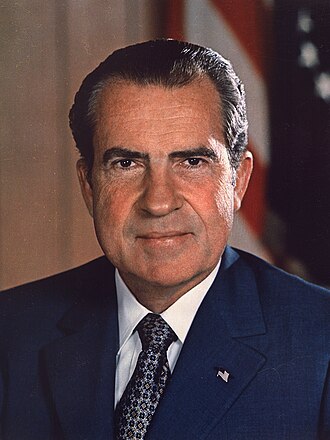 Richard Nixon
Post-Graduate Legal • 1m
EO 11484 Sep 29, 1969
⚖️✨ Zone 2 (Zone of Twilight) Constitutional Neutral
Executive Order 11484—Designating the United International Bureaux for the Protection of Intellectual Property (BIRPI) as a Public International Organization Entitled to Enjoy Certain Privileges, Exemptions, and Immunities
📜 5th Amend: Regulatory Execution with Due Process
I hereby designate the United International Bureaux for the Protection of Intellectual Property (BIRPI) as a public international organization entitled to enjoy the privileges, exemptions, and immunities conferred by the International Organizations Immunities Act.
Richard Nixon Post-Graduate Legal • 1m
EO 11485 Oct 1, 1969
🏛️✅ Zone 1 (Maximum Authority) Fidelity (+0.33)
Executive Order 11485—Supervision and Control of the National Guard of the District of Columbia
📜 Art. II §2: Commander-in-Chief Supervisory Authority
The Secretary of Defense, except as provided in section 3, is authorized and directed to supervise, administer and control the Army National Guard and the Air National Guard of the District of Columbia (hereinafter "National Guard") while in militia status.
Richard Nixon Post-Graduate Legal • 2m
EO 11486 Oct 3, 1969
⚖️✨ Zone 2 (Zone of Twilight) Constitutional Neutral
Executive Order 11486—Creating an Emergency Board to Investigate Disputes Between the Carriers Represented by the National Railway Labor Conference and Certain of Their Employees
📜 Art. II §1: Executive Discretion & Internal Operations
I hereby create a board of three members, to be appointed by me, to investigate these disputes. No member of the board shall be pecuniarily or otherwise interested in any organization of railroad employees or any carrier.
Richard Nixon Post-Graduate Legal • 5m
EO 11481 Sep 10, 1969
⚖️✨ Zone 2 (Zone of Twilight) Constitutional Neutral
Executive Order 11481—The Honorable Everett McKinley Dirksen
📜 Art. II §2: Commander-in-Chief Supervisory Authority
In further respect to the memory of the Honorable Everett McKinley Dirksen, late Minority Leader of the Senate of the United States, I direct that on the day of his interment, September 11, 1969, the flag of the United States shall be flown at half-staff on all buildings…
Richard Nixon Post-Graduate Legal • 1m
EO 11480 Sep 9, 1969
⚖️✨ Zone 2 (Zone of Twilight) Constitutional Neutral
Executive Order 11480—The President's Committee on Employment of the Handicapped
📜 5th Amend: Regulatory Execution with Due Process
Establishment and composition of the President's Committee. (a) There is hereby established the President's Committee on Employment of the Handicapped (hereinafter referred to as the Committee or as the President's Committee).
Richard Nixon Post-Graduate Legal • 7m
📜
Scholarly & Legal Citations
Exec. Order No. 11,482 (Sept. 22, 1969), https://executiveordersarchive.org/orders/app-executive-order-11482-establishing-construction-industry-collective-bargaining-commission.
