By virtue of the authority vested in me by the Federal Water Pollution Control Act (62 Stat. 1155, as amended, 33 U.S.C. 466 et seq.) as amended by the Water Quality Improvement Act of 1970 (Public Law 91-224, approved April 3, 1970), hereinafter referred to as the Act, by section 301 of title 3 of the United States Code, and as President of the United States, it is ordered as follows: SECTION 1. Delegations to the Secretary of the Interior. There is hereby delegated to the Secretary of the Interior responsibility and authority (a) to carry out the provisions of subsection (1) (2) of section 5 of the Act, relating to the study and investigation of methods to control the release of pesticides into the environment, including the preparation of a report on such investigation for submission by the President to the Congress; (b) in consultation with the Secretary of Transportation, to carry out the provisions of subsections (b) (2) and (b) (3) of section 11 of the Act, relating to the determination of those quantities of oil the discharge of which, at such times, locations, circumstances, and conditions, will be harmful to the public health or welfare of the United States and those which will not be harmful; (c) to carry out the provisions of subsection (c) (2) (G) of section 11 of the Act, relating to identification of dispersants and other chemicals to be used; (d) to carry out the provisions of subsection (e) of section 11 of the Act, relating to determinations of imminent and substantial threat because of actual or threatened discharge of oil, and relating to securing relief necessary to abate such actual or threatened discharges through court action; (e) in consultation with the Secretary of Transportation, to carry out the provisions of subsections (j) (1) (C) of section 11 of the Act, relating to procedures, methods, and requirements for equipment to prevent discharges of oil from non-transportation-related onshore and offshore facilities; (f) to carry out the provisions of subsection (a) (1) of section 12 of the Act, relating to the designation of hazardous substances, other than oil, which when discharged into or upon the navigable waters of the United States or adjoining shorelines or waters of the contiguous zone, present an imminent and substantial danger to public health or welfare; (g) in consultation with the Secretary of Transportation, to carry out the provisions of subsection (a) (2) of section 12 of the Act, relating to the establishment of recommended methods for the removal of hazardous substances within the meaning of subsection (a) (1) of section 12 of the Act. SEC. 2. Delegations to the Secretary of Transportation. There is hereby delegated to the Secretary of Transportation responsibility and authority (a) in consultation with the Secretary of the Interior, to carry out the provisions of subsection (j) (1) (C) of section 11 of the Act, relating to procedures, methods and requirements for equipment to prevent discharges of oil from vessels and transportation-related onshore and offshore facilities; (b) to carry out the provisions of subsection (j) (1) (D) of section 11 of the Act, relating to the inspection of vessels carrying cargoes of oil and the inspection of such cargoes; (c) to administer the revolving fund established pursuant to subsection (k) of section 11 of the Act; (d) to carry out the provisions of subsection (m) of section 11 of the Act, relating to the boarding and inspection of vessels, the arrest of persons violating the said section 11, and the execution of warrants or other process; (e) in consultation with the Secretary of the Interior, to carry out the provisions of subsection (g) of section 12 of the Act, including the preparation of a report for submission by the President to the Congress. SEC. 3. Delegations to the Federal Maritime Commission. (a) There is hereby delegated to the Federal Maritime Commission responsibility and authority (1) to carry out the provisions of subsection (p) (1) of section 11 of the Act, relating to the issuance of regulations governing evidence of financial responsibility for vessels to meet liability to the United States; (2) to carry out the provisions of subsection (p) (2) of section 11 of the Act, relating to the administration of the said subsection (p). (b) Without derogating from any action heretofore taken thereunder, the letter of the President to the Chairman of the Federal Maritime Commission dated June 2, 1970 (35 F.R. 8631), is hereby superseded. SEC. 4. Delegation to the Council on Environmental Quality. (a) There is hereby delegated to the Council on Environmental Quality the responsibility and authority to carry out the provisions of subsection (c) (2) of section 11 of the Act, providing for the preparation, publication, revision or amendment of a National Contingency Plan for the removal of oil (hereinafter referred to as the National Contingency Plan). (b) Without derogating from any action heretofore taken thereunder, the letter of the President to the Chairman of the Council on Environmental Quality dated May 26, 1970 (35 F.R. 8423), is hereby superseded. SEC. 5. Other delegations. (a) There is hereby delegated to the Secretary of the Interior and to the Secretary of Transportation, respectively, in and for the waters and areas assigned to each in section 306.2 of the National Contingency Plan (35 F.R. 8511) responsibility and authority (1) to carry out the provisions of subsection (c) (1) of section 11 of the Act, relating to the removal of oil discharged into or upon the navigable waters of the United States, adjoining shorelines, or into or upon the waters of the United States; (2) to carry out the provisions of subsection (d) of section 11 of the Act, relating to the coordination and direction of removal or elimination of the threat of oil discharges, and the removal and destruction of vessels; (3) to carry out the provisions of subsection (j) (1) (A) of section 11 of the Act, relating to methods and procedures for the removal of discharged oil; (4) to carry out the provisions of subsection (j) (1) (B) of section 11 of the Act, relating to criteria for the development and implementation of local and regional oil removal contingency plans; (5) to carry out the provisions of subsection (d) of section 12 of the Act, relating to the removal of discharged hazardous substances. (b) The civil penalty authority of section 11(j) (2) of the Act shall be exercised by the Secretary of the Interior and the Secretary of Transportation for the enforcement of the respective regulations issued by each pursuant to delegations in this order. SEC. 6. Agency to Receive Notices of Discharges of Oil or Hazardous Substances. The Coast Guard is hereby designated the "appropriate agency" for the purpose of receiving the notice of discharge of oil required by subsection (b) (4) of section 11 of the Act and for the purpose of receiving the notice of discharge of any hazardous substance required by subsection (c) of section 12 of the Act. The Commandant of the Coast Guard shall issue regulations implementing this designation. SEC. 7. Redelegation authority. Secretaries of Departments and heads of agencies are hereby authorized to redelegate within their respective departments or agencies the responsibilities and authority delegated to them by this order, subject to the requirements of 3 U.S.C. 301. SEC. 8. Regulations. Authority to carry out any of the foregoing responsibilities includes the authority to issue necessary implementing regulations. SEC. 9. Reorganization Plan No. 3 of 1970. Upon the taking effect of Reorganization Plan No. 3 of 1970, the responsibility and authority conferred upon the Secretary of Interior by this order, including the authority conferred by reason of his designation in the National Contingency Plan, and including the responsibility to consult with other officers, shall vest in the Administrator of the Environmental Protection Agency: Provided, that the Administrator shall thereafter consult with the Secretary of the Interior regarding the responsibility and authority delegated by section 1 (a) of this order and officers who by this order are required to consult with the Secretary of Interior shall consult with the Administrator of the Environmental Protection Agency. RICHARD NIXON The White House July 20, 1970
Executive Order 11548 ⚖️✨ Zone 2: Zone of Twilight Constitutional Neutral (+0.02)
📜 Art. II §1: Executive Discretion & Internal Operations
Executive Order 11548—Delegating Functions of the President Under the Federal Water Pollution Control Act, as Amended
Executive Brief • At a Glance
⏱️ 7 min read (1,359 words) •
● In Effect
🎯 Primary Mandate
There is hereby delegated to the Secretary of the Interior responsibility and authority (a) to carry out the provisions of subsection (1) (2) of section 5 of the Act, relating to the study and investigation of methods to control the release of pesticides into the environment, including the preparation of a report on such investigation for submission by the President to the Congress; (b) in consultation with the Secretary of Transportation, to carry out the provisions of subsections (b) (2) and (b) (3) of section 11 of the Act, relating to the determination of those quantities of oil the discharge of which, at such times, locations, circumstances, and conditions, will be harmful to the public health or welfare of the United States and…
⚖️ Constitutional Footing
⚖️✨ Zone 2: Zone of Twilight
Concurrent Authority / Congressional Silence
📜 Art. II §1: Executive Discretion & Internal Operations
🏛️ Scope & Affected Sectors
Executive Departments & Federal Civil Servants Private Citizens & Property Owners Public Health & Medical Institutions
Plain-English Translation & Framers' Constitutional Analysis
Early Statesman synthesis distilling legal jargon into practical meaning, statutory anchors, and structural constitutional impacts.
Signed by President Richard Nixon on July 20, 1970, this order concerns Delegating Functions of the President Under the Federal Water Pollution Control Act, as Amended. Delegations to the Secretary of the Interior. There is hereby delegated to the Secretary of the Interior responsibility and authority (a) to carry out the provisions of subsection (1) (2) of section 5 of the Act, relating to the study and investigation of methods to control the release of pesticides into the environment, including the preparation of a report on such investigation for submission by the President to…
Constitutional Assessment: This action represents an orderly exercise of Article II administrative discretion, managing the internal machinery and personnel of the executive branch without abridging the ancient liberties of the people.
Key Directives & Operative Actions
▪
There is hereby delegated to the Secretary of the Interior responsibility and authority (a) to carry out the provisions of subsection (1) (2) of section 5 of the Act, relating to the study and investigation of methods to control the release of pesticides into the environment, including the preparation of a report on such investigation for submission by the President to the Congress; (b) in consultation with the Secretary of Transportation, to carry out the provisions of subsections (b) (2) and (b) (3) of section 11 of the Act, relating to the determination of those quantities of oil the discharge of which, at such times, locations, circumstances, and conditions, will be harmful to the public health or welfare of the United States and…
▪
There is hereby delegated to the Federal Maritime Commission responsibility and authority (1) to carry out the provisions of subsection (p) (1) of section 11 of the Act, relating to the issuance of regulations governing evidence of financial responsibility for vessels to meet liability to the United States; (2) to carry out the provisions of subsection (p) (2) of section 11 of the Act, relating to the administration of the said subsection (p).
▪
Without derogating from any action heretofore taken thereunder, the letter of the President to the Chairman of the Federal Maritime Commission dated June 2, 1970 (35 F.R. 8631), is hereby superseded.
▪
There is hereby delegated to the Council on Environmental Quality the responsibility and authority to carry out the provisions of subsection (c) (2) of section 11 of the Act, providing for the preparation, publication, revision or amendment of a National Contingency Plan for the removal of oil (hereinafter referred to as the National Contingency Plan).
Constitutional & Societal Entities Impacted
🏛️ Executive Departments & Federal Civil Servants
🏛️ Private Citizens & Property Owners
🏛️ Public Health & Medical Institutions
Policy Areas & Topics
🏛️
The Framers' Constitutional Council
1787 PrismEvaluating this order against the constitutional debates of 1787 and the limits of Article II executive power.
⚖️✨ Zone 2 (Zone of Twilight)
§
"When the President acts in absence of either a congressional grant or denial of authority, he can only rely upon his own independent powers, but there is a zone of twilight in which he and Congress may have concurrent authority."
— Justice Robert H. Jackson, Youngstown Sheet & Tube Co. v. Sawyer (1952) Concurrent Authority / Congressional Silence
JM
James Madison
Separation of Powers & Legislative Primacy
"Power is of an encroaching nature, and it ought to be effectually restrained from passing the limits assigned to it." — Federalist No. 48 (1788)
Madison would view this order with watchful scrutiny. Operating in the 'Zone of Twilight' where Congress is silent, each such directive establishes an administrative precedent that steadily expands the executive perimeter at the expense of legislative primacy.
Madisonian Stance: Vigilant / Cautionary
AH
Alexander Hamilton
The Energetic Executive & Unified Command
"A feeble Executive implies a feeble execution of the government; and a government ill executed, whatever it may be in theory, must be, in practice, a bad government." — Federalist No. 70 (1788)
Hamilton would view this directive as the natural and indispensable functioning of administrative leadership. Without the power to coordinate agencies, manage personnel, and resolve operational ambiguities, the modern presidency would be reduced to an impotent figurehead.
Hamiltonian Stance: Defends Vigor & Dispatch
GM
George Mason
Bill of Rights, Due Process & 10th Amendment
"The president will be surrounded by flatterers and sycophants... and the great powers of the executive will gradually absorb the liberties of the people." — Cato IV (Anti-Federalist, 1787)
The Anti-Federalist prism advises continuous democratic vigilance. Even routine administrative directives aggregate centralized federal power away from town halls and state assemblies toward a distant executive apparatus.
Anti-Federalist Stance: Eternal Vigilance Required
📐
Five Measurable "Constitutional Friction" Dimensions
An objective audit measuring potential separation-of-powers tension against the United States Constitution and established Supreme Court doctrine.
⚖️ Discretionary Twilight Zone
58 / 100 friction index
Dimension 1 • Art. I, §1 & §8
High Friction
Legislative Encroachment & Purse
Touches upon core congressional prerogatives: raises appropriations reallocation, tariff imposition, or statutory preemption questions.
Benchmark: Power of the purse, taxes/tariffs, and rule of law reserved to Congress.
Dimension 2 • Art. II, §1 & §3
Moderate Friction
Executive Scope & Faithfulness
Directs internal executive branch machinery, agency workflows, and federal personnel.
Benchmark: Faithfully execute laws enacted by Congress vs. unilateral decree.
Dimension 3 • 10th Amendment
High Friction
Federalism & State Sovereignty
Creates friction with the Tenth Amendment by conditioning state grants, mandating local compliance, or preempting state police powers.
Benchmark: Police powers and un-delegated responsibilities reserved to the States.
Dimension 4 • 5th & 14th Amendments
Low Friction
Due Process & Individual Rights
Focuses on internal governmental operations with no direct impairment of private rights or property.
Benchmark: Protection of private property, contracts, liberty, and procedural justice.
Dimension 5 • Separation of Powers
Moderate Friction
Youngstown Jacksonian Tier
The order relies on inherent Article II executive discretion, civil service management, or foreign diplomacy where Congress has neither expressly approved nor prohibited action.
Benchmark: Concurrent Authority / Congressional Silence
⚖️
Audit Synthesis
This order operates within Justice Jackson’s Zone of Twilight, resting upon concurrent presidential authority or congressional silence.
Weighted composite: Art. I (25%), Art. II (25%), Federalism (15%), Due Process (15%), Youngstown (20%).
ℹ️
How to read these dimensions: Executive power expands whenever an administration acts without explicit statutory authorization from Congress (Article I), touches upon police powers historically reserved to the states (Tenth Amendment), or limits private rights and property without judicial process. A low friction score indicates strict concordance with enacted law; a high friction score highlights orders testing the limits of presidential discretion.
Total Words
1,359
8,364 characters
Estimated Read Time
7 min
@ 200 words / min
Flesch-Kincaid
23.2
Post-Graduate Legal
Text size:
🔗
Referenced By Later Executive Orders (1)
Subsequent presidents who cited, amended, continued, or revoked this directive in later orders.
Richard Nixon • 1973-08-03
Related Executive Orders
Other executive actions signed by Richard Nixon around this period.
EO 11549 Jul 28, 1970
⚖️✨ Zone 2 (Zone of Twilight) Constitutional Neutral
Executive Order 11549—Revoking Executive Order No. 10361 of June 11, 1952, Establishing the Whittier Defensive Sea Area, Alaska
📜 Art. II §1: Executive Discretion & Internal Operations
Executive Order No. 10361 of June 11, 1952, establishing the Whittier Defensive Sea Area, Alaska, is hereby revoked.
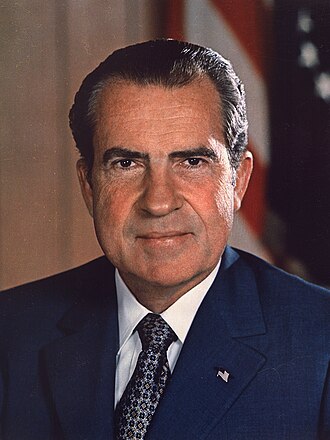 Richard Nixon
High School • 1m
EO 11550 Jul 30, 1970
⚖️✨ Zone 2 (Zone of Twilight) Constitutional Neutral
Executive Order 11550—Amending Executive Order No. 11248, Placing Certain Positions in Levels IV and V of the Federal Executive Salary Schedule
📜 Art. II §1: Executive Discretion & Internal Operations
Section 2 of Executive Order No. 11248 of October 10, 1965, as amended, placing certain positions in level V of the Federal Executive Salary Schedule, is further amended by deleting "(1,6) Chief, Children's Bureau, Social and Rehabilitation Service, Department of Health…
Richard Nixon Post-Graduate Legal • 1m
EO 11547 Jul 10, 1970
⚖️✨ Zone 2 (Zone of Twilight) Constitutional Neutral
Executive Order 11547—Amending Executive Order No. 11330 With Respect to Membership and Chairmanship
📜 Art. II §2: Commander-in-Chief Supervisory Authority
Executive Order No. 11330 of March 5, 1967, "Providing for the Coordination of Youth Opportunity Programs," is hereby amended by substituting the following for Section 101 (a): "SECTION 101. Membership and chairmanship.
Richard Nixon College Level • 1m
EO 11546 Jul 9, 1970
🏛️✅ Zone 1 (Maximum Authority) Fidelity (+0.29)
Executive Order 11546—Establishing the President's Commission for the Observance of the Twenty-Fifth Anniversary of the United Nations
📜 5th Amend: Regulatory Execution with Due Process
Establishment of Commission. (a) There is hereby established the President's Commission for the Observance of the Twenty-fifth Anniversary of the United Nations (hereinafter referred to as the "Commission").
Richard Nixon Post-Graduate Legal • 3m
EO 11545 Amended Jul 9, 1970
⚖️✨ Zone 2 (Zone of Twilight) Constitutional Neutral
Executive Order 11545—Establishing the Defense Distinguished Service Medal
📜 Art. II §2: Commander-in-Chief Supervisory Authority
There is hereby established a Defense Distinguished Service Medal, with accompanying ribbons and appurtenances, for award by the Secretary of Defense to a military officer who performed exceptionally meritorious service in a duty of great responsibility with the Office of the…
Richard Nixon Post-Graduate Legal • 1m
EO 11544 Jul 8, 1970
⚖️✨ Zone 2 (Zone of Twilight) Constitutional Neutral
Executive Order 11544—Establishing the Vice Presidential Service Certificate and the Vice Presidential Service Badge
📜 Art. II §2: Commander-in-Chief Supervisory Authority
There is hereby established a Vice Presidential Service Certificate to be awarded in the name of the Vice President of the United States to members of the Army, Navy, Marine Corps, Air Force, and Coast Guard who have been assigned to duty in the Office of the Vice President for…
Richard Nixon Post-Graduate Legal • 2m
📜
Scholarly & Legal Citations
Exec. Order No. 11,548 (July 20, 1970), https://executiveordersarchive.org/orders/app-executive-order-11548-delegating-functions-the-president-under-the-federal-water-pollution.
