Consumer protection fosters a market place in which our competitive economic system flourishes best. It is good for businessmen because it gives the consumer greater confidence in the goods and services provided by business. It is good for consumers because it reinforces the concept of buyers' rights: —the right to make an intelligent choice among products and services; —the right to accurate information on which to make a free choice; —the right to expect that the health and safety of the buyer is taken into account by those who seek his patronage; —the right to register dissatisfaction, and have a complaint heard and weighed, when a buyer's interests are badly served. The Special Assistant to the President for Consumer Affairs is performing an important role in representing consumer interests in the Federal Government. It is important that the role of the office of the Special Assistant be reinforced by increasing its responsibilities and reemphasizing its importance. There is need for a consumer office within the Executive Office of the President, which not only advises and represents the President on matters of consumer interest, but also analyzes and coordinates the implementation of all Federal activities in the field of consumer protection, helping to establish priorities and resolve conflicts, and recommending ways in which governmental consumer programs can be made more effective. Now, THEREFORE, by virtue of the authority vested in me as President of the United States, it is ordered as follows: SECTION 1. Office of Consumer Affairs. The Office of Consumer Affairs (hereinafter referred to as the "Office") is hereby established in the Executive Office of the President. The Office shall be headed by a Director who shall be appointed by the President, and there shall be in the Office a Deputy Director who shall also be appointed by the President. The Deputy Director shall perform such duties as the Director may designate, and in case of a vacancy in the office of Director or during the absence or incapacity of the Director, the Deputy Director shall act as Director. The Director and Deputy Director shall receive compensation at such rates as the President, consonant with law, may hereafter determine. SEC. 2. Powers and duties of the Director. (a) The Director shall be responsible for the exercise of the powers and the discharge of the duties of the Office, and shall have the authority to direct and supervise all personnel and activities thereof. The Director shall take all actions as may be necessary to organize the Office so as to carry out the functions and to achieve the purposes set forth in this order. (b) In addition to any other authority conferred upon him by this order, the Director is authorized, in carrying out his functions hereunder, to— (1) appoint one or more advisory committees composed of such private citizens and officials of the Federal, State, and local governments as he deems desirable to advise him with respect to his functions. Members of such committees (including the Consumer Advisory Council established in section 5 of this order) other than those regularly employed by the Federal Government, while attending meetings of such committees or otherwise serving at the request of the Director, shall be entitled to receive compensation and travel expenses as authorized by law for persons serving intermittently; (2) promulgate such rules, regulations, and procedures as may be necessary to carry out the functions vested in him or in the Office, and delegate authority for the performance of any function to any officer or employee under his direction and supervision; (3) utilize, with their consent, the services, personnel, and facilities of other Federal, State, local and private agencies and instrumentalities with or without reimbursement thereof except as reimbursement may be required by law; and (c) The Director shall report periodically to the President on significant developments affecting the interests of consumers together with such recommendations including legislative recommendations as he deems appropriate. SEC. 3. Functions. (a) The Office shall advise the President as to all matters affecting the interest of consumers. (b) The Office shall (1) With respect to consumer interests in Federal policies and programs, encourage and assist in development and implementation of consumer programs; coordinate and review policies and programs; seek resolution of conflicts; advise and make recommendations to Federal agencies with respect to policy matters, the effectiveness of their programs and operations, and the elimination of duplications; (2) assure that the interests of consumers are presented and considered in a timely manner by the appropriate levels of the Federal Government in the formulation of policies and in the operation of programs that affect the consumer interest; (3) conduct investigations, conferences, and surveys concerning the needs, interests and problems of consumers, except that it shall, where feasible, avoid duplicating activities conducted by other Federal agencies; (4) submit recommendations to the President on how Federal programs and activities affecting consumers can be improved; (5) take action with respect to consumer complaints to the extent authorized by section 4 of this order; (6) perform the functions assigned to the President's Committee on Consumer Interests in Executive Order No. 11566 of October 26, 1970; (7) encourage and coordinate the development of information of interest to consumers by Federal agencies and the publication and distribution of materials which will inform consumers of matters of interest to them in language which is readily understandable by the layman; (8) encourage and coordinate research conducted by Federal agencies leading to improved consumer products, services, and consumer information; (9) encourage, initiate, coordinate, evaluate, and participate in consumer education programs and consumer counseling programs; (10) encourage, cooperate with, and assist State and local governments in the promotion and protection of consumer interests; and (11) cooperate with and encourage private enterprise in the promotion and protection of consumer interests. SEC. 4. Consumer complaints. (a) Whenever the Office receives from any source complaints or other information disclosing a possible violation of (1) any law of the United States or (2) any rule or order of any Federal agency concerning consumer interests, the Office shall promptly transmit such complaint or other information to the Federal agency charged with the duty of enforcing such law, rule, or order, for appropriate action. (b) Whenever the Office receives complaints or other information disclosing any commercial or trade practice which it deems detrimental to the general interests of consumers within the United States, and which is not included within the category specified in subsection (a) of this section, the Office may transmit such complaint or other information promptly to the Federal, State, or local agency whose regulatory or other authority provides the most effective means to act upon them; the Office may in its discretion also refer such complaint or other information to the private persons or industry against whom the complaint is made. SEC. 5. Consumer Advisory Council. (a) There is hereby established in the Office a Consumer Advisory Council to be composed of not more than 12 members appointed by the President. Members shall be appointed on the basis of their knowledge and experience in areas of interest to consumers and their demonstrated ability to exercise independent, informed, and critical judgment. (b) (1) Members shall be appointed for two-year terms. Members of the Consumer Advisory Council, established pursuant to Executive Order No. 11136 of January 3, 1964, as amended, shall continue in office in accordance with the terms of their original appointments. (2) Any member chosen to fill a vacancy shall be appointed for the unexpired term of the member he succeeds. (3) A vacancy in the Council shall not affect its authority to act, and a majority of the members thereof shall constitute a quorum. (c) The President shall designate the Chairman from among the members composing the Council. The Council shall meet at the call of the Director. The Director shall be an ex-officio member of the Council and its Executive Secretary. (d) The Council shall advise the Director with respect to (1) policy matters relating to consumer interests; and (2) the effectiveness of Federal programs and operations, which affect the interests of consumers; and (3) problems of primary importance to consumers, and ways in which unmet consumer needs can appropriately be met through Federal Government action. SEC. 6. Consideration of the consumer interest in Federal agency determinations. Every Federal agency in taking any action of a nature which can reasonably be construed as substantially affecting the interests of consumers of products and services, including, but not limited to, (1) the promulgation of rules, regulations, or guidelines, (2) the formulation of written policy decisions, or (3) the issuance of orders, decrees, or standards, shall, in taking such action, give due consideration to the valid interests of consumers. SEC. 7. Abolition of Committee and Council. Except as otherwise provided herein, the President's Committee on Consumer Interests and the Consumer Advisory Council established under Executive Order No. 11136 of January 3, 1964, as amended by Executive Order No. 11349 of May 1, 1967, are abolished. SEC. 8. Construction. Nothing in this order shall be construed as subjecting any function vested by law in, or assigned pursuant to law to, any Federal agency or the head thereof to the authority of any other agency or officer or as abrogating or restricting any such function in any manner. SEC. 9. Orders superseded. Executive Order No. 11136 of January 3, 1964, and Executive Order No. 11349 of May 1, 1967, are hereby superseded. RICHARD NIXON The White House February 24, 1971
Executive Order 11583 🏛️✅ Zone 1: Maximum Authority Constitutional Fidelity (+0.33)
📜 Art. I §8: Delegated Tariff & Commerce Execution
Executive Order 11583—Office of Consumer Affairs
Executive Brief • At a Glance
⏱️ 8 min read (1,576 words) •
● In Effect
🎯 Primary Mandate
The Office of Consumer Affairs (hereinafter referred to as the "Office") is hereby established in the Executive Office of the President.
⚖️ Constitutional Footing
🏛️✅ Zone 1: Maximum Authority
Express or Implied Congressional Authorization
📜 Art. I §8: Delegated Tariff & Commerce Execution
🏛️ Scope & Affected Sectors
Merchants, Importers & Commercial Enterprises Sovereign State Governments & Localities Private Citizens & Property Owners
Plain-English Translation & Framers' Constitutional Analysis
Early Statesman synthesis distilling legal jargon into practical meaning, statutory anchors, and structural constitutional impacts.
Signed by President Richard Nixon on February 24, 1971, this order concerns Office of Consumer Affairs. Consumer protection fosters a market place in which our competitive economic system flourishes best. It is good for businessmen because it gives the consumer greater confidence in the goods and services provided by business.
Constitutional Assessment: This action represents an orderly exercise of Article II administrative discretion, managing the internal machinery and personnel of the executive branch without abridging the ancient liberties of the people.
Key Directives & Operative Actions
▪
Office of Consumer Affairs
The Office of Consumer Affairs (hereinafter referred to as the "Office") is hereby established in the Executive Office of the President.
▪
Now, THEREFORE, by virtue of the authority vested in me as President of the United States, it is ordered as follows: SECTION 1.
▪
The Office shall be headed by a Director who shall be appointed by the President, and there shall be in the Office a Deputy Director who shall also be appointed by the President.
▪
The Deputy Director shall perform such duties as the Director may designate, and in case of a vacancy in the office of Director or during the absence or incapacity of the Director, the Deputy Director shall act as Director.
Constitutional & Societal Entities Impacted
🏛️ Merchants, Importers & Commercial Enterprises
🏛️ Sovereign State Governments & Localities
🏛️ Private Citizens & Property Owners
Policy Areas & Topics
🏛️
The Framers' Constitutional Council
1787 PrismEvaluating this order against the constitutional debates of 1787 and the limits of Article II executive power.
🏛️✅ Zone 1 (Maximum Authority)
§
"When the President acts pursuant to an express or implied authorization of Congress, his authority is at its maximum, for it includes all that he possesses in his own right plus all that Congress can delegate."
— Justice Robert H. Jackson, Youngstown Sheet & Tube Co. v. Sawyer (1952) Express or Implied Congressional Authorization
JM
James Madison
Separation of Powers & Legislative Primacy
"The constitutional magistracy was designed not to invent policy, but to be the faithful instrument of the laws passed by the people's representatives." — Speech in the First Congress (1789)
Madison would approve the structural posture of this order. The President acts strictly in subordination to statutory authority granted under Article II, Section 3 ("take Care that the Laws be faithfully executed"). The checks and balances hold firm because the policy origin remains with the legislature.
Madisonian Stance: Concurring (Statutory)
AH
Alexander Hamilton
The Energetic Executive & Unified Command
"The direction of war implies the direction of the common strength; and the power of directing and employing the common strength must be under the direction of the single hand of the Executive." — Federalist No. 74 (1788)
Hamilton would forcefully champion executive discretion here. For foreign entanglements, commerce defense, and national security, deliberative assemblies are too slow and faction-ridden. A unified, energetic Executive exercising swift command is precisely what the Philadelphia Convention intended for national preservation.
Hamiltonian Stance: Supportive of Execution
GM
George Mason
Bill of Rights, Due Process & 10th Amendment
"The president will be surrounded by flatterers and sycophants... and the great powers of the executive will gradually absorb the liberties of the people." — Cato IV (Anti-Federalist, 1787)
The Anti-Federalist prism advises continuous democratic vigilance. Even routine administrative directives aggregate centralized federal power away from town halls and state assemblies toward a distant executive apparatus.
Anti-Federalist Stance: Eternal Vigilance Required
📐
Five Measurable "Constitutional Friction" Dimensions
An objective audit measuring potential separation-of-powers tension against the United States Constitution and established Supreme Court doctrine.
⚖️ Discretionary Twilight Zone
55 / 100 friction index
Dimension 1 • Art. I, §1 & §8
High Friction
Legislative Encroachment & Purse
Touches upon core congressional prerogatives: raises appropriations reallocation, tariff imposition, or statutory preemption questions.
Benchmark: Power of the purse, taxes/tariffs, and rule of law reserved to Congress.
Dimension 2 • Art. II, §1 & §3
Moderate Friction
Executive Scope & Faithfulness
Directs internal executive branch machinery, agency workflows, and federal personnel.
Benchmark: Faithfully execute laws enacted by Congress vs. unilateral decree.
Dimension 3 • 10th Amendment
High Friction
Federalism & State Sovereignty
Creates friction with the Tenth Amendment by conditioning state grants, mandating local compliance, or preempting state police powers.
Benchmark: Police powers and un-delegated responsibilities reserved to the States.
Dimension 4 • 5th & 14th Amendments
Moderate Friction
Due Process & Individual Rights
Applies regulatory or compliance standards to private contractors or commercial entities.
Benchmark: Protection of private property, contracts, liberty, and procedural justice.
Dimension 5 • Separation of Powers
Low Friction
Youngstown Jacksonian Tier
The President operates strictly as the constitutional Chief Executive, carrying out policy established by Congress with strong statutory backing.
Benchmark: Express or Implied Congressional Authorization
⚖️
Audit Synthesis
This order operates within Justice Jackson’s Zone of Twilight, resting upon concurrent presidential authority or congressional silence.
Weighted composite: Art. I (25%), Art. II (25%), Federalism (15%), Due Process (15%), Youngstown (20%).
ℹ️
How to read these dimensions: Executive power expands whenever an administration acts without explicit statutory authorization from Congress (Article I), touches upon police powers historically reserved to the states (Tenth Amendment), or limits private rights and property without judicial process. A low friction score indicates strict concordance with enacted law; a high friction score highlights orders testing the limits of presidential discretion.
Total Words
1,576
10,114 characters
Estimated Read Time
8 min
@ 200 words / min
Flesch-Kincaid
20.1
Post-Graduate Legal
Text size:
🔗
Referenced By Later Executive Orders (5)
Subsequent presidents who cited, amended, continued, or revoked this directive in later orders.
Jimmy Carter • 1977-08-22
Gerald R. Ford • 1976-12-20
Gerald R. Ford • 1975-01-04
Richard Nixon • 1973-01-25
Amends Executive Order 11595—Amending Executive Order 11583, Establishing the Office of Consumer Affairs
Richard Nixon • 1971-05-26
Related Executive Orders
3 orders cited directly in this text, plus related actions from this administration.
EO 11566 Oct 26, 1970
🏛️✅ Zone 1 (Maximum Authority) Fidelity (+0.33)
Executive Order 11566—Consumer Product Information
📜 Art. II §2: Commander-in-Chief Supervisory Authority
Numerous agencies of the Federal government purchase from private industry a wide variety of consumer products for government use. The making of such purchases requires the development of extensive documents, reports, and other information for evaluating the products purchased.
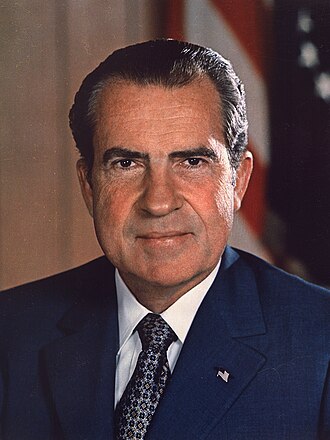 Richard Nixon
Post-Graduate Legal • 5m
EO 11136 Jan 3, 1964
⚖️✨ Zone 2 (Zone of Twilight) Constitutional Neutral
Executive Order 11136—Establishing the President's Committee on Consumer Interests and the Consumer Advisory Council
📜 5th Amend: Regulatory Execution with Due Process
There is hereby established the President's Committee on Consumer Interests (hereinafter referred to as the "Committee"). (b) The Committee shall be composed of representatives of the Attorney General, the Secretary of the Interior, the Secretary of Agriculture, the Secretary…
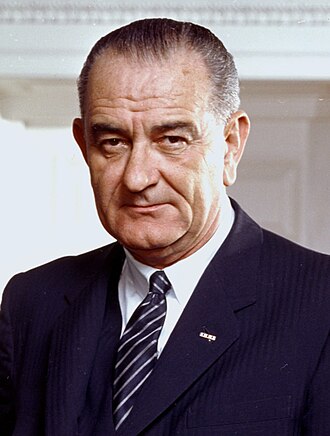 Lyndon B. Johnson
Post-Graduate Legal • 5m
EO 11349 May 1, 1967
🏛️✅ Zone 1 (Maximum Authority) Fidelity (+0.47)
Executive Order 11349—Amending Executive Order No. 11136, Relating to the President's Commission on Consumer Interests and the Consumer Advisory Council
📜 5th Amend: Regulatory Execution with Due Process
Executive Order No. 11136 of January 3,1964, is hereby amended to read as follows: "The consumer's interest is the American interest, for we are all consumers. In filling the needs of our daily lives, we are direct purchasers of two thirds of our total national production.
Lyndon B. Johnson College Level • 6m
EO 11584 Mar 3, 1971
🏛️✅ Zone 1 (Maximum Authority) Constitutional Neutral
Executive Order 11584—Inspection of Income, Excess-Profits, Estate, and Gift Tax Returns by the Senate Committee on Government Operations
📜 Art. I §8: Delegated Tariff & Commerce Execution
Any income, excess-profits, estate, or gift tax return for the years 1950 to 1971, inclusive, shall, during the Ninety-second Congress, be open to inspection by the Senate Committee on Government Operations or any duly authorized subcommittee thereof, in connection with its…
Richard Nixon Post-Graduate Legal • 1m
EO 11585 Mar 4, 1971
⚖️✨ Zone 2 (Zone of Twilight) Constitutional Neutral
Executive Order 11585—Creating an Emergency Board to Investigate Disputes Between Certain Carriers Represented by the National Railway Labor Conference and the Eastern, Western and Southeastern Carriers' Conference Committees and Certain of Their Employees Represented by the Brotherhood of Railroad Signalmen
📜 Art. II §1: Executive Discretion & Internal Operations
I hereby create a board of three members, to be appointed by me, to investigate these disputes. No member of the board shall be pecuniarily or otherwise interested in any organization of railroad employees or any carrier.
Richard Nixon Post-Graduate Legal • 1m
EO 11582 Feb 11, 1971
🏛️✅ Zone 1 (Maximum Authority) Constitutional Neutral
Executive Order 11582—Observance of Holidays by Government Agencies
📜 Art. I §8: Delegated Tariff & Commerce Execution
Except as provided in section 7, this order shall apply to all executive departments, independent agencies, and Government corporations, including their field services. SEC. 2.
Richard Nixon Post-Graduate Legal • 3m
📜
Scholarly & Legal Citations
Exec. Order No. 11,583 (Feb. 24, 1971), https://executiveordersarchive.org/orders/app-executive-order-11583-office-consumer-affairs.
