By virtue of the authority vested in me by the Constitution and statutes of the United States, including sections 3301 and 7301 of title 5 of the United States Code, and as President of the United States, Executive Order No. 11491 of October 29, 1969, relating to labor-management relations in the Federal service, is amended as follows: 1. Section 2 (b) is amended by deleting the words "formal or". 2. Paragraph (2) of section 2(e) is amended to read as follows: "(2) assists or participates in a strike against the Government of the United States or any agency thereof, or imposes a duty or obligation to conduct, assist, or participate in such a strike;" 3. Section 4(a) is amended to read as follows: "(a) There is hereby established the Federal Labor Relations Council, which consists of the Chairman of the Civil Service Commission, who shall be chairman of the Council, the Secretary of Labor, the Director of the Office of Management and Budget, and such other officials of the executive branch as the President may designate from time to time. The Civil Service Commission shall provide administrative support and services to the Council to the extent authorized by law." 4. Section 6(a) is amended— (a) by deleting the word "and" at the end of paragraph (3). (b) by substituting for paragraph (4) the following: "(4) decide unfair labor practice complaints and alleged violations of the standards of conduct for labor organizations; and" (c) by adding at the end thereof the following: "(5) decide questions as to whether a grievance is subject to a negotiated grievance procedure or subject to arbitration under an agreement." 5. Section 7(d) is amended to read as follows: "(d) Recognition of a labor organization does not— "(1) preclude an employee, regardless of whether he is in a unit of exclusive recognition, from exercising grievance or appellate rights established by law or regulations; or from choosing his own representative in a grievance or appellate action, except when presenting a grievance under a negotiated procedure as provided in section 13; "(2) preclude or restrict consultations and dealings between an agency and a veterans organization with respect to matters of particular interest to employees with veterans preference; or "(3) preclude an agency from consulting or dealing with a religious, social, fraternal, professional or other lawful association, not qualified as a labor organization, with respect to matters or policies which involve individual members of the association or are of particular applicability to it or its members. "Consultations and dealings under subparagraph (3) of this paragraph shall be so limited that they do not assume the character of formal consultation on matters of general employee-management policy, except as provided in paragraph (e) of this section, or extend to areas where recognition of the interests of one employee group may result in discrimination against or injury to the interests of other employees." 6. Section 7(f) is amended to read as follows: "(f) Informal recognition or formal recognition shall not be accorded." 7. Section 8 is revoked. 8. Section 13 is amended to read as follows: "Sec. 13. Grievance and arbitration procedures. "(a) An agreement between an agency and a labor organization shall provide a procedure, applicable only to the unit, for the consideration of grievances over the interpretation or application of the agreement. A negotiated grievance procedure may not cover any other matters, including matters for which statutory appeals procedures exist, and shall be the exclusive procedure available to the parties and the employees in the unit for resolving such grievances. However, any employee or group of employees in the unit may present such grievances to the agency and have them adjusted, without the intervention of the exclusive representative, as long as the adjustment is not inconsistent with the terms of the agreement and the exclusive representative has been given opportunity to be present at the adjustment. "(b) A negotiated procedure may provide for the arbitration of grievances over the interpretation or application of the agreement, but not over any other matters. Arbitration may be invoked only by the agency or the exclusive representative. Either party may file exceptions to an arbitrator's award with the Council, under regulations prescribed by the Council. "(c) Grievances initiated by an employee or group of employees in the unit on matters other than the interpretation or application of an existing agreement may he presented under any procedure available for the purpose. "(d) Questions that cannot be resolved by the parties as to whether or not a grievance is on a matter subject to the grievance procedure in an existing agreement, or is subject to arbitration under that agreement, may he referred to the Assistant Secretary for decision. "(e) No agreement may be established, extended, or renewed after the effective date of this Order which does not conform to this section. However, this section is not applicable to agreements entered into before the effective date of this Order." 9. Section 14 is revoked. 10. Section 19(d) is amended to read as follows: "(d) Issues which can properly be raised under an appeals procedure may not be raised under this section. Issues which can be raised under a grievance procedure may, in the discretion of the aggrieved party, be raised under that procedure or the complaint procedure under this section, but not under both procedures. Appeals or grievance decisions shall not be construed as unfair labor practice decisions under this Order nor as precedent for such decisions. All complaints under this section that cannot be resolved by the parties shall be filed with the Assistant Secretary." 11. Section 20 is amended to read as follows: "Sec. 20. Use of official time. Solicitation of membership or dues, and other internal business of a labor organization, shall be conducted during the non-duty hours of the employees concerned. Employees who represent a recognized labor organization shall not be on official time when negotiating an agreement with agency management, except to the extent that the negotiating parties agree to other arrangements which may provide that the agency will either authorize official time for up to 40 hours or authorize up to one-half the time spent in negotiations during regular working hours, for a reasonable number of employees, which number normally shall not exceed the number of management representatives." 12. Section 21 is amended to read as follows: "Sec. 21. Allotment of dues. (a) When a labor organization holds exclusive recognition, and the agency and the organization agree in writing to this course of action, an agency may deduct the regular and periodic dues of the organization from the pay of members of the organization in the unit of recognition who make a voluntary allotment for that purpose. Such an allotment is subject to the regulations of the Civil Service Commission, which shall include provision for the employee to revoke his authorization at stated six-month intervals. Such an allotment terminates when— "(1) the dues withholding agreement between the agency and the labor organization is terminated or ceases to be applicable to the employee; or "(2) the employee has been suspended or expelled from the labor organization. "(b) An agency may deduct the regular and periodic dues of an association of management officials or supervisors from the pay of members of the association who make a voluntary allotment for that purpose, when the agency and the association agree in writing to this course of action. Such an allotment is subject to the regulations of the Civil Service Commission." 13. Section 24 is amended by deleting "(a)" after the section heading; and by deleting subsections (b), (c), and (d). 14. Section 25(a) is amended to read as follows: "(a) The Civil Service Commission, in conjunction with the Office of Management and Budget, shall establish and maintain a program for the policy guidance of agencies on labor-management relations in the Federal service and periodically review the implementation of these policies. The Civil Service Commission shall continuously review the operation of the Federal labor-management relations program to assist in assuring adherence to its provisions and merit system requirements; implement technical advice and information programs for the agencies; assist in the development of programs for training agency personnel and management officials in labor-management relations; and, from time to time, report to the Council on the state of the program with any recommendations for its improvement." The amendments made by this Order shall become effective ninety days from this date. Each agency shall issue appropriate policies and regulations consistent with this Order for its implementation. RICHARD NIXON The White House August 26, 1971
Executive Order 11616 🏛️✅ Zone 1: Maximum Authority Constitutional Neutral (+0.02)
📜 Art. I §8: Delegated Tariff & Commerce Execution
Executive Order 11616—Amending Executive Order No. 11491, Relating to Labor-Management Relations in the Federal Service
Executive Brief • At a Glance
⏱️ 7 min read (1,424 words) •
● In Effect
🎯 Primary Mandate
Executive Order No. 11491 of October 29, 1969, relating to labor-management relations in the Federal service, is amended as follows: 1.
⚖️ Constitutional Footing
🏛️✅ Zone 1: Maximum Authority
Express or Implied Congressional Authorization
📜 Art. I §8: Delegated Tariff & Commerce Execution
🏛️ Scope & Affected Sectors
Armed Forces & Military Establishments Sovereign State Governments & Localities Executive Departments & Federal Civil Servants
Plain-English Translation & Framers' Constitutional Analysis
Early Statesman synthesis distilling legal jargon into practical meaning, statutory anchors, and structural constitutional impacts.
Signed by President Richard Nixon on August 26, 1971, this order concerns Amending Executive Order No. 11491, Relating to Labor-Management Relations in the Federal Service. Executive Order No. 11491 of October 29, 1969, relating to labor-management relations in the Federal service, is amended as follows: 1. Section 2 (b) is amended by deleting the words "formal or". 2. Paragraph (2) of section 2(e) is amended to read as follows: "(2) assists or participates in a strike against the Government of the United States or any agency thereof, or imposes a duty or obligation to conduct…
Constitutional Assessment: This action represents an orderly exercise of Article II administrative discretion, managing the internal machinery and personnel of the executive branch without abridging the ancient liberties of the people.
Key Directives & Operative Actions
▪
Executive Order No. 11491 of October 29, 1969, relating to labor-management relations in the Federal service, is amended as follows: 1.
▪
Is amended by deleting the words "formal or". 2.
▪
Paragraph (2) of section 2(e) is amended to read as follows: "(2) assists or participates in a strike against the Government of the United States or any agency thereof, or imposes a duty or obligation to conduct, assist, or participate in such a strike;" 3.
▪
Section 4(a) is amended to read as follows: "(a) There is hereby established the Federal Labor Relations Council, which consists of the Chairman of the Civil Service Commission, who shall be chairman of the Council, the Secretary of Labor, the Director of the Office of Management and Budget, and such other officials of the executive branch as the President may designate from time to time.
Constitutional & Societal Entities Impacted
🏛️ Armed Forces & Military Establishments
🏛️ Sovereign State Governments & Localities
🏛️ Executive Departments & Federal Civil Servants
Policy Areas & Topics
🏛️
The Framers' Constitutional Council
1787 PrismEvaluating this order against the constitutional debates of 1787 and the limits of Article II executive power.
🏛️✅ Zone 1 (Maximum Authority)
§
"When the President acts pursuant to an express or implied authorization of Congress, his authority is at its maximum, for it includes all that he possesses in his own right plus all that Congress can delegate."
— Justice Robert H. Jackson, Youngstown Sheet & Tube Co. v. Sawyer (1952) Express or Implied Congressional Authorization
JM
James Madison
Separation of Powers & Legislative Primacy
"The constitutional magistracy was designed not to invent policy, but to be the faithful instrument of the laws passed by the people's representatives." — Speech in the First Congress (1789)
Madison would approve the structural posture of this order. The President acts strictly in subordination to statutory authority granted under Article II, Section 3 ("take Care that the Laws be faithfully executed"). The checks and balances hold firm because the policy origin remains with the legislature.
Madisonian Stance: Concurring (Statutory)
AH
Alexander Hamilton
The Energetic Executive & Unified Command
"The direction of war implies the direction of the common strength; and the power of directing and employing the common strength must be under the direction of the single hand of the Executive." — Federalist No. 74 (1788)
Hamilton would forcefully champion executive discretion here. For foreign entanglements, commerce defense, and national security, deliberative assemblies are too slow and faction-ridden. A unified, energetic Executive exercising swift command is precisely what the Philadelphia Convention intended for national preservation.
Hamiltonian Stance: Supportive of Execution
GM
George Mason
Bill of Rights, Due Process & 10th Amendment
"The president will be surrounded by flatterers and sycophants... and the great powers of the executive will gradually absorb the liberties of the people." — Cato IV (Anti-Federalist, 1787)
The Anti-Federalist prism advises continuous democratic vigilance. Even routine administrative directives aggregate centralized federal power away from town halls and state assemblies toward a distant executive apparatus.
Anti-Federalist Stance: Eternal Vigilance Required
📐
Five Measurable "Constitutional Friction" Dimensions
An objective audit measuring potential separation-of-powers tension against the United States Constitution and established Supreme Court doctrine.
⚖️ Discretionary Twilight Zone
62 / 100 friction index
Dimension 1 • Art. I, §1 & §8
High Friction
Legislative Encroachment & Purse
Touches upon core congressional prerogatives: raises appropriations reallocation, tariff imposition, or statutory preemption questions.
Benchmark: Power of the purse, taxes/tariffs, and rule of law reserved to Congress.
Dimension 2 • Art. II, §1 & §3
Moderate Friction
Executive Scope & Faithfulness
Directs internal executive branch machinery, agency workflows, and federal personnel.
Benchmark: Faithfully execute laws enacted by Congress vs. unilateral decree.
Dimension 3 • 10th Amendment
High Friction
Federalism & State Sovereignty
Creates friction with the Tenth Amendment by conditioning state grants, mandating local compliance, or preempting state police powers.
Benchmark: Police powers and un-delegated responsibilities reserved to the States.
Dimension 4 • 5th & 14th Amendments
High Friction
Due Process & Individual Rights
Scrutinized under the Bill of Rights for potential impact on private contracts, property rights, or procedural due process.
Benchmark: Protection of private property, contracts, liberty, and procedural justice.
Dimension 5 • Separation of Powers
Low Friction
Youngstown Jacksonian Tier
The President operates strictly as the constitutional Chief Executive, carrying out policy established by Congress with strong statutory backing.
Benchmark: Express or Implied Congressional Authorization
⚖️
Audit Synthesis
This order operates within Justice Jackson’s Zone of Twilight, resting upon concurrent presidential authority or congressional silence.
Weighted composite: Art. I (25%), Art. II (25%), Federalism (15%), Due Process (15%), Youngstown (20%).
ℹ️
How to read these dimensions: Executive power expands whenever an administration acts without explicit statutory authorization from Congress (Article I), touches upon police powers historically reserved to the states (Tenth Amendment), or limits private rights and property without judicial process. A low friction score indicates strict concordance with enacted law; a high friction score highlights orders testing the limits of presidential discretion.
Total Words
1,424
8,973 characters
Estimated Read Time
7 min
@ 200 words / min
Flesch-Kincaid
17.8
Post-Graduate Legal
Text size:
Related Executive Orders
1 order cited directly in this text, plus related actions from this administration.
EO 11491 Oct 29, 1969
🏛️✅ Zone 1 (Maximum Authority) Constitutional Neutral
Executive Order 11491—Labor-Management Relations in the Federal Service
📜 Art. I §8: Delegated Tariff & Commerce Execution
I hereby direct that the following policies shall govern officers and agencies of the executive branch of the Government in all dealings with Federal employees and organizations representing such employees. GENERAL PROVISIONS SECTION 1. Policy.
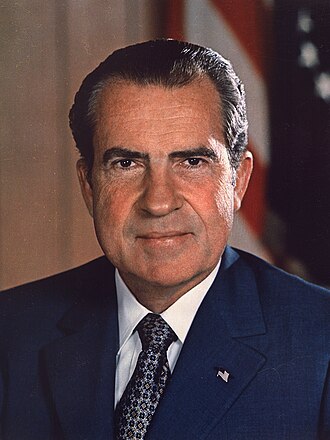 Richard Nixon
Post-Graduate Legal • 30m
EO 11617 Sep 2, 1971
⚖️✨ Zone 2 (Zone of Twilight) Constitutional Neutral
Executive Order 11617—Amending Executive Order No. 11615, Providing for Stabilization of Prices, Rents, Wages, and Salaries
📜 Art. II §1: Executive Discretion & Internal Operations
Section 2 (b) of Executive Order No. 11615 of August 15, 1971, is amended by inserting after the comma following the words "the Secretary of Labor", the following: "the Secretary of Housing and Urban Development,".
Richard Nixon High School • 1m
EO 11615 Aug 15, 1971
🏛️✅ Zone 1 (Maximum Authority) Fidelity (+0.29)
Executive Order 11615—Providing for Stabilization of Prices, Rents, Wages, and Salaries
📜 Art. I §8: Delegated Tariff & Commerce Execution
Prices, rents, wages, and salaries shall be stabilized for a period of 90 days from the date hereof at levels not greater than the highest of those pertaining to a substantial volume of actual transactions by each individual, business, firm or other entity of any kind during…
Richard Nixon Post-Graduate Legal • 5m
EO 11618 Sep 10, 1971
⚖️✨ Zone 2 (Zone of Twilight) Constitutional Neutral
Executive Order 11618—Further Amending Executive Order No. 10713, Providing for Administration of the Ryukyu Islands
📜 Art. II §2: Commander-in-Chief Supervisory Authority
Executive Order No. 11263 of December 20, 1965, and Executive Order No. 11395 of January 31, 1968, is hereby further amended as follows: 1. Section 6(a) of that Order is revised to read as fol. lows: "(a) The legislative power of the Government of the Ryukyu Islands, except as…
Richard Nixon College Level • 2m
EO 11614 Aug 5, 1971
🏛️✅ Zone 1 (Maximum Authority) Fidelity (+0.33)
Executive Order 11614—Establishing the National Business Council for Consumer Affairs
📜 5th Amend: Regulatory Execution with Due Process
Establishment of the Council. (a) There is hereby established the National Business Council for Consumer Affairs (hereinafter referred to as the "Council") which shall be composed of a Chairman, a Vice Chairman, and other representatives of business and industry appointed by…
Richard Nixon College Level • 3m
EO 11613 Aug 2, 1971
⚖️✨ Zone 2 (Zone of Twilight) Constitutional Neutral
Executive Order 11613—Membership of Environmental Protection Agency on Established River Basin Commissions
📜 Art. II §1: Executive Discretion & Internal Operations
Section 3 (2) of each of the following-described Executive orders is amended by adding "Environmental Protection Agency," immediately after "Department of Transportation,"— (1) Executive Order No. 11331 of March 6, 1967, establishing the Pacific Northwest River Basins…
Richard Nixon High School • 1m
📜
Scholarly & Legal Citations
Exec. Order No. 11,616 (Aug. 26, 1971), https://executiveordersarchive.org/orders/app-executive-order-11616-amending-executive-order-no-11491-relating-labor-management.
