To assure that the many committees appointed to advise or assist the Federal Government can work effectively, it is necessary to set forth general standards for their formation, use, conduct, management and accessibility to the public. Now, THEREFORE, by virtue of the authority vested in me as President by the Constitution and laws of the United States, it is hereby ordered as follows: SECTION 1. As used in this order, the term— (1) "department or agency" means any department, independent agency, or establishment of the executive branch of the Government; (2) "Government Official" means any full-time salaried officer or employee of the Federal Government; (3) "Director" means the Director of the Office of Management and Budget; (4) "Committee" means any committee, board, commission, council, conference, panel, task force, or other similar group or body established to meet on a recurring basis to provide advice or recommendations to the Government, or for the purpose of coordinating the activities of departments or agencies, including Presidential, interagency, advisory, or industrial advisory committees but excluding intra-agency committees; (5) "Presidential committee" means any advisory committee having members appointed by the President and which is used as a source of direct advice and counsel to the President or the Vice President; (6) "Advisory committee" means any committee that is not composed wholly of Government officials and (A) is established by a department or agency of the Government in the interest of obtaining advice or recommendations, and which has been or will be in existence more than twelve months, or (B) is not established by a department or agency, but only for such period when it is being utilized by a department or agency in the same manner as a Government-established advisory committee. (7) "industrial advisory committee" means an advisory committee composed predominantly of members or representatives of a single industry or group of related industries, or of any subdivision of a single industry made on a geographic service or product basis; and (8) "interagency committee" means any committee formally established by a department or agency whose membership consists exclusively of Government officials, as defined herein, representing more than one department or agency, and which has been or will be in existence more than twelve months. SEC. 2. No interagency or advisory committee including any industrial advisory committee shall be established by any department or agency unless such establishment is: (1) specifically authorized by statute or Presidential directive, or (2) specifically determined as a matter of formal record by the head of the department or agency to be in the public interest in connection with the performance of duties imposed on that department or agency by law. SEC. 3. The heads of departments or agencies shall establish standards for the chartering of committees. No committee shall meet until after a committee charter has been approved by the head of the department or agency establishing the committee except where such committee has been established by statute. SEC. 4. Unless otherwise specifically authorized by statute or Presidential directive, no advisory committee shall be utilized for functions not solely advisory. Determinations of action to be taken and policy to be expressed with respect to matters upon which a committee advises or makes recommendations shall be made solely by the President or an official of a department or agency of the Government. SEC. 5. Unless its duration is otherwise fixed by statute or Presidential directive, a committee shall terminate not later than two years from the date of its formation unless the establishing authority makes a formal determination not more than 60 days prior to the date of scheduled termination that its continued existence is in the public interest. A like determination by the establishing authority shall be necessary not more than 60 days before the end of each subsequent two-year period to continue the existence of such committee thereafter. For the purpose of this section, the date of formation of a committee in existence on the date of publication of this order, and not now having a termination date, shall be deemed to be January 1, 1972, or the actual date of its formation, whichever is later. SEC. 6. Unless specified to the contrary by Presidential directive, statute, or committee charter, the department or agency establishing a committee shall be responsible for providing support services for the committee's activities. Where more than one department or agency establishes a committee, only one of those departments or agencies shall be responsible for support services at any one time. SEC. 7. In order to strengthen interagency or advisory committee responsibility, a committee shall have dual or rotating chairmanships only when the head of the department or agency establishing the committee determines that such an arrangement is required. SEC. 8. The Director shall: (1) establish and maintain oversight of the administrative activities of Presidential advisory committees unless provided to the contrary by the establishing authority; (2) provide guidance to departments and agencies concerning the management of interagency and advisory committees consistent with the purposes and provisions of this order; (3) from time to time request such information as he deems necessary to assure proper utilization of committees; and (4) on or before January 1 of each year, provide to the Congress and thereafter publish in the Federal Register, a list of Presidential advisory, interagency advisory, and industry advisory committees established or used by the executive branch during the preceding fiscal year. Such a list shall contain (A) the name of each committee and the agency to which it reports, (B) the name and business address of the Chairman and the agency or organization he represents, (C) an indication that the committee was established, continued or terminated during the reporting year, and (D) the name, business address and telephone number of a person whose duty it is to make appropriate response to requests for additional information about the committee. SEC. 9. The head of every department or agency establishing a committee shall: (1) designate a Committee Management Officer to exercise effective control over the establishment and use of interagency, advisory, and industry advisory committees; (2) issue directives and provide guidance for the management of the department or agency, interagency advisory, and industry advisory committees consistent with the provisions and purposes of this order and the instructions of the Director; (3) designate a Government official who shall be responsible for assembling committee records and, under established agency procedures, responding to requests for public information; and (4) establish a committee management system, under the supervision of the Committee Management Officer, which will provide systematic and effective review and evaluation of the activities and accomplishments of interagency, advisory, and industry advisory committees. SEC. 10. Advisory committees shall meet under the chairmanship of, or in the presence of, a Government official appointed by the agency establishing the committee who shall have the authority and be required to adjourn any meetings whenever he considers adjournment to be in the public interest. SEC. 11. Each industrial advisory committee shall be reasonably representative of the group of industries, the single industry, or the geographical, service or product segment thereof to which it relates, taking into account the size and function of business enterprises in the industry or industries, and their location, affiliation, and competitive status, among other factors. Selection of industry members shall, unless otherwise provided by statute, be limited to individuals actively engaged in operations in the particular industry, industries, or segments concerned, except where the department or agency head makes a written determination that such limitations would interfere with effective committee operation, detailing his reasons therefor. SEC. 12. Advisory committees shall not: (1) receive, compile, or discuss data or reports showing the current or projected commercial operations of identified business enterprises, unless the department or agency head determines it necessary for the effective functioning of the committee, or (2) hold any meetings except at the call of, or with the advance approval of, a Government official and with an agenda approved by such official, unless the head of the agency determines it is in the public interest to permit such meetings. SEC. 13. (a) In order to provide for public knowledge of and accessibility to advisory and industry advisory committees, department and agency heads shall make adequate provision for participation by the public in the activities of such committees. In carrying out this obligation, and except as provided in subsection (d) of this section, departments and agencies shall: (1) require that all meetings of such committees be open to public Observation, and (2) apprise, by publication in the Federal Register or as appropriate by publication in local media, any interested individual or group of the purposes, membership and activities of advisory and industrial advisory committees, including dates, places, and agendas of open meetings. (b) Any interested person may attend open meetings of advisory and industrial advisory committees. However, the department or agency head may establish reasonable limitations as to numbers of persons who may attend and the nature and extent of their participation, if any, in such meetings. (c) Advice or recommendations of the committee shall be given only with respect to matters covered in the record of the committee's proceedings. Records shall be kept of all committee proceedings; including: (1) the identification of committee members present and members of the public who participate at meetings and the interests or affiliations they represent; (2) the written information made available for consideration by the committee; (3) a description of matters discussed; and (4) recommendations made and reasons therefor. (d) The preceding provisions of this section shall apply to all advisory and industry advisory committees except to the extent that a determination is made in writing by the department or agency head that committee activities are matters which fall within policies analogous to those recognized in Section 552 (b) of Title 5 of the United. States Code, and the public interest requires such activities to be withheld from disclosure. When such a determination is made, the department or agency head shall detail his reasons therefor. In the event a department or agency head makes such a determination, provision shall be made for the committee to issue a report, at least annually, setting forth a summary of its activities and such other matters as would be informative to the public and would be consistent with policies analogous to those recognized in Section 552 (b) of Title 5 of the United States Code. (e) The availability to the public of records of such committees shall be determined pursuant to section 552 of Title 5 of the United States Code and other applicable law. SEC. 14. The requirements of this order shall not apply to any advisory committee composed wholly of representatives of State or local agencies or charitable, religious, educational, civic, social welfare, or other similar nonprofit organizations. SEC. 15. To the extent this order is inconsistent with or in conflict with any statutory provision, the provisions of the order shall not apply. SEC. 16. This order supersedes Executive Order No. 11007, as well as all provisions of prior Executive orders to the extent that they are in conflict with the provisions of this order. RICHARD NIXON The White House, June 5, 1972
Executive Order 11671 🏛️✅ Zone 1: Maximum Authority Constitutional Neutral (+0.02)
📜 Art. I §8: Delegated Tariff & Commerce Execution
Executive Order 11671—Committee Management
Executive Brief • At a Glance
⏱️ 9 min read (1,859 words) •
● In Effect
🎯 Primary Mandate
As used in this order, the term— (1) "department or agency" means any department, independent agency, or establishment of the executive branch of the Government; (2) "Government Official" means any full-time salaried officer or employee of the Federal Government; (3) "Director" means the Director of the Office of Management and Budget; (4) "Committee" means any committee, board, commission, council, conference, panel, task force, or other similar group or body established to meet on a recurring basis to provide advice or recommendations to the Government, or for the purpose of coordinating the activities of departments or agencies, including Presidential, interagency, advisory, or industrial advisory committees but excluding intra-agency…
⚖️ Constitutional Footing
🏛️✅ Zone 1: Maximum Authority
Express or Implied Congressional Authorization
📜 Art. I §8: Delegated Tariff & Commerce Execution
🏛️ Scope & Affected Sectors
Merchants, Importers & Commercial Enterprises Sovereign State Governments & Localities Executive Departments & Federal Civil Servants Private Citizens & Property Owners
Plain-English Translation & Framers' Constitutional Analysis
Early Statesman synthesis distilling legal jargon into practical meaning, statutory anchors, and structural constitutional impacts.
Signed by President Richard Nixon on June 5, 1972, this order concerns Committee Management. As used in this order, the term— (1) "department or agency" means any department, independent agency, or establishment of the executive branch of the Government; (2) "Government Official" means any full-time salaried officer or employee of the Federal Government; (3) "Director" means the Director of the Office of Management and Budget; (4) "Committee" means any committee, board, commission, council, conference…
Constitutional Assessment: This action represents an orderly exercise of Article II administrative discretion, managing the internal machinery and personnel of the executive branch without abridging the ancient liberties of the people.
Key Directives & Operative Actions
▪
As used in this order, the term— (1) "department or agency" means any department, independent agency, or establishment of the executive branch of the Government; (2) "Government Official" means any full-time salaried officer or employee of the Federal Government; (3) "Director" means the Director of the Office of Management and Budget; (4) "Committee" means any committee, board, commission, council, conference, panel, task force, or other similar group or body established to meet on a recurring basis to provide advice or recommendations to the Government, or for the purpose of coordinating the activities of departments or agencies, including Presidential, interagency, advisory, or industrial advisory committees but excluding intra-agency…
▪
"industrial advisory committee" means an advisory committee composed predominantly of members or representatives of a single industry or group of related industries, or of any subdivision of a single industry made on a geographic service or product basis; and (8) "interagency committee" means any committee formally established by a department or agency whose membership consists exclusively of Government officials, as defined herein, representing more than one department or agency, and which has been or will be in existence more than twelve months.
▪
No interagency or advisory committee including any industrial advisory committee shall be established by any department or agency unless such establishment is: (1) specifically authorized by statute or Presidential directive, or (2) specifically determined as a matter of formal record by the head of the department or agency to be in the public interest in connection with the performance of duties imposed on that department or agency by law.
▪
The heads of departments or agencies shall establish standards for the chartering of committees.
Constitutional & Societal Entities Impacted
🏛️ Merchants, Importers & Commercial Enterprises
🏛️ Sovereign State Governments & Localities
🏛️ Executive Departments & Federal Civil Servants
🏛️ Private Citizens & Property Owners
🏛️ Public Health & Medical Institutions
Policy Areas & Topics
🏛️
The Framers' Constitutional Council
1787 PrismEvaluating this order against the constitutional debates of 1787 and the limits of Article II executive power.
🏛️✅ Zone 1 (Maximum Authority)
§
"When the President acts pursuant to an express or implied authorization of Congress, his authority is at its maximum, for it includes all that he possesses in his own right plus all that Congress can delegate."
— Justice Robert H. Jackson, Youngstown Sheet & Tube Co. v. Sawyer (1952) Express or Implied Congressional Authorization
JM
James Madison
Separation of Powers & Legislative Primacy
"The constitutional magistracy was designed not to invent policy, but to be the faithful instrument of the laws passed by the people's representatives." — Speech in the First Congress (1789)
Madison would approve the structural posture of this order. The President acts strictly in subordination to statutory authority granted under Article II, Section 3 ("take Care that the Laws be faithfully executed"). The checks and balances hold firm because the policy origin remains with the legislature.
Madisonian Stance: Concurring (Statutory)
AH
Alexander Hamilton
The Energetic Executive & Unified Command
"The direction of war implies the direction of the common strength; and the power of directing and employing the common strength must be under the direction of the single hand of the Executive." — Federalist No. 74 (1788)
Hamilton would forcefully champion executive discretion here. For foreign entanglements, commerce defense, and national security, deliberative assemblies are too slow and faction-ridden. A unified, energetic Executive exercising swift command is precisely what the Philadelphia Convention intended for national preservation.
Hamiltonian Stance: Supportive of Execution
GM
George Mason
Bill of Rights, Due Process & 10th Amendment
"The president will be surrounded by flatterers and sycophants... and the great powers of the executive will gradually absorb the liberties of the people." — Cato IV (Anti-Federalist, 1787)
The Anti-Federalist prism advises continuous democratic vigilance. Even routine administrative directives aggregate centralized federal power away from town halls and state assemblies toward a distant executive apparatus.
Anti-Federalist Stance: Eternal Vigilance Required
📐
Five Measurable "Constitutional Friction" Dimensions
An objective audit measuring potential separation-of-powers tension against the United States Constitution and established Supreme Court doctrine.
⚖️ Discretionary Twilight Zone
46 / 100 friction index
Dimension 1 • Art. I, §1 & §8
Moderate Friction
Legislative Encroachment & Purse
Administers commerce or fiscal programs requiring ongoing statutory delegation and legislative oversight.
Benchmark: Power of the purse, taxes/tariffs, and rule of law reserved to Congress.
Dimension 2 • Art. II, §1 & §3
Moderate Friction
Executive Scope & Faithfulness
Directs internal executive branch machinery, agency workflows, and federal personnel.
Benchmark: Faithfully execute laws enacted by Congress vs. unilateral decree.
Dimension 3 • 10th Amendment
High Friction
Federalism & State Sovereignty
Creates friction with the Tenth Amendment by conditioning state grants, mandating local compliance, or preempting state police powers.
Benchmark: Police powers and un-delegated responsibilities reserved to the States.
Dimension 4 • 5th & 14th Amendments
Moderate Friction
Due Process & Individual Rights
Applies regulatory or compliance standards to private contractors or commercial entities.
Benchmark: Protection of private property, contracts, liberty, and procedural justice.
Dimension 5 • Separation of Powers
Low Friction
Youngstown Jacksonian Tier
The President operates strictly as the constitutional Chief Executive, carrying out policy established by Congress with strong statutory backing.
Benchmark: Express or Implied Congressional Authorization
⚖️
Audit Synthesis
This order operates within Justice Jackson’s Zone of Twilight, resting upon concurrent presidential authority or congressional silence.
Weighted composite: Art. I (25%), Art. II (25%), Federalism (15%), Due Process (15%), Youngstown (20%).
ℹ️
How to read these dimensions: Executive power expands whenever an administration acts without explicit statutory authorization from Congress (Article I), touches upon police powers historically reserved to the states (Tenth Amendment), or limits private rights and property without judicial process. A low friction score indicates strict concordance with enacted law; a high friction score highlights orders testing the limits of presidential discretion.
Total Words
1,859
12,060 characters
Estimated Read Time
9 min
@ 200 words / min
Flesch-Kincaid
28.2
Post-Graduate Legal
Text size:
🔗
Referenced By Later Executive Orders (1)
Subsequent presidents who cited, amended, continued, or revoked this directive in later orders.
Supersedes Executive Order 11686—Committee Management
Richard Nixon • 1972-10-07
Related Executive Orders
1 order cited directly in this text, plus related actions from this administration.
EO 11007 Feb 26, 1962
🏛️✅ Zone 1 (Maximum Authority) Constitutional Neutral
Executive Order 11007—Prescribing Regulations for the Formation and Use of Advisory Committees
📜 10th Amend: Intergovernmental Federalism Cooperation
The regulations prescribed in this order for the formation and use of advisory committees shall govern the departments and agencies of the Government to the extent not inconsistent with specific law. SEC. 2.
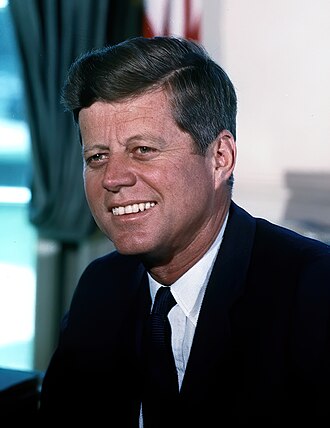 John F. Kennedy
Post-Graduate Legal • 7m
EO 11673 Jun 6, 1972
⚖️✨ Zone 2 (Zone of Twilight) Constitutional Neutral
Executive Order 11673—Amending Executive Order No. 8684 to Redefine the Culebra Island Naval Defensive Sea Area
📜 Art. II §1: Executive Discretion & Internal Operations
The Culebra Island Naval Defensive Sea Area, as defined in Executive Order No. 8684, of February 14, 1941, is hereby redefined as the territorial waters between the extreme high-water mark and the three-mile marine boundary adjacent to that portion of the island of Culebra…
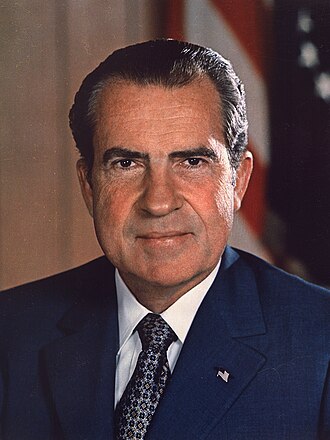 Richard Nixon
Post-Graduate Legal • 1m
EO 11672 Jun 6, 1972
⚖️✨ Zone 2 (Zone of Twilight) Constitutional Neutral
Executive Order 11672—Providing for the Transfer or Furnishing of Property Under the Postal Reorganization Act
📜 5th Amend: Regulatory Execution with Due Process
The authority conferred upon the President by section 2002 (d) of title 39 of the United States Code is hereby delegated to the Administrator of General Services subject to the provisions of this order. SEC. 2.
Richard Nixon Post-Graduate Legal • 2m
EO 11670 May 20, 1972
⚖️✨ Zone 2 (Zone of Twilight) Constitutional Neutral
Executive Order 11670—Providing for the Return of Certain Lands to the Yakima Indian Reservation
📜 5th Amend: Regulatory Execution with Due Process
In 1855, the United States entered into a treaty with the Yakima Tribe of Indians. The treaty created a reservation, generally described by natural landmarks, for the exclusive use and benefit of the Tribe.
Richard Nixon College Level • 3m
EO 11674 Jun 29, 1972
⚖️✨ Zone 2 (Zone of Twilight) Constitutional Neutral
Executive Order 11674—Amending Executive Order No. 11640, as Amended, Further Providing for the Stabilization of the Economy
📜 Art. II §1: Executive Discretion & Internal Operations
By virtue of the authority vested in me by the Constitution and statutes of the United States, particularly the Economic Stabilization Act of 1970 (P.L. 92-210; 85 Stat. 743), as amended, subsection (c) of Section 1 of Executive Order No. 11640 of January 26, 1972, is amended…
Richard Nixon High School • 1m
EO 11669 May 2, 1972
⚖️✨ Zone 2 (Zone of Twilight) Constitutional Neutral
Executive Order 11669—J. Edgar Hoover
📜 Art. II §2: Commander-in-Chief Supervisory Authority
Pursuant to the provisions of Section 4 of Proclamation 3044 of March 1, 1954, as amended, that until interment the flag of the United States shall be flown at half-staff on all buildings, grounds and naval vessels of the Federal Government in the District of Columbia and…
Richard Nixon College Level • 1m
📜
Scholarly & Legal Citations
Exec. Order No. 11,671 (June 5, 1972), https://executiveordersarchive.org/orders/app-executive-order-11671-committee-management.
