By virtue of the authority vested in me as President of the United States of America, including section 301 of title 3 of the United States Code, and in furtherance of the purpose and policies of the Clean Air Act, as amended (42 U.S.C. 1857), the Federal Water Pollution Control Act, as amended (33 U.S.C. 1251), the Solid Waste Disposal Act, as amended (42 U.S.C. 3251), the Noise Control Act of 1972 (42 U.S.C. 4901), the Marine Protection, Research, and Sanctuaries Act of 1972 (16 U.S.C. 1431), the Federal Insecticide, Fungicide, and Rodenticide Act, as amended by the Federal Environmental Pesticide Control Act of 1972 (7 U.S.C. 136), and the National Environmental Policy Act of 1969 (42 U.S.C. 4321), it is ordered as follows: SECTION 1. Policy. It is the purpose of this order to assure that the Federal Government, in the design, construction, management, operation, and maintenance of its facilities, shall provide leadership in the nationwide effort to protect and enhance the quality of our air, water, and land resources through compliance with applicable standards for the prevention, control, and abatement of environmental pollution in full cooperation with State and local governments. Compliance by Federal facilities with Federal, State, interstate, and local substantive standards and substantive limitations, to the same extent that any person is subject to such standards and limitations, will accomplish the objective of providing Federal leadership and cooperation in the prevention of environmental pollution. In light of the principle of Federal supremacy embodied in the Constitution, this order is not intended, nor should it be interpreted, to require Federal facilities to comply with State or local administrative procedures with respect to pollution abatement and control. SEC. 2. Definitions. As used in this order: (1) The term "Administrator" means the Administrator of the Environmental Protection Agency. (2) The term "Federal agencies" means the departments, agencies, establishments, and instrumentalities of the executive branch. (3) The term "State, interstate, and local agencies" means any of the following: (A) a State agency designated by the Governor of that State as an official State agency responsible for enforcing State and local laws relating to the prevention, control, and abatement of environmental pollution; (B) any agency established by two or more States and having substantial powers or duties pertaining to the prevention, control, and abatement of environmental pollution; (C) a city, county, or other local government authority charged with responsibility for enforcing ordinances or laws relating to the prevention, control, and abatement of environmental pollution; or (D) an agency of two or more municipalities located in the same State or in different States and having substantial powers or duties pertaining to the prevention, control, and abatement of environmental pollution. (4) The term "facilities" means the buildings, installations, structures, land, public works, equipment, aircraft, vessels, and other vehicles and property, owned by, or constructed or manufactured for the purpose of leasing to, the Federal Government. (5) The term "United States" means the fifty States, the District of Columbia, the Commonwealth of Puerto Rico, the Virgin Islands, Guam, American Samoa, and the Trust Territory of the Pacific Islands. SEC. 3. Responsibilities. (a) Heads of Federal agencies shall, with regard to all facilities under their jurisdiction in the United States: (1) Ensure that applicable standards specified in section 4 of this order are met on a continuing basis. (2) Cooperate with the Administrator and State, interstate, and local agencies in the prevention, control, and abatement of environmental pollution and, in accordance with guidelines issued by the Administrator, provide to the Administrator and to those agencies such information as is necessary to determine compliance with applicable standards. Such cooperation shall include development of an abatement plan and schedule for meeting applicable standards. (3) Present to the Director of the Office of Management and Budget, annually, a plan to provide for such improvement in the design, construction, management, operation, and maintenance of existing facilities as may be necessary to meet applicable standards specified in section 4. (4) Consider the environmental impact in the initial stages of planning for each new facility or modification to an existing facility in accordance with the National Environmental Policy Act. (5) Include with all budget requests for the design and construction of new facilities or for modification of existing facilities funds for such measures as may be necessary to meet applicable standards specified in section 4. Budget requests shall reflect the most efficient alternative for meeting applicable standards. (6) Consult, as appropriate, with the Administrator and with State and local agencies concerning the best techniques and methods available for the prevention, control, and abatement of environmental pollution. (7) Ensure that any funds appropriated and apportioned for the prevention, control, and abatement of environmental pollution are not used for any other purpose unless permitted by law and unless specifically approved by the Office of Management and Budget. (b) Where activities are carried out at Federal facilities acquired by leasing or other Federal agreements, the head of the responsible agency may at his discretion, to the extent permissible under applicable statutes and regulations, require the lessee or permittee to assume full responsibility for complying with standards for the prevention, control, and abatement of environmental pollution. (c) Heads of Federal agencies responsible for the construction and operation of Federal facilities outside the United States shall assure that such facilities are operated so as to comply with the environmental pollution standards of general applicability in the host country or jurisdictions concerned. (d) The Administrator shall: (1) Provide technical advice and assistance to the heads of Federal agencies in connection with their duties and responsibilities under this order. (2) Maintain such review of Federal facilities' compliance with the standards specified in section 4 as may be necessary. (3) Provide liaison as required to assure that actions taken by Federal agencies pursuant to this order are coordinated with State, interstate, and local programs for the prevention, control, and abatement of environmental pollution. (4) Mediate conflicts between Federal agencies and State, interstate, or local agencies in matters affecting the application of, or compliance with, applicable standards specified in section 4. (5) Develop in consultation with the heads of other Federal agencies a coordinated strategy for Federal facility compliance with applicable standards specified in section 4 which incorporates, to the maximum extent practicable, common procedures for an integrated approach to Federal agency compliance with such standards, and issue such regulations and guidelines as are deemed necessary to facilitate implementation of that strategy and to provide a framework for coordination and cooperation among the Environmental Protection Agency, the other Federal agencies, and the State, interstate, and local agencies. (6) Maintain a continuing review of the implementation of this order and, from time to time, report to the President on the progress of the Federal agencies in implementing this order. SEC. 4. Standards. (a) Heads of Federal agencies shall ensure that all facilities under their jurisdiction are designed, constructed, managed, operated, and maintained so as to conform to the following requirements: (1) Federal, State, interstate, and local air quality standards and emission limitations adopted in accordance with or effective under the provisions of the Clean Air Act, as amended. (2) Federal, State, interstate, and local water quality standards and effluent limitations respecting the discharge or runoff of pollutants adopted in accordance with or effective under the provisions of the Federal Water Pollution Control Act, as amended. (3) Federal regulations and guidelines respecting dumping of material into ocean waters adopted in accordance with the Marine Protection, Research, and Sanctuaries Act of 1972, and the Federal Water Pollution Control Act, as amended. (4) Guidelines for solid waste recovery, collection, storage, separation, and disposal systems issued by the Administrator pursuant to the Solid Waste Disposal Act, as amended. (5) Federal noise emission standards for products adopted in accordance with provisions of the Noise Control Act of 1972 and State, interstate, and local standards for control and abatement of environmental noise. (6) Federal guidance on radiation and generally applicable environmental radiation standards promulgated or recommended by the Administrator and adopted in accordance with the Atomic Energy Act, as amended (42 U.S.C. 2011), and rules, regulations, requirements, and guidelines on discharges of radioactivity as prescribed by the Atomic Energy Commission. (7) Federal regulations and guidelines respecting manufacture, transportation, purchase, use, storage, and disposal of pesticides promulgated pursuant to the provisions of the Federal Insecticide, Fungicide, and Rodenticide Act, as amended by the Federal Environmental Pesticide Control Act of 1972. (b) In those cases in which there are no environmental pollution standards as specified in subsection (a) for a particular geographic area or class of Federal facilities, the Administrator, in consultation with appropriate Federal, State, interstate, and local agencies, may issue regulations, which shall be published in the Federal Register, establishing environmental pollution standards for the purpose of this order. SEC. 5. Exemptions. (a) The heads of Federal agencies, in consultation with the Administrator, may, from time to time, identify facilities or uses thereof which are exempted from applicable standards specified in section 4 in the interest of national security or in extraordinary cases in which it is in the paramount interest of the United States. No such exemptions shall be made except as are permissible under applicable Federal law. (b) In any case in which the Administrator does not agree with a determination to exempt a facility or use thereof from the provisions of this order, the head of the Federal agency making such a determination must have the approval of the Director of the Office of Management and Budget to exempt that facility or use thereof; except that, the Administrator is solely responsible for approval of exemptions under section 18 of the Federal Insecticide, Fungicide, and Rodenticide Act, as amended by the Federal Environmental Pesticide Control Act of 1972. (c) The heads of Federal agencies shall present to the Director of the Office of Management and Budget at the end of each calendar year a report of all exemptions made during that year, together with the justification for each such exemption. SEC. 6. Saving Provisions. Except to the extent that they are inconsistent with this order, all outstanding rules, regulations, orders, delegations, or other forms of administrative action issued, made, or otherwise taken under the order superseded by section 7 hereof or relating to the subject of this order shall remain in full force and effect until amended, modified, or terminated by proper authority. SEC. 7. Order Superseded. Executive Order No. 11507 of February 4, 1970, is hereby superseded. RICHARD NIXON The White House, December 17, 1973.
Executive Order 11752 ⚖️✨ Zone 2: Zone of Twilight Constitutional Neutral (+0.02)
📜 5th Amend: Regulatory Execution with Due Process
Executive Order 11752—Prevention, Control, and Abatement of Environmental Pollution at Federal Facilities
Executive Brief • At a Glance
⏱️ 9 min read (1,751 words) •
● In Effect
🎯 Primary Mandate
It is the purpose of this order to assure that the Federal Government, in the design, construction, management, operation, and maintenance of its facilities, shall provide leadership in the nationwide effort to protect and enhance the quality of our air, water, and land resources through compliance with applicable standards for the prevention, control, and abatement of environmental pollution in full cooperation with State and local governments.
⚖️ Constitutional Footing
⚖️✨ Zone 2: Zone of Twilight
Concurrent Authority / Congressional Silence
📜 5th Amend: Regulatory Execution with Due Process
🏛️ Scope & Affected Sectors
Merchants, Importers & Commercial Enterprises Sovereign State Governments & Localities Executive Departments & Federal Civil Servants Private Citizens & Property Owners
Plain-English Translation & Framers' Constitutional Analysis
Early Statesman synthesis distilling legal jargon into practical meaning, statutory anchors, and structural constitutional impacts.
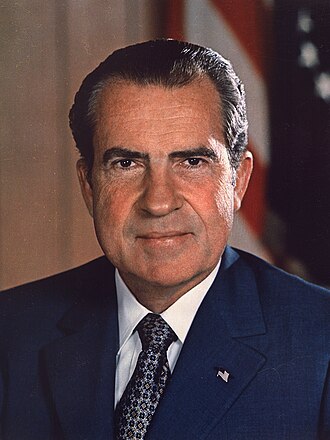
Signed by President Richard Nixon on December 17, 1973, this order concerns Prevention, Control, and Abatement of Environmental Pollution at Federal Facilities. Policy. It is the purpose of this order to assure that the Federal Government, in the design, construction, management, operation, and maintenance of its facilities, shall provide leadership in the nationwide effort to protect and enhance the quality of our air, water, and land resources through compliance with applicable standards for the prevention, control, and abatement of environmental pollution in full…
Constitutional Assessment: Evaluated against the Fifth Amendment, this action touches upon property or economic rights. An early statesman would insist upon strict adherence to due process of law and the constitutional guarantee that private holdings shall not be encumbered or taken for public purposes without just compensation and lawful process.
Key Directives & Operative Actions
▪
It is the purpose of this order to assure that the Federal Government, in the design, construction, management, operation, and maintenance of its facilities, shall provide leadership in the nationwide effort to protect and enhance the quality of our air, water, and land resources through compliance with applicable standards for the prevention, control, and abatement of environmental pollution in full cooperation with State and local governments.
▪
In light of the principle of Federal supremacy embodied in the Constitution, this order is not intended, nor should it be interpreted, to require Federal facilities to comply with State or local administrative procedures with respect to pollution abatement and control.
▪
The term "State, interstate, and local agencies" means any of the following: (A) a State agency designated by the Governor of that State as an official State agency responsible for enforcing State and local laws relating to the prevention, control, and abatement of environmental pollution; (B) any agency established by two or more States and having substantial powers or duties pertaining to the prevention, control, and abatement of environmental pollution; (C) a city, county, or other local government authority charged with responsibility for enforcing ordinances or laws relating to the prevention, control, and abatement of environmental pollution; or (D) an agency of two or more municipalities located in the same State or in different…
▪
Heads of Federal agencies shall, with regard to all facilities under their jurisdiction in the United States: (1) Ensure that applicable standards specified in section 4 of this order are met on a continuing basis.
Constitutional & Societal Entities Impacted
🏛️ Merchants, Importers & Commercial Enterprises
🏛️ Sovereign State Governments & Localities
🏛️ Executive Departments & Federal Civil Servants
🏛️ Private Citizens & Property Owners
Policy Areas & Topics
🏛️
The Framers' Constitutional Council
1787 PrismEvaluating this order against the constitutional debates of 1787 and the limits of Article II executive power.
⚖️✨ Zone 2 (Zone of Twilight)
§
"When the President acts in absence of either a congressional grant or denial of authority, he can only rely upon his own independent powers, but there is a zone of twilight in which he and Congress may have concurrent authority."
— Justice Robert H. Jackson, Youngstown Sheet & Tube Co. v. Sawyer (1952) Concurrent Authority / Congressional Silence
JM
James Madison
Separation of Powers & Legislative Primacy
"Power is of an encroaching nature, and it ought to be effectually restrained from passing the limits assigned to it." — Federalist No. 48 (1788)
Madison would view this order with watchful scrutiny. Operating in the 'Zone of Twilight' where Congress is silent, each such directive establishes an administrative precedent that steadily expands the executive perimeter at the expense of legislative primacy.
Madisonian Stance: Vigilant / Cautionary
AH
Alexander Hamilton
The Energetic Executive & Unified Command
"A feeble Executive implies a feeble execution of the government; and a government ill executed, whatever it may be in theory, must be, in practice, a bad government." — Federalist No. 70 (1788)
Hamilton would view this directive as the natural and indispensable functioning of administrative leadership. Without the power to coordinate agencies, manage personnel, and resolve operational ambiguities, the modern presidency would be reduced to an impotent figurehead.
Hamiltonian Stance: Defends Vigor & Dispatch
GM
George Mason
Bill of Rights, Due Process & 10th Amendment
"The purse and the sword ought never to be in the same hands... nor the liberties of the citizen placed at the pleasure of a single magistrate." — Virginia Ratifying Convention (1788)
George Mason and the Anti-Federalists would sound a fierce warning. They feared that Article II would inevitably evolve into an elective monarchy. When an executive order impacts private rights, property, or civil liberties without individualized judicial process, Mason would see their darkest predictions verified.
Anti-Federalist Stance: High Bill of Rights Scrutiny
📐
Five Measurable "Constitutional Friction" Dimensions
An objective audit measuring potential separation-of-powers tension against the United States Constitution and established Supreme Court doctrine.
⚖️ Discretionary Twilight Zone
53 / 100 friction index
Dimension 1 • Art. I, §1 & §8
Moderate Friction
Legislative Encroachment & Purse
Administers commerce or fiscal programs requiring ongoing statutory delegation and legislative oversight.
Benchmark: Power of the purse, taxes/tariffs, and rule of law reserved to Congress.
Dimension 2 • Art. II, §1 & §3
Moderate Friction
Executive Scope & Faithfulness
Directs internal executive branch machinery, agency workflows, and federal personnel.
Benchmark: Faithfully execute laws enacted by Congress vs. unilateral decree.
Dimension 3 • 10th Amendment
High Friction
Federalism & State Sovereignty
Creates friction with the Tenth Amendment by conditioning state grants, mandating local compliance, or preempting state police powers.
Benchmark: Police powers and un-delegated responsibilities reserved to the States.
Dimension 4 • 5th & 14th Amendments
Moderate Friction
Due Process & Individual Rights
Applies regulatory or compliance standards to private contractors or commercial entities.
Benchmark: Protection of private property, contracts, liberty, and procedural justice.
Dimension 5 • Separation of Powers
Moderate Friction
Youngstown Jacksonian Tier
The order relies on inherent Article II executive discretion, civil service management, or foreign diplomacy where Congress has neither expressly approved nor prohibited action.
Benchmark: Concurrent Authority / Congressional Silence
⚖️
Audit Synthesis
This order operates within Justice Jackson’s Zone of Twilight, resting upon concurrent presidential authority or congressional silence.
Weighted composite: Art. I (25%), Art. II (25%), Federalism (15%), Due Process (15%), Youngstown (20%).
ℹ️
How to read these dimensions: Executive power expands whenever an administration acts without explicit statutory authorization from Congress (Article I), touches upon police powers historically reserved to the states (Tenth Amendment), or limits private rights and property without judicial process. A low friction score indicates strict concordance with enacted law; a high friction score highlights orders testing the limits of presidential discretion.
Total Words
1,751
11,744 characters
Estimated Read Time
9 min
@ 200 words / min
Flesch-Kincaid
20.7
Post-Graduate Legal
Text size:
🔗
Referenced By Later Executive Orders (2)
Subsequent presidents who cited, amended, continued, or revoked this directive in later orders.
Jimmy Carter • 1978-10-13
References Executive Order 12038—Department of Energy
Jimmy Carter • 1978-02-03
Related Executive Orders
1 order cited directly in this text, plus related actions from this administration.
EO 11507 Feb 4, 1970
🏛️✅ Zone 1 (Maximum Authority) Fidelity (+0.33)
Executive Order 11507—Prevention, Control, and Abatement of Air and Water Pollution at Federal Facilities
📜 Art. II §2: Commander-in-Chief Supervisory Authority
Policy. It is the intent of this order that the Federal Government in the design, operation, and maintenance of its facilities shall provide leadership in the nationwide effort to protect and enhance the quality of our air and water resources. SEC. 2. Definitions.
 Richard Nixon
Post-Graduate Legal • 10m
EO 11751 Dec 15, 1973
🏛️✅ Zone 1 (Maximum Authority) Constitutional Neutral
Executive Order 11751—Authorizing the Secretary of Transportation to Grant Exemptions From Daylight Saving Time and Realignments of Time Zone Limits
📜 10th Amend: Intergovernmental Federalism Cooperation
The Secretary of Transportation (hereinafter "the Secretary") is hereby designated and empowered to exercise the authority vested in me by section 3 (b) of the Act to grant an exemption from section 3 (a) of the Act (which establishes daylight saving time as standard time), or…
Richard Nixon Post-Graduate Legal • 2m
EO 11753 Dec 20, 1973
🏛️✅ Zone 1 (Maximum Authority) Fidelity (+0.47)
Executive Order 11753—Establishing the President's Export Council and for Other Purposes
📜 5th Amend: Regulatory Execution with Due Process
Establishment of the President's Export Council. (a) There is hereby established within the Department of Commerce the President's Export Council, hereinafter referred to as the "Export Council," which shall be composed of a Chairman, a Vice Chairman, and twenty other members…
Richard Nixon College Level • 3m
EO 11750 Dec 13, 1973
⚖️✨ Zone 2 (Zone of Twilight) Constitutional Neutral
Executive Order 11750—Providing for the Closing of Government Departments and Agencies on Monday, December 24, 1973 and Monday, December 31, 1973
📜 Art. II §2: Commander-in-Chief Supervisory Authority
All executive departments, independent establishments, and other governmental agencies, including their field services, except as provided by section 2 below, shall be closed, and employees thereof shall be excused from duty, on Monday, December 24, 1973, the day preceding…
Richard Nixon Post-Graduate Legal • 1m
EO 11749 Dec 10, 1973
🏛️✅ Zone 1 (Maximum Authority) Fidelity (+0.47)
Executive Order 11749—Consolidating Disaster Relief Functions Assigned to the Secretary of Housing and Urban Development
📜 Art. II §2: Commander-in-Chief Supervisory Authority
The Secretary of Housing and Urban Development is designated and empowered to exercise without the approval, ratification, or other action of the' President, all of the authority vested in the President by the Disaster Relief Act of 1970, as amended, hereinafter referred to as…
Richard Nixon Post-Graduate Legal • 6m
EO 11754 Dec 26, 1973
🏛️✅ Zone 1 (Maximum Authority) Constitutional Neutral
Executive Order 11754—Modifying Rates of Interest Equalization Tax
📜 Art. I §8: Delegated Tariff & Commerce Execution
Of Executive Order No. 11464, dated April 3, 1969, is hereby amended to read as follows: "SECTION 1. Rates of Tax. "(a) Rates applicable to acquisitions of stock.
Richard Nixon Grade 8 • 3m
📜
Scholarly & Legal Citations
Exec. Order No. 11,752 (Dec. 17, 1973), https://executiveordersarchive.org/orders/app-executive-order-11752-prevention-control-and-abatement-environmental-pollution-federal.
