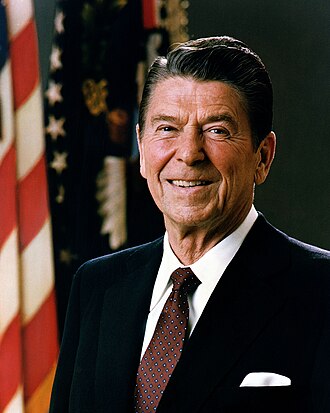
By the authority vested in me as President by the Constitution and laws of the United States of America, including the International Emergency Economic Powers Act (50 U.S.C. 1701 et seq.), the National Emergencies Act (50 U.S.C. 1601 et seq.), the Foreign Assistance Act (22 U.S.C. 2151 et seq.), the United Nations Participation Act (22 U.S.C. 287), the Arms Export Control Act (22 U.S.C. 2751 et seq.), the Export Administration Act (50 U.S.C. App. 2401 et seq.), the Atomic Energy Act (42 U.S.C. 2011 et seq.), the Foreign Service Act (22 U.S.C. 3901 et seq.), the Federal Advisory Committee Act (5 U.S.C. App. I), Section 301 of Title 3 of the United States Code, and considering the measures which the United Nations Security Council has decided on or recommended in Security Council Resolutions No. 418 of November 4, 1977, No. 558 of December 13, 1984, and No. 569 of July 26, 1985, and considering that the policy and practice of apartheid are repugnant to the moral and political values of democratic and free societies and run counter to United States policies to promote democratic governments throughout the world and respect for human rights, and the policy of the United States to influence peaceful change in South Africa, as well as the threat posed to United States interests by recent events in that country, I, Ronald Reagan, President of the United States of America, find that the policies and actions of the Government of South Africa constitute an unusual and extraordinary threat to the foreign policy and economy of the United States and hereby declare a national emergency to deal with that threat.
Section 1. #sec-1
Except as otherwise provided in this section, the following transactions are prohibited effective October 11, 1985: (a) The making or approval of any loans by financial institutions in the United States to the Government of South Africa or to entities owned or controlled by that Government. This prohibition shall enter into force on November 11, 1985. It shall not apply to (i) any loan or extension of credit for any educational, housing, or health facility which is available to all persons on a nondiscriminatory basis and which is located in a geographic area accessible to all population groups without any legal or administrative restriction; or (ii) any loan or extension of credit for which an agreement is entered into before the date of this Order. The Secretary of the Treasury is hereby authorized to promulgate such rules and regulations as may be necessary to carry out this subsection. The initial rules and regulations shall be issued within sixty days. The Secretary of the Treasury may, in consultation with the Secretary of State, permit exceptions to this prohibition only if the Secretary of the Treasury determines that the loan or extension of credit will improve the welfare or expand the economic opportunities of persons in South Africa disadvantaged by the apartheid system, provided that no exception may be made for any apartheid enforcing entity. (b) All exports of computers, computer software, or goods or technology intended to service computers to or for use by any of the following entities of the Government of South Africa: (1) The military; (2) The police; (3) The prison system; (4) The national security agencies; (5) ARMSCOR and its subsidiaries or the weapons research activities of the Council for Scientific and Industrial Research; (6) The administering authorities for the black passbook and similar controls; (7) Any apartheid enforcing agency; (8) Any local or regional government or "homeland" entity which performs any function of any entity described in paragraphs (1) through (7). The Secretary of Commerce is hereby authorized to promulgate such rules and regulations as may be necessary to carry out this subsection and to implement a system of end use verification to ensure that any computers exported directly or indirectly to South Africa will not be used by any entity set forth in this subsection. (c)(1) Issuance of any license for the export to South Africa of goods or technology which are to be used in a nuclear production or utilization facility, or which, in the judgment of the Secretary of State, are likely to be diverted for use in such a facility; any authorization to engage, directly or indirectly, in the production of any special nuclear material in South Africa; any license for the export to South Africa of component parts or other items or substances especially relevant from the standpoint of export control because of their significance for nuclear explosive purposes; and any approval of retransfers to South Africa of any goods, technology, special nuclear material, components, items, or substances described in this section. The Secretaries of State, Energy, Commerce, and Treasury are hereby authorized to take such actions as may be necessary to carry out this subsection. (2) Nothing in this section shall preclude assistance for International Atomic Energy Agency safeguards or IAEA programs generally available to its member states, or for technical programs for the purpose of reducing proliferation risks, such as for reducing the use of highly enriched uranium and activities envisaged by section 223 of the Nuclear Waste Policy Act (42 U.S.C. 10203) or for exports which the Secretary of State determines are necessary for humanitarian reasons to protect the public health and safety. (d) The import into the United States of any arms, ammunition, or military vehicles produced in South Africa or of any manufacturing data for such articles. The Secretaries of State, Treasury, and Defense are hereby authorized to take such actions as may be necessary to carry out this subsection.
Sec. 2. #sec-2
(a) The majority of United States firms in South Africa have voluntarily adhered to fair labor principles which have benefitted those in South Africa who have been disadvantaged by the apartheid system. It is the policy of the United States to encourage strongly all United States firms in South Africa to follow this commendable example. (b) Accordingly, no department or agency of the United States may intercede after December 31, 1985, with any foreign government regarding the export marketing activity in any country of any national of the United States employing more than 25 individuals in South Africa who does not adhere to the principles stated in subsection (c) with respect to that national's operations in South Africa. The Secretary of State shall promulgate regulations to further define the employers that will be subject to the requirements of this subsection and procedures to ensure that such nationals may register that they have adhered to the principles. (c) The principles referred to in subsection (b) are as follows: (1) Desegregating the races in each employment facility; (2) Providing equal employment opportunity for all employees without regard to race or ethnic origin; (3) Assuring that the pay system is applied to all employees without regard to race or ethnic origin; (4) Establishing a minimum wage and salary structure based on the appropriate local minimum economic level which takes into account the needs of employees and their families; (5) Increasing by appropriate means the number of persons in managerial, supervisory, administrative, clerical, and technical jobs who are disadvantaged by the apartheid system for the purpose of significantly increasing their representation in such jobs; (6) Taking reasonable steps to improve the quality of employees' lives outside the work environment with respect to housing, transportation, schooling, recreation, and health; (7) Implementing fair labor practices by recognizing the right of all employees, regardless of racial or other distinctions, to self-organization and to form, join, or assist labor organizations, freely and without penalty or reprisal, and recognizing the right to refrain from any such activity. (d) United States nationals referred to in subsection (b) are encouraged to take reasonable measures to extend the scope of their influence on activities outside the workplace, by measures such as supporting the right of all businesses, regardless of the racial character of their owners or employees, to locate in urban areas, by influencing other companies in South Africa to follow the standards specified in subsection (c) and by supporting the freedom of mobility of all workers, regardless of race, to seek employment opportunities wherever they exist, and by making provision for adequate housing for families of employees within the proximity of the employee's place of work.
Sec. 3. #sec-3
The Secretary of State and the head of any other department or agency of the United States carrying out activities in South Africa shall promptly take, to the extent permitted by law, the necessary steps to ensure that the labor practices described in section (2)(c) are applied to their South African employees.
Sec. 4. #sec-4
The Secretary of State and the head of any other department or agency of the United States carrying out activities in South Africa shall, to the maximum extent practicable and to the extent permitted by law, in procuring goods or services in South Africa, make affirmative efforts to assist business enterprises having more than 50 percent beneficial ownership by persons in South Africa disadvantaged by the apartheid system.
Sec. 5. #sec-5
(a) The Secretary of State and the United States Trade Representative are directed to consult with other parties to the General Agreement on Tariffs and Trade with a view toward adopting a prohibition on the import of Krugerrands. (b) The Secretary of the Treasury is directed to conduct a study to be completed within sixty days regarding the feasibility of minting and issuing gold coins with a view toward expeditiously seeking legislative authority to accomplish the goal of issuing such coins.
Sec. 6. #sec-6
In carrying out their respective functions and responsibilities under this Order, the Secretary of the Treasury and the Secretary of Commerce shall consult with the Secretary of State. Each such Secretary shall consult, as appropriate, with other government agencies and private persons.
Sec. 7. #sec-7
The Secretary of State shall establish, pursuant to appropriate legal authority, an Advisory Committee on South Africa to provide recommendations on measures to encourage peaceful change in South Africa. The Advisory Committee shall provide its initial report within twelve months.
Sec. 8. #sec-8
The Secretary of State is directed to take the steps necessary pursuant to the Foreign Assistance Act and related legislation to (a) increase the amount of internal scholarships provided to South Africans disadvantaged by the apartheid system up to $8 million from funds made available for Fiscal Year 1986, and (b) increase the amount allocated for South Africa from funds made available for Fiscal Year 1986 in the Human Rights Fund up to $1.5 million. At least one-third of the latter amount shall be used for legal assistance for South Africans. Appropriate increases in the amounts made available for these purposes will be considered in future fiscal years.
Sec. 9. #sec-9
This Order is intended to express and implement the foreign policy of the United States. It is not intended to create any right or benefit, substantive or procedural, enforceable at law by a party against the United States, its agencies, its officers, or any person. RONALD REAGAN The White House, September 9, 1985. [Filed with the Office of the Federal Register, 11:59 a.m., September 9, 1985]
