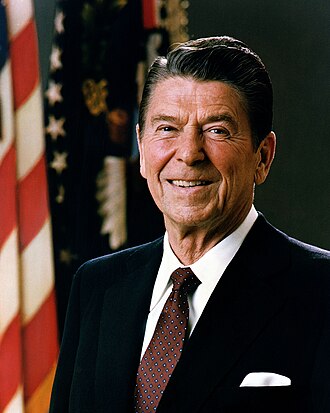
I, Ronald Reagan, President of the United States of America, find that: Drug use is having serious adverse effects upon a significant proportion of the national work force and results in billions of dollars of lost productivity each year; The Federal government, as an employer, is concerned with the well-being of its employees, the successful accomplishment of agency missions, and the need to maintain employee productivity; The Federal government, as the largest employer in the Nation, can and should show the way towards achieving drug-free workplaces through a program designed to offer drug users a helping hand and, at the same time, demonstrating to drug users and potential drug users that drugs will not be tolerated in the Federal workplace; The profits from illegal drugs provide the single greatest source of income for organized crime, fuel violent street crime, and otherwise contribute to the breakdown of our society; The use of illegal drugs, on or off duty, by Federal employees is inconsistent not only with the law-abiding behavior expected of all citizens, but also with the special trust placed in such employees as servants of the public; Federal employees who use illegal drugs, on or off duty, tend to be less productive, less reliable, and prone to greater absenteeism than their fellow employees who do not use illegal drugs; The use of illegal drugs, on or off duty, by Federal employees impairs the efficiency of Federal departments and agencies, undermines public confidence in them, and makes it more difficult for other employees who do not use illegal drugs to perform their jobs effectively. The use of illegal drugs, on or off duty, by Federal employees also can pose a serious health and safety threat to members of the public and to other Federal employees; The use of illegal drugs, on or off duty, by Federal employees in certain positions evidences less than the complete reliability, stability, and good judgment that is consistent with access to sensitive information and creates the possibility of coercion, influence, and irresponsible action under pressure that may pose a serious risk to national security, the public safety, and the effective enforcement of the law; and Federal employees who use illegal drugs must themselves be primarily responsible for changing their behavior and, if necessary, begin the process of rehabilitating themselves. By the authority vested in me as President by the Constitution and laws of the United States of America, including section 3301(2) of Title 5 of the United States Code, section 7301 of Title 5 of the United States Code, section 290ee-1 of Title 42 of the United States Code, deeming such action in the best interests of national security, public health and safety, law enforcement and the efficiency of the Federal service, and in order to establish standards and procedures to ensure fairness in achieving a drug-free Federal workplace and to protect the privacy of Federal employees, it is hereby ordered as follows:
Section 1. #sec-1
Drug-Free Workplace. (a) Federal employees are required to refrain from the use of illegal drugs. (b) The use of illegal drugs by Federal employees, whether on duty or off duty, is contrary to the efficiency of the service. (c) Persons who use illegal drugs are not suitable for Federal employment.
Sec. 2. #sec-2
Agency Responsibilities. (a) The head of each Executive agency shall develop a plan for achieving the objective of a drug-free workplace with due consideration of the rights of the government, the employee, and the general public. (b) Each agency plan shall include: (1) A statement of policy setting forth the agency's expectations regarding drug use and the action to be anticipated in response to identified drug use; (2) Employee Assistance Programs emphasizing high level direction, education, counseling, referral to rehabilitation, and coordination with available community resources; (3) Supervisory training to assist in identifying and addressing illegal drug use by agency employees; (4) Provision for self-referrals as well as supervisory referrals to treatment with maximum respect for individual confidentiality consistent with safety and security issues; and (5) Provision for identifying illegal drug users, including testing on a controlled and carefully monitored basis in accordance with this Order.
Sec. 3. #sec-3
Drug Testing Programs. (a) The head of each Executive agency shall establish a program to test for the use of illegal drugs by employees in sensitive positions. The extent to which such employees are tested and the criteria for such testing shall be determined by the head of each agency, based upon the nature of the agency's mission and its employees' duties, the efficient use of agency resources, and the danger to the public health and safety or national security that could result from the failure of an employee adequately to discharge his or her position. (b) The head of each Executive agency shall establish a program for voluntary employee drug testing. (c) In addition to the testing authorized in subsections (a) and (b) of this section, the head of each Executive agency is authorized to test an employee for illegal drug use under the following circumstances: (1) When there is a reasonable suspicion that any employee uses illegal drugs; (2) In an examination authorized by the agency regarding an accident or unsafe practice; or (3) As part of or as a follow-up to counseling or rehabilitation for illegal drug use through an Employee Assistance Program. (d) The head of each Executive agency is authorized to test any applicant for illegal drug use.
Sec. 4. #sec-4
Drug Testing Procedures. (a) Sixty days prior to the implementation of a drug testing program pursuant to this Order, agencies shall notify employees that testing for use of illegal drugs is to be conducted and that they may seek counseling and rehabilitation and inform them of the procedures for obtaining such assistance through the agency's Employee Assistance Program. Agency drug testing programs already ongoing are exempted from the 60-day notice requirement. Agencies may take action under section 3(c) of this Order without reference to the 60-day notice period. (b) Before conducting a drug test, the agency shall inform the employee to be tested of the opportunity to submit medical documentation that may support a legitimate use for a specific drug. (c) Drug testing programs shall contain procedures for timely submission of requests for retention of records and specimens; procedures for retesting; and procedures, consistent with applicable law, to protect the confidentiality of test results and related medical and rehabilitation records. Procedures for providing urine specimens must allow individual privacy, unless the agency has reason to believe that a particular individual may alter or substitute the specimen to be provided. (d) The Secretary of Health and Human Services is authorized to promulgate scientific and technical guidelines for drug testing programs, and agencies shall conduct their drug testing programs in accordance with these guidelines once promulgated.
Sec. 5. #sec-5
Personnel Actions. (a) Agencies shall, in addition to any appropriate personnel actions, refer any employee who is found to use illegal drugs to an Employee Assistance Program for assessment, counseling, and referral for treatment or rehabilitation as appropriate. (b) Agencies shall initiate action to discipline any employee who is found to use illegal drugs, provided that such action is not required for an employee who: (1) Voluntarily identifies himself as a user of illegal drugs or who volunteers for drug testing pursuant to section 3(b) of this Order, prior to being identified through other means; (2) Obtains counseling or rehabilitation through an Employee Assistance Program; and (3) Thereafter refrains from using illegal drugs. (c) Agencies shall not allow any employee to remain on duty in a sensitive position who is found to use illegal drugs, prior to successful completion of rehabilitation through an Employee Assistance Program. However, as part of a rehabilitation or counseling program, the head of an Executive agency may, in his or her discretion, allow an employee to return to duty in a sensitive position if it is determined that this action would not pose a danger to public health or safety or the national security. (d) Agencies shall initiate action to remove from the service any employee who is found to use illegal drugs and: (1) Refuses to obtain counseling or rehabilitation through an Employee Assistance Program; or (2) Does not thereafter refrain from using illegal drugs. (e) The results of a drug test and information developed by the agency in the course of the drug testing of the employee may be considered in processing any adverse action against the employee or for other administrative purposes. Preliminary test results may not be used in an administrative proceeding unless they are confirmed by a second analysis of the same sample or unless the employee confirms the accuracy of the initial test by admitting the use of illegal drugs. (f) The determination of an agency that an employee uses illegal drugs can be made on the basis of any appropriate evidence, including direct observation, a criminal conviction, administrative inquiry, or the results of an authorized testing program. Positive drug test results may be rebutted by other evidence that an employee has not used illegal drugs. (g) Any action to discipline an employee who is using illegal drugs (including removal from the service, if appropriate) shall be taken in compliance with otherwise applicable procedures, including the Civil Service Reform Act. (h) Drug testing shall not be conducted pursuant to this Order for the purpose of gathering evidence for use in criminal proceedings. Agencies are not required to report to the Attorney General for investigation or prosecution any information, allegation, or evidence relating to violations of Title 21 of the United States Code received as a result of the operation of drug testing programs established pursuant to this Order.
Sec. 6. #sec-6
Coordination of Agency Programs. (a) The Director of the Office of Personnel Management shall: (1) Issue government-wide guidance to agencies on the implementation of the terms of this Order; (2) Ensure that appropriate coverage for drug abuse is maintained for employees and their families under the Federal Employees Health Benefits Program; (3) Develop a model Employee Assistance Program for Federal agencies and assist the agencies in putting programs in place; (4) In consultation with the Secretary of Health and Human Services, develop and improve training programs for Federal supervisors and managers on illegal drug use; and (5) In cooperation with the Secretary of Health and Human Services and heads of Executive agencies, mount an intensive drug awareness campaign throughout the Federal work force. (b) The Attorney General shall render legal advice regarding the implementation of this Order and shall be consulted with regard to all guidelines, regulations, and policies proposed to be adopted pursuant to this Order. (c) Nothing in this Order shall be deemed to limit the authorities of the Director of Central Intelligence under the National Security Act of 1947, as amended, or the statutory authorities of the National Security Agency or the Defense Intelligence Agency. Implementation of this Order within the Intelligence Community, as defined in Executive Order No. 12333, shall be subject to the approval of the head of the affected agency. Sec. 7 Definitions. (a) This Order applies to all agencies of the Executive Branch. (b) For purposes of this Order, the term "agency" means an Executive agency, as defined in 5 U.S.C. 105; the Uniformed Services, as defined in 5 U.S.C. 2101(3) (but excluding the armed forces as defined by 5 U.S.C. 2101(2)); or any other employing unit or authority of the Federal government, except the United States Postal Service, the Postal Rate Commission, and employing units or authorities in the Judicial and Legislative Branches. (c) For purposes of this Order, the term "illegal drugs" means a controlled substance included in Schedule I or II, as defined by section 802(6) of Title 21 of the United States Code, the possession of which is unlawful under chapter 13 of that Title. The term "illegal drugs" does not mean the use of a controlled substance pursuant to a valid prescription or other uses authorized by law. (d) For purposes of this Order, the term "employee in a sensitive position" refers to: (1) An employee in a position that an agency head designates Special Sensitive, Critical-Sensitive, or Noncritical-Sensitive under Chapter 731 of the Federal Personnel Manual or an employee in a position that an agency head designates as sensitive in accordance with Executive Order No. 10450, as amended; (2) An employee who has been granted access to classified information or may be granted access to classified information pursuant to a determination of trustworthiness by an agency head under Section 4 of Executive Order No. 12356; (3) Individuals serving under Presidential appointments; (4) Law enforcement officers as defined in 5 U.S.C. 8331 (20); and (5) Other positions that the agency head determines involve law enforcement, national security, the protection of life and property, public health or safety, or other functions requiring a high degree of trust and confidence. (e) For purposes of this Order, the term "employee" means all persons appointed in the Civil Service as described in 5 U.S.C. 2105 (but excluding persons appointed in the armed services as defined in 5 U.S.C. 2102(2)). (f) For purposes of this Order, the term "Employee Assistance Program" means agency-based counseling programs that offer assessment, short-term counseling, and referral services to employees for a wide range of drug, alcohol, and mental health programs that affect employee job performance. Employee Assistance Programs are responsible for referring drug-using employees for rehabilitation and for monitoring employees' progress while in treatment.
Sec. 8. #sec-8
Effective Date. This Order is effective immediately. RONALD REAGAN The White House, September 15, 1986. [Filed with the Office of the Federal Register, 3:47 p.m., September 15, 1986]