★
Executive Orders Historical Archive
Cite
Executive Order 12686 🏛️✅ Zone 1: Maximum Authority Constitutional Fidelity (+0.55) 📜 5th Amend: Regulatory Execution with Due Process

Executive Order 12686—President's Commission on Aviation Security and Terrorism

•
Friday, August 4, 1989
•
3 min read (575 words)

Executive Brief • At a Glance

⏱️ 3 min read (575 words) • ● In Effect
🎯 Primary Mandate

The Commission shall conduct a comprehensive study and appraisal of practices and policy options with respect to preventing terrorist acts involving aviation.

⚖️ Constitutional Footing
🏛️✅ Zone 1: Maximum Authority
Express or Implied Congressional Authorization
📜 5th Amend: Regulatory Execution with Due Process
🏛️ Scope & Affected Sectors
Merchants, Importers & Commercial Enterprises Executive Departments & Federal Civil Servants Private Citizens & Property Owners

Plain-English Translation & Framers' Constitutional Analysis

Early Statesman synthesis distilling legal jargon into practical meaning, statutory anchors, and structural constitutional impacts.

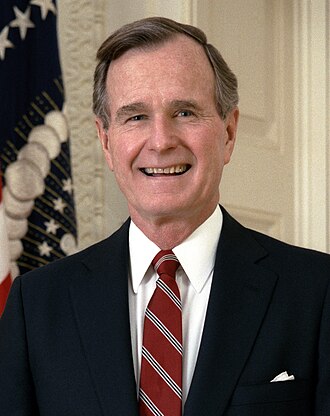
Signed by President George Bush on August 4, 1989, this order concerns President's Commission on Aviation Security and Terrorism. There is established the President's Commission on Aviation Security and Terrorism to review and evaluate policy options in connection with aviation security, with particular reference to the destruction on December 21, 1988, of Pan American World Airways Flight 103. The Commission shall consist of seven members appointed by the President.

Constitutional Assessment: Evaluated against the Fifth Amendment, this action touches upon property or economic rights. An early statesman would insist upon strict adherence to due process of law and the constitutional guarantee that private holdings shall not be encumbered or taken for public purposes without just compensation and lawful process.

Key Directives & Operative Actions

▪
Functions

The Commission shall conduct a comprehensive study and appraisal of practices and policy options with respect to preventing terrorist acts involving aviation.

▪
Administration

To the extent permitted by law and fully protecting intelligence sources and methods and the ongoing investigations into the destruction of Pan American World Airways Flight 103 of December 21, 1988, the heads of executive departments, agencies, and independent instrumentalities shall provide the Commission, upon request, with such information as it may require for purposes of carrying out its functions.

▪
General Provision

The Commission shall terminate 30 days after submitting its report to the President.

Constitutional & Societal Entities Impacted

🏛️ Merchants, Importers & Commercial Enterprises 🏛️ Executive Departments & Federal Civil Servants 🏛️ Private Citizens & Property Owners
🏛️

The Framers' Constitutional Council

1787 Prism

Evaluating this order against the constitutional debates of 1787 and the limits of Article II executive power.

🏛️✅ Zone 1 (Maximum Authority)
§

"When the President acts pursuant to an express or implied authorization of Congress, his authority is at its maximum, for it includes all that he possesses in his own right plus all that Congress can delegate."

— Justice Robert H. Jackson, Youngstown Sheet & Tube Co. v. Sawyer (1952) Express or Implied Congressional Authorization
JM

James Madison

Separation of Powers & Legislative Primacy

"The constitutional magistracy was designed not to invent policy, but to be the faithful instrument of the laws passed by the people's representatives." — Speech in the First Congress (1789)

Madison would approve the structural posture of this order. The President acts strictly in subordination to statutory authority granted under Article II, Section 3 ("take Care that the Laws be faithfully executed"). The checks and balances hold firm because the policy origin remains with the legislature.

Madisonian Stance: Concurring (Statutory)
AH

Alexander Hamilton

The Energetic Executive & Unified Command

"A feeble Executive implies a feeble execution of the government; and a government ill executed, whatever it may be in theory, must be, in practice, a bad government." — Federalist No. 70 (1788)

Hamilton would view this directive as the natural and indispensable functioning of administrative leadership. Without the power to coordinate agencies, manage personnel, and resolve operational ambiguities, the modern presidency would be reduced to an impotent figurehead.

Hamiltonian Stance: Supportive of Execution
GM

George Mason

Bill of Rights, Due Process & 10th Amendment

"The purse and the sword ought never to be in the same hands... nor the liberties of the citizen placed at the pleasure of a single magistrate." — Virginia Ratifying Convention (1788)

George Mason and the Anti-Federalists would sound a fierce warning. They feared that Article II would inevitably evolve into an elective monarchy. When an executive order impacts private rights, property, or civil liberties without individualized judicial process, Mason would see their darkest predictions verified.

Anti-Federalist Stance: High Bill of Rights Scrutiny
📐

Five Measurable "Constitutional Friction" Dimensions

An objective audit measuring potential separation-of-powers tension against the United States Constitution and established Supreme Court doctrine.

⚖️ Discretionary Twilight Zone
41 / 100 friction index
Dimension 1 • Art. I, §1 & §8

Legislative Encroachment & Purse

Moderate Friction

Administers commerce or fiscal programs requiring ongoing statutory delegation and legislative oversight.

Benchmark: Power of the purse, taxes/tariffs, and rule of law reserved to Congress.
Dimension 2 • Art. II, §1 & §3

Executive Scope & Faithfulness

Low Friction

Exercises standard supervisory executive authority to faithfully execute existing statutes.

Benchmark: Faithfully execute laws enacted by Congress vs. unilateral decree.
Dimension 3 • 10th Amendment

Federalism & State Sovereignty

High Friction

Creates friction with the Tenth Amendment by conditioning state grants, mandating local compliance, or preempting state police powers.

Benchmark: Police powers and un-delegated responsibilities reserved to the States.
Dimension 4 • 5th & 14th Amendments

Due Process & Individual Rights

Moderate Friction

Applies regulatory or compliance standards to private contractors or commercial entities.

Benchmark: Protection of private property, contracts, liberty, and procedural justice.
Dimension 5 • Separation of Powers

Youngstown Jacksonian Tier

Low Friction

The President operates strictly as the constitutional Chief Executive, carrying out policy established by Congress with strong statutory backing.

Benchmark: Express or Implied Congressional Authorization
⚖️ Audit Synthesis

This order operates within Justice Jackson’s Zone of Twilight, resting upon concurrent presidential authority or congressional silence.

Weighted composite: Art. I (25%), Art. II (25%), Federalism (15%), Due Process (15%), Youngstown (20%).
ℹ️
How to read these dimensions: Executive power expands whenever an administration acts without explicit statutory authorization from Congress (Article I), touches upon police powers historically reserved to the states (Tenth Amendment), or limits private rights and property without judicial process. A low friction score indicates strict concordance with enacted law; a high friction score highlights orders testing the limits of presidential discretion.
Total Words
575
3,857 characters
Estimated Read Time
3 min
@ 200 words / min
Flesch-Kincaid
17.8
Post-Graduate Legal
Language Tone Score
+0.55
Constitutional Fidelity
How is this scored?
Text size:

Official Archival Text

View Source Document

By the authority vested in me as President by the Constitution and laws of the United States of America, and in order to establish a Commission on Aviation Security and Terrorism, it is hereby ordered as follows:

Section 1. #sec-1

Establishment. (a) There is established the President's Commission on Aviation Security and Terrorism to review and evaluate policy options in connection with aviation security, with particular reference to the destruction on December 21, 1988, of Pan American World Airways Flight 103. The Commission shall consist of seven members appointed by the President. Two members shall be Senators, and two shall be Members of the House of Representatives; they shall represent both parties equally. The President shall consult with the Majority and Republican Leaders of the Senate and the Speaker and Minority Leader of the House of Representatives in making appointments from the Senate and House of Representatives, respectively. (b) The President shall designate a Chairman from among the members of the Commission.

Sec. 2. #sec-2

Functions. (a) The Commission shall conduct a comprehensive study and appraisal of practices and policy options with respect to preventing terrorist acts involving aviation. In conducting this effort, the Commission shall evaluate the adequacy of existing procedures for aviation security, compliance therewith, and enforcement thereof. The Commission also shall review options for handling terrorist threats, including prior notification to the public. Further, the Commission shall investigate practices, policies, and laws with respect to the treatment of families of victims of terrorist acts. (b) Within 6 months of the date of this order, the Commission shall submit a report to the President, which shall be classified if necessary, containing findings and recommendations. If the Commission's report is classified, an unclassified version shall be prepared for public distribution.

Sec. 3. #sec-3

Administration. (a) To the extent permitted by law and fully protecting intelligence sources and methods and the ongoing investigations into the destruction of Pan American World Airways Flight 103 of December 21, 1988, the heads of executive departments, agencies, and independent instrumentalities shall provide the Commission, upon request, with such information as it may require for purposes of carrying out its functions. (b) Members of the Commission appointed from among private citizens may receive compensation for their work on the Commission at the daily rate specified for GS-18 of the General Schedule. While engaged in the work of the Commission, members appointed from among private citizens of the United States may be allowed travel expenses, including per diem in lieu of subsistence, as authorized by law for persons serving intermittently in the Government service -5707). (c) To the extent permitted by law and subject to the availability of appropriations, the Department of Transportation shall, among other Administrative functions, provide the Commission with administrative services, funds, facilities, staff, and other support services necessary for the performance of its functions, and the Secretary of Transportation shall perform the functions of the President under the Federal Advisory Committee Act, as amended except that of reporting to the Congress, in accordance with the guidelines and procedures established by the Administrator of General Services. (d) The Commission shall adhere to the requirements set forth in the Federal Advisory Committee Act, as amended. All executive branch officials assigned duties by the Federal Advisory Committee Act shall comply with its requirements with respect to this Commission.

Sec. 4. #sec-4

General Provision. The Commission shall terminate 30 days after submitting its report to the President. George Bush The White House, August 4, 1989.

🔗

Referenced By Later Executive Orders (2)

Subsequent presidents who cited, amended, continued, or revoked this directive in later orders.

📜

Scholarly & Legal Citations

Exec. Order No. 12,686 (Aug. 4, 1989), https://executiveordersarchive.org/orders/app-executive-order-12686-presidents-commission-aviation-security-and-terrorism.