★
Executive Orders Historical Archive
Cite
Executive Order 12722 Revoked ⚖️⚠️ Zone 3: Lowest Ebb Constitutional Friction / Overreach (-0.19) 📜 Art. I §8: Legislative Prerogative Tension (Purse & Commerce)

Executive Order 12722—Blocking Iraqi Government Property and Prohibiting Transactions with Iraq

•
Thursday, August 2, 1990
•
4 min read (718 words)

Executive Brief • At a Glance

⏱️ 4 min read (718 words) • ● Revoked
🎯 Primary Mandate

All property and interests in property of the Government of Iraq, its agencies, instrumentalities and controlled entities and the Central Bank of Iraq that are in the United States, that hereafter come within the United States or that are or hereafter come within the possession or control of United States persons, including their overseas branches, are hereby blocked.

⚖️ Constitutional Footing
⚖️⚠️ Zone 3: Lowest Ebb
Incompatible with Expressed Will of Congress or High Friction
📜 Art. I §8: Legislative Prerogative Tension (Purse & Commerce)
🏛️ Scope & Affected Sectors
Sovereign State Governments & Localities Executive Departments & Federal Civil Servants Private Citizens & Property Owners Foreign Nations & International Entities

Plain-English Translation & Framers' Constitutional Analysis

Early Statesman synthesis distilling legal jargon into practical meaning, statutory anchors, and structural constitutional impacts.

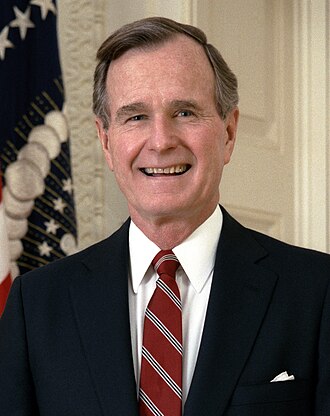
Signed by President George Bush on August 2, 1990, this order concerns Blocking Iraqi Government Property and Prohibiting Transactions with Iraq. All property and interests in property of the Government of Iraq, its agencies, instrumentalities and controlled entities and the Central Bank of Iraq that are in the United States, that hereafter come within the United States or that are or hereafter come within the possession or control of United States persons, including their overseas branches, are hereby blocked. Section 2.

Constitutional Assessment: An early statesman would subject this decree to rigorous scrutiny under Article I, Section 8. The Framers deliberately committed commerce, taxation, tariffs, and revenue to Congress alone. To the extent this order imposes duties or financial burdens without explicit statutory pre-authorization, it creates friction with the separation of powers.

Key Directives & Operative Actions

▪

All property and interests in property of the Government of Iraq, its agencies, instrumentalities and controlled entities and the Central Bank of Iraq that are in the United States, that hereafter come within the United States or that are or hereafter come within the possession or control of United States persons, including their overseas branches, are hereby blocked.

▪

The following are prohibited, except to the extent provided in regulations whch may hereafter be issued pursuant to this Order: (a) The import into the United States of any goods or services of Iraqi origin, other than publications and other informational materials; (b) The export to Iraq of any goods, technology (including technical data or other information controlled for export pursuant to Section 5 of the Export administration Act or services from the United States, except publications and other informational materials, and donations of articles articles intended to relieve human suffering, such as food, clothing, medicine and medical supplies intended strictly for medical purposes; (c) Any transaction by a United States person…

Constitutional & Societal Entities Impacted

🏛️ Sovereign State Governments & Localities 🏛️ Executive Departments & Federal Civil Servants 🏛️ Private Citizens & Property Owners 🏛️ Foreign Nations & International Entities 🏛️ Public Health & Medical Institutions
🏛️

The Framers' Constitutional Council

1787 Prism

Evaluating this order against the constitutional debates of 1787 and the limits of Article II executive power.

⚖️⚠️ Zone 3 (Lowest Ebb)
§

"When the President takes measures incompatible with the expressed or implied will of Congress, his power is at its lowest ebb."

— Justice Robert H. Jackson, Youngstown Sheet & Tube Co. v. Sawyer (1952) Incompatible with Expressed Will of Congress or High Friction
JM

James Madison

Separation of Powers & Legislative Primacy

"The accumulation of all powers, legislative, executive, and judiciary, in the same hands... may justly be pronounced the very definition of tyranny." — Federalist No. 47 (1788)

Madison would express grave alarm over this order. By asserting independent authority in tension with legislative limits or the Bill of Rights, the Executive risks collapsing the separation of powers into unilateral rule. Under the Madisonian model, no emergency justifies the Executive substituting its decree for a deliberative Act of Congress.

Madisonian Stance: Strict Dissent (Overreach)
AH

Alexander Hamilton

The Energetic Executive & Unified Command

"The direction of war implies the direction of the common strength; and the power of directing and employing the common strength must be under the direction of the single hand of the Executive." — Federalist No. 74 (1788)

Hamilton would forcefully champion executive discretion here. For foreign entanglements, commerce defense, and national security, deliberative assemblies are too slow and faction-ridden. A unified, energetic Executive exercising swift command is precisely what the Philadelphia Convention intended for national preservation.

Hamiltonian Stance: Qualified Caution
GM

George Mason

Bill of Rights, Due Process & 10th Amendment

"The purse and the sword ought never to be in the same hands... nor the liberties of the citizen placed at the pleasure of a single magistrate." — Virginia Ratifying Convention (1788)

George Mason and the Anti-Federalists would sound a fierce warning. They feared that Article II would inevitably evolve into an elective monarchy. When an executive order impacts private rights, property, or civil liberties without individualized judicial process, Mason would see their darkest predictions verified.

Anti-Federalist Stance: Vehement Objection
📐

Five Measurable "Constitutional Friction" Dimensions

An objective audit measuring potential separation-of-powers tension against the United States Constitution and established Supreme Court doctrine.

⚠️ Elevated Constitutional Friction
79 / 100 friction index
Dimension 1 • Art. I, §1 & §8

Legislative Encroachment & Purse

High Friction

Touches upon core congressional prerogatives: raises appropriations reallocation, tariff imposition, or statutory preemption questions.

Benchmark: Power of the purse, taxes/tariffs, and rule of law reserved to Congress.
Dimension 2 • Art. II, §1 & §3

Executive Scope & Faithfulness

High Friction

Invokes broad unilateral or emergency executive authorities that test the constitutional boundary of the Take Care Clause.

Benchmark: Faithfully execute laws enacted by Congress vs. unilateral decree.
Dimension 3 • 10th Amendment

Federalism & State Sovereignty

Moderate Friction

Engages state and local partners in cooperative federalism programs.

Benchmark: Police powers and un-delegated responsibilities reserved to the States.
Dimension 4 • 5th & 14th Amendments

Due Process & Individual Rights

High Friction

Scrutinized under the Bill of Rights for potential impact on private contracts, property rights, or procedural due process.

Benchmark: Protection of private property, contracts, liberty, and procedural justice.
Dimension 5 • Separation of Powers

Youngstown Jacksonian Tier

High Friction

The order asserts independent Article II prerogative against statutory constraints, reallocates funds without explicit appropriation, or stretches executive power into realms constitutionally reserved to the legislature or judiciary.

Benchmark: Incompatible with Expressed Will of Congress or High Friction
⚖️ Audit Synthesis

This directive engages significant constitutional friction across statutory authorization, legislative prerogatives, or individual liberties.

Weighted composite: Art. I (25%), Art. II (25%), Federalism (15%), Due Process (15%), Youngstown (20%).
ℹ️
How to read these dimensions: Executive power expands whenever an administration acts without explicit statutory authorization from Congress (Article I), touches upon police powers historically reserved to the states (Tenth Amendment), or limits private rights and property without judicial process. A low friction score indicates strict concordance with enacted law; a high friction score highlights orders testing the limits of presidential discretion.
Total Words
718
4,455 characters
Estimated Read Time
4 min
@ 200 words / min
Flesch-Kincaid
22.5
Post-Graduate Legal
Language Tone Score
-0.19
Constitutional Friction / Overreach
How is this scored?
Text size:

Official Archival Text

View Source Document
📑Sections Outline (4 sections)

By the authority vested in me as President by the constitution and laws of the United States of America, including the International Emergency Economic Powers Act (50 U.S.C. 1701 et seq.), the National Emergencies Act(50 U.S.C. 1601 et seq.), and section 301 of title 3 of the United States Code. I, GEORGE BUSH, President of the United States of America, find that the policies and actions of the Government of Iraq constitute an unusual and extraordinary threat to the national security and foreign policy of the United States and hereby declare a national emergency to deal with that threat. I hereby order:

Section 1. #sec-1

All property and interests in property of the Government of Iraq, its agencies, instrumentalities and controlled entities and the Central Bank of Iraq that are in the United States, that hereafter come within the United States or that are or hereafter come within the possession or control of United States persons, including their overseas branches, are hereby blocked.

Section 2. #sec-2

The following are prohibited, except to the extent provided in regulations whch may hereafter be issued pursuant to this Order: (a) The import into the United States of any goods or services of Iraqi origin, other than publications and other informational materials; (b) The export to Iraq of any goods, technology (including technical data or other information controlled for export pursuant to Section 5 of the Export administration Act or services from the United States, except publications and other informational materials, and donations of articles articles intended to relieve human suffering, such as food, clothing, medicine and medical supplies intended strictly for medical purposes; (c) Any transaction by a United States person relating to transportation to or from Iraq; the provision of transportation to or from the United states by any Iraqi person or any vessel or aircraft of Iraqi registration; or the sale in the United States by any person holding authority under the Federal Aviation Act of 1958, as amended of any transportation by air which includes any stop in Iraq; (d) The purchase by any United States person of goods for export from Iraq to any country; (e) The performance by any United States person of any contract in support of an industrial or other commercial or governmental project in Iraq; (f) The grant or extension of credits or loans by any United States person to the Government of Iraq, its instrumentalities and controlled entities; (g) Any transaction by the United States person relating to travel by any United States citizen or permanent resident alien to Iraq, or to activities by any such person within Iraq, after the date of this Order, other than transactions necessary to effect such person's departure from Iraq, or travel for journalistic activity by persons regularly employed in such capacity by a newsgathering organization; and (h) Any transaction by the United States person which evades or avoids, or has the purpose of evading or avoiding, any of the prohibitions set forth int his Order. For purposes of this Order, the term "United States person" means any United States citizen, permanent resident alien, juridical person organized under the laws of the United States, or any person in the United States.

Section 3. #sec-3

This Order is effective immediately.

Section 4. #sec-4

The Secretary of the Treasury, in consultation with the Secretary of State, is hereby authorized to take such actions, including the promulgation of rules and regulations, as may be necessary to carry out the purposes of this Order. Such actions may include prohibiting or regulating payments or transfers of any property or any transactions involving the transfer of anything of economic value by any United States person to the Government of Iraq, its instrumentalities and controlled entities, or to any Iraqi national or entity owned or controlled, directly or indirectly, by Iraq or Iraqi nationals. The Secretary may redelegate any of these functions to other officers and agencies of the Federal government. All agencies of the United States government are directed to take all appropriate measures within their authority to carry out the provisions of this Order, including the suspension or termination of licenses or other authorizations in effect as of the date of this Order. This Order shall be transmitted to the Congress and published in the Federal Register. George Bush The White House, August 2, 1990.

🔗

Referenced By Later Executive Orders (6)

Subsequent presidents who cited, amended, continued, or revoked this directive in later orders.

📜

Scholarly & Legal Citations

Exec. Order No. 12,722 (Aug. 2, 1990), https://executiveordersarchive.org/orders/app-executive-order-12722-blocking-iraqi-government-property-and-prohibiting-transactions-with.