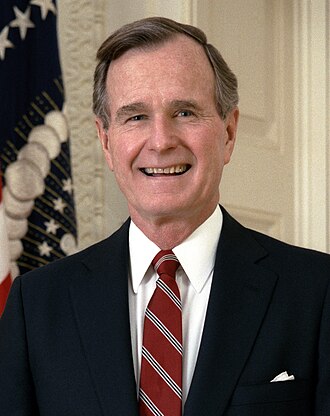
Whereas, this Administration is determined to secure for future generations of Americans their rightful share of our Nation's natural resources, as well as a clean and healthful environment in which to enjoy them; and Whereas, two goals of this Administration's environmental policy, cost-effective pollution prevention and the conservation of natural resources, can be significantly advanced by reducing waste and recycling the resources used by this generation of Americans; and Whereas, the Federal Government, as one of the Nation's largest generators of solid waste, is able through cost-effective waste reduction and recycling resources to conserve local government disposal capacity; and Whereas, the Federal Government, as the Nation's largest single consumer, is able through affirmative procurement practices to encourage the development of economically efficient markets for products manufactured with recycled materials; Now, Therefore, I, George Bush, by the authority vested in me as President by the Constitution and the laws of the United States of America, including the Solid Waste Disposal Act, Public Law 89 - 272, 79 Stat. 997, as amended by the Resource Conservation and Recovery Act ("RCRA"), Public Law 94 - 580, 90 Stat. 2795 (1976), hereby order as follows: PART 1 -- PREAMBLE
Section 101. #sec-101
The purpose of this Executive order is to: (a) Require that Federal agencies promote cost-effective waste reduction and recycling of reusable materials from wastes generated by Federal Government activities. (b) Encourage economically efficient market demand for designated items produced using recovered materials by directing the immediate implementation of cost-effective Federal procurement preference programs favoring the purchase of such items. (c) Provide a forum for the development and study of policy options and procurement practices that will promote environmentally sound and economically efficient waste reduction and recycling of our Nation's resources. (d) Integrate cost-effective waste reduction and recycling programs into all Federal agency waste management programs in order to assist in addressing the Nation's solid waste disposal problems. (e) Establish Federal Government leadership in addressing the need for efficient State and local solid waste management through implementation of environmentally sound and economically efficient recycling.
Sec. 102. #sec-102
Consistent with section 6002(c)(1) of RCRA (42 U.S.C. 6962(c)(1)), activities and operations of the executive branch shall be conducted in an environmentally responsible manner, and waste reduction and recycling opportunities shall be utilized to the maximum extent practicable, consistent with economic efficiency.
Sec. 103. #sec-103
Consistent with section 6002(c)(2) of RCRA (42 U.S.C. 6962(c)(2)), agencies that generate energy from fossil fuel in systems that have the technical capacity of using energy or fuels derived from solid waste as a primary or supplementary fuel shall use such capability to the maximum extent practicable. PART 2 -- DEFINITIONS For purposes of this order:
Sec. 201. #sec-201
"Federal agency" means any department, agency, or other instrumentality of the executive branch.
Sec. 202. #sec-202
"Procurement" and "acquisition" are used interchangeably to refer to the processes through which Federal agencies purchase products.
Sec. 203. #sec-203
"Recovered materials" is used as defined in sections 1004(19) and 6002(h) of the Resource Conservation and Recovery Act (42 U.S.C. 6903(19) and 6962(h)), as amended.
Sec. 204. #sec-204
"Recycling" means the diversion of materials from the solid waste stream and the beneficial use of such materials. Recycling is further defined as the result of a series of activities by which materials that would become or otherwise remain waste, are diverted from the solid waste stream by collection, separation and processing and are used as raw materials in the manufacture of goods sold or distributed in commerce or the reuse of such materials as substitutes for goods made of virgin materials.
Sec. 205. #sec-205
"Waste reduction" means any change in a process, operation, or activity that results in the economically efficient reduction in waste material per unit of production without reducing the value output of the process, operation, or activity, taking into account the health and environmental consequences of such change. PART 3 -- SOLID WASTE RECYCLING PROGRAMS
Sec. 301. #sec-301
Recycling Programs. Each Federal agency that has not already done so shall initiate a program to promote cost-effective waste reduction and recycling of reusable materials in all of its operations and facilities. These programs shall foster (a) practices that reduce waste generation, and (b) the recycling of recyclable materials such as paper, plastic, metals, glass, used oil, lead acid batteries, and tires and the composting of organic materials such as yard waste. The recycling programs implemented pursuant to this section must be compatible with applicable State and local recycling requirements.
Sec. 302. #sec-302
Contractor Operated Facilities. Every contract that provides for contractor operation of a Government-owned or leased facility, awarded more than 210 days after the effective date of this Executive order, shall include provisions that obligate the contractor to comply with the requirements of this Part as fully as though the contractor were a Federal agency. PART 4 -- VOLUNTARY STANDARDS
Sec. 401. #sec-401
Amendment of OMB Circular No. A - 119. The Director of the Office of Management and Budget ("OMB") shall amend, as appropriate, OMB Circular No. A - 119, "Federal Participation in the Development and Use of Voluntary Standards," to encourage Federal agencies to participate in the development of environmentally sound and economically efficient standards and to encourage Federal agency use of such standards. PART 5 -- PROCUREMENT OF RECOVERED MATERIALS
Sec. 501. #sec-501
Adoption of Affirmative Procurement Programs. Within 180 days after the effective date of this order, each Federal agency shall provide a report to the Administrator of the Environmental Protection Agency regarding the Agency's adoption of an affirmative procurement program; such programs are required by section 6002(i) of RCRA (42 U.S.C. 6962(i)). Within 1 year of the issuance of this order, the Administrator of the Environmental Protection Agency shall report to the President regarding the compliance of each Federal agency with this requirement.
Sec. 502. #sec-502
Annual Review of Affirmative Procurement Programs. In accordance with section 6002(i) of RCRA (42 U.S.C. 6962(i)), each Federal agency shall review annually the effectiveness of its affirmative procurement program and shall provide a report regarding its findings to the Environmental Protection Agency and to the Office of Federal Procurement Policy, beginning with a report covering fiscal year 1992. Such report shall be transmitted by December 15 each year. Reports required by this section shall be made available to the public. PART 6 -- RECYCLING COORDINATORS AND THE COUNCIL ON FEDERAL RECYCLING AND PROCUREMENT POLICY
Sec. 601. #sec-601
Federal Recycling Coordinator. Within 90 days after the effective date of this order, the Administrator of the Environmental Protection Agency shall designate a senior official of that Agency to serve as the Federal Recycling Coordinator. The Federal Recycling Coordinator shall review and report annually to OMB, at the time of agency budget submissions, the actions taken by the agencies to comply with the requirements of this order.
Sec. 602. #sec-602
Designation of Recycling Coordinators. Within 90 days after the effective date of this order, the head of each Federal agency shall designate an agency employee to serve as Agency Recycling Coordinator. The Agency Recycling Coordinator shall be responsible for: (a) coordinating the development of an effective agency waste reduction and recycling program that complies with the comprehensive implementation plan developed by the Council on Federal Recycling and Procurement Policy; (b) coordinating agency action to develop benefits, costs, and savings data measuring the effectiveness of the agency program; and (c) coordinating the development of agency reports required by this Executive order and providing copies of such reports to the Environmental Protection Agency.
Sec. 603. #sec-603
The Council on Federal Recycling and Procurement Policy. (a) A Council on Federal Recycling and Procurement Policy is hereby established. It shall comprise the Federal Recycling Coordinator, the Chairman of the Council on Environmental Quality, the Administrator of the Office of Federal Procurement Policy, and the Agency Recycling Coordinator and the Procurement Executive of each of the following agencies: the Environmental Protection Agency, the Department of Defense, the General Services Administration, the National Aeronautics and Space Administration, the Department of Energy, the Department of Commerce, and the Department of the Interior. The Federal Recycling Coordinator shall serve as Chair of the Council. (b) Duties. The Council on Federal Recycling and Procurement Policy shall: (1) identify and recommend, to OMB, initiatives that will promote the purposes of this order, including: (A) the development of appropriate incentives to encourage the economically efficient acquisition by the Federal Government of products that reduce waste and of products produced with recycled materials; (B) the development of appropriate incentives to encourage active participation in economically efficient Federal waste reduction and recycling programs; and (C) the development of guidelines for cost-effective waste reduction and recycling activities by Federal agencies; (2) review Federal agency specifications and standards and recommend changes that will enhance Federal procurement of products made from recycled and recyclable materials, taking into account the costs and the performance requirements of each agency; (3) collect and disseminate Federal agencies' information concerning methods to reduce wastes, types of materials that can be recycled, the costs and savings associated with recycling, and the current market sources and prices of products that reduce waste and of products produced with recycled materials; (4) assist the development of cost-effective waste reduction and recycling programs pursuant to this order by developing guidelines for agency waste reduction and recycling programs and by identifying long-range goals for Federal waste reduction and recycling programs; (5) provide meaningful data to measure the effectiveness and progress of Federal waste reduction and recycling programs; (6) provide guidance and assistance to the Agency Recycling Coordinators in setting up and reporting on agency programs; and (7) review Federal agency compliance with section 103 of this order. PART 7 -- LIMITATION
Sec. 701. #sec-701
This order is intended only to improve the internal management of the executive branch and shall not be interpreted to create any right or benefit, sustantive or procedural, enforceable at law by a party against the United States, its officers, or any other person.
Sec. 702. #sec-702
Section 502 and Part 6 of this order shall be effective for 5 years only, beginning on the effective date of this order.
Sec. 703. #sec-703
This order shall be effective immediately. George Bush The White House, October 31, 1991. [Filed with the Office of the Federal Register, 12:42 p.m., October 31, 1991]
