★
Executive Orders Historical Archive
Cite
Executive Order 12891 Revoked 🏛️✅ Zone 1: Maximum Authority Constitutional Fidelity (+0.70) 📜 Art. II §2: Commander-in-Chief Supervisory Authority

Executive Order 12891—Advisory Committee on Human Radiation Experiments

•
Saturday, January 15, 1994
•
5 min read (1,036 words)
•
59 Fed. Reg. 2935

Executive Brief • At a Glance

⏱️ 5 min read (1,036 words) • ● Revoked
🎯 Primary Mandate

There has been established a Human Radiation Interagency Working Group, the members of which include the Secretary of Energy, the Secretary of Defense, the Secretary of Health and Human Services, the Secretary of Veterans Affairs, the Attorney General, the Administrator of the National Aeronautics and Space Administration, the Director of Central Intelligence, and the Director of the Office of Management and Budget.

⚖️ Constitutional Footing
🏛️✅ Zone 1: Maximum Authority
Express or Implied Congressional Authorization
📜 Art. II §2: Commander-in-Chief Supervisory Authority
🏛️ Scope & Affected Sectors
Armed Forces & Military Establishments Executive Departments & Federal Civil Servants Public Health & Medical Institutions

Plain-English Translation & Framers' Constitutional Analysis

Early Statesman synthesis distilling legal jargon into practical meaning, statutory anchors, and structural constitutional impacts.

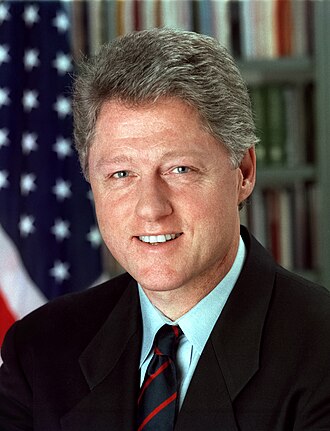
Signed by President William J. Clinton on January 15, 1994, this order concerns Advisory Committee on Human Radiation Experiments. There shall be established an Advisory Committee on Human Radiation Experiments (the "Advisory Committee" or "Committee"). The Advisory Committee shall be composed of not more than 15 members to be appointed or designated by the President. The Advisory Committee shall comply with the Federal Advisory Committee Act, as amended, 5 U.S.C. App. 2.

Constitutional Assessment: Scrutinized through Article II, Section 2, this action exercises the President's constitutional role as Commander in Chief. Early Framers recognized broad executive discretion in commanding military forces during conflict, provided it remains bounded by congressional declarations and respects civilian domestic courts.

Key Directives & Operative Actions

▪
Functions

There has been established a Human Radiation Interagency Working Group, the members of which include the Secretary of Energy, the Secretary of Defense, the Secretary of Health and Human Services, the Secretary of Veterans Affairs, the Attorney General, the Administrator of the National Aeronautics and Space Administration, the Director of Central Intelligence, and the Director of the Office of Management and Budget.

▪
Administration

The heads of executive departments and agencies shall, to the extent permitted by law, provide the Advisory Committee with such information as it may require for purposes of carrying out its functions.

Constitutional & Societal Entities Impacted

🏛️ Armed Forces & Military Establishments 🏛️ Executive Departments & Federal Civil Servants 🏛️ Public Health & Medical Institutions
🏛️

The Framers' Constitutional Council

1787 Prism

Evaluating this order against the constitutional debates of 1787 and the limits of Article II executive power.

🏛️✅ Zone 1 (Maximum Authority)
§

"When the President acts pursuant to an express or implied authorization of Congress, his authority is at its maximum, for it includes all that he possesses in his own right plus all that Congress can delegate."

— Justice Robert H. Jackson, Youngstown Sheet & Tube Co. v. Sawyer (1952) Express or Implied Congressional Authorization
JM

James Madison

Separation of Powers & Legislative Primacy

"The constitutional magistracy was designed not to invent policy, but to be the faithful instrument of the laws passed by the people's representatives." — Speech in the First Congress (1789)

Madison would approve the structural posture of this order. The President acts strictly in subordination to statutory authority granted under Article II, Section 3 ("take Care that the Laws be faithfully executed"). The checks and balances hold firm because the policy origin remains with the legislature.

Madisonian Stance: Concurring (Statutory)
AH

Alexander Hamilton

The Energetic Executive & Unified Command

"The direction of war implies the direction of the common strength; and the power of directing and employing the common strength must be under the direction of the single hand of the Executive." — Federalist No. 74 (1788)

Hamilton would forcefully champion executive discretion here. For foreign entanglements, commerce defense, and national security, deliberative assemblies are too slow and faction-ridden. A unified, energetic Executive exercising swift command is precisely what the Philadelphia Convention intended for national preservation.

Hamiltonian Stance: Strong Prerogative Support
GM

George Mason

Bill of Rights, Due Process & 10th Amendment

"The president will be surrounded by flatterers and sycophants... and the great powers of the executive will gradually absorb the liberties of the people." — Cato IV (Anti-Federalist, 1787)

The Anti-Federalist prism advises continuous democratic vigilance. Even routine administrative directives aggregate centralized federal power away from town halls and state assemblies toward a distant executive apparatus.

Anti-Federalist Stance: Eternal Vigilance Required
📐

Five Measurable "Constitutional Friction" Dimensions

An objective audit measuring potential separation-of-powers tension against the United States Constitution and established Supreme Court doctrine.

⚖️ Discretionary Twilight Zone
40 / 100 friction index
Dimension 1 • Art. I, §1 & §8

Legislative Encroachment & Purse

Moderate Friction

Administers commerce or fiscal programs requiring ongoing statutory delegation and legislative oversight.

Benchmark: Power of the purse, taxes/tariffs, and rule of law reserved to Congress.
Dimension 2 • Art. II, §1 & §3

Executive Scope & Faithfulness

Moderate Friction

Directs internal executive branch machinery, agency workflows, and federal personnel.

Benchmark: Faithfully execute laws enacted by Congress vs. unilateral decree.
Dimension 3 • 10th Amendment

Federalism & State Sovereignty

Moderate Friction

Engages state and local partners in cooperative federalism programs.

Benchmark: Police powers and un-delegated responsibilities reserved to the States.
Dimension 4 • 5th & 14th Amendments

Due Process & Individual Rights

Moderate Friction

Applies regulatory or compliance standards to private contractors or commercial entities.

Benchmark: Protection of private property, contracts, liberty, and procedural justice.
Dimension 5 • Separation of Powers

Youngstown Jacksonian Tier

Low Friction

The President operates strictly as the constitutional Chief Executive, carrying out policy established by Congress with strong statutory backing.

Benchmark: Express or Implied Congressional Authorization
⚖️ Audit Synthesis

This order operates within Justice Jackson’s Zone of Twilight, resting upon concurrent presidential authority or congressional silence.

Weighted composite: Art. I (25%), Art. II (25%), Federalism (15%), Due Process (15%), Youngstown (20%).
ℹ️
How to read these dimensions: Executive power expands whenever an administration acts without explicit statutory authorization from Congress (Article I), touches upon police powers historically reserved to the states (Tenth Amendment), or limits private rights and property without judicial process. A low friction score indicates strict concordance with enacted law; a high friction score highlights orders testing the limits of presidential discretion.
Total Words
1,036
6,906 characters
Estimated Read Time
5 min
@ 200 words / min
Flesch-Kincaid
20.1
Post-Graduate Legal
Language Tone Score
+0.70
Constitutional Fidelity
How is this scored?
Text size:

Official Archival Text

View Source Document

By the authority vested in me as President by the Constitution and the laws of the United States of America, it is hereby ordered as follows:

Section 1. #sec-1

Establishment. (a) There shall be established an Advisory Committee on Human Radiation Experiments (the "Advisory Committee" or "Committee"). The Advisory Committee shall be composed of not more than 15 members to be appointed or designated by the President. The Advisory Committee shall comply with the Federal Advisory Committee Act, as amended, 5 U.S.C. App. 2. (b) The President shall designate a Chairperson from among the members of the Advisory Committee.

Sec. 2. #sec-2

Functions. (a) There has been established a Human Radiation Interagency Working Group, the members of which include the Secretary of Energy, the Secretary of Defense, the Secretary of Health and Human Services, the Secretary of Veterans Affairs, the Attorney General, the Administrator of the National Aeronautics and Space Administration, the Director of Central Intelligence, and the Director of the Office of Management and Budget. As set forth in paragraph (b) of this section, the Advisory Committee shall provide to the Human Radiation Interagency Working Group advice and recommendations on the ethical and scientific standards applicable to human radiation experiments carried out or sponsored by the United States Government. As used herein, "human radiation experiments" means: (1) experiments on individuals involving intentional exposure to ionizing radiation. This category does not include common and routine clinical practices, such as established diagnosis and treatment methods, involving incidental exposures to ionizing radiation; (2) experiments involving intentional environmental releases of radiation that (A) were designed to test human health effects of ionizing radiation; or (B) were designed to test the extent of human exposure to ionizing radiation. Consistent with the provisions set forth in paragraph (b) of this section, the Advisory Committee shall also provide advice, information, and recommendations on the following experiments: (1) the experiment into the atmospheric diffusion of radioactive gases and test of detectability, commonly referred to as "the Green Run test," by the former Atomic Energy Commission (AEC) and the Air Force in December 1949 at the Hanford Reservation in Richland, Washington; (2) two radiation warfare field experiments conducted at the AEC's Oak Ridge office in 1948 involving gamma radiation released from non-bomb point sources at or near ground level; (3) six tests conducted during 1949–1952 of radiation warfare ballistic dispersal devices containing radioactive agents at the U.S. Army's Dugway, Utah, site; (4) four atmospheric radiation-tracking tests in 1950 at Los Alamos, New Mexico; and (5) any other similar experiment that may later be identified by the Human Radiation Interagency Working Group. The Advisory Committee shall review experiments conducted from 1944 to May 30, 1974. Human radiation experiments undertaken after May 30, 1974, the date of issuance of the Department of Health, Education, and Welfare ("DHEW") Regulations for the Protection of Human Subjects (45 C.F.R. 46), may be sampled to determine whether further inquiry into experiments is warranted. Further inquiry into experiments conducted after May 30, 1974, may be pursued if the Advisory Committee determines, with the concurrence of the Human Radiation Interagency Working Group, that such inquiry is warranted. (b)(1) The Advisory Committee shall determine the ethical and scientific standards and criteria by which it shall evaluate human radiation experiments, as set forth in paragraph (a) of this section. The Advisory Committee shall consider whether (A) there was a clear medical or scientific purpose for the experiments; (B) appropriate medical follow-up was conducted; and (C) the experiments' design and administration adequately met the ethical and scientific standards, including standards of informed consent, that prevailed at the time of the experiments and that exist today. (2) The Advisory Committee shall evaluate the extent to which human radiation experiments were consistent with applicable ethical and scientific standards as determined by the Committee pursuant to paragraph (b)(1) of this section. If deemed necessary for such an assessment, the Committee may carry out a detailed review of experiments and associated records to the extent permitted by law. (3) If required to protect the health of individuals who were subjects of a human radiation experiment, or their descendants, the Advisory Committee may recommend to the Human Radiation Interagency Working Group that an agency notify particular subjects of an experiment, or their descendants, of any potential health risk or the need for medical follow-up. (4) The Advisory Committee may recommend further policies, as needed, to ensure compliance with recommended ethical and scientific standards for human radiation experiments. (5) The Advisory Committee may carry out such additional functions as the Human Radiation Interagency Working Group may from time to time request.

Sec. 3. #sec-3

Administration. (a) The heads of executive departments and agencies shall, to the extent permitted by law, provide the Advisory Committee with such information as it may require for purposes of carrying out its functions. (b) Members of the Advisory Committee shall be compensated in accordance with Federal law. Committee members may be allowed travel expenses, including per diem in lieu of subsistence, to the extent permitted by law for persons serving intermittently in the government service (5 U.S.C. 5701-5707). (c) To the extent permitted by law, and subject to the availability of appropriations, the Department of Energy shall provide the Advisory Committee with such funds as may be necessary for the performance of its functions.

Sec. 4. #sec-4

General Provisions. (a) Notwithstanding the provisions of any other Executive order, the functions of the President under the Federal Advisory Committee Act that are applicable to the Advisory Committee, except that of reporting annually to the Congress, shall be performed by the Human Radiation Interagency Working Group, in accordance with the guidelines and procedures established by the Administrator of General Services. (b) The Advisory Committee shall terminate 30 days after submitting its final report to the Human Radiation Interagency Working Group. (c) This order is intended only to improve the internal management of the executive branch and it is not intended to create any right, benefit, trust, or responsibility, substantive or procedural, enforceable at law or equity by a party against the United States, its agencies, its officers, or any person. William J. Clinton The White House, January 15, 1994. [Filed with the Office of the Federal Register, 4:37 p.m., January 18, 1994]

🔗

Referenced By Later Executive Orders (1)

Subsequent presidents who cited, amended, continued, or revoked this directive in later orders.

📜

Scholarly & Legal Citations

Exec. Order No. 12,891, 59 Fed. Reg. 2935 (Jan. 15, 1994).