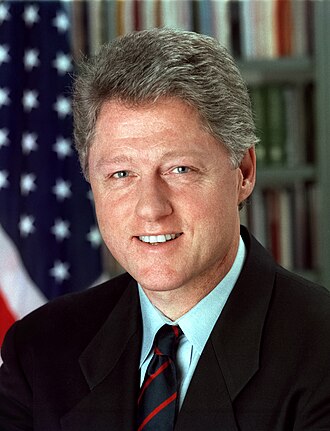
By the authority vested in me as President by the Constitution and the laws of the United States of America, including the International Emergency Economic Powers Act (50 U.S.C. 1701 et seq. ), the National Emergencies Act (50 U.S.C. 1601 et seq. ), the Arms Export Control Act, as amended (22 U.S.C. 2751 et seq. ), Executive Orders Nos. 12851 and 12924, and section 301 of title 3, United States Code, I, William J. Clinton, President of the United States of America, find that the proliferation of nuclear, biological, and chemical weapons ("weapons of mass destruction") and of the means of delivering such weapons, constitutes an unusual and extraordinary threat to the national security, foreign policy, and economy of the United States, and hereby declare a national emergency to deal with that threat. Accordingly, I hereby order:
Section 1. #sec-1
International Negotiations. It is the policy of the United States to lead and seek multilaterally coordinated efforts with other countries to control the proliferation of weapons of mass destruction and the means of delivering such weapons. Accordingly, the Secretary of State shall cooperate in and lead multilateral efforts to stop the proliferation of weapons of mass destruction and their means of delivery.
Sec. 2. #sec-2
Imposition of Controls. As provided herein, the Secretary of State and the Secretary of Commerce shall use their respective authorities, including the Arms Export Control Act and the International Emergency Economic Powers Act, to control any exports, to the extent they are not already controlled by the Department of Energy and the Nuclear Regulatory Commission, that either Secretary determines would assist a country in acquiring the capability to develop, produce, stockpile, deliver, or use weapons of mass destruction or their means of delivery. The Secretary of State shall pursue early negotiations with foreign governments to adopt effective measures comparable to those imposed under this order.
Sec. 3. #sec-3
Department of Commerce Controls. (a) The Secretary of Commerce shall prohibit the export of any goods, technology, or services subject to the Secretary's export jurisdiction that the Secretary of Commerce determines, in consultation with the Secretary of State, the Secretary of Defense, and other appropriate officials, would assist a foreign country in acquiring the capability to develop, produce, stockpile, deliver, or use weapons of mass destruction or their means of delivery. The Secretary of State shall pursue early negotiations with foreign governments to adopt effective measures comparable to those imposed under this section. (b) Subsection (a) of this section will not apply to exports relating to a particular category of weapons of mass destruction (i.e., nuclear, chemical, or biological weapons) if their destination is a country with whose government the United States has entered into a bilateral or multilateral arrangement for the control of that category of weapons of mass destruction-related goods (including delivery systems) and technology, or maintains domestic export controls comparable to controls that are imposed by the United States with respect to that category of goods and technology, or that are otherwise deemed adequate by the Secretary of State. (c) The Secretary of Commerce shall require validated licenses to implement this order and shall coordinate any license applications with the Secretary of State and the Secretary of Defense. (d) The Secretary of Commerce, in consultation with the Secretary of State, shall take such actions, including the promulgation of rules, regulations, and amendments thereto, as may be necessary to continue to regulate the activities of United States persons in order to prevent their participation in activities that could contribute to the proliferation of weapons of mass destruction or their means of delivery, as provided in the Export Administration Regulations, set forth in Title 15, Chapter VII, Subchapter C, of the Code of Federal Regulations, Parts 768 to 799 inclusive.
Sec. 4. #sec-4
Sanctions Against Foreign Persons. (a) In addition to the sanctions imposed on foreign persons as provided in the National Defense Authorization Act for Fiscal Year 1991 and the Chemical and Biological Weapons Control and Warfare Elimination Act of 1991, sanctions also shall be imposed on a foreign person with respect to chemical and biological weapons proliferation if the Secretary of State determines that the foreign person on or after the effective date of this order or its predecessor, Executive Order No. 12735 of November 16, 1990, knowingly and materially contributed to the efforts of any foreign country, project, or entity to use, develop, produce, stockpile, or otherwise acquire chemical or biological weapons. (b) No department or agency of the United States Government may procure, or enter into any contract for the procurement of, any goods or services from any foreign person described in subsection (a) of this section. The Secretary of the Treasury shall prohibit the importation into the United States of products produced by that foreign person. (c) Sanctions pursuant to this section may be terminated or not imposed against foreign persons if the Secretary of State determines that there is reliable evidence that the foreign person concerned has ceased all activities referred to in subsection (a). (d) The Secretary of State and the Secretary of the Treasury may provide appropriate exemptions for procurement contracts necessary to meet U.S. operational military requirements or requirements under defense production agreements, sole source suppliers, spare parts, components, routine servicing and maintenance of products, and medical and humanitarian items. They may provide exemptions for contracts in existence on the date of this order under appropriate circumstances.
Sec. 5. #sec-5
Sanctions Against Foreign Countries. (a) In addition to the sanctions imposed on foreign countries as provided in the Chemical and Biological Weapons Control and Warfare Elimination Act of 1991, sanctions also shall be imposed on a foreign country as specified in subsection (b) of this section, if the Secretary of State determines that the foreign country has, on or after the effective date of this order or its predecessor, Executive Order No. 12735 of November 16, 1990, (1) used chemical or biological weapons in violation of international law; (2) made substantial preparations to use chemical or biological weapons in violation of international law; or (3) developed, produced, stockpiled, or otherwise acquired chemical or biological weapons in violation of international law. (b) The following sanctions shall be imposed on any foreign country identified in subsection (a)(1) of this section unless the Secretary of State determines, on grounds of significant foreign policy or national security, that any individual sanction should not be applied. The sanctions specified in this section may be made applicable to the countries identified in subsections (a)(2) or (a)(3) when the Secretary of State determines that such action will further the objectives of this order pertaining to proliferation. The sanctions specified in subsection (b)(2) below shall be imposed with the concurrence of the Secretary of the Treasury. (1) Foreign Assistance. No assistance shall be provided to that country under the Foreign Assistance Act of 1961, or any successor act, or the Arms Export Control Act, other than assistance that is intended to benefit the people of that country directly and that is not channeled through governmental agencies or entities of that country. (2) Multilateral Development Bank Assistance. The United States shall oppose any loan or financial or technical assistance to that country by international financial institutions in accordance with section 701 of the International Financial Institutions Act (22 U.S.C. 262d). (3) Denial of Credit or Other Financial Assistance. The United States shall deny to that country any credit or financial assistance by any department, agency, or instrumentality of the United States Government. (4) Prohibition of Arms Sales. The United States Government shall not, under the Arms Export Control Act, sell to that country any defense articles or defense services or issue any license for the export of items on the United States Munitions List. (5) Exports of National Security-Sensitive Goods and Technology. No exports shall be permitted of any goods or technologies controlled for national security reasons under the Export Administration Regulations. (6) Further Export Restrictions. The Secretary of Commerce shall prohibit or otherwise substantially restrict exports to that country of goods, technology, and services (excluding agricultural commodities and products otherwise subject to control). (7) Import Restrictions. Restrictions shall be imposed on the importation into the United States of articles (that may include petroleum or any petroleum product) that are the growth, product, or manufacture of that country. (8) Landing Rights. At the earliest practicable date, the Secretary of State shall terminate, in a manner consistent with international law, the authority of any air carrier that is controlled in fact by the government of that country to engage in air transportation (as defined in section 101(10) of the Federal Aviation Act of 1958 (49 U.S.C. App. 1301(10)).
Sec. 6. #sec-6
Duration. Any sanctions imposed pursuant to sections 4 or 5 of this order shall remain in force until the Secretary of State determines that lifting any sanction is in the foreign policy or national security interests of the United States or, as to sanctions under section 4 of this order, until the Secretary has made the determination under section 4(c).
Sec. 7. #sec-7
Implementation. The Secretary of State, the Secretary of the Treasury, and the Secretary of Commerce are hereby authorized and directed to take such actions, including the promulgation of rules and regulations, as may be necessary to carry out the purposes of this order. These actions, and in particular those in sections 4 and 5 of this order, shall be made in consultation with the Secretary of Defense and, as appropriate, other agency heads and shall be implemented in accordance with procedures established pursuant to Executive Order No. 12851. The Secretary concerned may redelegate any of these functions to other officers in agencies of the Federal Government. All heads of departments and agencies of the United States Government are directed to take all appropriate measures within their authority to carry out the provisions of this order, including the suspension or termination of licenses or other authorizations.
Sec. 8. #sec-8
Preservation of Authorities. Nothing in this order is intended to affect the continued effectiveness of any rules, regulations, orders, licenses, or other forms of administrative action issued, taken, or continued in effect heretofore or hereafter under the authority of the International Economic Emergency Powers Act, the Export Administration Act, the Arms Export Control Act, the Nuclear Non-proliferation Act, Executive Order No. 12730 of September 30, 1990, Executive Order No. 12735 of November 16, 1990, Executive Order No. 12924 of August 18, 1994, and Executive Order No. 12930 of September 29, 1994.
Sec. 9. #sec-9
Judicial Review. This order is not intended to create, nor does it create, any right or benefit, substantive or procedural, enforceable at law by a party against the United States, its agencies, officers, or any other person.
Sec. 10. #sec-10
Revocation of Executive Orders Nos. 12735 and 12930. Executive Order No. 12735 of November 16, 1990, and Executive Order No. 12930 of September 29, 1994, are hereby revoked.
Sec. 11. #sec-11
Effective Date. This order is effective immediately. This order shall be transmitted to the Congress and published in the Federal Register. William J. Clinton The White House, November 14, 1994. [Filed with the Office of the Federal Register, 3:16 p.m., November 14, 1994]