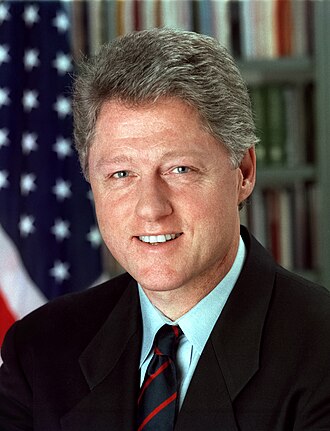
By the authority vested in me as President by the Constitution and the laws of the United States of America, including the International Emergency Economic Powers Act (50 U.S.C. 1701 et seq.) ("IEEPA"), the National Emergencies Act (50 U.S.C. 1601 et seq.), section 505 of the International Security and Development Cooperation Act of 1985 (22 U.S.C. 2349aa-9) ("ISDCA"), and section 301 of title 3, United States Code, I, William J. Clinton, President of the United States of America, in order to clarify the steps taken in Executive Orders 12957 of March 15, 1995, and 12959 of May 6, 1995, to deal with the unusual and extraordinary threat to the national security, foreign policy, and economy of the United States declared in Executive Order 12957 in response to the actions and policies of the Government of Iran, hereby order:
Section 1. #sec-1
Except to the extent provided in section 3 of this order or in regulations, orders, directives, or licenses issued pursuant to this order, and notwithstanding any contract entered into or any license or permit granted prior to the effective date of this order, the importation into the United States of any goods or services of Iranian origin or owned or controlled by the Government of Iran, other than information or informational materials within the meaning of section 203(b)(3) of IEEPA (50 U.S.C. 1702(b)(3)), is hereby prohibited.
Sec. 2. #sec-2
Except to the extent provided in section 3 of this order, in section 203(b) of IEEPA (50 U.S.C. 1702(b)), or in regulations, orders, directives, or licenses issued pursuant to this order, and notwithstanding any contract entered into or any license or permit granted prior to the effective date of this order, the following are prohibited: (a) the exportation, reexportation, sale, or supply, directly or indirectly, from the United States, or by a United States person, wherever located, of any goods, technology, or services to Iran or the Government of Iran, including the exportation, reexportation, sale, or supply of any goods, technology, or services to a person in a third country undertaken with knowledge or reason to know that: (i) such goods, technology, or services are intended specifically for supply, transshipment, or reexportation, directly or indirectly, to Iran or the Government of Iran; or (ii) such goods, technology, or services are intended specifically for use in the production of, for commingling with, or for incorporation into goods, technology, or services to be directly or indirectly supplied, transshipped, or reexported exclusively or predominantly to Iran or the Government of Iran; (b) the reexportation from a third country, directly or indirectly, by a person other than a United States person of any goods, technology, or services that have been exported from the United States, if: (i) undertaken with knowledge or reason to know that the reexportation is intended specifically for Iran or the Government of Iran, and (ii) the exportation of such goods, technology, or services to Iran from the United States was subject to export license application requirements under any United States regulations in effect on May 6, 1995, or thereafter is made subject to such requirements imposed independently of the actions taken pursuant to the national emergency declared in Executive Order 12957; provided, however, that this prohibition shall not apply to those goods or that technology subject to export license application requirements if such goods or technology have been: (A) substantially transformed into a foreign-made product outside the United States; or (B) incorporated into a foreign-made product outside the United States if the aggregate value of such controlled United States goods and technology constitutes less than 10 percent of the total value of the foreign-made product to be exported from a third country; (c) any new investment by a United States person in Iran or in property, including entities, owned or controlled by the Government of Iran; (d) any transaction or dealing by a United States person, wherever located, including purchasing, selling, transporting, swapping, brokering, approving, financing, facilitating, or guaranteeing, in or related to: (i) goods or services of Iranian origin or owned or controlled by the Government of Iran; or (ii) goods, technology, or services for exportation, reexportation, sale, or supply, directly or indirectly, to Iran or the Government of Iran; (e) any approval, financing, facilitation, or guarantee by a United States person, wherever located, of a transaction by a foreign person where the transaction by that foreign person would be prohibited by this order if performed by a United States person or within the United States; and (f) any transaction by a United States person or within the United States that evades or avoids, or has the purpose of evading or avoiding, or attempts to violate, any of the prohibitions set forth in this order.
Sec. 3. #sec-3
Specific licenses issued pursuant to Executive Orders 12613 (of October 29, 1987), 12957, or 12959 continue in effect in accordance with their terms except to the extent revoked, amended, or modified by the Secretary of the Treasury. General licenses, regulations, orders, and directives issued pursuant to those orders continue in effect in accordance with their terms except to the extent inconsistent with this order or to the extent revoked, amended, or modified by the Secretary of the Treasury.
Sec. 4. #sec-4
For the purposes of this order: (a) the term "person" means an individual or entity; (b) the term "entity" means a partnership, association, trust, joint venture, corporation, or other organization; (c) the term "United States person" means any United States citizen, permanent resident alien, entity organized under the laws of the United States (including foreign branches), or any person in the United States; (d) the term "Iran" means the territory of Iran and any other territory or marine area, including the exclusive economic zone and continental shelf, over which the Government of Iran claims sovereignty, sovereign rights, or jurisdiction, provided that the Government of Iran exercises partial or total de facto control over the area or derives a benefit from economic activity in the area pursuant to international arrangements; (e) the term "Government of Iran" includes the Government of Iran, any political subdivision, agency, or instrumentality thereof, and any person owned or controlled by, or acting for or on behalf of, the Government of Iran; (f) the term "new investment" means: (i) a commitment or contribution of funds or other assets; or (ii) a loan or other extension of credit, made after the effective date of Executive Order 12957 as to transactions prohibited by that order, or otherwise made after the effective date of Executive Order 12959.
Sec. 5. #sec-5
The Secretary of the Treasury, in consultation with the Secretary of State and, as appropriate, other agencies, is hereby authorized to take such actions, including the promulgation of rules and regulations, the requirement of reports, including reports by United States persons on oil and related transactions engaged in by their foreign affiliates with Iran or the Government of Iran, and to employ all powers granted to me by IEEPA and the ISDCA as may be necessary to carry out the purposes of this order. The Secretary of the Treasury may redelegate any of these functions to other officers and agencies of the United States Government. All agencies of the United States Government are hereby directed to take all appropriate measures within their authority to carry out the provisions of this order.
Sec. 6. #sec-6
(a) The Secretary of the Treasury may authorize the exportation or reexportation to Iran or the Government of Iran of any goods, technology, or services also subject to export license application requirements of another agency of the United States Government only if authorization by that agency of the exportation or reexportation to Iran would be permitted by law. (b) Nothing contained in this order shall be construed to supersede the requirements established under any other provision of law or to relieve a person from any requirement to obtain a license or other authorization from another department or agency of the United States Government in compliance with applicable laws and regulations subject to the jurisdiction of that department or agency.
Sec. 7. #sec-7
The provisions of this order consolidate the provisions of Executive Orders 12613, 12957, and 12959. Executive Order 12613 and subsections (a), (b), (c), (d), and (f) of section 1 of Executive Order 12959 are hereby revoked with respect to transactions occurring after the effective date of this order. The revocation of those provisions shall not alter their applicability to any transaction or violation occurring before the effective date of this order, nor shall it affect the applicability of any rule, regulation, order, license, or other form of administrative action previously taken pursuant to Executive Orders 12613 or 12959.
Sec. 8. #sec-8
Nothing contained in this order shall create any right or benefit, substantive or procedural, enforceable by any party against the United States, its agencies or instrumentalities, its officers or employees, or any other person.
Sec. 9. #sec-9
The measures taken pursuant to this order are in response to actions of the Government of Iran occurring after the conclusion of the 1981 Algiers Accords, and are intended solely as a response to those later actions.
Sec. 10. #sec-10
(a) This order is effective at 12:01 a.m. eastern daylight time on August 20, 1997. (b) This order shall be transmitted to the Congress and published in the Federal Register. William J. Clinton The White House, August 19, 1997. [Filed with the Office of the Federal Register, 11:16 a.m., August 20, 1997]