By the authority vested in me as President by the Constitution and the laws of the United States of America, including sections 121 and 12304 of title 10, United States Code, I hereby determine that it is necessary to augment the active armed forces of the United States for the effective conduct of operations in and around Southwest Asia. Further, under the stated authority, I hereby authorize the Secretary of Defense, and the Secretary of Transportation with respect to the Coast Guard when it is not operating as a service in the Department of the Navy, to order to active duty any units, and any individual members not assigned to a unit organized to serve as a unit, of the Selected Reserve. This order is intended only to improve the internal management of the executive branch and is not intended to create any right or benefit, substantive or procedural, enforceable at law by a party against the United States, its agencies, its officers, or any person. William J. Clinton The White House, February 24, 1998. [Filed with the Office of the Federal Register, 8:45 a.m., February 25, 1998]
Executive Order 13076 Amended 🏛️✅ Zone 1: Maximum Authority Constitutional Fidelity (+0.23)
📜 Art. II §2: Commander-in-Chief Supervisory Authority
Executive Order 13076—Ordering the Selected Reserve of the Armed Forces to Active Duty
Executive Brief • At a Glance
⏱️ 1 min read (188 words) •
● Amended
🎯 Primary Mandate
I hereby determine that it is necessary to augment the active armed forces of the United States for the effective conduct of operations in and around Southwest Asia.
⚖️ Constitutional Footing
🏛️✅ Zone 1: Maximum Authority
Express or Implied Congressional Authorization
📜 Art. II §2: Commander-in-Chief Supervisory Authority
🏛️ Scope & Affected Sectors
Armed Forces & Military Establishments Executive Departments & Federal Civil Servants
Legal Status & Amendment History
AmendedActions on this order
- Amended by EO 13286 (February 28, 2003)
Source: Office of the Federal Register executive order disposition notes. Orders before 1994 show only actions recorded by later orders.
Plain-English Translation & Framers' Constitutional Analysis
Early Statesman synthesis distilling legal jargon into practical meaning, statutory anchors, and structural constitutional impacts.
Signed by President William J. Clinton on February 24, 1998, this order concerns Ordering the Selected Reserve of the Armed Forces to Active Duty. I hereby determine that it is necessary to augment the active armed forces of the United States for the effective conduct of operations in and around Southwest Asia. Further, under the stated authority, I hereby authorize the Secretary of Defense, and the Secretary of Transportation with respect to the Coast Guard when it is not operating as a service in the Department of the Navy, to order to active duty any…
Constitutional Assessment: Scrutinized through Article II, Section 2, this action exercises the President's constitutional role as Commander in Chief. Early Framers recognized broad executive discretion in commanding military forces during conflict, provided it remains bounded by congressional declarations and respects civilian domestic courts.
Key Directives & Operative Actions
▪
I hereby determine that it is necessary to augment the active armed forces of the United States for the effective conduct of operations in and around Southwest Asia.
▪
Further, under the stated authority, I hereby authorize the Secretary of Defense, and the Secretary of Transportation with respect to the Coast Guard when it is not operating as a service in the Department of the Navy, to order to active duty any units, and any individual members not assigned to a unit organized to serve as a unit, of the Selected Reserve.
▪
This order is intended only to improve the internal management of the executive branch and is not intended to create any right or benefit, substantive or procedural, enforceable at law by a party against the United States, its agencies, its officers, or any person.
Constitutional & Societal Entities Impacted
🏛️ Armed Forces & Military Establishments
🏛️ Executive Departments & Federal Civil Servants
Policy Areas & Topics
🏛️
The Framers' Constitutional Council
1787 PrismEvaluating this order against the constitutional debates of 1787 and the limits of Article II executive power.
🏛️✅ Zone 1 (Maximum Authority)
§
"When the President acts pursuant to an express or implied authorization of Congress, his authority is at its maximum, for it includes all that he possesses in his own right plus all that Congress can delegate."
— Justice Robert H. Jackson, Youngstown Sheet & Tube Co. v. Sawyer (1952) Express or Implied Congressional Authorization
JM
James Madison
Separation of Powers & Legislative Primacy
"The constitutional magistracy was designed not to invent policy, but to be the faithful instrument of the laws passed by the people's representatives." — Speech in the First Congress (1789)
Madison would approve the structural posture of this order. The President acts strictly in subordination to statutory authority granted under Article II, Section 3 ("take Care that the Laws be faithfully executed"). The checks and balances hold firm because the policy origin remains with the legislature.
Madisonian Stance: Concurring (Statutory)
AH
Alexander Hamilton
The Energetic Executive & Unified Command
"The direction of war implies the direction of the common strength; and the power of directing and employing the common strength must be under the direction of the single hand of the Executive." — Federalist No. 74 (1788)
Hamilton would forcefully champion executive discretion here. For foreign entanglements, commerce defense, and national security, deliberative assemblies are too slow and faction-ridden. A unified, energetic Executive exercising swift command is precisely what the Philadelphia Convention intended for national preservation.
Hamiltonian Stance: Strong Prerogative Support
GM
George Mason
Bill of Rights, Due Process & 10th Amendment
"The president will be surrounded by flatterers and sycophants... and the great powers of the executive will gradually absorb the liberties of the people." — Cato IV (Anti-Federalist, 1787)
The Anti-Federalist prism advises continuous democratic vigilance. Even routine administrative directives aggregate centralized federal power away from town halls and state assemblies toward a distant executive apparatus.
Anti-Federalist Stance: Eternal Vigilance Required
📐
Five Measurable "Constitutional Friction" Dimensions
An objective audit measuring potential separation-of-powers tension against the United States Constitution and established Supreme Court doctrine.
⚖️ Discretionary Twilight Zone
40 / 100 friction index
Dimension 1 • Art. I, §1 & §8
Moderate Friction
Legislative Encroachment & Purse
Administers commerce or fiscal programs requiring ongoing statutory delegation and legislative oversight.
Benchmark: Power of the purse, taxes/tariffs, and rule of law reserved to Congress.
Dimension 2 • Art. II, §1 & §3
Moderate Friction
Executive Scope & Faithfulness
Directs internal executive branch machinery, agency workflows, and federal personnel.
Benchmark: Faithfully execute laws enacted by Congress vs. unilateral decree.
Dimension 3 • 10th Amendment
Moderate Friction
Federalism & State Sovereignty
Engages state and local partners in cooperative federalism programs.
Benchmark: Police powers and un-delegated responsibilities reserved to the States.
Dimension 4 • 5th & 14th Amendments
Moderate Friction
Due Process & Individual Rights
Applies regulatory or compliance standards to private contractors or commercial entities.
Benchmark: Protection of private property, contracts, liberty, and procedural justice.
Dimension 5 • Separation of Powers
Low Friction
Youngstown Jacksonian Tier
The President operates strictly as the constitutional Chief Executive, carrying out policy established by Congress with strong statutory backing.
Benchmark: Express or Implied Congressional Authorization
⚖️
Audit Synthesis
This order operates within Justice Jackson’s Zone of Twilight, resting upon concurrent presidential authority or congressional silence.
Weighted composite: Art. I (25%), Art. II (25%), Federalism (15%), Due Process (15%), Youngstown (20%).
ℹ️
How to read these dimensions: Executive power expands whenever an administration acts without explicit statutory authorization from Congress (Article I), touches upon police powers historically reserved to the states (Tenth Amendment), or limits private rights and property without judicial process. A low friction score indicates strict concordance with enacted law; a high friction score highlights orders testing the limits of presidential discretion.
Total Words
188
1,098 characters
Estimated Read Time
1 min
@ 200 words / min
Flesch-Kincaid
16.9
Post-Graduate Legal
Text size:
🔗
Referenced By Later Executive Orders (1)
Subsequent presidents who cited, amended, continued, or revoked this directive in later orders.
Related Executive Orders
Other executive actions signed by William J. Clinton around this period.
EO 13075 Revoked Feb 19, 1998
🏛️✅ Zone 1 (Maximum Authority) Fidelity (+0.66)
Executive Order 13075—Special Oversight Board for Department of Defense Investigations of Gulf War Chemical and Biological Incidents
📜 Art. II §2: Commander-in-Chief Supervisory Authority
There is hereby established the Special Oversight Board for Department of Defense Investigations of Gulf War Chemical and Biological Incidents ("Special Oversight Board"). The Special Oversight Board shall be composed of not more than seven members appointed by the President.
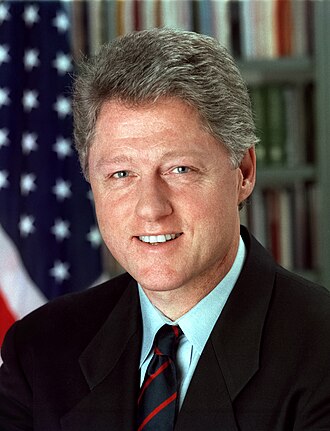 William J. Clinton
College Level • 3m
EO 13077 Mar 10, 1998
🏛️✅ Zone 1 (Maximum Authority) Fidelity (+0.23)
Executive Order 13077—Further Amendment to Executive Order 13010, Critical Infrastructure Protection
📜 Art. II §3: Faithful Execution of Statutory Law
Executive Order 13010, as amended, is further amended as follows: Section 6. Section 6(f), as amended, shall be further amended by deleting "March 15, 1998" and inserting "September 30, 1998" in lieu thereof. Section 7.
William J. Clinton College Level • 1m
EO 13074 Feb 9, 1998
🏛️✅ Zone 1 (Maximum Authority) Fidelity (+0.23)
Executive Order 13074—Amendment to Executive Order 12656
📜 Art. II §2: Commander-in-Chief Supervisory Authority
Executive Order 12656 is amended by adding a new section 501(16) to read as follows: "Subject to the direction of the President, and pursuant to procedures to be developed jointly by the Secretary of Defense and the Secretary of State, be responsible for the deployment and use…
William J. Clinton Post-Graduate Legal • 1m
EO 13078 Amended Mar 13, 1998
🏛️✅ Zone 1 (Maximum Authority) Fidelity (+0.52)
Executive Order 13078—Increasing Employment of Adults With Disabilities
📜 Art. I §8: Delegated Tariff & Commerce Execution
There is established the "National Task Force on Employment of Adults with Disabilities" ("Task Force"). The Task Force shall comprise the Secretary of Labor, Secretary of Education, Secretary of Veterans Affairs, Secretary of Health and Human Services, Commissioner of Social…
William J. Clinton Post-Graduate Legal • 8m
EO 13073 Amended Feb 4, 1998
🏛️✅ Zone 1 (Maximum Authority) Fidelity (+0.52)
Executive Order 13073—Year 2000 Conversion
📜 10th Amend: Intergovernmental Federalism Cooperation
It shall be the policy of the executive branch that agencies shall: (1) assure that no critical Federal program experiences disruption because of the Y2K problem; (2) assist and cooperate with State, local, and tribal governments to address the Y2K problem where those…
William J. Clinton Post-Graduate Legal • 4m
EO 13072 Feb 2, 1998
🏛️✅ Zone 1 (Maximum Authority) Fidelity (+0.29)
Executive Order 13072—White House Millennium Council
📜 Art. II §2: Commander-in-Chief Supervisory Authority
The White House, the Department of Education, and all executive branch agencies shall lead the country in a national and educational celebration of our culture, democracy, and citizenry.
William J. Clinton Post-Graduate Legal • 4m
📜
Scholarly & Legal Citations
Exec. Order No. 13,076, 63 Fed. Reg. 9719 (Feb. 24, 1998).
