★
Executive Orders Historical Archive
Cite
Executive Order 13157 🏛️✅ Zone 1: Maximum Authority Constitutional Fidelity (+0.41) 📜 10th Amend: Intergovernmental Federalism Cooperation

Executive Order 13157—Increasing Opportunities for Women-Owned Small Businesses

•
Tuesday, May 23, 2000
•
5 min read (1,052 words)
•
65 Fed. Reg. 34035

Executive Brief • At a Glance

⏱️ 5 min read (1,052 words) • ● In Effect
🎯 Primary Mandate

Each department and agency (hereafter referred to collectively as "agency") that has procurement authority shall develop a long-term comprehensive strategy to expand opportunities for WOSBs.

⚖️ Constitutional Footing
🏛️✅ Zone 1: Maximum Authority
Express or Implied Congressional Authorization
📜 10th Amend: Intergovernmental Federalism Cooperation
🏛️ Scope & Affected Sectors
Sovereign State Governments & Localities Executive Departments & Federal Civil Servants Private Citizens & Property Owners

Plain-English Translation & Framers' Constitutional Analysis

Early Statesman synthesis distilling legal jargon into practical meaning, statutory anchors, and structural constitutional impacts.

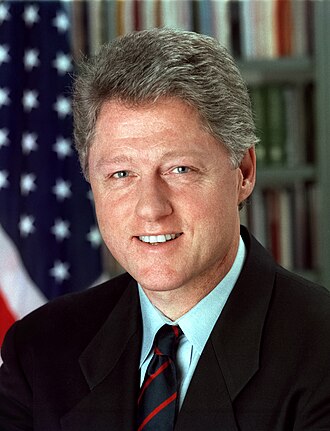
Signed by President William J. Clinton on May 23, 2000, this order concerns Increasing Opportunities for Women-Owned Small Businesses. In order to reaffirm and strengthen the statutory policy contained in the Small Business Act, 15 U.S.C. 644(g)(1), it shall be the policy of the executive branch to take the steps necessary to meet or exceed the 5 percent Government-wide goal for participation in procurement by women-owned small businesses (WOSBs).

Constitutional Assessment: Reviewed under the Tenth Amendment and the principle of dual federalism, this order touches upon domains traditionally reserved to the sovereign States. The Framers would caution against any attempt to commandeer state officers or displace local police powers through federal executive fiat.

Key Directives & Operative Actions

▪
Responsibilities of Federal Departments and Agencies

Each department and agency (hereafter referred to collectively as "agency") that has procurement authority shall develop a long-term comprehensive strategy to expand opportunities for WOSBs.

▪
Responsibilities of the Small Business Administration

The Small Business Administration (SBA) shall establish an Assistant Administrator for Women’s Procurement within the SBA’s Office of Government Contracting.

▪
Other Responsibilities of Federal Agencies

To the extent permitted by law, each Federal agency shall work with the SBA to ensure maximum participation of WOSBs in the procurement process by taking the following steps: (a) designating a senior acquisition official who will work with the SBA to identify and promote contracting opportunities for WOSBs; (b) requiring contracting officers, to the maximum extent practicable, to include WOSBs in competitive acquisitions; (c) prescribing procedures to ensure that acquisition planners, to the maximum extent practicable, structure acquisitions to facilitate competition by and among small businesses, HUBZone small businesses, SDBs, and WOSBs, and providing guidance on structuring acquisitions, including, but not limited to, those expected to…

▪
Subcontracting Plans

The head of each Federal agency, or designated representative, shall work closely with the SBA, OFPP, and others to develop procedures to increase compliance by prime contractors with subcontracting plans proposed under section 8(d) of the Small Business Act (15 U.S.C. 637(d)) or section 834 of Public Law 101–189, as amended (15 U.S.C. 637 note), including subcontracting plans involving WOSBs.

Constitutional & Societal Entities Impacted

🏛️ Sovereign State Governments & Localities 🏛️ Executive Departments & Federal Civil Servants 🏛️ Private Citizens & Property Owners

Policy Areas & Topics

🏛️

The Framers' Constitutional Council

1787 Prism

Evaluating this order against the constitutional debates of 1787 and the limits of Article II executive power.

🏛️✅ Zone 1 (Maximum Authority)
§

"When the President acts pursuant to an express or implied authorization of Congress, his authority is at its maximum, for it includes all that he possesses in his own right plus all that Congress can delegate."

— Justice Robert H. Jackson, Youngstown Sheet & Tube Co. v. Sawyer (1952) Express or Implied Congressional Authorization
JM

James Madison

Separation of Powers & Legislative Primacy

"The constitutional magistracy was designed not to invent policy, but to be the faithful instrument of the laws passed by the people's representatives." — Speech in the First Congress (1789)

Madison would approve the structural posture of this order. The President acts strictly in subordination to statutory authority granted under Article II, Section 3 ("take Care that the Laws be faithfully executed"). The checks and balances hold firm because the policy origin remains with the legislature.

Madisonian Stance: Concurring (Statutory)
AH

Alexander Hamilton

The Energetic Executive & Unified Command

"A feeble Executive implies a feeble execution of the government; and a government ill executed, whatever it may be in theory, must be, in practice, a bad government." — Federalist No. 70 (1788)

Hamilton would view this directive as the natural and indispensable functioning of administrative leadership. Without the power to coordinate agencies, manage personnel, and resolve operational ambiguities, the modern presidency would be reduced to an impotent figurehead.

Hamiltonian Stance: Supportive of Execution
GM

George Mason

Bill of Rights, Due Process & 10th Amendment

"The powers not delegated to the United States by the Constitution, nor prohibited by it to the States, are reserved to the States respectively, or to the people." — 10th Amendment to the US Constitution (1791)

Mason would scrutinize whether this federal directive intrudes into police powers, land stewardship, or municipal domains historically reserved to local citizens. The Anti-Federalist demand is that federal administration must never supplant state self-governance.

Anti-Federalist Stance: Eternal Vigilance Required
📐

Five Measurable "Constitutional Friction" Dimensions

An objective audit measuring potential separation-of-powers tension against the United States Constitution and established Supreme Court doctrine.

⚖️ Discretionary Twilight Zone
46 / 100 friction index
Dimension 1 • Art. I, §1 & §8

Legislative Encroachment & Purse

Moderate Friction

Administers commerce or fiscal programs requiring ongoing statutory delegation and legislative oversight.

Benchmark: Power of the purse, taxes/tariffs, and rule of law reserved to Congress.
Dimension 2 • Art. II, §1 & §3

Executive Scope & Faithfulness

Moderate Friction

Directs internal executive branch machinery, agency workflows, and federal personnel.

Benchmark: Faithfully execute laws enacted by Congress vs. unilateral decree.
Dimension 3 • 10th Amendment

Federalism & State Sovereignty

High Friction

Creates friction with the Tenth Amendment by conditioning state grants, mandating local compliance, or preempting state police powers.

Benchmark: Police powers and un-delegated responsibilities reserved to the States.
Dimension 4 • 5th & 14th Amendments

Due Process & Individual Rights

Moderate Friction

Applies regulatory or compliance standards to private contractors or commercial entities.

Benchmark: Protection of private property, contracts, liberty, and procedural justice.
Dimension 5 • Separation of Powers

Youngstown Jacksonian Tier

Low Friction

The President operates strictly as the constitutional Chief Executive, carrying out policy established by Congress with strong statutory backing.

Benchmark: Express or Implied Congressional Authorization
⚖️ Audit Synthesis

This order operates within Justice Jackson’s Zone of Twilight, resting upon concurrent presidential authority or congressional silence.

Weighted composite: Art. I (25%), Art. II (25%), Federalism (15%), Due Process (15%), Youngstown (20%).
ℹ️
How to read these dimensions: Executive power expands whenever an administration acts without explicit statutory authorization from Congress (Article I), touches upon police powers historically reserved to the states (Tenth Amendment), or limits private rights and property without judicial process. A low friction score indicates strict concordance with enacted law; a high friction score highlights orders testing the limits of presidential discretion.
Total Words
1,052
7,028 characters
Estimated Read Time
5 min
@ 200 words / min
Flesch-Kincaid
20.8
Post-Graduate Legal
Language Tone Score
+0.41
Constitutional Fidelity
How is this scored?
Text size:

Official Archival Text

View Source Document

By the authority vested in me as President by the Constitution and the laws of the United States of America, including the Small Business Act, 15 U.S.C. 631, et seq., section 7106 of the Federal Acquisition Streamlining Act of 1994 (Public Law 103–355), and the Office of Federal Procurement Policy, 41 U.S.C. 403, et seq., and in order to strengthen the executive branch’s commitment to increased opportunities for women-owned small businesses, it is hereby ordered as follows:

Section 1. #sec-1

Executive Branch Policy. In order to reaffirm and strengthen the statutory policy contained in the Small Business Act, 15 U.S.C. 644(g)(1), it shall be the policy of the executive branch to take the steps necessary to meet or exceed the 5 percent Government-wide goal for participation in procurement by women-owned small businesses (WOSBs). Further, the executive branch shall implement this policy by establishing a participation goal for WOSBs of not less than 5 percent of the total value of all prime contract awards for each fiscal year and of not less than 5 percent of the total value of all subcontract awards for each fiscal year.

Sec. 2. #sec-2

Responsibilities of Federal Departments and Agencies. Each department and agency (hereafter referred to collectively as "agency") that has procurement authority shall develop a long-term comprehensive strategy to expand opportunities for WOSBs. Where feasible and consistent with the effective and efficient performance of its mission, each agency shall establish a goal of achieving a participation rate for WOSBs of not less than 5 percent of the total value of all prime contract awards for each fiscal year and of not less than 5 percent of the total value of all subcontract awards for each fiscal year. The agency’s plans shall include, where appropriate, methods and programs as set forth in section 4 of this order.

Sec. 3. #sec-3

Responsibilities of the Small Business Administration. The Small Business Administration (SBA) shall establish an Assistant Administrator for Women’s Procurement within the SBA’s Office of Government Contracting. This officer shall be responsible for: (a) working with each agency to develop and implement policies to achieve the participation goals for WOSBs for the executive branch and individual agencies; (b) advising agencies on how to implement strategies that will increase the participation of WOSBs in Federal procurement; (c) evaluating, on a semiannual basis, using the Federal Procurement Data System (FPDS), the achievement of prime and subcontract goals and actual prime and subcontract awards to WOSBs for each agency; (d) preparing a report, which shall be submitted by the Administrator of the SBA to the President, through the Interagency Committee on Women’s Business Enterprise and the Office of Federal Procurement Policy (OFPP), on findings based on the FPDS, regarding prime contracts and subcontracts awarded to WOSBs; (e) making recommendations and working with Federal agencies to expand participation rates for WOSBs, with a particular emphasis on agencies in which the participation rate for these businesses is less than 5 percent; (f) providing a program of training and development seminars and conferences to instruct women on how to participate in the SBA’s 8(a) program, the Small Disadvantaged Business (SDB) program, the HUBZone program, and other small business contracting programs for which they may be eligible; (g) developing and implementing a single uniform Federal Government-wide website, which provides links to other websites within the Federal system concerning acquisition, small businesses, and women-owned businesses, and which provides current procurement information for WOSBs and other small businesses; (h) developing an interactive electronic commerce database that allows small businesses to register their businesses and capabilities as potential contractors for Federal agencies, and enables contracting officers to identify and locate potential contractors; and (i) working with existing women-owned business organizations, State and local governments, and others in order to promote the sharing of information and the development of more uniform State and local standards for WOSBs that reduce the burden on these firms in competing for procurement opportunities.

Sec. 4. #sec-4

Other Responsibilities of Federal Agencies. To the extent permitted by law, each Federal agency shall work with the SBA to ensure maximum participation of WOSBs in the procurement process by taking the following steps: (a) designating a senior acquisition official who will work with the SBA to identify and promote contracting opportunities for WOSBs; (b) requiring contracting officers, to the maximum extent practicable, to include WOSBs in competitive acquisitions; (c) prescribing procedures to ensure that acquisition planners, to the maximum extent practicable, structure acquisitions to facilitate competition by and among small businesses, HUBZone small businesses, SDBs, and WOSBs, and providing guidance on structuring acquisitions, including, but not limited to, those expected to result in multiple award contracts, in order to facilitate competition by and among these groups; (d) implementing mentor-protege programs, which include womenowned small business firms; and (e) offering industry-wide as well as industry-specific outreach, training, and technical assistance programs for WOSBs including, where appropriate, the use of Government acquisitions forecasts, in order to assist WOSBs in developing their products, skills, business planning practices, and marketing techniques.

Sec. 5. #sec-5

Subcontracting Plans. The head of each Federal agency, or designated representative, shall work closely with the SBA, OFPP, and others to develop procedures to increase compliance by prime contractors with subcontracting plans proposed under section 8(d) of the Small Business Act (15 U.S.C. 637(d)) or section 834 of Public Law 101–189, as amended (15 U.S.C. 637 note), including subcontracting plans involving WOSBs.

Sec. 6. #sec-6

Action Plans. If a Federal agency fails to meet its annual goals in expanding contract opportunities for WOSBs, it shall work with the SBA to develop an action plan to increase the likelihood that participation goals will be met or exceeded in future years.

Sec. 7. #sec-7

Compliance. Independent agencies are requested to comply with the provisions of this order.

Sec. 8. #sec-8

Consultation and Advice. In developing the long-term comprehensive strategies required by section 2 of this order, Federal agencies shall consult with, and seek information and advice from, State and local governments, WOSBs, other private-sector partners, and other experts.

Sec. 9. #sec-9

Judicial Review. This order is for internal management purposes for the Federal Government. It does not create any right or benefit, substantive or procedural, enforceable at law or equity by a party against the United States, its agencies, its officers, its employees, or any other person. William J. Clinton

THE WHITE HOUSE, #signature

May 23, 2000.

📜

Scholarly & Legal Citations

Exec. Order No. 13,157, 65 Fed. Reg. 34,035 (May 23, 2000).