By the authority vested in me as President by the Constitution and the laws of the United States of America, including section 1 of title II of the Act of June 15, 1917, as amended (50 U.S.C. 191) (the "Act"), and in addition to the finding in Executive Order 10173 of October 18, 1950, and any other declaration or finding in force under section 1 of the Act, I find that the security of the United States is endangered by reason of disturbances in the international relations of the United States that have existed since the terrorist attacks on the United States of September 11, 2001, and that such disturbances continue to endanger such relations, and hereby order that: Part 6 of Title 33 of the Code of Federal Regulations is amended by: (a) Adding after section 6.01–5 the following new section: "6.01–6 Area Commander. "Area Commander," as used in this part, means the officer of the Coast Guard designated by the Commandant to command a Coast Guard Area."; and (b) Amending section 6.04–1 to read as follows: "6.04–1 Enforcement. (a) The rules and regulations in this part shall be enforced by the Captain of the Port under the supervision and general direction of the District Commander, Area Commander, and the Commandant. All authority and power vested in the Captain of the Port by the regulations in this part shall be deemed vested in and may be exercised by the District Commander, Area Commander, and the Commandant. (b) The rules and regulations in this part may be enforced by any other officer or petty officer of the Coast Guard designated by the District Commander, Area Commander, or the Commandant. (c) Any authority or power under this part vested in, delegated to, or exercised by a member of the Coast Guard shall be subject to the direction of the Secretary of the Department in which the Coast Guard is operating.". GEORGE W. BUSH The White House, August 21, 2002. [Filed with the Office of the Federal Register, 8:45 a.m., August 30, 2002]
Executive Order 13273 🏛️✅ Zone 1: Maximum Authority Constitutional Fidelity (+0.23)
📜 Art. II §3: Faithful Execution of Statutory Law
Executive Order 13273—Further Amending Executive Order 10173, as Amended, Prescribing Regulations Relating to the Safeguarding of Vessels, Harbors, Ports, and Waterfront Facilities of the United States
Executive Brief • At a Glance
⏱️ 2 min read (341 words) •
● In Effect
🎯 Primary Mandate
Part 6 of Title 33 of the Code of Federal Regulations is amended by: (a) Adding after section 6.01–5 the following new section: "6.01–6 Area Commander.
⚖️ Constitutional Footing
🏛️✅ Zone 1: Maximum Authority
Express or Implied Congressional Authorization
📜 Art. II §3: Faithful Execution of Statutory Law
🏛️ Scope & Affected Sectors
Executive Departments & Federal Civil Servants
Legal Status & Amendment History
What this order changed
- See also EO 10173 (October 18, 1950)
Source: Office of the Federal Register executive order disposition notes. Orders before 1994 show only actions recorded by later orders.
Plain-English Translation & Framers' Constitutional Analysis
Early Statesman synthesis distilling legal jargon into practical meaning, statutory anchors, and structural constitutional impacts.
Signed by President George W. Bush on August 21, 2002, this order concerns Further Amending Executive Order 10173, as Amended, Prescribing Regulations Relating to the Safeguarding of Vessels, Harbors, Ports, and Waterfront Facilities of the United States. Part 6 of Title 33 of the Code of Federal Regulations is amended by: (a) Adding after section 6.01–5 the following new section: "6.01–6 Area Commander. "Area Commander," as used in this part, means the officer of the Coast Guard designated by the Commandant to command a Coast Guard Area."; and (b) Amending section 6.04–1 to read as follows: "6.04–1 Enforcement.
Constitutional Assessment: An early statesman would view this measure favorably under Article II, Section 3 (the Take Care Clause). The President operates strictly within the ambit of executing established laws and supervising departmental subordinates, respecting the supremacy of the legislative branch without fabricating novel statutory obligations.
Key Directives & Operative Actions
▪
Part 6 of Title 33 of the Code of Federal Regulations is amended by: (a) Adding after section 6.01–5 the following new section: "6.01–6 Area Commander.
▪
"Area Commander," as used in this part, means the officer of the Coast Guard designated by the Commandant to command a Coast Guard Area."; and (b) Amending section 6.04–1 to read as follows: "6.04–1 Enforcement.
▪
The rules and regulations in this part shall be enforced by the Captain of the Port under the supervision and general direction of the District Commander, Area Commander, and the Commandant.
▪
All authority and power vested in the Captain of the Port by the regulations in this part shall be deemed vested in and may be exercised by the District Commander, Area Commander, and the Commandant.
Constitutional & Societal Entities Impacted
🏛️ Executive Departments & Federal Civil Servants
Policy Areas & Topics
🏛️
The Framers' Constitutional Council
1787 PrismEvaluating this order against the constitutional debates of 1787 and the limits of Article II executive power.
🏛️✅ Zone 1 (Maximum Authority)
§
"When the President acts pursuant to an express or implied authorization of Congress, his authority is at its maximum, for it includes all that he possesses in his own right plus all that Congress can delegate."
— Justice Robert H. Jackson, Youngstown Sheet & Tube Co. v. Sawyer (1952) Express or Implied Congressional Authorization
JM
James Madison
Separation of Powers & Legislative Primacy
"The constitutional magistracy was designed not to invent policy, but to be the faithful instrument of the laws passed by the people's representatives." — Speech in the First Congress (1789)
Madison would approve the structural posture of this order. The President acts strictly in subordination to statutory authority granted under Article II, Section 3 ("take Care that the Laws be faithfully executed"). The checks and balances hold firm because the policy origin remains with the legislature.
Madisonian Stance: Concurring (Statutory)
AH
Alexander Hamilton
The Energetic Executive & Unified Command
"A feeble Executive implies a feeble execution of the government; and a government ill executed, whatever it may be in theory, must be, in practice, a bad government." — Federalist No. 70 (1788)
Hamilton would view this directive as the natural and indispensable functioning of administrative leadership. Without the power to coordinate agencies, manage personnel, and resolve operational ambiguities, the modern presidency would be reduced to an impotent figurehead.
Hamiltonian Stance: Supportive of Execution
GM
George Mason
Bill of Rights, Due Process & 10th Amendment
"The president will be surrounded by flatterers and sycophants... and the great powers of the executive will gradually absorb the liberties of the people." — Cato IV (Anti-Federalist, 1787)
The Anti-Federalist prism advises continuous democratic vigilance. Even routine administrative directives aggregate centralized federal power away from town halls and state assemblies toward a distant executive apparatus.
Anti-Federalist Stance: Eternal Vigilance Required
📐
Five Measurable "Constitutional Friction" Dimensions
An objective audit measuring potential separation-of-powers tension against the United States Constitution and established Supreme Court doctrine.
⚖️ Discretionary Twilight Zone
43 / 100 friction index
Dimension 1 • Art. I, §1 & §8
Moderate Friction
Legislative Encroachment & Purse
Administers commerce or fiscal programs requiring ongoing statutory delegation and legislative oversight.
Benchmark: Power of the purse, taxes/tariffs, and rule of law reserved to Congress.
Dimension 2 • Art. II, §1 & §3
Moderate Friction
Executive Scope & Faithfulness
Directs internal executive branch machinery, agency workflows, and federal personnel.
Benchmark: Faithfully execute laws enacted by Congress vs. unilateral decree.
Dimension 3 • 10th Amendment
High Friction
Federalism & State Sovereignty
Creates friction with the Tenth Amendment by conditioning state grants, mandating local compliance, or preempting state police powers.
Benchmark: Police powers and un-delegated responsibilities reserved to the States.
Dimension 4 • 5th & 14th Amendments
Low Friction
Due Process & Individual Rights
Focuses on internal governmental operations with no direct impairment of private rights or property.
Benchmark: Protection of private property, contracts, liberty, and procedural justice.
Dimension 5 • Separation of Powers
Low Friction
Youngstown Jacksonian Tier
The President operates strictly as the constitutional Chief Executive, carrying out policy established by Congress with strong statutory backing.
Benchmark: Express or Implied Congressional Authorization
⚖️
Audit Synthesis
This order operates within Justice Jackson’s Zone of Twilight, resting upon concurrent presidential authority or congressional silence.
Weighted composite: Art. I (25%), Art. II (25%), Federalism (15%), Due Process (15%), Youngstown (20%).
ℹ️
How to read these dimensions: Executive power expands whenever an administration acts without explicit statutory authorization from Congress (Article I), touches upon police powers historically reserved to the states (Tenth Amendment), or limits private rights and property without judicial process. A low friction score indicates strict concordance with enacted law; a high friction score highlights orders testing the limits of presidential discretion.
Total Words
341
1,970 characters
Estimated Read Time
2 min
@ 200 words / min
Flesch-Kincaid
13.1
College Level
Text size:
Related Executive Orders
1 order cited directly in this text, plus related actions from this administration.
EO 10173 Amended Oct 18, 1950
🏛️✅ Zone 1 (Maximum Authority) Constitutional Neutral
Executive Order 10173—Regulations Relating to the Safeguarding of Vessels, Harbors, Ports, and Waterfront Facilities of the United States
📜 Art. I §8: Delegated Tariff & Commerce Execution
I hereby find that the security of the United States is endangered by reason of subversive activity, and I hereby prescribe the following regulations relating to the safeguarding against destruction, loss, or injury from sabotage or other subversive acts, accidents, or other…
 Harry S Truman
College Level • 10m
EO 13272 Aug 13, 2002
🏛️✅ Zone 1 (Maximum Authority) Fidelity (+0.52)
Executive Order 13272—Proper Consideration of Small Entities in Agency Rulemaking
📜 Art. II §3: Administrative Management & Civil Service
Each agency shall establish procedures and policies to promote compliance with the Regulatory Flexibility Act, as amended (5 U.S.C. 601 et seq.) (the "Act").
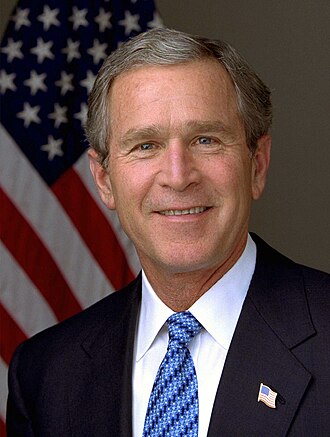 George W. Bush
Post-Graduate Legal • 4m
EO 13274 Amended Sep 18, 2002
🏛️✅ Zone 1 (Maximum Authority) Fidelity (+0.41)
Executive Order 13274—Environmental Stewardship and Transportation Infrastructure Project Reviews
📜 Art. II §2: Commander-in-Chief Supervisory Authority
The development and implementation of transportation infrastructure projects in an efficient and environmentally sound manner is essential to the well-being of the American people and a strong American economy.
George W. Bush Post-Graduate Legal • 4m
EO 13271 Revoked Jul 9, 2002
🏛️✅ Zone 1 (Maximum Authority) Fidelity (+0.52)
Executive Order 13271—Establishment of the Corporate Fraud Task Force
📜 Art. I §8: Delegated Tariff & Commerce Execution
The Attorney General shall immediately establish within the Department of Justice a Corporate Fraud Task Force (Task Force). Without regard to any other provision of this order, the Task Force shall be subject to the authority of the Attorney General under applicable law. Sec. 2.
George W. Bush Post-Graduate Legal • 4m
EO 13275 Oct 7, 2002
⚖️✨ Zone 2 (Zone of Twilight) Constitutional Neutral
Executive Order 13275—Creating a Board of Inquiry To Report on Certain Labor Disputes Affecting the Maritime Industry of the United States
📜 Art. II §2: Commander-in-Chief Supervisory Authority
I hereby create a Board of Inquiry consisting of such members as I shall appoint to inquire into the issues involved in such dispute. The Board shall have powers and duties as set forth in title II of the Act.
George W. Bush College Level • 1m
EO 13270 Revoked Jul 3, 2002
🏛️✅ Zone 1 (Maximum Authority) Fidelity (+0.41)
Executive Order 13270—Tribal Colleges and Universities
📜 5th Amend: Regulatory Execution with Due Process
There is a unique relationship between the United States and Indian tribes, and a special relationship between the United States and Alaska Native entities.
George W. Bush Post-Graduate Legal • 7m
📜
Scholarly & Legal Citations
Exec. Order No. 13,273, 67 Fed. Reg. 56,215 (Aug. 21, 2002).
