★
Executive Orders Historical Archive
Cite
Executive Order 13330 🏛️✅ Zone 1: Maximum Authority Constitutional Fidelity (+0.52) 📜 10th Amend: Intergovernmental Federalism Cooperation

Executive Order 13330—Human Service Transportation Coordination

•
Tuesday, February 24, 2004
•
5 min read (1,027 words)
•
69 Fed. Reg. 9185

Executive Brief • At a Glance

⏱️ 5 min read (1,027 words) • ● In Effect
🎯 Primary Mandate

In performing its functions, the Interagency Transportation Coordinating Council shall present to me a report not later than 1 calendar year from the date of this order.

⚖️ Constitutional Footing
🏛️✅ Zone 1: Maximum Authority
Express or Implied Congressional Authorization
📜 10th Amend: Intergovernmental Federalism Cooperation
🏛️ Scope & Affected Sectors
Armed Forces & Military Establishments Sovereign State Governments & Localities Executive Departments & Federal Civil Servants Private Citizens & Property Owners

Plain-English Translation & Framers' Constitutional Analysis

Early Statesman synthesis distilling legal jargon into practical meaning, statutory anchors, and structural constitutional impacts.

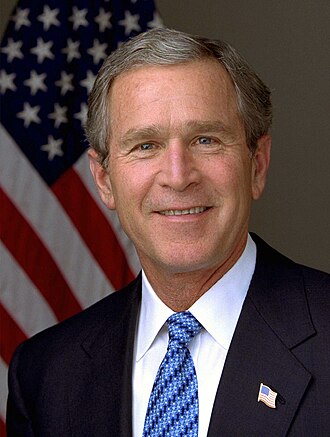
Signed by President George W. Bush on February 24, 2004, this order concerns Human Service Transportation Coordination. This order is issued consistent with the following findings and principles: (a) A strong America depends on citizens who are productive and who actively participate in the life of their communities. (b) Transportation plays a critical role in providing access to employment, medical and health care, education, and other community services and amenities.

Constitutional Assessment: Reviewed under the Tenth Amendment and the principle of dual federalism, this order touches upon domains traditionally reserved to the sovereign States. The Framers would caution against any attempt to commandeer state officers or displace local police powers through federal executive fiat.

Key Directives & Operative Actions

▪
Report

In performing its functions, the Interagency Transportation Coordinating Council shall present to me a report not later than 1 calendar year from the date of this order.

▪
General

Agencies shall assist the Interagency Transportation Coordinating Council and provide information to the Council consistent with applicable law as may be necessary to carry out its functions.

Constitutional & Societal Entities Impacted

🏛️ Armed Forces & Military Establishments 🏛️ Sovereign State Governments & Localities 🏛️ Executive Departments & Federal Civil Servants 🏛️ Private Citizens & Property Owners 🏛️ Foreign Nations & International Entities
🏛️

The Framers' Constitutional Council

1787 Prism

Evaluating this order against the constitutional debates of 1787 and the limits of Article II executive power.

🏛️✅ Zone 1 (Maximum Authority)
§

"When the President acts pursuant to an express or implied authorization of Congress, his authority is at its maximum, for it includes all that he possesses in his own right plus all that Congress can delegate."

— Justice Robert H. Jackson, Youngstown Sheet & Tube Co. v. Sawyer (1952) Express or Implied Congressional Authorization
JM

James Madison

Separation of Powers & Legislative Primacy

"The constitutional magistracy was designed not to invent policy, but to be the faithful instrument of the laws passed by the people's representatives." — Speech in the First Congress (1789)

Madison would approve the structural posture of this order. The President acts strictly in subordination to statutory authority granted under Article II, Section 3 ("take Care that the Laws be faithfully executed"). The checks and balances hold firm because the policy origin remains with the legislature.

Madisonian Stance: Concurring (Statutory)
AH

Alexander Hamilton

The Energetic Executive & Unified Command

"A feeble Executive implies a feeble execution of the government; and a government ill executed, whatever it may be in theory, must be, in practice, a bad government." — Federalist No. 70 (1788)

Hamilton would view this directive as the natural and indispensable functioning of administrative leadership. Without the power to coordinate agencies, manage personnel, and resolve operational ambiguities, the modern presidency would be reduced to an impotent figurehead.

Hamiltonian Stance: Supportive of Execution
GM

George Mason

Bill of Rights, Due Process & 10th Amendment

"The powers not delegated to the United States by the Constitution, nor prohibited by it to the States, are reserved to the States respectively, or to the people." — 10th Amendment to the US Constitution (1791)

Mason would scrutinize whether this federal directive intrudes into police powers, land stewardship, or municipal domains historically reserved to local citizens. The Anti-Federalist demand is that federal administration must never supplant state self-governance.

Anti-Federalist Stance: Eternal Vigilance Required
📐

Five Measurable "Constitutional Friction" Dimensions

An objective audit measuring potential separation-of-powers tension against the United States Constitution and established Supreme Court doctrine.

⚖️ Discretionary Twilight Zone
46 / 100 friction index
Dimension 1 • Art. I, §1 & §8

Legislative Encroachment & Purse

Moderate Friction

Administers commerce or fiscal programs requiring ongoing statutory delegation and legislative oversight.

Benchmark: Power of the purse, taxes/tariffs, and rule of law reserved to Congress.
Dimension 2 • Art. II, §1 & §3

Executive Scope & Faithfulness

Moderate Friction

Directs internal executive branch machinery, agency workflows, and federal personnel.

Benchmark: Faithfully execute laws enacted by Congress vs. unilateral decree.
Dimension 3 • 10th Amendment

Federalism & State Sovereignty

High Friction

Creates friction with the Tenth Amendment by conditioning state grants, mandating local compliance, or preempting state police powers.

Benchmark: Police powers and un-delegated responsibilities reserved to the States.
Dimension 4 • 5th & 14th Amendments

Due Process & Individual Rights

Moderate Friction

Applies regulatory or compliance standards to private contractors or commercial entities.

Benchmark: Protection of private property, contracts, liberty, and procedural justice.
Dimension 5 • Separation of Powers

Youngstown Jacksonian Tier

Low Friction

The President operates strictly as the constitutional Chief Executive, carrying out policy established by Congress with strong statutory backing.

Benchmark: Express or Implied Congressional Authorization
⚖️ Audit Synthesis

This order operates within Justice Jackson’s Zone of Twilight, resting upon concurrent presidential authority or congressional silence.

Weighted composite: Art. I (25%), Art. II (25%), Federalism (15%), Due Process (15%), Youngstown (20%).
ℹ️
How to read these dimensions: Executive power expands whenever an administration acts without explicit statutory authorization from Congress (Article I), touches upon police powers historically reserved to the states (Tenth Amendment), or limits private rights and property without judicial process. A low friction score indicates strict concordance with enacted law; a high friction score highlights orders testing the limits of presidential discretion.
Total Words
1,027
7,184 characters
Estimated Read Time
5 min
@ 200 words / min
Flesch-Kincaid
21.9
Post-Graduate Legal
Language Tone Score
+0.52
Constitutional Fidelity
How is this scored?
Text size:

Official Archival Text

View Source Document

By the authority vested in me as President by the Constitution and the laws of the United States of America, and to enhance access to transportation to improve mobility, employment opportunities, and access to community services for persons who are transportation-disadvantaged, it is hereby ordered as follows:

Section 1. #sec-1

This order is issued consistent with the following findings and principles: (a) A strong America depends on citizens who are productive and who actively participate in the life of their communities. (b) Transportation plays a critical role in providing access to employment, medical and health care, education, and other community services and amenities. The importance of this role is underscored by the variety of transportation programs that have been created in conjunction with health and human service programs, and by the significant Federal investment in accessible public transportation systems throughout the Nation. (c) These transportation resources, however, are often difficult for citizens to understand and access, and are more costly than necessary due to inconsistent and unnecessary Federal and State program rules and restrictions. (d) A broad range of Federal program funding allows for the purchase or provision of transportation services and resources for persons who are transportation-disadvantaged. Yet, in too many communities, these services and resources are fragmented, unused, or altogether unavailable. (e) Federally assisted community transportation services should be seamless, comprehensive, and accessible to those who rely on them for their lives and livelihoods. For persons with mobility limitations related to advanced age, persons with disabilities, and persons struggling for self-sufficiency, transportation within and between our communities should be as available and affordable as possible. (f) The development, implementation, and maintenance of responsive, comprehensive, coordinated community transportation sys tems is essential for persons with disabilities, persons with low incomes, and older adults who rely on such transportation to fully participate in their communities.

Sec. 2. #sec-2

Definitions. (a) As used in this order, the term "agency" means an executive department or agency of the Federal Government. (b) For the purposes of this order, persons who are transportation-disadvantaged are persons who qualify for Federally conducted or Federally assisted transportation-related programs or services due to disability, income, or advanced age.

Sec. 3. #sec-3

Establishment of the Interagency Transportation Coordinating Council on Access and Mobility. (a) There is hereby established, within the Department of Transportation for administrative purposes, the "Interagency Transportation Coordinating Council on Access and Mobility" ("Interagency Transportation Coordinating Council" or "Council"). The membership of the Interagency Transportation Coordinating Council shall consist of: (i) the Secretaries of Transportation, Health and Human Services, Education, Labor, Veterans Affairs, Agriculture, Housing and Urban Development, and the Interior, the Attorney General, and the Commissioner of Social Security; and (ii) such other Federal officials as the Chairperson of the Council may designate. (b) The Secretary of Transportation, or the Secretary's designee, shall serve as the Chairperson of the Council. The Chairperson shall convene and preside at meetings of the Council, determine its agenda, direct its work, and, as appropriate to particular subject matters, establish and direct subgroups of the Council, which shall consist exclusively of the Council's members. (c) A member of the Council may designate any person who is part of the member's agency and who is an officer appointed by the President or a full-time employee serving in a position with pay equal to or greater than the minimum rate payable for GS–15 of the General Schedule to perform functions of the Council or its subgroups on the member's behalf. Sec 4. Functions of the Interagency Transportation Coordinating Council. The Interagency Transportation Coordinating Council shall: (a) promote interagency cooperation and the establishment of appropriate mechanisms to minimize duplication and overlap of Federal programs and services so that transportation-disadvantaged persons have access to more transportation services; (b) facilitate access to the most appropriate, cost-effective transportation services within existing resources; (c) encourage enhanced customer access to the variety of transportation and resources available; (d) formulate and implement administrative, policy, and procedural mechanisms that enhance transportation services at all levels; and (e) develop and implement a method for monitoring progress on achieving the goals of this order.

Sec. 5. #sec-5

Report. In performing its functions, the Interagency Transportation Coordinating Council shall present to me a report not later than 1 calendar year from the date of this order. The report shall: (a) Identify those Federal, State, Tribal and local laws, regulations, procedures, and actions that have proven to be most useful and appropriate in coordinating transportation services for the targeted populations; (b) Identify substantive and procedural requirements of transportation-related Federal laws and regulations that are duplicative or restrict the laws' and regulations' most efficient operation; (c) Describe the results achieved, on an agency and program basis, in: (i) simplifying access to transportation services for persons with disabilities, persons with low income, and older adults; (ii) providing the most appropriate, cost-effective transportation services within existing resources; and (iii) reducing duplication to make funds available for more services to more such persons; (d) Provide recommendations to simplify and coordinate applicable substantive, procedural, and administrative requirements; and (e) Provide any other recommendations that would, in the judgment of the Council, advance the principles set forth in section 1 of this order.

Sec. 6. #sec-6

General. (a) Agencies shall assist the Interagency Transportation Coordinating Council and provide information to the Council consistent with applicable law as may be necessary to carry out its functions. To the extent permitted by law, and as permitted by available agency resources, the Department of Transportation shall provide funding and administrative support for the Council. (b) Nothing in this order shall be construed to impair or otherwise affect the functions of the Director of the Office of Management and Budget relating to budget, administrative, or legislative proposals. (c) This order is intended only to improve the internal management of the executive branch and is not intended to, and does not, create any right or benefit, substantive or procedural, enforceable at law or in equity by a party against the United States, its departments, agencies, instrumentalities or entities, its officers or employees, or any other person. GEORGE W. BUSH The White House, February 24, 2004. [Filed with the Office of the Federal Register, 11:57 a.m., February 25, 2004]

📜

Scholarly & Legal Citations

Exec. Order No. 13,330, 69 Fed. Reg. 9185 (Feb. 24, 2004).