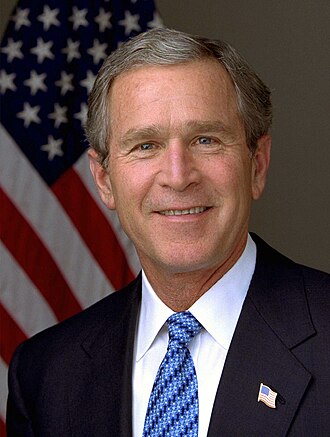
By the authority vested in me as President by the Constitution and the laws of the United States of America, including the International Emergency Economic Powers Act (50 U.S.C. 1701 et seq.) (IEEPA), the National Emergencies Act (50 U.S.C. 1601 et seq.) (NEA), the Syria Accountability and Lebanese Sovereignty Restoration Act of 2003, Public Law 108–175 (SAA), and section 301 of title 3, United States Code, I, George W. Bush, President of the United States of America, hereby determine that the actions of the Government of Syria in supporting terrorism, continuing its occupation of Lebanon, pursuing weapons of mass destruction and missile programs, and undermining United States and international efforts with respect to the stabilization and reconstruction of Iraq constitute an unusual and extraordinary threat to the national security, foreign policy, and economy of the United States and hereby declare a national emergency to deal with that threat. To address that threat, and to implement the SAA, I hereby order the following:
Section 1. #sec-1
(a) The Secretary of State shall not permit the exportation or reexportation to Syria of any item on the United States Munitions List (22 C.F.R. part 121). (b) Except to the extent provided in regulations, orders, directives, or licenses that may be issued pursuant to the provisions of this order in a manner consistent with the SAA, and notwithstanding any license, permit, or authorization granted prior to the effective date of this order, (i) the Secretary of Commerce shall not permit the exportation or reexportation to Syria of any item on the Commerce Control List (15 C.F.R. part 774); and (ii) with the exception of food and medicine, the Secretary of Commerce shall not permit the exportation or reexportation to Syria of any product of the United States not included in section 1(b)(i) of this order. (c) No other agency of the United States Government shall permit the exportation or reexportation to Syria of any product of the United States, except to the extent provided in regulations, orders, directives, or licenses that may be issued pursuant to this order in a manner consistent with the SAA, and notwithstanding any license, permit, or authorization granted prior to the effective date of this order.
Sec. 2. #sec-2
The Secretary of Transportation shall not permit any air carrier owned or controlled by Syria to provide foreign air transportation as defined in 49 U.S.C. 40102(a)(23), except that he may, to the extent consistent with Department of Transportation regulations, permit such carriers to charter aircraft to the Government of Syria for the transport of Syrian government officials to and from the United States on official Syrian government business. In addition, the Secretary of Transportation shall prohibit all takeoffs and landings in the United States, other than those associated with an emergency, by any such air carrier when engaged in scheduled international air services.
Sec. 3. #sec-3
(a) Except to the extent provided in section 203(b)(1), (3), and (4) of the IEEPA (50 U.S.C. 1702(b)(1), (3), and (4)), and the Trade Sanctions Reform and Export Enhancement Act of 2000 (title IX, Public Law 106–387) (TSRA), or regulations, orders, directives, or licenses that may be issued pursuant to this order, and notwithstanding any contract entered into or any license or permit granted prior to the effective date of this order, all property and interests in property of the following persons, that are in the United States, that hereafter come within the United States, or that are or hereafter come within the possession or control of United States persons, including their overseas branches, are blocked and may not be transferred, paid, exported, withdrawn, or otherwise dealt in: persons who are determined by the Secretary of the Treasury, in consultation with the Secretary of State, (i) to be or to have been directing or otherwise significantly contributing to the Government of Syria's provision of safe haven to or other support for any person whose property or interests in property are blocked under United States law for terrorism-related reasons, including, but not limited to, Hamas, Hizballah, Palestinian Islamic Jihad, the Popular Front for the Liberation of Palestine, the Popular Front for the Liberation of Palestine-General Command, and any persons designated pursuant to Executive Order 13224 of September 23, 2001; (ii) to be or to have been directing or otherwise significantly contributing to the Government of Syria's military or security presence in Lebanon; (iii) to be or to have been directing or otherwise significantly contributing to the Government of Syria's pursuit of the development and production of chemical, biological, or nuclear weapons and medium- and long-range surface-to-surface missiles; (iv) to be or to have been directing or otherwise significantly contributing to any steps taken by the Government of Syria to undermine United States and international efforts with respect to the stabilization and reconstruction of Iraq; or (v) to be owned or controlled by, or acting or purporting to act for or on behalf of, directly or indirectly, any person whose property or interests in property are blocked pursuant to this order. (b) The prohibitions in paragraph (a) of this section include, but are not limited to, (i) the making of any contribution of funds, goods, or services by, to, or for the benefit of any person whose property or interests in property are blocked pursuant to this order; and (ii) the receipt of any contribution or provision of funds, goods, or services from any such person.
Sec. 4. #sec-4
(a) Any transaction by a United States person or within the United States that evades or avoids, has the purpose of evading or avoiding, or attempts to violate any of the prohibitions set forth in this order is prohibited. (b) Any conspiracy formed to violate the prohibitions set forth in this order is prohibited.
Sec. 5. #sec-5
I hereby determine that the making of donations of the type of articles specified in section 203(b)(2) of the IEEPA (50 U.S.C. 1702(b)(2)) would seriously impair the ability to deal with the national emergency declared in this order, and hereby prohibit, (i) the exportation or reexportation of such donated articles to Syria as provided in section 1(b) of this order; and (ii) the making of such donations by, to, or for the benefit of any person whose property and interests in property are blocked pursuant to section 3 of this order.
Sec. 6. #sec-6
For purposes of this order: (a) the term "person" means an individual or entity; (b) the term "entity" means a partnership, association, trust, joint venture, corporation, group, subgroup, or other organization; (c) the term "United States person" means any United States citizen, permanent resident alien, entity organized under the laws of the United States or any jurisdiction within the United States (including foreign branches), or any person in the United States; (d) the term "Government of Syria" means the Government of the Syrian Arab Republic, its agencies, instrumentalities, and controlled entities; and (e) the term "product of the United States" means: for the purposes of subsection 1(b), any item subject to the Export Administration Regulations (15 C.F.R. parts 730– 774); and for the purposes of subsection 1(c), any item subject to the export licensing jurisdiction of any other United States Government agency.
Sec. 7. #sec-7
With respect to the prohibitions contained in section 1 of this order, consistent with subsection 5(b) of the SAA, I hereby determine that it is in the national security interest of the United States to waive, and hereby waive application of subsection 5(a)(1) and subsection 5(a)(2)(A) of the SAA so as to permit the exportation or reexportation of certain items as specified in the Department of Commerce's General Order No. 2 to Supplement No. 1, 15 C.F.R. part 736, as issued consistent with this order and as may be amended pursuant to the provisions of this order and in a manner consistent with the SAA. This waiver is made pursuant to the SAA only to the extent that regulation of such exports or reexports would not otherwise fall within my constitutional authority to conduct the Nation's foreign affairs and protect national security.
Sec. 8. #sec-8
With respect to the prohibitions contained in section 2 of this order, consistent with subsection 5(b) of the SAA, I hereby determine that it is in the national security interest of the United States to waive, and hereby waive, application of subsection 5(a)(2)(D) of the SAA insofar as it pertains to: aircraft of any air carrier owned or controlled by Syria chartered by the Syrian government for the transport of Syrian government officials to and from the United States on official Syrian government business, to the extent consistent with Department of Transportation regulations; takeoffs or landings for non-traffic stops of aircraft of any such air carrier that is not engaged in scheduled international air services; takeoffs and landings associated with an emergency; and overflights of United States territory.
Sec. 9. #sec-9
I hereby direct the Secretary of State to take such actions, including the promulgation of rules and regulations, as may be necessary to carry out subsection 1(a) of this order. I hereby direct the Secretary of Commerce, in consultation with the Secretary of State, to take such actions, including the promulgation of rules and regulations, as may be necessary to carry out subsection 1(b) of this order. I direct the Secretary of Transportation, in consultation with the Secretary of State, to take such actions, including the promulgation of rules and regulations, as may be necessary to carry out section 2 of this order. The Secretary of the Treasury, in consultation with the Secretary of State, is hereby authorized to take such actions, including the promulgation of rules and regulations, and to employ all powers granted to the President by the IEEPA as may be necessary to carry out sections 3, 4, and 5 of this order. The Secretaries of State, Commerce, Transportation, and the Treasury may redelegate any of these functions to other officers and agencies of the United States Government consistent with applicable law. The Secretary of State, in consultation with the Secretaries of Commerce, Transportation, and the Treasury, as appropriate, is authorized to exercise the functions and authorities conferred upon the President in subsection 5(b) of the SAA and to redelegate these functions and authorities consistent with applicable law. All agencies of the United States Government are hereby directed to take all appropriate measures within their authority to carry out the provisions of this order and, where appropriate, to advise the Secretaries of State, Commerce, Transportation, and the Treasury in a timely manner of the measures taken.
Sec. 10. #sec-10
This order is not intended to create, and does not create, any right or benefit, substantive or procedural, enforceable at law or in equity by any party against the United States, its departments, agencies, instrumentalities, or entities, its officers or employees, or any other person.
Sec. 11. #sec-11
For those persons whose property or interests in property are blocked pursuant to section 3 of this order who might have a constitutional presence in the United States, I find that because of the ability to transfer funds or assets instantaneously, prior notice to such persons of measures to be taken pursuant to this order would render these measures ineffectual. I therefore determine that for these measures to be effective in addressing the national emergency declared in this order, there need be no prior notice of a listing or determination made pursuant to this order.
Sec. 12. #sec-12
The Secretary of the Treasury, in consultation with the Secretary of State, is authorized to submit the recurring and final reports to the Congress on the national emergency declared in this order, consistent with section 401(c) of the NEA, 50 U.S.C. 1641(c), and section 204(c) of the IEEPA, 50 U.S.C. 1703(c).
Sec. 13. #sec-13
(a) This order is effective at 12:01 eastern daylight time on May 12, 2004. (b) This order shall be transmitted to the Congress and published in the Federal Register. GEORGE W. BUSH The White House, May 11, 2004. [Filed with the Office of the Federal Register, 9:07 a.m., May 12, 2004]
