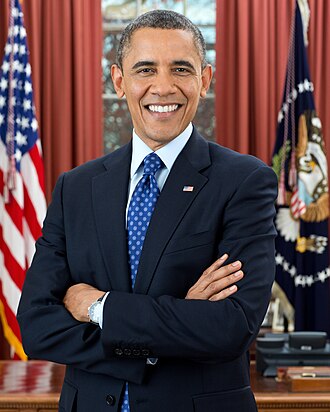
By the authority vested in me as President by the Constitution and the laws of the United States of America, including the International Emergency Economic Powers Act (50 U.S.C. 1701 et seq .) (IEEPA), the National Emergencies Act (50 U.S.C. 1601 et seq .), section 1245 of the National Defense Authorization Act for Fiscal Year 2012 (Public Law 112-81) (NDAA), and section 301 of title 3, United States Code, I, BARACK OBAMA, President of the United States of America, in order to take additional steps with respect to the national emergency declared in Executive Order 12957 of March 15, 1995, particularly in light of the deceptive practices of the Central Bank of Iran and other Iranian banks to conceal transactions of sanctioned parties, the deficiencies in Iran's anti-money laundering regime and the weaknesses in its implementation, and the continuing and unacceptable risk posed to the international financial system by Iran's activities, hereby order:
Section 1. #sec-1
(a) All property and interests in property of the Government of Iran, including the Central Bank of Iran, that are in the United States, that hereafter come within the United States, or that are or hereafter come within the possession or control of any United States person, including any foreign branch, are blocked and may not be transferred, paid, exported, withdrawn, or otherwise dealt in. (b) All property and interests in property of any Iranian financial institution, including the Central Bank of Iran, that are in the United States, that hereafter come within the United States, or that are or hereafter come within the possession or control of any United States person, including any foreign branch, are blocked and may not be transferred, paid, exported, withdrawn, or otherwise dealt in. (c) All property and interests in property that are in the United States, that hereafter come within the United States, or that are or hereafter come within the possession or control of any United States person, including any foreign branch, of the following persons are blocked and may not be transferred, paid, exported, withdrawn, or otherwise dealt in: any person determined by the Secretary of the Treasury, in consultation with the Secretary of State, to be owned or controlled by, or to have acted or purported to act for or on behalf of, directly or indirectly, any person whose property and interests in property are blocked pursuant to this order.
Sec. 2. #sec-2
I hereby determine that the making of donations of the type of articles specified in section 203(b)(2) of IEEPA (50 U.S.C. 1702(b)(2)) by, to, or for the benefit of any person whose property and interests in property are blocked pursuant to section 1 of this order would seriously impair my ability to deal with the national emergency declared in Executive Order 12957, and I hereby prohibit such donations as provided by section 1 of this order.
Sec. 3. #sec-3
The prohibitions in section 1 of this order include but are not limited to: (a) the making of any contribution or provision of funds, goods, or services by, to, or for the benefit of any person whose property and interests in property are blocked pursuant to this order; and (b) the receipt of any contribution or provision of funds, goods, or services from any such person.
Sec. 4. #sec-4
(a) The prohibitions in section 1 of this order apply except to the extent provided by statutes, or in regulations, orders, directives, or licenses that may be issued pursuant to this order, and notwithstanding any contract entered into or any license or permit granted prior to the effective date of this order. (b) The prohibitions in section 1 of this order do not apply to property and interests in property of the Government of Iran that were blocked pursuant to Executive Order 12170 of November 14, 1979, and thereafter made subject to the transfer directives set forth in Executive Order 12281 of January 19, 1981, and implementing regulations thereunder.
Sec. 5. #sec-5
(a) Any transaction by a United States person or within the United States that evades or avoids, has the purpose of evading or avoiding, causes a violation of, or attempts to violate any of the prohibitions set forth in this order is prohibited. (b) Any conspiracy formed to violate any of the prohibitions set forth in this order is prohibited.
Sec. 6. #sec-6
Nothing in section 1 of this order shall prohibit transactions for the conduct of the official business of the Federal Government by employees, grantees, or contractors thereof.
Sec. 7. #sec-7
For the purposes of this order: (a) the term "person" means an individual or entity; (b) the term "entity" means a partnership, association, trust, joint venture, corporation, group, subgroup, or other organization; (c) the term "United States person" means any United States citizen, permanent resident alien, entity organized under the laws of the United States or any jurisdiction within the United States (including foreign branches), or any person in the United States; (d) the term "Government of Iran" means the Government of Iran, any political subdivision, agency, or instrumentality thereof, including the Central Bank of Iran, and any person owned or controlled by, or acting for or on behalf of, the Government of Iran; (e) the term "Iran" means the territory of Iran and any other territory or marine area, including the exclusive economic zone and continental shelf, over which the Government of Iran claims sovereignty, sovereign rights, or jurisdiction, provided that the Government of Iran exercises partial or total de facto control over the area or derives a benefit from economic activity in the area pursuant to international arrangements; and (f) the term "Iranian financial institution" means a financial institution organized under the laws of Iran or any jurisdiction within Iran (including foreign branches), any financial institution in Iran, any financial institution, wherever located, owned or controlled by the Government of Iran, and any financial institution, wherever located, owned or controlled by any of the foregoing.
Sec. 8. #sec-8
For those persons whose property and interests in property are blocked pursuant to this order who might have a constitutional presence in the United States, I find that because of the ability to transfer funds or other assets instantaneously, prior notice to such persons of measures to be taken pursuant to this order would render those measures ineffectual. I therefore determine that for these measures to be effective in addressing the national emergency declared in Executive Order 12957, there need be no prior notice of a listing or determination made pursuant to section 1 of this order.
Sec. 9. #sec-9
The Secretary of the Treasury, in consultation with the Secretary of State, is hereby authorized to take such actions, including the promulgation of rules and regulations, and to employ all powers granted to the President by IEEPA as may be necessary to carry out the purposes of this order, other than the purposes described in section 11. The Secretary of the Treasury may redelegate any of these functions and authorities to other officers and agencies of the United States Government consistent with applicable law. All agencies of the United States Government are hereby directed to take all appropriate measures within their authority to carry out the provisions of this order.
Sec. 10. #sec-10
The Secretary of the Treasury, in consultation with the Secretary of State, is hereby authorized to exercise the functions and authorities conferred upon the President by section 1245(d)(1)(A) of the NDAA and to redelegate these functions and authorities consistent with applicable law. The Secretary of the Treasury, in consultation with the Secretary of State, is hereby further authorized to exercise the functions and authorities conferred upon the President by section 1245(g)(1) of the NDAA to the extent necessary to exercise the other functions and authorities delegated in this section and may redelegate these functions and authorities consistent with applicable law.
Sec. 11. #sec-11
The Secretary of State, in consultation with the Secretary of the Treasury, the Secretary of Energy, and the Director of National Intelligence, is hereby authorized to exercise the functions and authorities conferred upon the President by section 1245(d)(4)(D) of the NDAA and to redelegate these functions and authorities consistent with applicable law. The Secretary of State, in consultation with the Secretary of the Treasury, is hereby further authorized to exercise the functions and authorities conferred upon the President by sections 1245(e)(1) and 1245(e)(2) of the NDAA and to redelegate these functions and authorities consistent with applicable law. The Secretary of State, in consultation with the Secretary of the Treasury, is hereby further authorized to exercise the functions and authorities conferred upon the President by section 1245(g)(1) of the NDAA to the extent necessary to exercise the other functions and authorities delegated in this section and may redelegate these functions and authorities consistent with applicable law.
Sec. 12. #sec-12
This order is not intended to, and does not, create any right or benefit, substantive or procedural, enforceable at law or in equity by any party against the United States, its departments, agencies, or entities, its officers, employees, or agents, or any other person.
Sec. 13. #sec-13
The measures taken pursuant to this order are in response to actions of the Government of Iran occurring after the conclusion of the 1981 Algiers Accords, and are intended solely as a response to those later actions.
Sec. 14. #sec-14
This order is effective at 12:01 a.m. eastern standard time on February 6, 2012. BARACK OBAMA The White House, February 5, 2012.