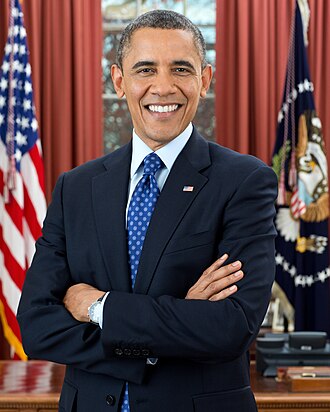
By the authority vested in me as President by the Constitution and the laws of the United States of America, including the International Emergency Economic Powers Act (50 U.S.C. 1701 et seq .) (IEEPA), the National Emergencies Act (50 U.S.C. 1601 et seq .), and section 301 of title 3, United States Code, I, Barack Obama, President of the United States of America, in order to take additional steps with respect to the national emergency declared in Executive Order 12957 of March 15, 1995, as relied upon for additional steps in subsequent Executive Orders, particularly in light of the Government of Iran's use of revenues from petroleum, petroleum products, and petrochemicals for illicit purposes, Iran's continued attempts to evade international sanctions through deceptive practices, and the unacceptable risk posed to the international financial system by Iran's activities, hereby order:
Section 1 . #sec-1
(a) The Secretary of the Treasury, in consultation with the Secretary of State, is hereby authorized to impose on a foreign financial institution the sanctions described in subsection (b) of this section upon determining that the foreign financial institution has knowingly conducted or facilitated any significant financial transaction: (i) with the National Iranian Oil Company (NIOC) or Naftiran Intertrade Company (NICO), except for a sale or provision to NIOC or NICO of the products described in section 5(a)(3)(A)(i) of the Iran Sanctions Act of 1996 (Public Law 104-172), as amended, provided that the fair market value of such products is lower than the applicable dollar threshold specified in that provision; (ii) for the purchase or acquisition of petroleum or petroleum products from Iran; or (iii) for the purchase or acquisition of petrochemical products from Iran. (b) With respect to any foreign financial institution determined by the Secretary of the Treasury in accordance with this section to meet the criteria set forth in subsection (a)(i), (a)(ii), or (a)(iii) of this section, the Secretary of the Treasury may prohibit the opening, and prohibit or impose strict conditions on the maintaining, in the United States of a correspondent account or a payable-through account by such foreign financial institution. (c) Subsections (a)(i) and (ii) of this section shall apply with respect to a significant financial transaction conducted or facilitated by a foreign financial institution only if: (i) the President determines under subparagraphs (4)(B) and (C) of subsection 1245(d) of the National Defense Authorization Act for Fiscal Year 2012 (Public Law 112-81) (NDAA) that there is a sufficient supply of petroleum and petroleum products from countries other than Iran to permit a significant reduction in the volume of petroleum and petroleum products purchased from Iran by or through foreign financial institutions; and (ii) an exception under subparagraph 4(D) of subsection 1245(d) of the NDAA from the imposition of sanctions under paragraph (1) of that subsection does not apply with respect to the country with primary jurisdiction over the foreign financial institution. (d) Subsection (a) of this section shall not apply with respect to any person for conducting or facilitating a transaction for the sale of food, medicine, or medical devices to Iran or when the underlying transaction has been authorized by the Secretary of the Treasury. (e) The prohibitions in subsection (b) of this section apply except to the extent provided by statutes, or in regulations, orders, directives, or licenses that may be issued pursuant to this order, and notwithstanding any contract entered into or any license or permit granted prior to the effective date of this order.
Sec. 2 . #sec-2
(a) The Secretary of State, in consultation with the Secretary of the Treasury, the Secretary of Commerce, and the United States Trade Representative, and with the President of the Export-Import Bank, the Chairman of the Board of Governors of the Federal Reserve System, and other agencies and officials as appropriate, is hereby authorized to impose on a person any of the sanctions described in section 3 or 4 of this order upon determining that the person: (i) knowingly, on or after the effective date of this order, engaged in a significant transaction for the purchase or acquisition of petroleum or petroleum products from Iran; (ii) knowingly, on or after the effective date of this order, engaged in a significant transaction for the purchase or acquisition of petrochemical products from Iran; (iii) is a successor entity to a person determined by the Secretary of State in accordance with this subsection to meet the criteria in subsection (a)(i) or (a)(ii) of this section; (iv) owns or controls a person determined by the Secretary of State in accordance with this subsection to meet the criteria in subsection (a)(i) or (a)(ii) of this section, and had knowledge that the person engaged in the activities referred to in that subsection; or (v) is owned or controlled by, or under common ownership or control with, a person determined by the Secretary of State in accordance with this subsection to meet the criteria in subsection (a)(i) or (a)(ii) of this section, and knowingly participated in the activities referred to in that subsection. (b) Subsection (a)(i) of this section shall apply with respect to a person only if: (i) the President determines under subparagraphs (4)(B) and (C) of subsection 1245(d) of the NDAA that there is a sufficient supply of petroleum and petroleum products from countries other than Iran to permit a significant reduction in the volume of petroleum and petroleum products purchased from Iran by or through foreign financial institutions; and (ii) an exception under subparagraph 4(D) of subsection 1245(d) of the NDAA from the imposition of sanctions under paragraph (1) of that subsection does not apply with respect to the country with primary jurisdiction over the person.
Sec. 3. #sec-3
When the Secretary of State, in accordance with the terms of section 2 of this order, has determined that a person meets any of the criteria described in section 2 and has selected any of the sanctions set forth below to impose on that person, the heads of relevant agencies, in consultation with the Secretary of State, shall take the following actions where necessary to implement the sanctions imposed by the Secretary of State: (a) the Board of Directors of the Export-Import Bank shall deny approval of the issuance of any guarantee, insurance, extension of credit, or participation in an extension of credit in connection with the export of any goods or services to the sanctioned person; (b) agencies shall not issue any specific license or grant any other specific permission or authority under any statute that requires the prior review and approval of the United States Government as a condition for the export or reexport of goods or technology to the sanctioned person; (c) with respect to a sanctioned person that is a financial institution: (i) the Chairman of the Board of Governors of the Federal Reserve System and the President of the Federal Reserve Bank of New York shall take such actions as they deem appropriate, including denying designation, or terminating the continuation of any prior designation of, the sanctioned person as a primary dealer in United States Government debt instruments; or (ii) agencies shall prevent the sanctioned person from serving as an agent of the United States Government or serving as a repository for United States Government funds; or (d) agencies shall not procure, or enter into a contract for the procurement of, any goods or services from the sanctioned person. (e) The prohibitions in subsections (a)-(d) of this section apply except to the extent provided by statutes, or in regulations, orders, directives, or licenses that may be issued pursuant to this order, and notwithstanding any contract entered into or any license or permit granted prior to the effective date of this order.
Sec. 4 . #sec-4
(a) When the Secretary of State, in accordance with the terms of section 2 of this order, has determined that a person meets any of the criteria described in section 2 and has selected any of the sanctions set forth below to impose on that person, the Secretary of the Treasury, in consultation with the Secretary of State, shall take the following actions where necessary to implement the sanctions imposed by the Secretary of State: (i) prohibit any United States financial institution from making loans or providing credits to the sanctioned person totaling more than $10,000,000 in any 12-month period, unless such person is engaged in activities to relieve human suffering and the loans or credits are provided for such activities; (ii) prohibit any transactions in foreign exchange that are subject to the jurisdiction of the United States and in which the sanctioned person has any interest; (iii) prohibit any transfers of credit or payments between financial institutions or by, through, or to any financial institution, to the extent that such transfers or payments are subject to the jurisdiction of the United States and involve any interest of the sanctioned person; (iv) block all property and interests in property that are in the United States, that come within the United States, or that are or come within the possession or control of any United States person, including any foreign branch, of the sanctioned person, and provide that such property and interests in property may not be transferred, paid, exported, withdrawn, or otherwise dealt in; or (v) restrict or prohibit imports of goods, technology, or services, directly or indirectly, into the United States from the sanctioned person. (b) The prohibitions in subsections (a)(i)-(a)(v) of this section apply except to the extent provided by statutes, or in regulations, orders, directives, or licenses that may be issued pursuant to this order, and notwithstanding any contract entered into or any license or permit granted prior to the effective date of this order.
Sec. 5 . #sec-5
(a) The Secretary of the Treasury, in consultation with the Secretary of State, is hereby authorized to impose on a person the measures described in subsection (b) of this section upon determining that the person has materially assisted, sponsored, or provided financial, material, or technological support for, or goods or services in support of, NIOC, NICO, or the Central Bank of Iran, or the purchase or acquisition of U.S. bank notes or precious metals by the Government of Iran. (b) With respect to any person determined by the Secretary of the Treasury in accordance with subsection (a) to meet the criteria set forth in subsection (a) of this section, all property and interests in property that are in the United States, that hereafter come within the United States, or that are or hereafter come within the possession or control of any United States person, including any foreign branch, of such person are blocked and may not be transferred, paid, exported, withdrawn, or otherwise dealt in. (c) The prohibitions in subsection (b) of this section apply except to the extent provided by statutes, or in regulations, orders, directives, or licenses that may be issued pursuant to this order, and notwithstanding any contract entered into or any license or permit granted prior to the effective date of this order.
Sec. 6 . #sec-6
Subsection 1(a), section 2, and subsection 5(a) of this order shall not apply with respect to any person for conducting or facilitating a transaction involving a natural gas development and pipeline project initiated prior to the effective date of this order to bring gas from Azerbaijan to Europe and Turkey in furtherance of a production sharing agreement or license awarded by a sovereign government other than the Government of Iran before the effective date of this order.
Sec. 7 . #sec-7
I hereby determine that, to the extent section 203(b)(2) of IEEPA (50 U.S.C. 1702(b)(2)) may apply, the making of donations of the type of articles specified in such section by, to, or for the benefit of any person whose property and interests in property are blocked pursuant to subsection (a)(iv) of section 4 or subsection (b) of section 5 of this order would seriously impair my ability to deal with the national emergency declared in Executive Order 12957, and I hereby prohibit such donations as provided by subsection (a)(iv) of section 4 and subsection (b) of section 5 of this order.
Sec. 8 . #sec-8
The prohibitions in subsection (a)(iv) of section 4 and subsection (b) of section 5 of this order include, but are not limited to: (i) the making of any contribution or provision of funds, goods, or services by, to, or for the benefit of any person whose property and interests in property are blocked pursuant to this order; and (ii) the receipt of any contribution or provision of funds, goods, or services from any such person.
Sec. 9 . #sec-9
(a) Any transaction that evades or avoids, has the purpose of evading or avoiding, causes a violation of, or attempts to violate any of the prohibitions set forth in this order is prohibited. (b) Any conspiracy formed to violate any of the prohibitions set forth in this order is prohibited.
Sec. 10 . #sec-10
For the purposes of this order: (a) the term "person" means an individual or entity; (b) the term "entity" means a partnership, association, trust, joint venture, corporation, group, subgroup, or other organization; (c) the term "United States person" means any United States citizen, permanent resident alien, entity organized under the laws of the United States or any jurisdiction within the United States (including foreign branches), or any person in the United States; (d) the term "financial institution," as used in sections 3 and 4 of this order, includes (i) a depository institution (as defined in section 3(c)(1) of the Federal Deposit Insurance Act) (12 U.S.C. 1813(c)(1)), including a branch or agency of a foreign bank (as defined in section 1(b)(7) of the International Banking Act of 1978) (12 U.S.C. 3101(7)); (ii) a credit union; (iii) a securities firm, including a broker or dealer; (iv) an insurance company, including an agency or underwriter; and (v) any other company that provides financial services; (e) the term "foreign financial institution," as used in section 1 of this order, means any foreign entity that is engaged in the business of accepting deposits, making, granting, transferring, holding, or brokering loans or credits, or purchasing or selling foreign exchange, securities, commodity futures or options, or procuring purchasers and sellers thereof, as principal or agent. It includes, but is not limited to, depository institutions, banks, savings banks, money service businesses, trust companies, securities brokers and dealers, commodity futures and options brokers and dealers, forward contract and foreign exchange merchants, securities and commodities exchanges, clearing corporations, investment companies, employee benefit plans, and holding companies, affiliates, or subsidiaries of any of the foregoing. The term does not include the international financial institutions identified in 22 U.S.C. 262r(c)(2), the International Fund for Agricultural Development, the North American Development Bank, or any other international financial institution so notified by the Secretary of the Treasury; (f) the term "United States financial institution" means a financial institution as defined in subsection (d) of this section (including its foreign branches) organized under the laws of the United States or any jurisdiction within the United States or located in the United States; (g) the term "Iran" means the Government of Iran and the territory of Iran and any other territory or marine area, including the exclusive economic zone and continental shelf, over which the Government of Iran claims sovereignty, sovereign rights, or jurisdiction, provided that the Government of Iran exercises partial or total de facto control over the area or derives a benefit from economic activity in the area pursuant to international arrangements; (h) the term "Government of Iran" includes the Government of Iran, any political subdivision, agency, or instrumentality thereof, including the Central Bank of Iran, and any person owned or controlled by, or acting for or on behalf of, the Government of Iran; (i) the terms "knowledge" and "knowingly," with respect to conduct, a circumstance, or a result, mean that a person has actual knowledge, or should have known, of the conduct, the circumstance, or the result; (j) the term "sanctioned person" means a person on whom the Secretary of State, in accordance with the terms of section 2 of this order, has determined to impose sanctions pursuant to section 2; (k) the term "petroleum" (also known as crude oil) means a mixture of hydrocarbons that exists in liquid phase in natural underground reservoirs and remains liquid at atmospheric pressure after passing through surface separating facilities; (l) the term "petroleum products" includes unfinished oils, liquefied petroleum gases, pentanes plus, aviation gasoline, motor gasoline, naphtha-type jet fuel, kerosene-type jet fuel, kerosene, distillate fuel oil, residual fuel oil, petrochemical feedstocks, special naphthas, lubricants, waxes, petroleum coke, asphalt, road oil, still gas, and miscellaneous products obtained from the processing of: crude oil (including lease condensate), natural gas, and other hydrocarbon compounds. The term does not include natural gas, liquefied natural gas, biofuels, methanol, and other non-petroleum fuels; (m) the term "petrochemical products" includes any aromatic, olefin, and synthesis gas, and any of their derivatives, including ethylene, propylene, butadiene, benzene, toluene, xylene, ammonia, methanol, and urea; (n) the terms "National Iranian Oil Company" and "NIOC" mean the National Iranian Oil Company and any entity owned or controlled by, or operating for or on behalf of, the National Iranian Oil Company; and (o) the terms "Naftiran Intertrade Company" and "NICO" mean the Naftiran Intertrade Company and any entity owned or controlled by, or operating for or on behalf of, the Naftiran Intertrade Company.
Sec. 11 . #sec-11
For those persons whose property and interests in property are blocked pursuant to this order who might have a constitutional presence in the United States, I find that because of the ability to transfer funds or other assets instantaneously, prior notice to such persons of measures to be taken pursuant to subsection (a)(iv) of section 4 or subsection (b) of section 5 of this order would render those measures ineffectual. I therefore determine that for these measures to be effective in addressing the national emergency declared in Executive Order 12957, there need be no prior notice of an action taken pursuant to subsection (a)(iv) of section 4 or subsection (b) of section 5 of this order.
Sec. 12 . #sec-12
The Secretary of the Treasury, in consultation with the Secretary of State, is hereby authorized to take such actions, including the promulgation of rules and regulations, and to employ all powers granted to the President by IEEPA as may be necessary to carry out the purposes of sections 1, 4, and 5 of this order. The Secretary of the Treasury may redelegate any of these functions to other officers and agencies of the United States Government consistent with applicable law. All agencies of the United States Government are hereby directed to take all appropriate measures within their authority to carry out the provisions of this order.
Sec. 13 . #sec-13
This order is not intended to, and does not, create any right or benefit, substantive or procedural, enforceable at law or in equity by any party against the United States, its departments, agencies, or entities, its officers, employees, or agents, or any other person.
Sec. 14 . #sec-14
The measures taken pursuant to this order are in response to actions of the Government of Iran occurring after the conclusion of the 1981 Algiers Accords, and are intended solely as a response to those later actions.
Sec. 15 . #sec-15
This order is effective at 12:01 a.m. eastern daylight time on July 31, 2012. BARACK OBAMA The White House, July 30, 2012.