★
Executive Orders Historical Archive
Cite
Executive Order 13725 🏛️✅ Zone 1: Maximum Authority Constitutional Fidelity (+0.52) 📜 Art. II §3: Faithful Execution of Statutory Law

Executive Order 13725—Steps To Increase Competition and Better Inform Consumers and Workers To Support Continued Growth of the American Economy

•
Friday, April 15, 2016
•
4 min read (879 words)
•
81 Fed. Reg. 23417

Executive Brief • At a Glance

⏱️ 4 min read (879 words) • ● In Effect
🎯 Primary Mandate

Executive departments and agencies with authorities that could be used to enhance competition (agencies) shall, where consistent with other laws, use those authorities to promote competition, arm consumers and workers with the information they need to make informed choices, and eliminate regulations that restrict competition without corresponding benefits to the American public.

⚖️ Constitutional Footing
🏛️✅ Zone 1: Maximum Authority
Express or Implied Congressional Authorization
📜 Art. II §3: Faithful Execution of Statutory Law
🏛️ Scope & Affected Sectors
Merchants, Importers & Commercial Enterprises Executive Departments & Federal Civil Servants Private Citizens & Property Owners

Plain-English Translation & Framers' Constitutional Analysis

Early Statesman synthesis distilling legal jargon into practical meaning, statutory anchors, and structural constitutional impacts.

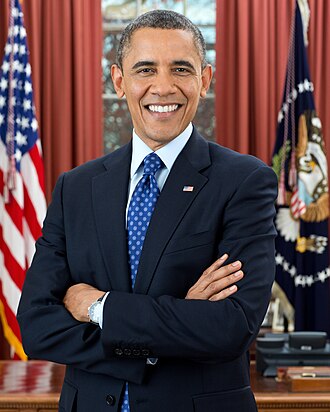
Signed by President Barack Obama on April 15, 2016, this order concerns Steps To Increase Competition and Better Inform Consumers and Workers To Support Continued Growth of the American Economy. Maintaining, encouraging, and supporting a fair, efficient, and competitive marketplace is a cornerstone of the American economy. Consumers and workers need both competitive markets and information to make informed choices.

Constitutional Assessment: An early statesman would view this measure favorably under Article II, Section 3 (the Take Care Clause). The President operates strictly within the ambit of executing established laws and supervising departmental subordinates, respecting the supremacy of the legislative branch without fabricating novel statutory obligations.

Key Directives & Operative Actions

▪
Agency Responsibilities

Executive departments and agencies with authorities that could be used to enhance competition (agencies) shall, where consistent with other laws, use those authorities to promote competition, arm consumers and workers with the information they need to make informed choices, and eliminate regulations that restrict competition without corresponding benefits to the American public.

▪

Agencies shall identify specific actions that they can take in their areas of responsibility to build upon efforts to detect abuses such as price fixing, anticompetitive behavior in labor and other input markets, exclusionary conduct, and blocking access to critical resources that are needed for competitive entry.

▪

Such a referral shall not preclude further action by the referring agency against that behavior under that agency's relevant statutory authority.

▪

Agencies shall also identify specific actions that they can take in their areas of responsibility to address undue burdens on competition.

Constitutional & Societal Entities Impacted

🏛️ Merchants, Importers & Commercial Enterprises 🏛️ Executive Departments & Federal Civil Servants 🏛️ Private Citizens & Property Owners
🏛️

The Framers' Constitutional Council

1787 Prism

Evaluating this order against the constitutional debates of 1787 and the limits of Article II executive power.

🏛️✅ Zone 1 (Maximum Authority)
§

"When the President acts pursuant to an express or implied authorization of Congress, his authority is at its maximum, for it includes all that he possesses in his own right plus all that Congress can delegate."

— Justice Robert H. Jackson, Youngstown Sheet & Tube Co. v. Sawyer (1952) Express or Implied Congressional Authorization
JM

James Madison

Separation of Powers & Legislative Primacy

"The constitutional magistracy was designed not to invent policy, but to be the faithful instrument of the laws passed by the people's representatives." — Speech in the First Congress (1789)

Madison would approve the structural posture of this order. The President acts strictly in subordination to statutory authority granted under Article II, Section 3 ("take Care that the Laws be faithfully executed"). The checks and balances hold firm because the policy origin remains with the legislature.

Madisonian Stance: Concurring (Statutory)
AH

Alexander Hamilton

The Energetic Executive & Unified Command

"A feeble Executive implies a feeble execution of the government; and a government ill executed, whatever it may be in theory, must be, in practice, a bad government." — Federalist No. 70 (1788)

Hamilton would view this directive as the natural and indispensable functioning of administrative leadership. Without the power to coordinate agencies, manage personnel, and resolve operational ambiguities, the modern presidency would be reduced to an impotent figurehead.

Hamiltonian Stance: Supportive of Execution
GM

George Mason

Bill of Rights, Due Process & 10th Amendment

"The president will be surrounded by flatterers and sycophants... and the great powers of the executive will gradually absorb the liberties of the people." — Cato IV (Anti-Federalist, 1787)

The Anti-Federalist prism advises continuous democratic vigilance. Even routine administrative directives aggregate centralized federal power away from town halls and state assemblies toward a distant executive apparatus.

Anti-Federalist Stance: Eternal Vigilance Required
📐

Five Measurable "Constitutional Friction" Dimensions

An objective audit measuring potential separation-of-powers tension against the United States Constitution and established Supreme Court doctrine.

⚖️ Discretionary Twilight Zone
48 / 100 friction index
Dimension 1 • Art. I, §1 & §8

Legislative Encroachment & Purse

High Friction

Touches upon core congressional prerogatives: raises appropriations reallocation, tariff imposition, or statutory preemption questions.

Benchmark: Power of the purse, taxes/tariffs, and rule of law reserved to Congress.
Dimension 2 • Art. II, §1 & §3

Executive Scope & Faithfulness

Moderate Friction

Directs internal executive branch machinery, agency workflows, and federal personnel.

Benchmark: Faithfully execute laws enacted by Congress vs. unilateral decree.
Dimension 3 • 10th Amendment

Federalism & State Sovereignty

Moderate Friction

Engages state and local partners in cooperative federalism programs.

Benchmark: Police powers and un-delegated responsibilities reserved to the States.
Dimension 4 • 5th & 14th Amendments

Due Process & Individual Rights

Moderate Friction

Applies regulatory or compliance standards to private contractors or commercial entities.

Benchmark: Protection of private property, contracts, liberty, and procedural justice.
Dimension 5 • Separation of Powers

Youngstown Jacksonian Tier

Low Friction

The President operates strictly as the constitutional Chief Executive, carrying out policy established by Congress with strong statutory backing.

Benchmark: Express or Implied Congressional Authorization
⚖️ Audit Synthesis

This order operates within Justice Jackson’s Zone of Twilight, resting upon concurrent presidential authority or congressional silence.

Weighted composite: Art. I (25%), Art. II (25%), Federalism (15%), Due Process (15%), Youngstown (20%).
ℹ️
How to read these dimensions: Executive power expands whenever an administration acts without explicit statutory authorization from Congress (Article I), touches upon police powers historically reserved to the states (Tenth Amendment), or limits private rights and property without judicial process. A low friction score indicates strict concordance with enacted law; a high friction score highlights orders testing the limits of presidential discretion.
Total Words
879
5,992 characters
Estimated Read Time
4 min
@ 200 words / min
Flesch-Kincaid
19.9
Post-Graduate Legal
Language Tone Score
+0.52
Constitutional Fidelity
How is this scored?
Text size:

Official Archival Text

View Source Document

By the authority vested in me as President by the Constitution and the laws of the United States of America, and in order to protect American consumers and workers and encourage competition in the U.S. economy, it is hereby ordered as follows:

Section 1 . #sec-1

Policy . Maintaining, encouraging, and supporting a fair, efficient, and competitive marketplace is a cornerstone of the American economy. Consumers and workers need both competitive markets and information to make informed choices. Certain business practices such as unlawful collusion, illegal bid rigging, price fixing, and wage setting, as well as anticompetitive exclusionary conduct and mergers stifle competition and erode the foundation of America's economic vitality. The immediate results of such conduct—higher prices and poorer service for customers, less innovation, fewer new businesses being launched, and reduced opportunities for workers—can impact Americans in every walk of life. Competitive markets also help advance national priorities, such as the delivery of affordable health care, energy independence, and improved access to fast and affordable broadband. Competitive markets also promote economic growth, which creates opportunity for American workers and encourages entrepreneurs to start innovative companies that create jobs. The Department of Justice (DOJ) and the Federal Trade Commission (FTC) have a proven record of detecting and stopping anticompetitive conduct and challenging mergers and acquisitions that threaten to consolidate markets and reduce competition. Promoting competitive markets and ensuring that consumers and workers have access to the information needed to make informed choices must be a shared priority across the Federal Government. Executive departments and agencies can contribute to these goals through, among other things, pro-competitive rulemaking and regulations, and by eliminating regulations that create barriers to or limit competition. Such Government-wide action is essential to ensuring that consumers, workers, startups, small businesses, and farms reap the full benefits of competitive markets.

Sec. 2 . #sec-2

Agency Responsibilities . (a) Executive departments and agencies with authorities that could be used to enhance competition (agencies) shall, where consistent with other laws, use those authorities to promote competition, arm consumers and workers with the information they need to make informed choices, and eliminate regulations that restrict competition without corresponding benefits to the American public. (b) Agencies shall identify specific actions that they can take in their areas of responsibility to build upon efforts to detect abuses such as price fixing, anticompetitive behavior in labor and other input markets, exclusionary conduct, and blocking access to critical resources that are needed for competitive entry. Behaviors that appear to violate our antitrust laws should be referred to antitrust enforcers at DOJ and the FTC. Such a referral shall not preclude further action by the referring agency against that behavior under that agency's relevant statutory authority. (c) Agencies shall also identify specific actions that they can take in their areas of responsibility to address undue burdens on competition. As permitted by law, agencies shall consult with other interested parties to identify ways that the agency can promote competition through pro-competitive rulemaking and regulations, by providing consumers and workers with information they need to make informed choices, and by eliminating regulations that restrict competition without corresponding benefits to the American public. (d) Not later than 30 days from the date of this order, agencies shall submit to the Director of the National Economic Council an initial list of (1) actions each agency can potentially take to promote more competitive markets; (2) any specific practices, such as blocking access to critical resources, that potentially restrict meaningful consumer or worker choice or unduly stifle new market entrants, along with any actions the agency can potentially take to address those practices; and (3) any relevant authorities and tools potentially available to enhance competition or make information more widely available for consumers and workers. (e) Not later than 60 days from the date of this order, agencies shall report to the President, through the Director of the National Economic Council, recommendations on agency-specific actions that eliminate barriers to competition, promote greater competition, and improve consumer access to information needed to make informed purchasing decisions. Such recommendations shall include a list of priority actions, including rulemakings, as well as timelines for completing those actions. (f) Subsequently, agencies shall report semi-annually to the President, through the Director of the National Economic Council, on additional actions that they plan to undertake to promote greater competition. (g) Sections 2(d), 2(e), and 2(f) of this order do not require reporting of information related to law enforcement policy and activities.

Sec. 3 . #sec-3

General Provisions . (a) This order shall be implemented consistent with applicable law and subject to the availability of appropriations. (b) Independent agencies are strongly encouraged to comply with the requirements of this order. (c) Nothing in this order shall be construed to impair or otherwise affect: (i) the authority granted by law to a department or agency, or the head thereof; or (ii) the functions of the Director of the Office of Management and Budget relating to budgetary, administrative, or legislative proposals. (d) This order is not intended to, and does not, create any right or benefit, substantive or procedural, enforceable at law or in equity by any party against the United States, its departments, agencies, or entities, its officers, employees, or agents, or any other person. BARACK OBAMA The White House, April 15, 2016.

🔗

Referenced By Later Executive Orders (1)

Subsequent presidents who cited, amended, continued, or revoked this directive in later orders.

📜

Scholarly & Legal Citations

Exec. Order No. 13,725, 81 Fed. Reg. 23,417 (Apr. 15, 2016).