★
Executive Orders Historical Archive
Cite
Executive Order 13986 Revoked 🏛️✅ Zone 1: Maximum Authority Constitutional Fidelity (+0.60) 📜 Art. II §2: Commander-in-Chief Supervisory Authority

Executive Order 13986—Ensuring a Lawful and Accurate Enumeration and Apportionment Pursuant to the Decennial Census

•
Wednesday, January 20, 2021
•
6 min read (1,245 words)
•
86 Fed. Reg. 7015

Executive Brief • At a Glance

⏱️ 6 min read (1,245 words) • ● Revoked
🎯 Primary Mandate

Both the Fourteenth Amendment of the United States Constitution and section 2a(a) of title 2, United States Code, require that the apportionment base of each State, for the purpose of the reapportionment of Representatives following the decennial census, include all persons whose usual place of residence was in that State as of the designated census date, regardless of their immigration status.

⚖️ Constitutional Footing
🏛️✅ Zone 1: Maximum Authority
Express or Implied Congressional Authorization
📜 Art. II §2: Commander-in-Chief Supervisory Authority
🏛️ Scope & Affected Sectors
Sovereign State Governments & Localities Executive Departments & Federal Civil Servants Private Citizens & Property Owners Foreign Nations & International Entities

Plain-English Translation & Framers' Constitutional Analysis

Early Statesman synthesis distilling legal jargon into practical meaning, statutory anchors, and structural constitutional impacts.

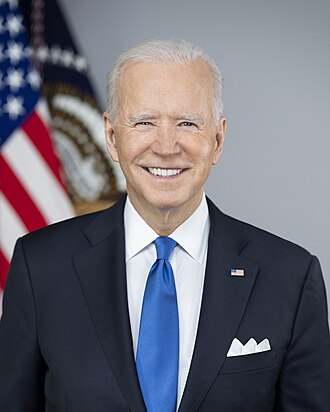
Signed by President Joseph R. Biden, Jr. on January 20, 2021, this order concerns Ensuring a Lawful and Accurate Enumeration and Apportionment Pursuant to the Decennial Census. We have long guaranteed all of the Nation's inhabitants representation in the House of Representatives. This tradition is foundational to our representative democracy, for our elected representatives have a responsibility to represent the interests of all people residing in the United States and affected by our laws. This tradition also respects the dignity and humanity of every person.

Constitutional Assessment: Scrutinized through Article II, Section 2, this action exercises the President's constitutional role as Commander in Chief. Early Framers recognized broad executive discretion in commanding military forces during conflict, provided it remains bounded by congressional declarations and respects civilian domestic courts.

Key Directives & Operative Actions

▪
Policy

Both the Fourteenth Amendment of the United States Constitution and section 2a(a) of title 2, United States Code, require that the apportionment base of each State, for the purpose of the reapportionment of Representatives following the decennial census, include all persons whose usual place of residence was in that State as of the designated census date, regardless of their immigration status.

▪
Data Quality

The Secretary shall take all necessary steps, consistent with law, to ensure that the total population information presented to the President and to the States is accurate and complies with all applicable laws.

▪
Revocation

Executive Order 13880 of July 11, 2019 (Collecting Information About Citizenship Status in Connection With the Decennial Census), and the Presidential Memorandum of July 21, 2020 (Excluding Illegal Aliens From the Apportionment Base Following the 2020 Census), are hereby revoked.

Constitutional & Societal Entities Impacted

🏛️ Sovereign State Governments & Localities 🏛️ Executive Departments & Federal Civil Servants 🏛️ Private Citizens & Property Owners 🏛️ Foreign Nations & International Entities
🏛️

The Framers' Constitutional Council

1787 Prism

Evaluating this order against the constitutional debates of 1787 and the limits of Article II executive power.

🏛️✅ Zone 1 (Maximum Authority)
§

"When the President acts pursuant to an express or implied authorization of Congress, his authority is at its maximum, for it includes all that he possesses in his own right plus all that Congress can delegate."

— Justice Robert H. Jackson, Youngstown Sheet & Tube Co. v. Sawyer (1952) Express or Implied Congressional Authorization
JM

James Madison

Separation of Powers & Legislative Primacy

"The constitutional magistracy was designed not to invent policy, but to be the faithful instrument of the laws passed by the people's representatives." — Speech in the First Congress (1789)

Madison would approve the structural posture of this order. The President acts strictly in subordination to statutory authority granted under Article II, Section 3 ("take Care that the Laws be faithfully executed"). The checks and balances hold firm because the policy origin remains with the legislature.

Madisonian Stance: Concurring (Statutory)
AH

Alexander Hamilton

The Energetic Executive & Unified Command

"The direction of war implies the direction of the common strength; and the power of directing and employing the common strength must be under the direction of the single hand of the Executive." — Federalist No. 74 (1788)

Hamilton would forcefully champion executive discretion here. For foreign entanglements, commerce defense, and national security, deliberative assemblies are too slow and faction-ridden. A unified, energetic Executive exercising swift command is precisely what the Philadelphia Convention intended for national preservation.

Hamiltonian Stance: Strong Prerogative Support
GM

George Mason

Bill of Rights, Due Process & 10th Amendment

"The president will be surrounded by flatterers and sycophants... and the great powers of the executive will gradually absorb the liberties of the people." — Cato IV (Anti-Federalist, 1787)

The Anti-Federalist prism advises continuous democratic vigilance. Even routine administrative directives aggregate centralized federal power away from town halls and state assemblies toward a distant executive apparatus.

Anti-Federalist Stance: Eternal Vigilance Required
📐

Five Measurable "Constitutional Friction" Dimensions

An objective audit measuring potential separation-of-powers tension against the United States Constitution and established Supreme Court doctrine.

⚖️ Discretionary Twilight Zone
48 / 100 friction index
Dimension 1 • Art. I, §1 & §8

Legislative Encroachment & Purse

High Friction

Touches upon core congressional prerogatives: raises appropriations reallocation, tariff imposition, or statutory preemption questions.

Benchmark: Power of the purse, taxes/tariffs, and rule of law reserved to Congress.
Dimension 2 • Art. II, §1 & §3

Executive Scope & Faithfulness

Moderate Friction

Directs internal executive branch machinery, agency workflows, and federal personnel.

Benchmark: Faithfully execute laws enacted by Congress vs. unilateral decree.
Dimension 3 • 10th Amendment

Federalism & State Sovereignty

Moderate Friction

Engages state and local partners in cooperative federalism programs.

Benchmark: Police powers and un-delegated responsibilities reserved to the States.
Dimension 4 • 5th & 14th Amendments

Due Process & Individual Rights

Moderate Friction

Applies regulatory or compliance standards to private contractors or commercial entities.

Benchmark: Protection of private property, contracts, liberty, and procedural justice.
Dimension 5 • Separation of Powers

Youngstown Jacksonian Tier

Low Friction

The President operates strictly as the constitutional Chief Executive, carrying out policy established by Congress with strong statutory backing.

Benchmark: Express or Implied Congressional Authorization
⚖️ Audit Synthesis

This order operates within Justice Jackson’s Zone of Twilight, resting upon concurrent presidential authority or congressional silence.

Weighted composite: Art. I (25%), Art. II (25%), Federalism (15%), Due Process (15%), Youngstown (20%).
ℹ️
How to read these dimensions: Executive power expands whenever an administration acts without explicit statutory authorization from Congress (Article I), touches upon police powers historically reserved to the states (Tenth Amendment), or limits private rights and property without judicial process. A low friction score indicates strict concordance with enacted law; a high friction score highlights orders testing the limits of presidential discretion.
Total Words
1,245
7,941 characters
Estimated Read Time
6 min
@ 200 words / min
Flesch-Kincaid
15.4
College Level
Language Tone Score
+0.60
Constitutional Fidelity
How is this scored?
Text size:

Official Archival Text

View Source Document

By the authority vested in me as President by the Constitution and the laws of the United States of America, it is hereby ordered:

Section 1 . #sec-1

Background . We have long guaranteed all of the Nation's inhabitants representation in the House of Representatives. This tradition is foundational to our representative democracy, for our elected representatives have a responsibility to represent the interests of all people residing in the United States and affected by our laws. This tradition also respects the dignity and humanity of every person. Accordingly, the executive branch has always determined the population of each State, for purposes of congressional representation, without regard to whether its residents are in lawful immigration status. The census and apportionment processes are enshrined in the Constitution. The Fourteenth Amendment apportions seats in the House of Representatives "among the several States according to their respective numbers, counting the whole number of persons in each State." (U.S. Const. amend. XIV, sec. 2.) Article I, in turn, provides that, in order to determine those numbers, an "actual Enumeration" of the population of the United States must be conducted every 10 years. (U.S. Const. art. I, sec. 2, cl. 3.) The Congress has assigned responsibility for conducting the decennial census to the Secretary of Commerce (Secretary). (13 U.S.C. 141(a).) Once the Secretary, through the Director of the U.S. Census Bureau, takes the count, the President must carry out the apportionment of Representatives among the States. The Secretary prepares the "tabulation of total population by States . . . as required for the apportionment of Representatives," and reports that tabulation to the President. (13 U.S.C. 141(b).) The President then sends a statement to the Congress showing "the whole number of persons in each State," as ascertained under the census, and "the number of Representatives to which each State would be entitled under" the equal proportions apportionment method. (2 U.S.C. 2a(a).) The Clerk of the House of Representatives then transmits to each State a certification of the number of seats that the State receives under that apportionment. (2 U.S.C. 2a(b).) Finally, within 1 year of the decennial census date, the Secretary must also report to the Governor and officers or public bodies having responsibility for legislative apportionment or districting of each State the population tabulations to be used for apportioning districts within that State. (13 U.S.C. 141(c).) At no point since our Nation's Founding has a person's immigration status alone served as a basis for excluding that person from the total population count used in apportionment. Before the Civil War and the abolition of slavery, the Constitution did not give equal weight to every person counted under the census. (U.S. Const. art. 1, sec. 2.) In accord with constitutional and statutory requirements, however, every apportionment since ratification of the Fourteenth Amendment has calculated each State's share of Representatives based on "the whole number of persons in each State," excluding only "Indians not taxed"—an express constitutional exception that no longer has legal or practical effect. (U.S. Const. amend. XIV, sec. 2; 2 U.S.C. 2a(a).) The term "persons in each State" has always been understood to include every person whose usual place of residence was in that State as of the designated census date. ( See, e.g. , Act of Mar. 1, 1790, ch. 2, secs. 1, 5, 1 Stat. 101, 103; Franklin v. Massachusetts, 505 U.S. 788, 804 (1992).) This unbroken practice has ensured that "the basis of representation in the House" is "every individual of the community at large." ( Evenwel v. Abbott, 136 S. Ct. 1120, 1127 (2016) (emphasis and quotation marks omitted).) And it reflects a sound policy judgment that the apportionment base be both clear and insulated against manipulation designed to affect the balance of power among the States. During the 2020 Census, the President announced a policy that broke from this long tradition. It aimed to produce a different apportionment base—one that would, to the maximum extent feasible, exclude persons who are not in a lawful immigration status. See Presidential Memorandum of July 21, 2020 (Excluding Illegal Aliens From the Apportionment Base Following the 2020 Census). This policy conflicted with the principle of equal representation enshrined in our Constitution, census statutes, and historical tradition. The policy further required the Census Bureau to inappropriately rely on records related to immigration status that were likely to be incomplete and inaccurate.

Sec. 2 . #sec-2

Policy . Both the Fourteenth Amendment of the United States Constitution and section 2a(a) of title 2, United States Code, require that the apportionment base of each State, for the purpose of the reapportionment of Representatives following the decennial census, include all persons whose usual place of residence was in that State as of the designated census date, regardless of their immigration status. These laws, affirmed by the executive branch's longstanding historical practice, do not permit the exclusion of inhabitants of the United States from the apportionment base solely on the ground that they lack a lawful immigration status. Reflecting this legal background, and the values of equal representation and respect that the Constitution and laws embody, it is the policy of the United States that reapportionment shall be based on the total number of persons residing in the several States, without regard for immigration status. It is likewise essential that the census count be accurate and based on reliable and high-quality data.

Sec. 3 . #sec-3

Ensuring that the Apportionment Base and State-Level Tabulations Include All Inhabitants of Each State . In preparing the report to the President required under section 141(b) of title 13, United States Code, the Secretary shall report the tabulation of total population by State that reflects the whole number of persons whose usual residence was in each State as of the designated census date in section 141(a) of title 13, United States Code, without regard to immigration status. In addition, the Secretary shall use tabulations of population reflecting the whole number of persons whose usual residence was in each State as of the census date, without regard to immigration status, in reports provided to the Governor and officers or public bodies having responsibility for legislative apportionment or districting of each State under section 141(c) of title 13, United States Code.

Sec. 4 . #sec-4

Data Quality . The Secretary shall take all necessary steps, consistent with law, to ensure that the total population information presented to the President and to the States is accurate and complies with all applicable laws.

Sec. 5 . #sec-5

Revocation . Executive Order 13880 of July 11, 2019 (Collecting Information About Citizenship Status in Connection With the Decennial Census), and the Presidential Memorandum of July 21, 2020 (Excluding Illegal Aliens From the Apportionment Base Following the 2020 Census), are hereby revoked.

Sec. 6 . #sec-6

General Provisions . (a) Nothing in this order shall be construed to impair or otherwise affect: (i) the authority granted by law to an executive department or agency, or the head thereof; or (ii) the functions of the Director of the Office of Management and Budget relating to budgetary, administrative, or legislative proposals. (b) This order shall be implemented consistent with applicable law and subject to the availability of appropriations. (c) This order is not intended to, and does not, create any right or benefit, substantive or procedural, enforceable at law or in equity by any party against the United States, its departments, agencies, or entities, its officers, employees, or agents, or any other person. JOSEPH R. BIDEN, JR. The White House, January 20, 2021.

🔗

Referenced By Later Executive Orders (1)

Subsequent presidents who cited, amended, continued, or revoked this directive in later orders.

📜

Scholarly & Legal Citations

Exec. Order No. 13,986, 86 Fed. Reg. 7015 (Jan. 20, 2021).