★
Executive Orders Historical Archive
Cite
Executive Order 13988 Revoked 🏛️✅ Zone 1: Maximum Authority Constitutional Fidelity (+0.66) 📜 Art. II §3: Faithful Execution of Statutory Law

Executive Order 13988—Preventing and Combating Discrimination on the Basis of Gender Identity or Sexual Orientation

•
Wednesday, January 20, 2021
•
4 min read (899 words)
•
86 Fed. Reg. 7023

Executive Brief • At a Glance

⏱️ 4 min read (899 words) • ● Revoked
🎯 Primary Mandate

Under Bostock's reasoning, laws that prohibit sex discrimination—including Title IX of the Education Amendments of 1972, as amended (20 U.S.C. 1681 et seq. ), the Fair Housing Act, as amended (42 U.S.C. 3601 et seq. ), and section 412 of the Immigration and Nationality Act, as amended (8 U.S.C. 1522), along with their respective implementing regulations—prohibit discrimination on the basis of gender identity or sexual orientation, so long as the laws do not contain sufficient indications to the contrary.

⚖️ Constitutional Footing
🏛️✅ Zone 1: Maximum Authority
Express or Implied Congressional Authorization
📜 Art. II §3: Faithful Execution of Statutory Law
🏛️ Scope & Affected Sectors
Executive Departments & Federal Civil Servants Foreign Nations & International Entities

Plain-English Translation & Framers' Constitutional Analysis

Early Statesman synthesis distilling legal jargon into practical meaning, statutory anchors, and structural constitutional impacts.

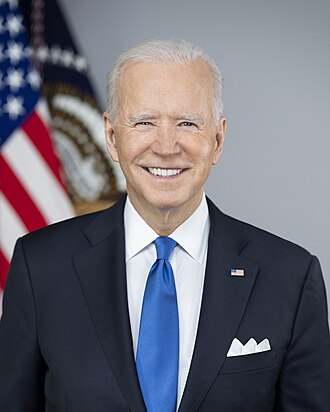
Signed by President Joseph R. Biden, Jr. on January 20, 2021, this order concerns Preventing and Combating Discrimination on the Basis of Gender Identity or Sexual Orientation. Every person should be treated with respect and dignity and should be able to live without fear, no matter who they are or whom they love. Children should be able to learn without worrying about whether they will be denied access to the restroom, the locker room, or school sports.

Constitutional Assessment: An early statesman would view this measure favorably under Article II, Section 3 (the Take Care Clause). The President operates strictly within the ambit of executing established laws and supervising departmental subordinates, respecting the supremacy of the legislative branch without fabricating novel statutory obligations.

Key Directives & Operative Actions

▪

Under Bostock's reasoning, laws that prohibit sex discrimination—including Title IX of the Education Amendments of 1972, as amended (20 U.S.C. 1681 et seq. ), the Fair Housing Act, as amended (42 U.S.C. 3601 et seq. ), and section 412 of the Immigration and Nationality Act, as amended (8 U.S.C. 1522), along with their respective implementing regulations—prohibit discrimination on the basis of gender identity or sexual orientation, so long as the laws do not contain sufficient indications to the contrary.

▪

Discrimination on the basis of gender identity or sexual orientation manifests differently for different individuals, and it often overlaps with other forms of prohibited discrimination, including discrimination on the basis of race or disability.

▪

It is the policy of my Administration to prevent and combat discrimination on the basis of gender identity or sexual orientation, and to fully enforce Title VII and other laws that prohibit discrimination on the basis of gender identity or sexual orientation.

▪

The head of each agency shall, as soon as practicable and in consultation with the Attorney General, as appropriate, review all existing orders, regulations, guidance documents, policies, programs, or other agency actions ("agency actions") that: (i) were promulgated or are administered by the agency under Title VII or any other statute or regulation that prohibits sex discrimination, including any that relate to the agency's own compliance with such statutes or regulations; and (ii) are or may be inconsistent with the policy set forth in section 1 of this order.

Constitutional & Societal Entities Impacted

🏛️ Executive Departments & Federal Civil Servants 🏛️ Foreign Nations & International Entities
🏛️

The Framers' Constitutional Council

1787 Prism

Evaluating this order against the constitutional debates of 1787 and the limits of Article II executive power.

🏛️✅ Zone 1 (Maximum Authority)
§

"When the President acts pursuant to an express or implied authorization of Congress, his authority is at its maximum, for it includes all that he possesses in his own right plus all that Congress can delegate."

— Justice Robert H. Jackson, Youngstown Sheet & Tube Co. v. Sawyer (1952) Express or Implied Congressional Authorization
JM

James Madison

Separation of Powers & Legislative Primacy

"The constitutional magistracy was designed not to invent policy, but to be the faithful instrument of the laws passed by the people's representatives." — Speech in the First Congress (1789)

Madison would approve the structural posture of this order. The President acts strictly in subordination to statutory authority granted under Article II, Section 3 ("take Care that the Laws be faithfully executed"). The checks and balances hold firm because the policy origin remains with the legislature.

Madisonian Stance: Concurring (Statutory)
AH

Alexander Hamilton

The Energetic Executive & Unified Command

"A feeble Executive implies a feeble execution of the government; and a government ill executed, whatever it may be in theory, must be, in practice, a bad government." — Federalist No. 70 (1788)

Hamilton would view this directive as the natural and indispensable functioning of administrative leadership. Without the power to coordinate agencies, manage personnel, and resolve operational ambiguities, the modern presidency would be reduced to an impotent figurehead.

Hamiltonian Stance: Supportive of Execution
GM

George Mason

Bill of Rights, Due Process & 10th Amendment

"The president will be surrounded by flatterers and sycophants... and the great powers of the executive will gradually absorb the liberties of the people." — Cato IV (Anti-Federalist, 1787)

The Anti-Federalist prism advises continuous democratic vigilance. Even routine administrative directives aggregate centralized federal power away from town halls and state assemblies toward a distant executive apparatus.

Anti-Federalist Stance: Eternal Vigilance Required
📐

Five Measurable "Constitutional Friction" Dimensions

An objective audit measuring potential separation-of-powers tension against the United States Constitution and established Supreme Court doctrine.

⚖️ Discretionary Twilight Zone
48 / 100 friction index
Dimension 1 • Art. I, §1 & §8

Legislative Encroachment & Purse

High Friction

Touches upon core congressional prerogatives: raises appropriations reallocation, tariff imposition, or statutory preemption questions.

Benchmark: Power of the purse, taxes/tariffs, and rule of law reserved to Congress.
Dimension 2 • Art. II, §1 & §3

Executive Scope & Faithfulness

Moderate Friction

Directs internal executive branch machinery, agency workflows, and federal personnel.

Benchmark: Faithfully execute laws enacted by Congress vs. unilateral decree.
Dimension 3 • 10th Amendment

Federalism & State Sovereignty

Moderate Friction

Engages state and local partners in cooperative federalism programs.

Benchmark: Police powers and un-delegated responsibilities reserved to the States.
Dimension 4 • 5th & 14th Amendments

Due Process & Individual Rights

Moderate Friction

Applies regulatory or compliance standards to private contractors or commercial entities.

Benchmark: Protection of private property, contracts, liberty, and procedural justice.
Dimension 5 • Separation of Powers

Youngstown Jacksonian Tier

Low Friction

The President operates strictly as the constitutional Chief Executive, carrying out policy established by Congress with strong statutory backing.

Benchmark: Express or Implied Congressional Authorization
⚖️ Audit Synthesis

This order operates within Justice Jackson’s Zone of Twilight, resting upon concurrent presidential authority or congressional silence.

Weighted composite: Art. I (25%), Art. II (25%), Federalism (15%), Due Process (15%), Youngstown (20%).
ℹ️
How to read these dimensions: Executive power expands whenever an administration acts without explicit statutory authorization from Congress (Article I), touches upon police powers historically reserved to the states (Tenth Amendment), or limits private rights and property without judicial process. A low friction score indicates strict concordance with enacted law; a high friction score highlights orders testing the limits of presidential discretion.
Total Words
899
5,573 characters
Estimated Read Time
4 min
@ 200 words / min
Flesch-Kincaid
15.2
College Level
Language Tone Score
+0.66
Constitutional Fidelity
How is this scored?
Text size:

Official Archival Text

View Source Document

By the authority vested in me as President by the Constitution and the laws of the United States of America, it is hereby ordered as follows:

Section 1 . #sec-1

Policy . Every person should be treated with respect and dignity and should be able to live without fear, no matter who they are or whom they love. Children should be able to learn without worrying about whether they will be denied access to the restroom, the locker room, or school sports. Adults should be able to earn a living and pursue a vocation knowing that they will not be fired, demoted, or mistreated because of whom they go home to or because how they dress does not conform to sex-based stereotypes. People should be able to access healthcare and secure a roof over their heads without being subjected to sex discrimination. All persons should receive equal treatment under the law, no matter their gender identity or sexual orientation. These principles are reflected in the Constitution, which promises equal protection of the laws. These principles are also enshrined in our Nation's anti-discrimination laws, among them Title VII of the Civil Rights Act of 1964, as amended (42 U.S.C. 2000e et seq. ). In Bostock v. Clayton County, 590 U.S. ___ (2020), the Supreme Court held that Title VII's prohibition on discrimination "because of . . . sex" covers discrimination on the basis of gender identity and sexual orientation. Under Bostock's reasoning, laws that prohibit sex discrimination—including Title IX of the Education Amendments of 1972, as amended (20 U.S.C. 1681 et seq. ), the Fair Housing Act, as amended (42 U.S.C. 3601 et seq. ), and section 412 of the Immigration and Nationality Act, as amended (8 U.S.C. 1522), along with their respective implementing regulations—prohibit discrimination on the basis of gender identity or sexual orientation, so long as the laws do not contain sufficient indications to the contrary. Discrimination on the basis of gender identity or sexual orientation manifests differently for different individuals, and it often overlaps with other forms of prohibited discrimination, including discrimination on the basis of race or disability. For example, transgender Black Americans face unconscionably high levels of workplace discrimination, homelessness, and violence, including fatal violence. It is the policy of my Administration to prevent and combat discrimination on the basis of gender identity or sexual orientation, and to fully enforce Title VII and other laws that prohibit discrimination on the basis of gender identity or sexual orientation. It is also the policy of my Administration to address overlapping forms of discrimination.

Sec. 2 . #sec-2

Enforcing Prohibitions on Sex Discrimination on the Basis of Gender Identity or Sexual Orientation . (a) The head of each agency shall, as soon as practicable and in consultation with the Attorney General, as appropriate, review all existing orders, regulations, guidance documents, policies, programs, or other agency actions ("agency actions") that: (i) were promulgated or are administered by the agency under Title VII or any other statute or regulation that prohibits sex discrimination, including any that relate to the agency's own compliance with such statutes or regulations; and (ii) are or may be inconsistent with the policy set forth in section 1 of this order. (b) The head of each agency shall, as soon as practicable and as appropriate and consistent with applicable law, including the Administrative Procedure Act (5 U.S.C. 551 et seq. ), consider whether to revise, suspend, or rescind such agency actions, or promulgate new agency actions, as necessary to fully implement statutes that prohibit sex discrimination and the policy set forth in section 1 of this order. (c) The head of each agency shall, as soon as practicable, also consider whether there are additional actions that the agency should take to ensure that it is fully implementing the policy set forth in section 1 of this order. If an agency takes an action described in this subsection or subsection (b) of this section, it shall seek to ensure that it is accounting for, and taking appropriate steps to combat, overlapping forms of discrimination, such as discrimination on the basis of race or disability. (d) Within 100 days of the date of this order, the head of each agency shall develop, in consultation with the Attorney General, as appropriate, a plan to carry out actions that the agency has identified pursuant to subsections (b) and (c) of this section, as appropriate and consistent with applicable law.

Sec. 3 . #sec-3

Definition. "Agency" means any authority of the United States that is an "agency" under 44 U.S.C. 3502(1), other than those considered to be independent regulatory agencies, as defined in 44 U.S.C. 3502(5).

Sec. 4 . #sec-4

General Provisions . (a) Nothing in this order shall be construed to impair or otherwise affect: (i) the authority granted by law to an executive department or agency, or the head thereof; or (ii) the functions of the Director of the Office of Management and Budget relating to budgetary, administrative, or legislative proposals. (b) This order shall be implemented consistent with applicable law and subject to the availability of appropriations. (c) This order is not intended to, and does not, create any right or benefit, substantive or procedural, enforceable at law or in equity by any party against the United States, its departments, agencies, or entities, its officers, employees, or agents, or any other person. JOSEPH R. BIDEN, JR. The White House, January 20, 2021.

🔗

Referenced By Later Executive Orders (4)

Subsequent presidents who cited, amended, continued, or revoked this directive in later orders.

📜

Scholarly & Legal Citations

Exec. Order No. 13,988, 86 Fed. Reg. 7023 (Jan. 20, 2021).