★
Executive Orders Historical Archive
Cite
Executive Order 14070 Revoked 🏛️✅ Zone 1: Maximum Authority Constitutional Fidelity (+0.52) 📜 Art. II §3: Faithful Execution of Statutory Law

Executive Order 14070—Continuing To Strengthen Americans' Access to Affordable, Quality Health Coverage

•
Tuesday, April 5, 2022
•
5 min read (1,086 words)
•
87 Fed. Reg. 20689

Executive Brief • At a Glance

⏱️ 5 min read (1,086 words) • ● Revoked
🎯 Primary Mandate

In addition to taking the actions directed pursuant to Executive Order 14009, agencies (as described in section 3502(1) of title 44, United States Code, except for the agencies described in section 3502(5) of title 44, United States Code) with responsibilities related to Americans' access to health coverage shall review agency actions to identify ways to continue to expand the availability of affordable health coverage, to improve the quality of coverage, to strengthen benefits, and to help more Americans enroll in quality health coverage.

⚖️ Constitutional Footing
🏛️✅ Zone 1: Maximum Authority
Express or Implied Congressional Authorization
📜 Art. II §3: Faithful Execution of Statutory Law
🏛️ Scope & Affected Sectors
Executive Departments & Federal Civil Servants Private Citizens & Property Owners Public Health & Medical Institutions

Plain-English Translation & Framers' Constitutional Analysis

Early Statesman synthesis distilling legal jargon into practical meaning, statutory anchors, and structural constitutional impacts.

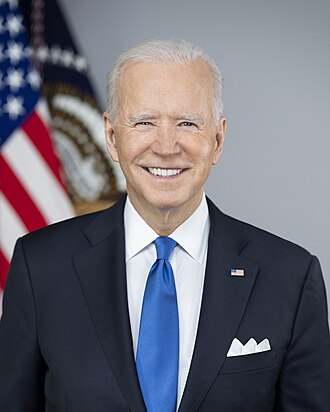
Signed by President Joseph R. Biden, Jr. on April 5, 2022, this order concerns Continuing To Strengthen Americans' Access to Affordable, Quality Health Coverage. On January 28, 2021, I signed Executive Order 14009 (Strengthening Medicaid and the Affordable Care Act), establishing that it is the policy of my Administration to protect and strengthen Medicaid and the Affordable Care Act (ACA) and to make high-quality healthcare accessible and affordable for every American.

Constitutional Assessment: An early statesman would view this measure favorably under Article II, Section 3 (the Take Care Clause). The President operates strictly within the ambit of executing established laws and supervising departmental subordinates, respecting the supremacy of the legislative branch without fabricating novel statutory obligations.

Key Directives & Operative Actions

▪
Agency Responsibilities

In addition to taking the actions directed pursuant to Executive Order 14009, agencies (as described in section 3502(1) of title 44, United States Code, except for the agencies described in section 3502(5) of title 44, United States Code) with responsibilities related to Americans' access to health coverage shall review agency actions to identify ways to continue to expand the availability of affordable health coverage, to improve the quality of coverage, to strengthen benefits, and to help more Americans enroll in quality health coverage.

▪

It directs executive departments and agencies (agencies) with authorities and responsibilities related to Medicaid and the ACA to review existing regulations, orders, guidance documents, policies, and any other similar agency actions (collectively, agency actions) to determine whether such agency actions are inconsistent with this policy.

▪

As part of this review, the heads of such agencies shall examine the following: (a) policies or practices that make it easier for all consumers to enroll in and retain coverage, understand their coverage options, and select appropriate coverage; (b) policies or practices that strengthen benefits and improve access to healthcare providers; (c) policies or practices that improve the comprehensiveness of coverage and protect consumers from low-quality coverage; (d) policies or practices that expand eligibility and lower costs for coverage in the ACA Marketplaces, Medicaid, Medicare, and other programs; (e) policies or practices that help improve linkages between the healthcare system and other stakeholders to address health-related needs…

Constitutional & Societal Entities Impacted

🏛️ Executive Departments & Federal Civil Servants 🏛️ Private Citizens & Property Owners 🏛️ Public Health & Medical Institutions
🏛️

The Framers' Constitutional Council

1787 Prism

Evaluating this order against the constitutional debates of 1787 and the limits of Article II executive power.

🏛️✅ Zone 1 (Maximum Authority)
§

"When the President acts pursuant to an express or implied authorization of Congress, his authority is at its maximum, for it includes all that he possesses in his own right plus all that Congress can delegate."

— Justice Robert H. Jackson, Youngstown Sheet & Tube Co. v. Sawyer (1952) Express or Implied Congressional Authorization
JM

James Madison

Separation of Powers & Legislative Primacy

"The constitutional magistracy was designed not to invent policy, but to be the faithful instrument of the laws passed by the people's representatives." — Speech in the First Congress (1789)

Madison would approve the structural posture of this order. The President acts strictly in subordination to statutory authority granted under Article II, Section 3 ("take Care that the Laws be faithfully executed"). The checks and balances hold firm because the policy origin remains with the legislature.

Madisonian Stance: Concurring (Statutory)
AH

Alexander Hamilton

The Energetic Executive & Unified Command

"A feeble Executive implies a feeble execution of the government; and a government ill executed, whatever it may be in theory, must be, in practice, a bad government." — Federalist No. 70 (1788)

Hamilton would view this directive as the natural and indispensable functioning of administrative leadership. Without the power to coordinate agencies, manage personnel, and resolve operational ambiguities, the modern presidency would be reduced to an impotent figurehead.

Hamiltonian Stance: Supportive of Execution
GM

George Mason

Bill of Rights, Due Process & 10th Amendment

"The president will be surrounded by flatterers and sycophants... and the great powers of the executive will gradually absorb the liberties of the people." — Cato IV (Anti-Federalist, 1787)

The Anti-Federalist prism advises continuous democratic vigilance. Even routine administrative directives aggregate centralized federal power away from town halls and state assemblies toward a distant executive apparatus.

Anti-Federalist Stance: Eternal Vigilance Required
📐

Five Measurable "Constitutional Friction" Dimensions

An objective audit measuring potential separation-of-powers tension against the United States Constitution and established Supreme Court doctrine.

⚖️ Discretionary Twilight Zone
48 / 100 friction index
Dimension 1 • Art. I, §1 & §8

Legislative Encroachment & Purse

High Friction

Touches upon core congressional prerogatives: raises appropriations reallocation, tariff imposition, or statutory preemption questions.

Benchmark: Power of the purse, taxes/tariffs, and rule of law reserved to Congress.
Dimension 2 • Art. II, §1 & §3

Executive Scope & Faithfulness

Moderate Friction

Directs internal executive branch machinery, agency workflows, and federal personnel.

Benchmark: Faithfully execute laws enacted by Congress vs. unilateral decree.
Dimension 3 • 10th Amendment

Federalism & State Sovereignty

Moderate Friction

Engages state and local partners in cooperative federalism programs.

Benchmark: Police powers and un-delegated responsibilities reserved to the States.
Dimension 4 • 5th & 14th Amendments

Due Process & Individual Rights

Moderate Friction

Applies regulatory or compliance standards to private contractors or commercial entities.

Benchmark: Protection of private property, contracts, liberty, and procedural justice.
Dimension 5 • Separation of Powers

Youngstown Jacksonian Tier

Low Friction

The President operates strictly as the constitutional Chief Executive, carrying out policy established by Congress with strong statutory backing.

Benchmark: Express or Implied Congressional Authorization
⚖️ Audit Synthesis

This order operates within Justice Jackson’s Zone of Twilight, resting upon concurrent presidential authority or congressional silence.

Weighted composite: Art. I (25%), Art. II (25%), Federalism (15%), Due Process (15%), Youngstown (20%).
ℹ️
How to read these dimensions: Executive power expands whenever an administration acts without explicit statutory authorization from Congress (Article I), touches upon police powers historically reserved to the states (Tenth Amendment), or limits private rights and property without judicial process. A low friction score indicates strict concordance with enacted law; a high friction score highlights orders testing the limits of presidential discretion.
Total Words
1,086
7,173 characters
Estimated Read Time
5 min
@ 200 words / min
Flesch-Kincaid
26.3
Post-Graduate Legal
Language Tone Score
+0.52
Constitutional Fidelity
How is this scored?
Text size:

Official Archival Text

View Source Document

By the authority vested in me as President by the Constitution and the laws of the United States of America, it is hereby ordered as follows:

Section 1 . #sec-1

Policy . On January 28, 2021, I signed Executive Order 14009 (Strengthening Medicaid and the Affordable Care Act), establishing that it is the policy of my Administration to protect and strengthen Medicaid and the Affordable Care Act (ACA) and to make high-quality healthcare accessible and affordable for every American. It directs executive departments and agencies (agencies) with authorities and responsibilities related to Medicaid and the ACA to review existing regulations, orders, guidance documents, policies, and any other similar agency actions (collectively, agency actions) to determine whether such agency actions are inconsistent with this policy. Consistent with Executive Order 14009, agencies have taken numerous actions to protect and strengthen Medicaid and the ACA, including: (a) facilitating the expansion of Medicaid in Missouri and Oklahoma to individuals below 138 percent of the Federal poverty level, which is projected to cover nearly half a million people; (b) extending Medicaid eligibility to new populations in order to allow pregnant individuals to retain their Medicaid coverage for up to 1 year postpartum, including through initiatives in Illinois, New Jersey, Virginia, and Louisiana; (c) operating a Special Enrollment Period during 2021 that allowed 2.8 million Americans to newly enroll in coverage under the ACA; (d) extending the length of the HealthCare.gov Open Enrollment Period by 1 month and operating the most successful Open Enrollment Period ever, with a historic 14.5 million Americans enrolling in coverage through the ACA Marketplaces and an additional 1 million people enrolling in Basic Health Program coverage, resulting in a 20 percent increase over the prior year across both programs combined; (e) increasing outreach and enrollment funding for organizations that help Americans apply for ACA and Medicaid coverage, including quadrupling the number of trained Navigators to more than 1,500 people in States using HealthCare.gov; (f) lowering maximum out-of-pocket costs for consumers with employer and ACA coverage by $400 in 2022; (g) reducing paperwork burdens for people enrolling in Medicaid and the ACA by eliminating unnecessary documentation requirements; (h) allowing low-income Americans to enroll in affordable ACA coverage year-round; (i) strengthening Medicaid and ACA section 1332 waiver policies to partner with States to develop innovative coverage options, strengthen benefits, and lower costs; (j) proposing rules that would better ensure comprehensive and standardized coverage and improve the adequacy of ACA provider networks; and (k) making efforts to improve the affordability of ACA coverage for families by proposing rules to correct a regulatory gap that prevents family members from accessing ACA subsidies despite very high premiums for coverage through an employer. On March 11, 2021, I signed into law the American Rescue Plan Act of 2021 (Public Law 117-2), which will further strengthen Medicaid and the ACA in numerous ways, including by making ACA coverage more affordable for 9 million Americans through enhanced ACA subsidies, incentivizing States to adopt the ACA's Medicaid expansion, making it easier for States to extend postpartum Medicaid coverage, establishing new options for States to establish mobile crisis intervention services teams to help provide services to Medicaid beneficiaries experiencing a behavioral health crisis, and increasing Medicaid funding for home- and community-based services to strengthen and expand access to services for millions of seniors and people with disabilities who need care as well as to help States strengthen their programs. My Administration has made significant progress in making healthcare more affordable and accessible to millions of Americans. From the end of 2020 to September 2021, one in seven uninsured Americans gained coverage, leaving the uninsured rate at nearly an all-time low. Despite this progress, nearly 4 million Americans continue to be locked out of Medicaid expansion because they reside in 1 of the 12 States that have failed to adopt the ACA's Medicaid expansion. In addition, millions more continue to struggle to obtain the care they need, to go without health coverage, or to be enrolled in coverage that is insufficient to meet their needs. The effects of being uninsured or underinsured can be devastating financially, as families without access to affordable coverage may accrue high levels of medical debt. It remains the policy of my Administration to protect and strengthen Medicaid and the ACA and to make high-quality healthcare accessible and affordable for every American. Agencies with authorities and responsibilities related to Medicaid and the ACA are continuing their review of existing agency actions under Executive Order 14009.

Sec. 2 . #sec-2

Agency Responsibilities . In addition to taking the actions directed pursuant to Executive Order 14009, agencies (as described in section 3502(1) of title 44, United States Code, except for the agencies described in section 3502(5) of title 44, United States Code) with responsibilities related to Americans' access to health coverage shall review agency actions to identify ways to continue to expand the availability of affordable health coverage, to improve the quality of coverage, to strengthen benefits, and to help more Americans enroll in quality health coverage. As part of this review, the heads of such agencies shall examine the following: (a) policies or practices that make it easier for all consumers to enroll in and retain coverage, understand their coverage options, and select appropriate coverage; (b) policies or practices that strengthen benefits and improve access to healthcare providers; (c) policies or practices that improve the comprehensiveness of coverage and protect consumers from low-quality coverage; (d) policies or practices that expand eligibility and lower costs for coverage in the ACA Marketplaces, Medicaid, Medicare, and other programs; (e) policies or practices that help improve linkages between the healthcare system and other stakeholders to address health-related needs; and (f) policies or practices that help reduce the burden of medical debt on households.

Sec. 3 . #sec-3

General Provisions . (a) Nothing in this order shall be construed to impair or otherwise affect: (i) the authority granted by law to an executive department or agency, or the head thereof; or (ii) the functions of the Director of the Office of Management and Budget relating to budgetary, administrative, or legislative proposals. (b) This order shall be implemented consistent with applicable law and subject to the availability of appropriations. (c) This order is not intended to, and does not, create any right or benefit, substantive or procedural, enforceable at law or in equity by any party against the United States, its departments, agencies, or entities, its officers, employees, or agents, or any other person. JOSEPH R. BIDEN, JR.

THE WHITE HOUSE, #signature

April 5, 2022.

🔗

Referenced By Later Executive Orders (1)

Subsequent presidents who cited, amended, continued, or revoked this directive in later orders.

📜

Scholarly & Legal Citations

Exec. Order No. 14,070, 87 Fed. Reg. 20,689 (Apr. 5, 2022).