★
Executive Orders Historical Archive
Cite
Executive Order 14076 Revoked 🏛️✅ Zone 1: Maximum Authority Constitutional Fidelity (+0.70) 📜 10th Amend: Intergovernmental Federalism Cooperation

Executive Order 14076—Protecting Access to Reproductive Health Care Services

•
Friday, July 8, 2022
•
6 min read (1,241 words)
•
87 Fed. Reg. 42053

Executive Brief • At a Glance

⏱️ 6 min read (1,241 words) • ● Revoked
🎯 Primary Mandate

Within 30 days of the date of this order, the Secretary of Health and Human Services shall submit a report to the President: (i) identifying potential actions: (A) to protect and expand access to abortion care, including medication abortion; and (B) to otherwise protect and expand access to the full range of reproductive healthcare services, including actions to enhance family planning services such as access to emergency contraception; (ii) identifying ways to increase outreach and education about access to reproductive healthcare services, including by launching a public awareness initiative to provide timely and accurate information about such access, which shall: (A) share information about how to obtain free or reduced cost…

⚖️ Constitutional Footing
🏛️✅ Zone 1: Maximum Authority
Express or Implied Congressional Authorization
📜 10th Amend: Intergovernmental Federalism Cooperation
🏛️ Scope & Affected Sectors
Merchants, Importers & Commercial Enterprises Sovereign State Governments & Localities Executive Departments & Federal Civil Servants Private Citizens & Property Owners

Plain-English Translation & Framers' Constitutional Analysis

Early Statesman synthesis distilling legal jargon into practical meaning, statutory anchors, and structural constitutional impacts.

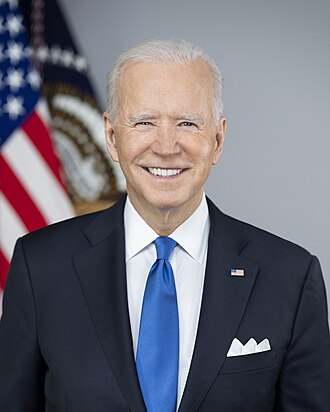
Signed by President Joseph R. Biden, Jr. on July 8, 2022, this order concerns Protecting Access to Reproductive Health Care Services. Nearly 50 years ago, Roe v. Wade , 410 U.S. 113 (1973), articulated the United States Constitution's protection of women's fundamental right to make reproductive healthcare decisions. These deeply private decisions should not be subject to government interference. Yet today, fundamental rights—to privacy, autonomy, freedom, and equality—have been denied to millions of women across the country.

Constitutional Assessment: Reviewed under the Tenth Amendment and the principle of dual federalism, this order touches upon domains traditionally reserved to the sovereign States. The Framers would caution against any attempt to commandeer state officers or displace local police powers through federal executive fiat.

Key Directives & Operative Actions

▪
Protecting Access to Reproductive Healthcare Services

Within 30 days of the date of this order, the Secretary of Health and Human Services shall submit a report to the President: (i) identifying potential actions: (A) to protect and expand access to abortion care, including medication abortion; and (B) to otherwise protect and expand access to the full range of reproductive healthcare services, including actions to enhance family planning services such as access to emergency contraception; (ii) identifying ways to increase outreach and education about access to reproductive healthcare services, including by launching a public awareness initiative to provide timely and accurate information about such access, which shall: (A) share information about how to obtain free or reduced cost…

▪
Protecting Privacy, Safety, and Security

To address potential heightened safety and security risks related to the provision of reproductive healthcare services, the Attorney General and the Secretary of Homeland Security shall consider actions, as appropriate and consistent with applicable law, to ensure the safety of patients, providers, and third parties, and to protect the security of clinics (including mobile clinics), pharmacies, and other entities providing, dispensing, or delivering reproductive and related healthcare services.

▪
Coordinating Implementation Efforts

The Secretary of Health and Human Services and the Director of the Gender Policy Council shall establish and co-chair an Interagency Task Force on Reproductive Healthcare Access (Task Force).

Constitutional & Societal Entities Impacted

🏛️ Merchants, Importers & Commercial Enterprises 🏛️ Sovereign State Governments & Localities 🏛️ Executive Departments & Federal Civil Servants 🏛️ Private Citizens & Property Owners 🏛️ Foreign Nations & International Entities
🏛️

The Framers' Constitutional Council

1787 Prism

Evaluating this order against the constitutional debates of 1787 and the limits of Article II executive power.

🏛️✅ Zone 1 (Maximum Authority)
§

"When the President acts pursuant to an express or implied authorization of Congress, his authority is at its maximum, for it includes all that he possesses in his own right plus all that Congress can delegate."

— Justice Robert H. Jackson, Youngstown Sheet & Tube Co. v. Sawyer (1952) Express or Implied Congressional Authorization
JM

James Madison

Separation of Powers & Legislative Primacy

"The constitutional magistracy was designed not to invent policy, but to be the faithful instrument of the laws passed by the people's representatives." — Speech in the First Congress (1789)

Madison would approve the structural posture of this order. The President acts strictly in subordination to statutory authority granted under Article II, Section 3 ("take Care that the Laws be faithfully executed"). The checks and balances hold firm because the policy origin remains with the legislature.

Madisonian Stance: Concurring (Statutory)
AH

Alexander Hamilton

The Energetic Executive & Unified Command

"A feeble Executive implies a feeble execution of the government; and a government ill executed, whatever it may be in theory, must be, in practice, a bad government." — Federalist No. 70 (1788)

Hamilton would view this directive as the natural and indispensable functioning of administrative leadership. Without the power to coordinate agencies, manage personnel, and resolve operational ambiguities, the modern presidency would be reduced to an impotent figurehead.

Hamiltonian Stance: Supportive of Execution
GM

George Mason

Bill of Rights, Due Process & 10th Amendment

"The powers not delegated to the United States by the Constitution, nor prohibited by it to the States, are reserved to the States respectively, or to the people." — 10th Amendment to the US Constitution (1791)

Mason would scrutinize whether this federal directive intrudes into police powers, land stewardship, or municipal domains historically reserved to local citizens. The Anti-Federalist demand is that federal administration must never supplant state self-governance.

Anti-Federalist Stance: Eternal Vigilance Required
📐

Five Measurable "Constitutional Friction" Dimensions

An objective audit measuring potential separation-of-powers tension against the United States Constitution and established Supreme Court doctrine.

⚖️ Discretionary Twilight Zone
48 / 100 friction index
Dimension 1 • Art. I, §1 & §8

Legislative Encroachment & Purse

High Friction

Touches upon core congressional prerogatives: raises appropriations reallocation, tariff imposition, or statutory preemption questions.

Benchmark: Power of the purse, taxes/tariffs, and rule of law reserved to Congress.
Dimension 2 • Art. II, §1 & §3

Executive Scope & Faithfulness

Moderate Friction

Directs internal executive branch machinery, agency workflows, and federal personnel.

Benchmark: Faithfully execute laws enacted by Congress vs. unilateral decree.
Dimension 3 • 10th Amendment

Federalism & State Sovereignty

Moderate Friction

Engages state and local partners in cooperative federalism programs.

Benchmark: Police powers and un-delegated responsibilities reserved to the States.
Dimension 4 • 5th & 14th Amendments

Due Process & Individual Rights

Moderate Friction

Applies regulatory or compliance standards to private contractors or commercial entities.

Benchmark: Protection of private property, contracts, liberty, and procedural justice.
Dimension 5 • Separation of Powers

Youngstown Jacksonian Tier

Low Friction

The President operates strictly as the constitutional Chief Executive, carrying out policy established by Congress with strong statutory backing.

Benchmark: Express or Implied Congressional Authorization
⚖️ Audit Synthesis

This order operates within Justice Jackson’s Zone of Twilight, resting upon concurrent presidential authority or congressional silence.

Weighted composite: Art. I (25%), Art. II (25%), Federalism (15%), Due Process (15%), Youngstown (20%).
ℹ️
How to read these dimensions: Executive power expands whenever an administration acts without explicit statutory authorization from Congress (Article I), touches upon police powers historically reserved to the states (Tenth Amendment), or limits private rights and property without judicial process. A low friction score indicates strict concordance with enacted law; a high friction score highlights orders testing the limits of presidential discretion.
Total Words
1,241
8,503 characters
Estimated Read Time
6 min
@ 200 words / min
Flesch-Kincaid
18.9
Post-Graduate Legal
Language Tone Score
+0.70
Constitutional Fidelity
How is this scored?
Text size:

Official Archival Text

View Source Document

By the authority vested in me as President by the Constitution and the laws of the United States of America, it is hereby ordered as follows:

Section 1 . #sec-1

Policy . Nearly 50 years ago, Roe v. Wade , 410 U.S. 113 (1973), articulated the United States Constitution's protection of women's fundamental right to make reproductive healthcare decisions. These deeply private decisions should not be subject to government interference. Yet today, fundamental rights—to privacy, autonomy, freedom, and equality—have been denied to millions of women across the country. Eliminating the right recognized in Roe has already had and will continue to have devastating implications for women's health and public health more broadly. Access to reproductive healthcare services is now threatened for millions of Americans, and especially for those who live in States that are banning or severely restricting abortion care. Women's health clinics are being forced to close—including clinics that offer other preventive healthcare services such as contraception—leaving many communities without access to critical reproductive healthcare services. Women seeking abortion care—especially those in low-income, rural, and other underserved communities—now have to travel to jurisdictions where services remain legal notwithstanding the cost or risks. In the face of this health crisis, the Federal Government is taking action to protect healthcare service delivery and promote access to critical reproductive healthcare services, including abortion. It remains the policy of my Administration to support women's right to choose and to protect and defend reproductive rights. Doing so is essential to justice, equality, and our health, safety, and progress as a Nation.

Sec. 2 . #sec-2

Definitions . (a) The term "agency" means any authority of the United States that is an "agency" under 44 U.S.C. 3502(1), other than one considered to be an independent regulatory agency, as defined in 44 U.S.C. 3502(5). (b) The term "reproductive healthcare services" means medical, surgical, counseling, or referral services relating to the human reproductive system, including services relating to pregnancy or the termination of a pregnancy.

Sec. 3 . #sec-3

Protecting Access to Reproductive Healthcare Services . (a) Within 30 days of the date of this order, the Secretary of Health and Human Services shall submit a report to the President: (i) identifying potential actions: (A) to protect and expand access to abortion care, including medication abortion; and (B) to otherwise protect and expand access to the full range of reproductive healthcare services, including actions to enhance family planning services such as access to emergency contraception; (ii) identifying ways to increase outreach and education about access to reproductive healthcare services, including by launching a public awareness initiative to provide timely and accurate information about such access, which shall: (A) share information about how to obtain free or reduced cost reproductive healthcare services through Health Resources and Services Administration-Funded Health Centers, Title X clinics, and other providers; and (B) include promoting awareness of and access to the full range of contraceptive services, as well as know-your-rights information for those seeking or providing reproductive healthcare services; and (iii) identifying steps to ensure that all patients—including pregnant women and those experiencing pregnancy loss, such as miscarriages and ectopic pregnancies—receive the full protections for emergency medical care afforded under the law, including by considering updates to current guidance on obligations specific to emergency conditions and stabilizing care under the Emergency Medical Treatment and Labor Act, 42 U.S.C. 1395dd, and providing data from the Department of Health and Human Services concerning implementation of these efforts. (b) To promote access to reproductive healthcare services, the Attorney General and the Counsel to the President shall convene a meeting of private pro bono attorneys, bar associations, and public interest organizations in order to encourage lawyers to represent and assist patients, providers, and third parties lawfully seeking these services throughout the country.

Sec. 4 . #sec-4

Protecting Privacy, Safety, and Security . (a) To address potential heightened safety and security risks related to the provision of reproductive healthcare services, the Attorney General and the Secretary of Homeland Security shall consider actions, as appropriate and consistent with applicable law, to ensure the safety of patients, providers, and third parties, and to protect the security of clinics (including mobile clinics), pharmacies, and other entities providing, dispensing, or delivering reproductive and related healthcare services. (b) To address the potential threat to patient privacy caused by the transfer and sale of sensitive health-related data and by digital surveillance related to reproductive healthcare services, and to protect people seeking reproductive health services from fraudulent schemes or deceptive practices: (i) The Chair of the Federal Trade Commission (FTC) is encouraged to consider actions, as appropriate and consistent with applicable law (including the Federal Trade Commission Act, 15 U.S.C. 41 et seq .), to protect consumers' privacy when seeking information about and provision of reproductive healthcare services. (ii) The Secretary of Health and Human Services shall consider actions, including providing guidance under the Health Insurance Portability and Accountability Act, Public Law 104-191, 110 Stat. 1936 (1996) as amended by Public Law 111-5, 123 Stat. 115 (2009), and any other statutes as appropriate, to strengthen the protection of sensitive information related to reproductive healthcare services and bolster patient-provider confidentiality. (iii) The Secretary of Health and Human Services shall, in consultation with the Attorney General, consider actions to educate consumers on how best to protect their health privacy and limit the collection and sharing of their sensitive health-related information. (iv) The Secretary of Health and Human Services shall, in consultation with the Attorney General and the Chair of the FTC, consider options to address deceptive or fraudulent practices related to reproductive healthcare services, including online, and to protect access to accurate information.

Sec. 5 . #sec-5

Coordinating Implementation Efforts . (a) The Secretary of Health and Human Services and the Director of the Gender Policy Council shall establish and co-chair an Interagency Task Force on Reproductive Healthcare Access (Task Force). Additional members shall include the Attorney General and the heads of other agencies as determined by the Secretary of Health and Human Services and the Director of the Gender Policy Council. The Task Force shall work to identify and coordinate activities to protect and strengthen access to essential reproductive healthcare services. In addition, the Task Force shall coordinate Federal interagency policymaking, program development, and outreach efforts to address barriers that individuals and entities may face in seeking and providing reproductive healthcare services. The Department of Health and Human Services shall provide funding and administrative support as may be necessary for the performance and functions of the Task Force. (b) The Attorney General shall provide technical assistance, as appropriate and consistent with applicable law, concerning Federal constitutional protections to States seeking to afford legal protection to out-of-State patients and providers who offer legal reproductive healthcare.

Sec. 6 . #sec-6

General Provisions . (a) Nothing in this order shall be construed to impair or otherwise affect: (i) the authority granted by law to an executive department or agency, or the head thereof; or (ii) the functions of the Director of the Office of Management and Budget relating to budgetary, administrative, or legislative proposals. (b) This order shall be implemented consistent with applicable law and subject to the availability of appropriations. (c) This order is not intended to, and does not, create any right or benefit, substantive or procedural, enforceable at law or in equity by any party against the United States, its departments, agencies, or entities, its officers, employees, or agents, or any other person. JOSEPH R. BIDEN JR.

THE WHITE HOUSE, #signature

July 8, 2022.

🔗

Referenced By Later Executive Orders (3)

Subsequent presidents who cited, amended, continued, or revoked this directive in later orders.

📜

Scholarly & Legal Citations

Exec. Order No. 14,076, 87 Fed. Reg. 42,053 (July 8, 2022).