★
Executive Orders Historical Archive
Cite
Executive Order 14087 Revoked 🏛️✅ Zone 1: Maximum Authority Constitutional Fidelity (+0.52) 📜 Art. II §3: Faithful Execution of Statutory Law

Executive Order 14087—Lowering Prescription Drug Costs for Americans

•
Friday, October 14, 2022
•
4 min read (790 words)
•
87 Fed. Reg. 63399

Executive Brief • At a Glance

⏱️ 4 min read (790 words) • ● Revoked
🎯 Primary Mandate

In furtherance of the policy set forth in section 1 of this order, the Secretary shall, consistent with the criteria set out in 42 U.S.C. 1315a(b)(2), consider whether to select for testing by the Innovation Center new health care payment and delivery models that would lower drug costs and promote access to innovative drug therapies for beneficiaries enrolled in the Medicare and Medicaid programs, including models that may lead to lower cost-sharing for commonly used drugs and support value-based payment that promotes high-quality care.

⚖️ Constitutional Footing
🏛️✅ Zone 1: Maximum Authority
Express or Implied Congressional Authorization
📜 Art. II §3: Faithful Execution of Statutory Law
🏛️ Scope & Affected Sectors
Executive Departments & Federal Civil Servants Private Citizens & Property Owners

Plain-English Translation & Framers' Constitutional Analysis

Early Statesman synthesis distilling legal jargon into practical meaning, statutory anchors, and structural constitutional impacts.

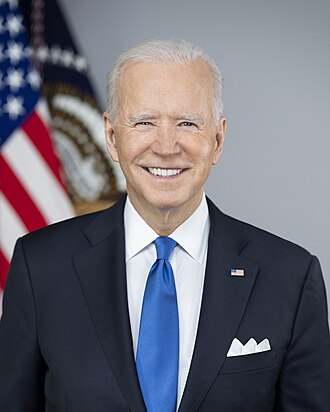
Signed by President Joseph R. Biden, Jr. on October 14, 2022, this order concerns Lowering Prescription Drug Costs for Americans. Too many Americans face challenges paying for prescription drugs. On average, Americans pay two to three times as much as people in other countries for prescription drugs, and one in four Americans who take prescription drugs struggle to afford their medications. Nearly 3 in 10 American adults who take prescription drugs say that they have skipped doses, cut pills in half, or not filled prescriptions due to cost.

Constitutional Assessment: An early statesman would view this measure favorably under Article II, Section 3 (the Take Care Clause). The President operates strictly within the ambit of executing established laws and supervising departmental subordinates, respecting the supremacy of the legislative branch without fabricating novel statutory obligations.

Key Directives & Operative Actions

▪
HHS Actions

In furtherance of the policy set forth in section 1 of this order, the Secretary shall, consistent with the criteria set out in 42 U.S.C. 1315a(b)(2), consider whether to select for testing by the Innovation Center new health care payment and delivery models that would lower drug costs and promote access to innovative drug therapies for beneficiaries enrolled in the Medicare and Medicaid programs, including models that may lead to lower cost-sharing for commonly used drugs and support value-based payment that promotes high-quality care.

▪

The Secretary shall, not later than 90 days after the date of this order, submit a report to the Assistant to the President for Domestic Policy enumerating and describing any models that the Secretary has selected.

▪

The report shall also include the Secretary's plan and timeline to test any such models.

▪

Following the submission of the report, the Secretary shall take appropriate actions to test any health care payment and delivery models discussed in the report.

Constitutional & Societal Entities Impacted

🏛️ Executive Departments & Federal Civil Servants 🏛️ Private Citizens & Property Owners
🏛️

The Framers' Constitutional Council

1787 Prism

Evaluating this order against the constitutional debates of 1787 and the limits of Article II executive power.

🏛️✅ Zone 1 (Maximum Authority)
§

"When the President acts pursuant to an express or implied authorization of Congress, his authority is at its maximum, for it includes all that he possesses in his own right plus all that Congress can delegate."

— Justice Robert H. Jackson, Youngstown Sheet & Tube Co. v. Sawyer (1952) Express or Implied Congressional Authorization
JM

James Madison

Separation of Powers & Legislative Primacy

"The constitutional magistracy was designed not to invent policy, but to be the faithful instrument of the laws passed by the people's representatives." — Speech in the First Congress (1789)

Madison would approve the structural posture of this order. The President acts strictly in subordination to statutory authority granted under Article II, Section 3 ("take Care that the Laws be faithfully executed"). The checks and balances hold firm because the policy origin remains with the legislature.

Madisonian Stance: Concurring (Statutory)
AH

Alexander Hamilton

The Energetic Executive & Unified Command

"A feeble Executive implies a feeble execution of the government; and a government ill executed, whatever it may be in theory, must be, in practice, a bad government." — Federalist No. 70 (1788)

Hamilton would view this directive as the natural and indispensable functioning of administrative leadership. Without the power to coordinate agencies, manage personnel, and resolve operational ambiguities, the modern presidency would be reduced to an impotent figurehead.

Hamiltonian Stance: Supportive of Execution
GM

George Mason

Bill of Rights, Due Process & 10th Amendment

"The president will be surrounded by flatterers and sycophants... and the great powers of the executive will gradually absorb the liberties of the people." — Cato IV (Anti-Federalist, 1787)

The Anti-Federalist prism advises continuous democratic vigilance. Even routine administrative directives aggregate centralized federal power away from town halls and state assemblies toward a distant executive apparatus.

Anti-Federalist Stance: Eternal Vigilance Required
📐

Five Measurable "Constitutional Friction" Dimensions

An objective audit measuring potential separation-of-powers tension against the United States Constitution and established Supreme Court doctrine.

⚖️ Discretionary Twilight Zone
36 / 100 friction index
Dimension 1 • Art. I, §1 & §8

Legislative Encroachment & Purse

Moderate Friction

Administers commerce or fiscal programs requiring ongoing statutory delegation and legislative oversight.

Benchmark: Power of the purse, taxes/tariffs, and rule of law reserved to Congress.
Dimension 2 • Art. II, §1 & §3

Executive Scope & Faithfulness

Moderate Friction

Directs internal executive branch machinery, agency workflows, and federal personnel.

Benchmark: Faithfully execute laws enacted by Congress vs. unilateral decree.
Dimension 3 • 10th Amendment

Federalism & State Sovereignty

Moderate Friction

Engages state and local partners in cooperative federalism programs.

Benchmark: Police powers and un-delegated responsibilities reserved to the States.
Dimension 4 • 5th & 14th Amendments

Due Process & Individual Rights

Low Friction

Focuses on internal governmental operations with no direct impairment of private rights or property.

Benchmark: Protection of private property, contracts, liberty, and procedural justice.
Dimension 5 • Separation of Powers

Youngstown Jacksonian Tier

Low Friction

The President operates strictly as the constitutional Chief Executive, carrying out policy established by Congress with strong statutory backing.

Benchmark: Express or Implied Congressional Authorization
⚖️ Audit Synthesis

This order operates within Justice Jackson’s Zone of Twilight, resting upon concurrent presidential authority or congressional silence.

Weighted composite: Art. I (25%), Art. II (25%), Federalism (15%), Due Process (15%), Youngstown (20%).
ℹ️
How to read these dimensions: Executive power expands whenever an administration acts without explicit statutory authorization from Congress (Article I), touches upon police powers historically reserved to the states (Tenth Amendment), or limits private rights and property without judicial process. A low friction score indicates strict concordance with enacted law; a high friction score highlights orders testing the limits of presidential discretion.
Total Words
790
4,951 characters
Estimated Read Time
4 min
@ 200 words / min
Flesch-Kincaid
17.4
Post-Graduate Legal
Language Tone Score
+0.52
Constitutional Fidelity
How is this scored?
Text size:

Official Archival Text

View Source Document

By the authority vested in me as President by the Constitution and the laws of the United States of America, it is hereby ordered as follows:

Section 1 . #sec-1

Policy . Too many Americans face challenges paying for prescription drugs. On average, Americans pay two to three times as much as people in other countries for prescription drugs, and one in four Americans who take prescription drugs struggle to afford their medications. Nearly 3 in 10 American adults who take prescription drugs say that they have skipped doses, cut pills in half, or not filled prescriptions due to cost. On July 9, 2021, I signed Executive Order 14036 (Promoting Competition in the American Economy), which directed various actions in pursuit of my Administration's policy to improve competition, increase wages, and reduce prices for prescription drugs, among other goods and services. In response to Executive Order 14036, the Department of Health and Human Services (HHS) submitted a report to the White House Competition Council calling for bold legislative and administrative actions to lower drug prices. On August 16, 2022, I signed Public Law 117-169, commonly referred to as the Inflation Reduction Act of 2022 (IRA), which will lower the cost of prescription drugs and save millions of Americans hundreds or thousands of dollars per year. The IRA will protect Medicare beneficiaries from catastrophic drug costs by phasing in a cap for out-of-pocket costs at the pharmacy and establishing a $35 monthly cap per prescription for insulin covered by a Medicare prescription drug plan and insulin delivered through traditional pumps. Starting this January, Medicare beneficiaries with prescription drug coverage will pay $0 out of pocket for recommended adult vaccines (including the shingles vaccine). The IRA will also require certain companies to pay Medicare rebates if they increase the prices of drugs used by Medicare beneficiaries faster than the rate of inflation. In addition, the Secretary of HHS (Secretary) will be able to negotiate prices for selected high-cost prescription drugs for Medicare beneficiaries for the first time ever. Following the passage of the IRA, HHS has taken critical steps to swiftly implement these historic provisions in order to deliver results and lower health care costs for the American people. As my Administration works to implement the IRA, it is critical that we take additional actions to complement the IRA and further drive down prescription drug costs. Within HHS, the Center for Medicare and Medicaid Innovation ("Innovation Center") tests health care payment and delivery models to improve health care quality and make the delivery of health care more efficient. In June 2022, the Innovation Center announced a new model to improve cancer care and lower health care costs for cancer patients, including prescription drug costs. The Innovation Center provides my Administration and the American people with a useful set of tools to help lower health care costs and improve quality of care, and its work can advance the continued policy of my Administration to lower the cost of prescription drugs.

Sec. 2 . #sec-2

HHS Actions . In furtherance of the policy set forth in section 1 of this order, the Secretary shall, consistent with the criteria set out in 42 U.S.C. 1315a(b)(2), consider whether to select for testing by the Innovation Center new health care payment and delivery models that would lower drug costs and promote access to innovative drug therapies for beneficiaries enrolled in the Medicare and Medicaid programs, including models that may lead to lower cost-sharing for commonly used drugs and support value-based payment that promotes high-quality care. The Secretary shall, not later than 90 days after the date of this order, submit a report to the Assistant to the President for Domestic Policy enumerating and describing any models that the Secretary has selected. The report shall also include the Secretary's plan and timeline to test any such models. Following the submission of the report, the Secretary shall take appropriate actions to test any health care payment and delivery models discussed in the report.

Sec. 3 . #sec-3

General Provisions . (a) Nothing in this order shall be construed to impair or otherwise affect: (i) the authority granted by law to an executive department or agency, or the head thereof; or (ii) the functions of the Director of the Office of Management and Budget relating to budgetary, administrative, or legislative proposals. (b) This order shall be implemented consistent with applicable law and subject to the availability of appropriations. (c) This order is not intended to, and does not, create any right or benefit, substantive or procedural, enforceable at law or in equity by any party against the United States, its departments, agencies, or entities, its officers, employees, or agents, or any other person. JOSEPH R. BIDEN, JR. The White House, October 14, 2022.

🔗

Referenced By Later Executive Orders (1)

Subsequent presidents who cited, amended, continued, or revoked this directive in later orders.

📜

Scholarly & Legal Citations

Exec. Order No. 14,087, 87 Fed. Reg. 63,399 (Oct. 14, 2022).