The SECRETARY OF STATE: My communication to the Secretary of War dated December 21, 1898, declares the necessity of extending the actual occupation and administration of the city, harbor, and bay of Manila to the whole of the territory which by the treaty of Paris, signed on December 10, 1898, passed from the sovereignty of Spain to the sovereignty of the United States and the consequent establishment of military government throughout the entire group of the Philippine Islands. While the treaty has not yet been ratified, it is believed that it will be by the time of the arrival at Manila of the commissioners named below. In order to facilitate the most humane, specific, and effective extension of authority throughout these islands and to secure with the least possible delay the benefits of a wise and generous protection of life and property to the inhabitants, I have named Jacob G. Schurman, Rear-Admiral George Dewey, Major-General Elwell S. Otis, Charles Denby, and Dean C. Worcester to constitute a commission to aid in the accomplishment of these results. In the performance of this duty the commissioners are enjoined to meet at the earliest possible day in the city of Manila and to announce by a public proclamation their presence and the mission intrusted to them, carefully setting forth that while the military government already proclaimed is to be maintained and continued so long as necessity may require, efforts will be made to alleviate the burdens of taxation, to establish industrial and commercial prosperity, and to provide for the safety of persons and of property by such means as may be found conducive to these ends. The commissioners will endeavor, without interference with the military authorities of the United States now in control of the Philippines, to ascertain what amelioration in the condition of the inhabitants and what improvements in public order may be practicable, and for this purpose they will study attentively the existing social and political state of the various populations, particularly as regards the forms of local government, the administration of justice, the collection of customs and other taxes, the means of transportation, and the need of public improvements. They will report through the State Department, according to the forms customary or hereafter prescribed for transmitting and preserving such communications, the results of their observations and reflections, and will recommend such executive action as may from time to time seem to them wise and useful. The commissioners are hereby authorized to confer authoritatively with any persons resident in the islands from whom they may believe themselves able to derive information or suggestions valuable for the purposes of their commission, or whom they may choose to employ as agents, as may be necessary for this purpose. The temporary government of the islands is intrusted to the military authorities, as already provided for by my instructions to the Secretary of War of December 21, 1898, and will continue until Congress shall determine otherwise. The commission may render valuable services by examining with special care the legislative needs of the various groups of inhabitants and by reporting, with recommendations, the measures which should be instituted for the maintenance of order, peace, and public welfare, either as temporary steps to be taken immediately for the perfection of present administration or as suggestions for future legislation. In so far as immediate personal changes in the civil administration may seem to be advisable, the commissioners are empowered to recommend suitable persons for appointment to these offices from among the inhabitants of the islands who have previously acknowledged their allegiance to this Government. It is my desire that in all their relations with the inhabitants of the islands the commissioners exercise due respect for all the ideals, customs, and institutions of the tribes and races which compose the population, emphasizing upon all occasions the just and beneficent intentions of the Government of the United States. It is also my wish and expectation that the commissioners may be received in a manner due to the honored and authorized representatives of the American Republic, duly commissioned, on account of their knowledge, skill, and integrity, as bearers of the good will, the protection, and the richest blessings of a liberating rather than a conquering nation. WILLIAM MCKINLEY
Presidential Order
⚖️✨ Zone 2: Zone of Twilight Constitutional Neutral (+0.02)
📜 Art. II §2: Commander-in-Chief Supervisory Authority
Executive Order
Executive Brief • At a Glance
⏱️ 4 min read (707 words) •
● In Effect
🎯 Primary Mandate
The SECRETARY OF STATE: My communication to the Secretary of War dated December 21, 1898, declares the necessity of extending the actual occupation and administration of the city, harbor, and bay of Manila to the whole of the territory which by the treaty of Paris, signed on December 10, 1898, passed from the sovereignty of Spain to the sovereignty of the United States and the consequent establishment of military government throughout the entire group of the Philippine Islands.
⚖️ Constitutional Footing
⚖️✨ Zone 2: Zone of Twilight
Concurrent Authority / Congressional Silence
📜 Art. II §2: Commander-in-Chief Supervisory Authority
🏛️ Scope & Affected Sectors
Armed Forces & Military Establishments Merchants, Importers & Commercial Enterprises Sovereign State Governments & Localities Executive Departments & Federal Civil Servants
Plain-English Translation & Framers' Constitutional Analysis
Early Statesman synthesis distilling legal jargon into practical meaning, statutory anchors, and structural constitutional impacts.
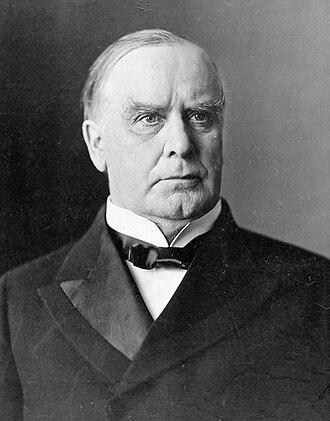
Signed by President William McKinley on January 20, 1899, this order reads: The SECRETARY OF STATE: My communication to the Secretary of War dated December 21, 1898, declares the necessity of extending the actual occupation and administration of the city, harbor, and bay of Manila to the whole of the territory which by the treaty of Paris, signed on December 10, 1898, passed from the sovereignty of Spain to the sovereignty of the United States and the consequent establishment of military…
Constitutional Assessment: Scrutinized through Article II, Section 2, this action exercises the President's constitutional role as Commander in Chief. Early Framers recognized broad executive discretion in commanding military forces during conflict, provided it remains bounded by congressional declarations and respects civilian domestic courts.
Key Directives & Operative Actions
▪
The SECRETARY OF STATE: My communication to the Secretary of War dated December 21, 1898, declares the necessity of extending the actual occupation and administration of the city, harbor, and bay of Manila to the whole of the territory which by the treaty of Paris, signed on December 10, 1898, passed from the sovereignty of Spain to the sovereignty of the United States and the consequent establishment of military government throughout the entire group of the Philippine Islands.
▪
In the performance of this duty the commissioners are enjoined to meet at the earliest possible day in the city of Manila and to announce by a public proclamation their presence and the mission intrusted to them, carefully setting forth that while the military government already proclaimed is to be maintained and continued so long as necessity may require, efforts will be made to alleviate the burdens of taxation, to establish industrial and commercial prosperity, and to provide for the safety of persons and of property by such means as may be found conducive to these ends.
▪
They will report through the State Department, according to the forms customary or hereafter prescribed for transmitting and preserving such communications, the results of their observations and reflections, and will recommend such executive action as may from time to time seem to them wise and useful.
▪
The commissioners are hereby authorized to confer authoritatively with any persons resident in the islands from whom they may believe themselves able to derive information or suggestions valuable for the purposes of their commission, or whom they may choose to employ as agents, as may be necessary for this purpose.
Constitutional & Societal Entities Impacted
🏛️ Armed Forces & Military Establishments
🏛️ Merchants, Importers & Commercial Enterprises
🏛️ Sovereign State Governments & Localities
🏛️ Executive Departments & Federal Civil Servants
🏛️ Private Citizens & Property Owners
Policy Areas & Topics
🏛️
The Framers' Constitutional Council
1787 PrismEvaluating this order against the constitutional debates of 1787 and the limits of Article II executive power.
⚖️✨ Zone 2 (Zone of Twilight)
§
"When the President acts in absence of either a congressional grant or denial of authority, he can only rely upon his own independent powers, but there is a zone of twilight in which he and Congress may have concurrent authority."
— Justice Robert H. Jackson, Youngstown Sheet & Tube Co. v. Sawyer (1952) Concurrent Authority / Congressional Silence
JM
James Madison
Separation of Powers & Legislative Primacy
"Power is of an encroaching nature, and it ought to be effectually restrained from passing the limits assigned to it." — Federalist No. 48 (1788)
Madison would view this order with watchful scrutiny. Operating in the 'Zone of Twilight' where Congress is silent, each such directive establishes an administrative precedent that steadily expands the executive perimeter at the expense of legislative primacy.
Madisonian Stance: Vigilant / Cautionary
AH
Alexander Hamilton
The Energetic Executive & Unified Command
"The direction of war implies the direction of the common strength; and the power of directing and employing the common strength must be under the direction of the single hand of the Executive." — Federalist No. 74 (1788)
Hamilton would forcefully champion executive discretion here. For foreign entanglements, commerce defense, and national security, deliberative assemblies are too slow and faction-ridden. A unified, energetic Executive exercising swift command is precisely what the Philadelphia Convention intended for national preservation.
Hamiltonian Stance: Strong Prerogative Support
GM
George Mason
Bill of Rights, Due Process & 10th Amendment
"The president will be surrounded by flatterers and sycophants... and the great powers of the executive will gradually absorb the liberties of the people." — Cato IV (Anti-Federalist, 1787)
The Anti-Federalist prism advises continuous democratic vigilance. Even routine administrative directives aggregate centralized federal power away from town halls and state assemblies toward a distant executive apparatus.
Anti-Federalist Stance: Eternal Vigilance Required
📐
Five Measurable "Constitutional Friction" Dimensions
An objective audit measuring potential separation-of-powers tension against the United States Constitution and established Supreme Court doctrine.
⚖️ Discretionary Twilight Zone
38 / 100 friction index
Dimension 1 • Art. I, §1 & §8
Moderate Friction
Legislative Encroachment & Purse
Administers commerce or fiscal programs requiring ongoing statutory delegation and legislative oversight.
Benchmark: Power of the purse, taxes/tariffs, and rule of law reserved to Congress.
Dimension 2 • Art. II, §1 & §3
Low Friction
Executive Scope & Faithfulness
Exercises standard supervisory executive authority to faithfully execute existing statutes.
Benchmark: Faithfully execute laws enacted by Congress vs. unilateral decree.
Dimension 3 • 10th Amendment
Moderate Friction
Federalism & State Sovereignty
Engages state and local partners in cooperative federalism programs.
Benchmark: Police powers and un-delegated responsibilities reserved to the States.
Dimension 4 • 5th & 14th Amendments
Low Friction
Due Process & Individual Rights
Focuses on internal governmental operations with no direct impairment of private rights or property.
Benchmark: Protection of private property, contracts, liberty, and procedural justice.
Dimension 5 • Separation of Powers
Moderate Friction
Youngstown Jacksonian Tier
The order relies on inherent Article II executive discretion, civil service management, or foreign diplomacy where Congress has neither expressly approved nor prohibited action.
Benchmark: Concurrent Authority / Congressional Silence
⚖️
Audit Synthesis
This order operates within Justice Jackson’s Zone of Twilight, resting upon concurrent presidential authority or congressional silence.
Weighted composite: Art. I (25%), Art. II (25%), Federalism (15%), Due Process (15%), Youngstown (20%).
ℹ️
How to read these dimensions: Executive power expands whenever an administration acts without explicit statutory authorization from Congress (Article I), touches upon police powers historically reserved to the states (Tenth Amendment), or limits private rights and property without judicial process. A low friction score indicates strict concordance with enacted law; a high friction score highlights orders testing the limits of presidential discretion.
Total Words
707
4,487 characters
Estimated Read Time
4 min
@ 200 words / min
Flesch-Kincaid
23.8
Post-Graduate Legal
Text size:
Related Executive Orders
Other executive actions signed by William McKinley around this period.
Order
Jan 31, 1899
⚖️✨ Zone 2 (Zone of Twilight) Constitutional Neutral
Executive Order
📜 Art. II §1: Executive Discretion & Internal Operations
The following described tract of land situate near the north bank of Cook Inlet, adjoining the town of Kenai on the north, District of Alaska, be and it is hereby set apart as an agricultural experiment station, subject to any existing legal rights thereto, it being more…
 William McKinley
High School • 1m
Order
Feb 3, 1899
🏛️✅ Zone 1 (Maximum Authority) Constitutional Neutral
Executive Order
📜 Art. I §8: Delegated Tariff & Commerce Execution
That the counties of Alger, Baraga, Chippews, Delta, Dickinson, Gogebic, Houghton, Iron, Keweenaw, Luce, Mackinac, Marquette, Menominee, Ontonagon and Schoolcroft, now a part of the First Internal Revenue Collection District of Michigan be transferred to and made a part of the…
William McKinley Post-Graduate Legal • 1m
Order
Jan 1, 1899
⚖️✨ Zone 2 (Zone of Twilight) Constitutional Neutral
Executive Order
📜 Art. II §2: Commander-in-Chief Supervisory Authority
Washington --4:30 P.M. General OTIS, Manila: The President considers it of first importance that a conflict brought on by you be avoided at this time, if possible.
William McKinley College Level • 1m
Order
Dec 22, 1898
⚖️✨ Zone 2 (Zone of Twilight) Constitutional Neutral
Executive Order
📜 Art. II §2: Commander-in-Chief Supervisory Authority
The SECRETARY OF WAR: The major-general commanding the United States forces in Cuba and the senior naval officer of the American fleet in the port of Havana are directed to observe such arrangements and ceremonies for the evacuation of Havana, to take place on January 1, 1899…
William McKinley Post-Graduate Legal • 1m
Order
Dec 22, 1898
⚖️✨ Zone 2 (Zone of Twilight) Constitutional Neutral
Executive Order
📜 Art. II §2: Commander-in-Chief Supervisory Authority
Until otherwise ordered no grants or concessions of public or corporate rights or franchises for the construction of public or quasi public works, such as railroads, tramways, telegraph and telephone lines, water works, gas works, electric-light lines, etc., shall be made by…
William McKinley Post-Graduate Legal • 1m
Order
Dec 21, 1898
⚖️✨ Zone 2 (Zone of Twilight) Constitutional Neutral
Executive Order
📜 Art. II §2: Commander-in-Chief Supervisory Authority
Washington, General Otis, Manila: Answering your message of December 14, the President directs that you send necessary troops to Iloilo to preserve the peace and protect life and property. It is most important that there should be no conflict with the insurgents.
William McKinley High School • 1m
📜
Scholarly & Legal Citations
Exec. Order (Jan. 20, 1899), https://executiveordersarchive.org/orders/app-executive-order-142.
