It is hereby ordered that the lands in Ts. 17 S., Rs. 4 and 5 E., and T. 21 S., R. 6 E., Gila and Salt River Meridian, in the State of Arizona, reserved for use of the Papago Indians by Executive Order No. 1374, dated June 16, 1911 are hereby restored to the public domain, and in lieu thereof the following three described tracts of unsurveyed land, in said State, all east of the Gila and Salt River Meridian, containing an approximate aggregate area of 4224.84 acres, be, and the same are hereby, withdrawn from settlement, entry, sale, or other disposition, and reserved for school, agency, and other necessary uses for the benefit of the Papago or other Indians, in said State, subject to any prior valid rights of any persons thereto, namely: 1. A tract of land which, by protraction of the regular surveys from the standard corner of Ts. 20 S., Rs. 4 and 5 E., established in the survey of the Fourth Standard Parallel South, would appear to be, when surveyed, lots 1, 2, 3 and 4, sec. 30, T. 17 S., R. 5 E., containing an approximate area of one hundred and forty-eight and twenty-four hundredths (148.24) acres. 2. A tract of land which, by protraction of the regular surveys from the established fractional south boundary of T. 19 S., R. 7 E., would appear to be, when surveyed, the south halves of secs. 3 and 4; the SE. 1/4 of sec. 5; the NE. 1/4 of sec. 8; all of secs. 9, 10, 15 and 16; the N. 1/2 of sec. 21, and the NW. 1/4 of sec. 22, all in T. 19 S., R. 7 E., containing an approximate area of four thousand (4000) acres. 3. A tract of land which, by protraction of the regular surveys from the established east boundary of T. 21 S., R. 6 E., would appear to be, when surveyed, lot 1, and the NE. 1/4 of the NW. 1/4 of sec. 7, T. 21 S., R. 6 E., containing an approximate area of seventy-six and sixty hundredths (76.60) acres. WM. H. TAFT The White House, December 5, 1912
Executive Order 1655 🏛️✅ Zone 1: Maximum Authority Constitutional Neutral (+0.02)
📜 10th Amend: Intergovernmental Federalism Cooperation
Executive Order 1655—Altering Lands Composing Reservation of Papago Indians
Executive Brief • At a Glance
⏱️ 2 min read (361 words) •
● In Effect
🎯 Primary Mandate
The lands in Ts. 17 S., Rs. 4 and 5 E., and T. 21 S., R. 6 E., Gila and Salt River Meridian, in the State of Arizona, reserved for use of the Papago Indians by Executive Order No. 1374, dated June 16, 1911 are hereby restored to the public domain, and in lieu thereof the following three described tracts of unsurveyed land, in said State, all east of the Gila and Salt River Meridian, containing an approximate aggregate area of 4224.84 acres, be, and the same are hereby, withdrawn from settlement, entry, sale, or other disposition, and reserved for school, agency, and other necessary uses for the benefit of the Papago or other Indians, in said State, subject to any prior valid rights of any persons thereto, namely: 1.
⚖️ Constitutional Footing
🏛️✅ Zone 1: Maximum Authority
Express or Implied Congressional Authorization
📜 10th Amend: Intergovernmental Federalism Cooperation
🏛️ Scope & Affected Sectors
Sovereign State Governments & Localities Private Citizens & Property Owners
Plain-English Translation & Framers' Constitutional Analysis
Early Statesman synthesis distilling legal jargon into practical meaning, statutory anchors, and structural constitutional impacts.
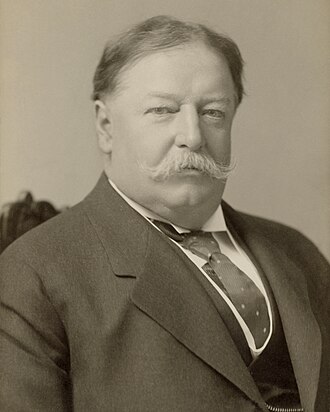
Signed by President William Howard Taft on December 5, 1912, this order concerns Altering Lands Composing Reservation of Papago Indians. The lands in Ts. 17 S., Rs. 4 and 5 E., and T. 21 S., R. 6 E., Gila and Salt River Meridian, in the State of Arizona, reserved for use of the Papago Indians by Executive Order No. 1374, dated June 16, 1911 are hereby restored to the public domain, and in lieu thereof the following three described tracts of unsurveyed land, in said State, all east of the Gila and Salt River Meridian, containing an approximate…
Constitutional Assessment: Reviewed under the Tenth Amendment and the principle of dual federalism, this order touches upon domains traditionally reserved to the sovereign States. The Framers would caution against any attempt to commandeer state officers or displace local police powers through federal executive fiat.
Key Directives & Operative Actions
▪
The lands in Ts. 17 S., Rs. 4 and 5 E., and T. 21 S., R. 6 E., Gila and Salt River Meridian, in the State of Arizona, reserved for use of the Papago Indians by Executive Order No. 1374, dated June 16, 1911 are hereby restored to the public domain, and in lieu thereof the following three described tracts of unsurveyed land, in said State, all east of the Gila and Salt River Meridian, containing an approximate aggregate area of 4224.84 acres, be, and the same are hereby, withdrawn from settlement, entry, sale, or other disposition, and reserved for school, agency, and other necessary uses for the benefit of the Papago or other Indians, in said State, subject to any prior valid rights of any persons thereto, namely: 1.
▪
A tract of land which, by protraction of the regular surveys from the standard corner of Ts. 20 S., Rs. 4 and 5 E., established in the survey of the Fourth Standard Parallel South, would appear to be, when surveyed, lots 1, 2, 3 and 4, sec. 30, T. 17 S., R. 5 E., containing an approximate area of one hundred and forty-eight and twenty-four hundredths (148.24) acres. 2.
Constitutional & Societal Entities Impacted
🏛️ Sovereign State Governments & Localities
🏛️ Private Citizens & Property Owners
Policy Areas & Topics
🏛️
The Framers' Constitutional Council
1787 PrismEvaluating this order against the constitutional debates of 1787 and the limits of Article II executive power.
🏛️✅ Zone 1 (Maximum Authority)
§
"When the President acts pursuant to an express or implied authorization of Congress, his authority is at its maximum, for it includes all that he possesses in his own right plus all that Congress can delegate."
— Justice Robert H. Jackson, Youngstown Sheet & Tube Co. v. Sawyer (1952) Express or Implied Congressional Authorization
JM
James Madison
Separation of Powers & Legislative Primacy
"The constitutional magistracy was designed not to invent policy, but to be the faithful instrument of the laws passed by the people's representatives." — Speech in the First Congress (1789)
Madison would approve the structural posture of this order. The President acts strictly in subordination to statutory authority granted under Article II, Section 3 ("take Care that the Laws be faithfully executed"). The checks and balances hold firm because the policy origin remains with the legislature.
Madisonian Stance: Concurring (Statutory)
AH
Alexander Hamilton
The Energetic Executive & Unified Command
"A feeble Executive implies a feeble execution of the government; and a government ill executed, whatever it may be in theory, must be, in practice, a bad government." — Federalist No. 70 (1788)
Hamilton would view this directive as the natural and indispensable functioning of administrative leadership. Without the power to coordinate agencies, manage personnel, and resolve operational ambiguities, the modern presidency would be reduced to an impotent figurehead.
Hamiltonian Stance: Supportive of Execution
GM
George Mason
Bill of Rights, Due Process & 10th Amendment
"The powers not delegated to the United States by the Constitution, nor prohibited by it to the States, are reserved to the States respectively, or to the people." — 10th Amendment to the US Constitution (1791)
Mason would scrutinize whether this federal directive intrudes into police powers, land stewardship, or municipal domains historically reserved to local citizens. The Anti-Federalist demand is that federal administration must never supplant state self-governance.
Anti-Federalist Stance: Eternal Vigilance Required
📐
Five Measurable "Constitutional Friction" Dimensions
An objective audit measuring potential separation-of-powers tension against the United States Constitution and established Supreme Court doctrine.
⚖️ Discretionary Twilight Zone
31 / 100 friction index
Dimension 1 • Art. I, §1 & §8
Moderate Friction
Legislative Encroachment & Purse
Administers commerce or fiscal programs requiring ongoing statutory delegation and legislative oversight.
Benchmark: Power of the purse, taxes/tariffs, and rule of law reserved to Congress.
Dimension 2 • Art. II, §1 & §3
Low Friction
Executive Scope & Faithfulness
Exercises standard supervisory executive authority to faithfully execute existing statutes.
Benchmark: Faithfully execute laws enacted by Congress vs. unilateral decree.
Dimension 3 • 10th Amendment
Moderate Friction
Federalism & State Sovereignty
Engages state and local partners in cooperative federalism programs.
Benchmark: Police powers and un-delegated responsibilities reserved to the States.
Dimension 4 • 5th & 14th Amendments
Low Friction
Due Process & Individual Rights
Focuses on internal governmental operations with no direct impairment of private rights or property.
Benchmark: Protection of private property, contracts, liberty, and procedural justice.
Dimension 5 • Separation of Powers
Low Friction
Youngstown Jacksonian Tier
The President operates strictly as the constitutional Chief Executive, carrying out policy established by Congress with strong statutory backing.
Benchmark: Express or Implied Congressional Authorization
⚖️
Audit Synthesis
This order operates within Justice Jackson’s Zone of Twilight, resting upon concurrent presidential authority or congressional silence.
Weighted composite: Art. I (25%), Art. II (25%), Federalism (15%), Due Process (15%), Youngstown (20%).
ℹ️
How to read these dimensions: Executive power expands whenever an administration acts without explicit statutory authorization from Congress (Article I), touches upon police powers historically reserved to the states (Tenth Amendment), or limits private rights and property without judicial process. A low friction score indicates strict concordance with enacted law; a high friction score highlights orders testing the limits of presidential discretion.
Total Words
361
1,891 characters
Estimated Read Time
2 min
@ 200 words / min
Flesch-Kincaid
6.3
Grade 6
Text size:
Related Executive Orders
1 order cited directly in this text, plus related actions from this administration.
EO 1374 Jun 16, 1911
⚖️✨ Zone 2 (Zone of Twilight) Constitutional Neutral
Executive Order 1374—Reserving Lands for Benefit of Papago Indians
📜 Art. II §1: Executive Discretion & Internal Operations
The following described lands in Pima County, Ariz., be, and they are hereby, reserved from settlement, entry, sale, or other disposal and set aside for school, agency, and other necessary uses for the benefit of the Papago Indians, subject to any valid existing rights of any…
 William Howard Taft
Grade 3 • 1m
EO 1649 Nov 26, 1912
⚖️✨ Zone 2 (Zone of Twilight) Constitutional Neutral
Executive Order 1649—Altering Lands Composing the Moapa River Indian Reservation
📜 Art. II §1: Executive Discretion & Internal Operations
The following described lands, containing 128.37 acres, be, and they are hereby, reserved from settlement, sale, or other disposition, and set aside as an addition to the said Indian reservation: Lots 2, 3, and 4, of Section 1, Township 15, Range 65; SE. 1/4 of the SW. 1/4 of…
William Howard Taft High School • 1m
EO 1632 Oct 28, 1912
⚖️✨ Zone 2 (Zone of Twilight) Constitutional Neutral
Executive Order 1632—Addition of Lands to the Moapa River Indian Reservation
📜 Art. II §1: Executive Discretion & Internal Operations
The following described tracts of land, aggregating 89.70 acres, namely, the Lots 3 and 4 and the NE. 1/4 of the NW. 1/4 of Section 1, Township 15 South of Range 65 East of the Mount Diablo Meridian in Nevada, be, and the same are hereby, reserved from settlement, entry, sale…
William Howard Taft High School • 1m
EO 1682 Jan 14, 1913
🏛️✅ Zone 1 (Maximum Authority) Constitutional Neutral
Executive Order 1682—Setting Aside Lands in Montana for Administrative Purposes in Connection with Flathead Indians
📜 10th Amend: Intergovernmental Federalism Cooperation
The SE. 1/4 of the SW. 1/4 of Section 9, Township 18 North, Range 21 West, Montana Meridian, containing 40 acres, be, and the same is hereby withdrawn from entry and set apart for administrative purposes in connection with the affairs of the Flathead Indians in the State of…
William Howard Taft High School • 1m
EO 1681 Jan 14, 1913
⚖️✨ Zone 2 (Zone of Twilight) Constitutional Neutral
Executive Order 1681—Reserving Lands in Nevada for Use of the Paiute and Shoshoni Indians
📜 Art. II §1: Executive Discretion & Internal Operations
The following described lands in Nevada, be, and they are hereby, withdrawn from entry, sale or other disposition, and set aside for Paiute and Shoshoni Indians, and such other Indians as the Secretary of the Interior may settle thereon, namely: Township 42 N., R. 26 E.…
William Howard Taft Grade 5 • 1m
EO 1621 Oct 8, 1912
⚖️✨ Zone 2 (Zone of Twilight) Constitutional Neutral
Executive Order 1621—Altering Lands Composing Reservation of Papago Indians
📜 Art. II §1: Executive Discretion & Internal Operations
Executive Order No. 1538, dated May 28, 1912, be, and the same hereby is, amended so as to eliminate therefrom the S. 1/2 of Section 13, Township 4 South of Range 2 East of the Gila and Salt River Meridian in Arizona.
William Howard Taft Grade 8 • 1m
📜
Scholarly & Legal Citations
Exec. Order No. 1655 (Dec. 5, 1912), https://executiveordersarchive.org/orders/app-executive-order-1655-altering-lands-composing-reservation-papago-indians.
