★
Executive Orders Historical Archive
Cite
Executive Order 1857 ⚖️⚠️ Zone 3: Lowest Ebb Constitutional Friction / Overreach (-0.41) 📜 Art. II §2: Commander-in-Chief / War Prerogative Tension

Executive Order 1857—To Regulate the Carrying of Arms in the Canal Zone

•
Friday, November 7, 1913
•
4 min read (875 words)

Executive Brief • At a Glance

⏱️ 4 min read (875 words) • ● In Effect
🎯 Primary Mandate

I hereby establish the following order for the Canal Zone: Section 1.

⚖️ Constitutional Footing
⚖️⚠️ Zone 3: Lowest Ebb
Incompatible with Expressed Will of Congress or High Friction
📜 Art. II §2: Commander-in-Chief / War Prerogative Tension
🏛️ Scope & Affected Sectors
Armed Forces & Military Establishments Sovereign State Governments & Localities Executive Departments & Federal Civil Servants Private Citizens & Property Owners

Plain-English Translation & Framers' Constitutional Analysis

Early Statesman synthesis distilling legal jargon into practical meaning, statutory anchors, and structural constitutional impacts.

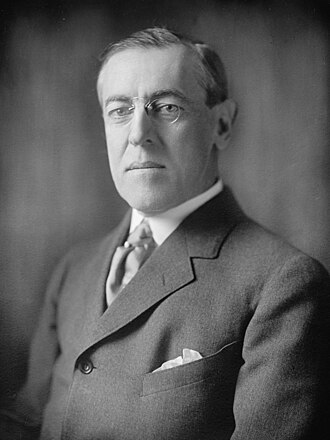
Signed by President Woodrow Wilson on November 7, 1913, this order concerns To Regulate the Carrying of Arms in the Canal Zone. I hereby establish the following order for the Canal Zone: Section 1. Anyone who carries on or about his person any firearm, dirk, dagger or other knife manufactured or sold for the purpose of offence or defence, or any slungshot, sword-cane or any knuckles made of metal or other hard substance, shall be punished by fine of not less than Five Dollars nor more than Twenty-five Dollars, or by imprisonment in jail of…

Constitutional Assessment: Scrutinized through Article II, Section 2, this action exercises the President's constitutional role as Commander in Chief. Early Framers recognized broad executive discretion in commanding military forces during conflict, provided it remains bounded by congressional declarations and respects civilian domestic courts.

Key Directives & Operative Actions

▪

I hereby establish the following order for the Canal Zone: Section 1.

▪

Anyone who carries on or about his person any firearm, dirk, dagger or other knife manufactured or sold for the purpose of offence or defence, or any slungshot, sword-cane or any knuckles made of metal or other hard substance, shall be punished by fine of not less than Five Dollars nor more than Twenty-five Dollars, or by imprisonment in jail of not less than five days nor more than thirty days, or by both such fine and imprisonment in the discretion of the court, and during such time of imprisonment such offender may be put to work upon any public work in the Canal Zone.

▪

In addition to the punishment herein prescribed for unlawfully carrying arms, the courts shall adjudge the seizure and confiscation of the arms unlawfully carried by the offending party and the same shall be disposed of in such manner as the Head of the Department of Civil Administration shall determine.

▪

The preceding section shall not apply to a person engaged in the military or naval service of the United States or as a peace officer or officer authorized to execute judicial process of the United States or the Canal Zone, or in carrying mail or engaged in the collection or custody of funds of the United States or the Canal Zone, nor to a member of a gun or pistol club for the promotion of target practice, a certified copy of the constitution and by-laws of which has been approved by the Head of the Department of Civil Administration, and filed with the Collector of Revenues, when such member is going to or from a target range, and engaged in practice at the target range.

Constitutional & Societal Entities Impacted

🏛️ Armed Forces & Military Establishments 🏛️ Sovereign State Governments & Localities 🏛️ Executive Departments & Federal Civil Servants 🏛️ Private Citizens & Property Owners 🏛️ Financial Institutions & Monetary Authorities
🏛️

The Framers' Constitutional Council

1787 Prism

Evaluating this order against the constitutional debates of 1787 and the limits of Article II executive power.

⚖️⚠️ Zone 3 (Lowest Ebb)
§

"When the President takes measures incompatible with the expressed or implied will of Congress, his power is at its lowest ebb."

— Justice Robert H. Jackson, Youngstown Sheet & Tube Co. v. Sawyer (1952) Incompatible with Expressed Will of Congress or High Friction
JM

James Madison

Separation of Powers & Legislative Primacy

"The accumulation of all powers, legislative, executive, and judiciary, in the same hands... may justly be pronounced the very definition of tyranny." — Federalist No. 47 (1788)

Madison would express grave alarm over this order. By asserting independent authority in tension with legislative limits or the Bill of Rights, the Executive risks collapsing the separation of powers into unilateral rule. Under the Madisonian model, no emergency justifies the Executive substituting its decree for a deliberative Act of Congress.

Madisonian Stance: Strict Dissent (Overreach)
AH

Alexander Hamilton

The Energetic Executive & Unified Command

"The direction of war implies the direction of the common strength; and the power of directing and employing the common strength must be under the direction of the single hand of the Executive." — Federalist No. 74 (1788)

Hamilton would forcefully champion executive discretion here. For foreign entanglements, commerce defense, and national security, deliberative assemblies are too slow and faction-ridden. A unified, energetic Executive exercising swift command is precisely what the Philadelphia Convention intended for national preservation.

Hamiltonian Stance: Strong Prerogative Support
GM

George Mason

Bill of Rights, Due Process & 10th Amendment

"The purse and the sword ought never to be in the same hands... nor the liberties of the citizen placed at the pleasure of a single magistrate." — Virginia Ratifying Convention (1788)

George Mason and the Anti-Federalists would sound a fierce warning. They feared that Article II would inevitably evolve into an elective monarchy. When an executive order impacts private rights, property, or civil liberties without individualized judicial process, Mason would see their darkest predictions verified.

Anti-Federalist Stance: Vehement Objection
📐

Five Measurable "Constitutional Friction" Dimensions

An objective audit measuring potential separation-of-powers tension against the United States Constitution and established Supreme Court doctrine.

⚠️ Elevated Constitutional Friction
70 / 100 friction index
Dimension 1 • Art. I, §1 & §8

Legislative Encroachment & Purse

Moderate Friction

Administers commerce or fiscal programs requiring ongoing statutory delegation and legislative oversight.

Benchmark: Power of the purse, taxes/tariffs, and rule of law reserved to Congress.
Dimension 2 • Art. II, §1 & §3

Executive Scope & Faithfulness

High Friction

Invokes broad unilateral or emergency executive authorities that test the constitutional boundary of the Take Care Clause.

Benchmark: Faithfully execute laws enacted by Congress vs. unilateral decree.
Dimension 3 • 10th Amendment

Federalism & State Sovereignty

Moderate Friction

Engages state and local partners in cooperative federalism programs.

Benchmark: Police powers and un-delegated responsibilities reserved to the States.
Dimension 4 • 5th & 14th Amendments

Due Process & Individual Rights

High Friction

Scrutinized under the Bill of Rights for potential impact on private contracts, property rights, or procedural due process.

Benchmark: Protection of private property, contracts, liberty, and procedural justice.
Dimension 5 • Separation of Powers

Youngstown Jacksonian Tier

High Friction

The order asserts independent Article II prerogative against statutory constraints, reallocates funds without explicit appropriation, or stretches executive power into realms constitutionally reserved to the legislature or judiciary.

Benchmark: Incompatible with Expressed Will of Congress or High Friction
⚖️ Audit Synthesis

This directive engages significant constitutional friction across statutory authorization, legislative prerogatives, or individual liberties.

Weighted composite: Art. I (25%), Art. II (25%), Federalism (15%), Due Process (15%), Youngstown (20%).
ℹ️
How to read these dimensions: Executive power expands whenever an administration acts without explicit statutory authorization from Congress (Article I), touches upon police powers historically reserved to the states (Tenth Amendment), or limits private rights and property without judicial process. A low friction score indicates strict concordance with enacted law; a high friction score highlights orders testing the limits of presidential discretion.
Total Words
875
5,021 characters
Estimated Read Time
4 min
@ 200 words / min
Flesch-Kincaid
22.2
Post-Graduate Legal
Language Tone Score
-0.41
Constitutional Friction / Overreach
How is this scored?
Text size:

Official Archival Text

View Source Document
📑Sections Outline (7 sections)

By virtue of the authority vested in me, I hereby establish the following order for the Canal Zone:

Section 1. #sec-1

Anyone who carries on or about his person any firearm, dirk, dagger or other knife manufactured or sold for the purpose of offence or defence, or any slungshot, sword-cane or any knuckles made of metal or other hard substance, shall be punished by fine of not less than Five Dollars nor more than Twenty-five Dollars, or by imprisonment in jail of not less than five days nor more than thirty days, or by both such fine and imprisonment in the discretion of the court, and during such time of imprisonment such offender may be put to work upon any public work in the Canal Zone. In addition to the punishment herein prescribed for unlawfully carrying arms, the courts shall adjudge the seizure and confiscation of the arms unlawfully carried by the offending party and the same shall be disposed of in such manner as the Head of the Department of Civil Administration shall determine.

Section 2. #sec-2

The preceding section shall not apply to a person engaged in the military or naval service of the United States or as a peace officer or officer authorized to execute judicial process of the United States or the Canal Zone, or in carrying mail or engaged in the collection or custody of funds of the United States or the Canal Zone, nor to a member of a gun or pistol club for the promotion of target practice, a certified copy of the constitution and by-laws of which has been approved by the Head of the Department of Civil Administration, and filed with the Collector of Revenues, when such member is going to or from a target range, and engaged in practice at the target range. For the purposes of this order, a certificate of membership in the gun or pistol club shall be issued by the organization and approved by the Head of the Department of Civil Administration, and shall entitle the holder to carry firearms as provided for in this section. Neither shall the preceding section apply to any person authorized to have or carry arms by permit granted under the terms and conditions named in section 3 hereof.

Section 3. #sec-3

The Head of the Department of Civil Administration may authorize the granting of permits to have and carry arms as follows: 1. To hunt upon the public lands of the Canal Zone, or upon the lands of private persons when authorized by the latter. 2. To have arms in residences, offices, business places and plantations; and to watchmen or overseers of plantations, factories, warehouses, docks or piers. Applications for such permits shall be made to the Head of the Department of Civil Administration and shall state the full name, residence and occupation of the applicant, and if the applicant is a minor it shall not be granted without the written consent of his parent or guardian. The Head of the Department of Civil Administration shall satisfy himself by due inquiry that the applicant is a proper person to have a permit to carry arms, and he may grant or deny the application as to him may seem proper. When an application is granted by the Head of the Department of Civil Administration for a permit to hunt he shall file the application, with his approval endorsed thereon, with the Collector of Revenues, who shall issue a permit to the applicant upon his paying the Collector of Revenues a fee of one dollar, to be covered into the Treasury of the Canal Zone Government. The hunting permits issued by virtue of this order shall authorize the holder thereof to have, use or carry a gun, rifle or other similar long arm for hunting purposes during the fiscal year for which the permit is issued, provided, however, that such permit may be revoked at any time for cause by the Head of the Department of Civil Administration.

Section 4. #sec-4

Anyone who engages in hunting without first obtaining the permit provided for in this order shall be subject to a fine not exceeding Twenty-five dollars or imprisonment in jail not exceeding ten days, provided, however, that persons engaged in the land or naval forces of the United States shall not be required to obtain a permit to hunt upon the public lands of the Canal Zone.

Section 5. #sec-5

Penalties for infringements of this order imposed upon intoxicated or disorderly persons shall be in addition to the punishments authorized by law for such intoxicated or disorderly conduct.

Section 6. #sec-6

Sections 449 to 460, both inclusive, of the Penal Code, the Executive Order of December 1, 1909, issued by the Secretary of War by authority of the President, amending Section 450 and 456 of the Penal Code, and the Executive Order of the Secretary of War, issued by authority of the President, dated November 3, 1911, amending Section 456 of the Penal Code as amended by the Executive Order above mentioned, and all other laws, orders and decrees in conflict with this order are hereby repealed.

Section 7. #sec-7

This order shall take effect thirty days from and after its publication in the Canal Record. WOODROW WILSON

THE WHITE HOUSE, #signature

November 7, 1913.

📜

Scholarly & Legal Citations

Exec. Order No. 1857 (Nov. 7, 1913), https://executiveordersarchive.org/orders/app-executive-order-1857-regulate-the-carrying-arms-the-canal-zone.