★
Executive Orders Historical Archive
Cite
Executive Order 2461 🏛️✅ Zone 1: Maximum Authority Constitutional Neutral (+0.02) 📜 Art. I §8: Delegated Tariff & Commerce Execution

Executive Order 2461—Amending Consular Regulations 172

•
Thursday, September 28, 1916
•
2 min read (495 words)

Executive Brief • At a Glance

⏱️ 2 min read (495 words) • ● In Effect
🎯 Primary Mandate

Paragraph 172 of the Consular Regulations is amended to read as follows: Registration of American Citizens.--Principal Consular Officers shall keep at their offices a Register of all American citizens residing in their several districts, and will therefore make it known that such a Register is kept and invite all resident Americans to cause their names to be entered therein.

⚖️ Constitutional Footing
🏛️✅ Zone 1: Maximum Authority
Express or Implied Congressional Authorization
📜 Art. I §8: Delegated Tariff & Commerce Execution
🏛️ Scope & Affected Sectors
Merchants, Importers & Commercial Enterprises Sovereign State Governments & Localities Executive Departments & Federal Civil Servants Private Citizens & Property Owners

Plain-English Translation & Framers' Constitutional Analysis

Early Statesman synthesis distilling legal jargon into practical meaning, statutory anchors, and structural constitutional impacts.

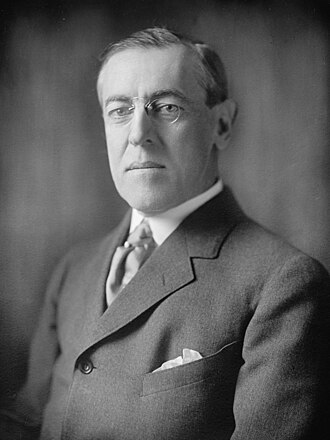
Signed by President Woodrow Wilson on September 28, 1916, this order concerns Amending Consular Regulations 172. Paragraph 172 of the Consular Regulations is amended to read as follows: Registration of American Citizens.--Principal Consular Officers shall keep at their offices a Register of all American citizens residing in their several districts, and will therefore make it known that such a Register is kept and invite all resident Americans to cause their names to be entered therein.

Constitutional Assessment: This action represents an orderly exercise of Article II administrative discretion, managing the internal machinery and personnel of the executive branch without abridging the ancient liberties of the people.

Key Directives & Operative Actions

▪

Paragraph 172 of the Consular Regulations is amended to read as follows: Registration of American Citizens.--Principal Consular Officers shall keep at their offices a Register of all American citizens residing in their several districts, and will therefore make it known that such a Register is kept and invite all resident Americans to cause their names to be entered therein.

▪

Except in cases of emergency no person shall be given a certificate of registration until his application for registration has been approved by the Department.

▪

The Register, which will consist of sworn applications approved by the Department, should show in the case of each person registered the date of registration, the full name of the person registered, the date and place of his birth, the place of his last domicile in the United States, the date of his arrival in the foreign country where he is residing and his place of residence therein, the reasons for his foreign residence, whether or not he is married and if married the name of his wife, her place of birth and residence, if he has children, the name, date and place of birth and residence of each, and any other pertinent information which the Department of State may require.

▪

The nature of the proof accepted to establish his citizenship should also appear.

Constitutional & Societal Entities Impacted

🏛️ Merchants, Importers & Commercial Enterprises 🏛️ Sovereign State Governments & Localities 🏛️ Executive Departments & Federal Civil Servants 🏛️ Private Citizens & Property Owners 🏛️ Foreign Nations & International Entities

Policy Areas & Topics

🏛️

The Framers' Constitutional Council

1787 Prism

Evaluating this order against the constitutional debates of 1787 and the limits of Article II executive power.

🏛️✅ Zone 1 (Maximum Authority)
§

"When the President acts pursuant to an express or implied authorization of Congress, his authority is at its maximum, for it includes all that he possesses in his own right plus all that Congress can delegate."

— Justice Robert H. Jackson, Youngstown Sheet & Tube Co. v. Sawyer (1952) Express or Implied Congressional Authorization
JM

James Madison

Separation of Powers & Legislative Primacy

"The constitutional magistracy was designed not to invent policy, but to be the faithful instrument of the laws passed by the people's representatives." — Speech in the First Congress (1789)

Madison would approve the structural posture of this order. The President acts strictly in subordination to statutory authority granted under Article II, Section 3 ("take Care that the Laws be faithfully executed"). The checks and balances hold firm because the policy origin remains with the legislature.

Madisonian Stance: Concurring (Statutory)
AH

Alexander Hamilton

The Energetic Executive & Unified Command

"The direction of war implies the direction of the common strength; and the power of directing and employing the common strength must be under the direction of the single hand of the Executive." — Federalist No. 74 (1788)

Hamilton would forcefully champion executive discretion here. For foreign entanglements, commerce defense, and national security, deliberative assemblies are too slow and faction-ridden. A unified, energetic Executive exercising swift command is precisely what the Philadelphia Convention intended for national preservation.

Hamiltonian Stance: Supportive of Execution
GM

George Mason

Bill of Rights, Due Process & 10th Amendment

"The president will be surrounded by flatterers and sycophants... and the great powers of the executive will gradually absorb the liberties of the people." — Cato IV (Anti-Federalist, 1787)

The Anti-Federalist prism advises continuous democratic vigilance. Even routine administrative directives aggregate centralized federal power away from town halls and state assemblies toward a distant executive apparatus.

Anti-Federalist Stance: Eternal Vigilance Required
📐

Five Measurable "Constitutional Friction" Dimensions

An objective audit measuring potential separation-of-powers tension against the United States Constitution and established Supreme Court doctrine.

⚖️ Discretionary Twilight Zone
35 / 100 friction index
Dimension 1 • Art. I, §1 & §8

Legislative Encroachment & Purse

Moderate Friction

Administers commerce or fiscal programs requiring ongoing statutory delegation and legislative oversight.

Benchmark: Power of the purse, taxes/tariffs, and rule of law reserved to Congress.
Dimension 2 • Art. II, §1 & §3

Executive Scope & Faithfulness

Low Friction

Exercises standard supervisory executive authority to faithfully execute existing statutes.

Benchmark: Faithfully execute laws enacted by Congress vs. unilateral decree.
Dimension 3 • 10th Amendment

Federalism & State Sovereignty

Moderate Friction

Engages state and local partners in cooperative federalism programs.

Benchmark: Police powers and un-delegated responsibilities reserved to the States.
Dimension 4 • 5th & 14th Amendments

Due Process & Individual Rights

Moderate Friction

Applies regulatory or compliance standards to private contractors or commercial entities.

Benchmark: Protection of private property, contracts, liberty, and procedural justice.
Dimension 5 • Separation of Powers

Youngstown Jacksonian Tier

Low Friction

The President operates strictly as the constitutional Chief Executive, carrying out policy established by Congress with strong statutory backing.

Benchmark: Express or Implied Congressional Authorization
⚖️ Audit Synthesis

This order operates within Justice Jackson’s Zone of Twilight, resting upon concurrent presidential authority or congressional silence.

Weighted composite: Art. I (25%), Art. II (25%), Federalism (15%), Due Process (15%), Youngstown (20%).
ℹ️
How to read these dimensions: Executive power expands whenever an administration acts without explicit statutory authorization from Congress (Article I), touches upon police powers historically reserved to the states (Tenth Amendment), or limits private rights and property without judicial process. A low friction score indicates strict concordance with enacted law; a high friction score highlights orders testing the limits of presidential discretion.
Total Words
495
3,060 characters
Estimated Read Time
2 min
@ 200 words / min
Flesch-Kincaid
16.4
Post-Graduate Legal
Language Tone Score
+0.02
Constitutional Neutral
How is this scored?
Text size:

Official Archival Text

View Source Document

Paragraph 172 of the Consular Regulations is amended to read as follows: Registration of American Citizens.--Principal Consular Officers shall keep at their offices a Register of all American citizens residing in their several districts, and will therefore make it known that such a Register is kept and invite all resident Americans to cause their names to be entered therein. Except in cases of emergency no person shall be given a certificate of registration until his application for registration has been approved by the Department. The general principles which govern applications for passports also govern applications for registration. (Paragraph 151.) The forms of application for registration will be prescribed by the Secretary of State. The Register, which will consist of sworn applications approved by the Department, should show in the case of each person registered the date of registration, the full name of the person registered, the date and place of his birth, the place of his last domicile in the United States, the date of his arrival in the foreign country where he is residing and his place of residence therein, the reasons for his foreign residence, whether or not he is married and if married the name of his wife, her place of birth and residence, if he has children, the name, date and place of birth and residence of each, and any other pertinent information which the Department of State may require. The nature of the proof accepted to establish his citizenship should also appear. Consuls may issue, upon forms prescribed by the Department, certificates of registration good for one year, for use with the authorities of the place where the persons registered are residing. When a certificate expires a new one may be issued, the old one being surrendered and destroyed, or the original certificate may be renewed for a period of one year if it is clearly shown that the applicant has not expatriated himself. Persons who hold passports which have not expired shall not be furnished with certificates of registration, and it is strictly forbidden to furnish them to be used for traveling in the place of passports, except in cases of extraordinary emergency when the Department of State shall expressly authorize their use for this purpose. Returns of all registrations and of all certificates of registration issued shall be made at intervals and under regulations to be prescribed by the Secretary of State. The Secretary of State is authorized to make regulations concerning registration additional to these rules and not inconsistent with them. No fee shall be required for registration nor for any service connected therewith, except for the issuance of a certificate of registration, for which a fee of one dollar shall be required. The Tariff of the United States consular Fees is hereby amended by the addition thereto of the following paragraph: Certificate of registration of an American citizen. ...........$1.00 This order shall go into effect November 15, 1916. WOODROW WILSON

THE WHITE HOUSE, #signature

September 28, 1916.

📜

Scholarly & Legal Citations

Exec. Order No. 2461 (Sept. 28, 1916), https://executiveordersarchive.org/orders/app-executive-order-2461-amending-consular-regulations-172.