I. The President, having acceded to the request of General William T. Sherman to be relieved from the command of the Army on the 1st of November, 1883, preparatory to his retirement from active service, directs the following changes and assignments to command: General William T. Sherman will be relieved from the command of the Army on the above-mentioned date and will repair to his home, St. Louis, Mo., to await his retirement. The General will be attended prior to his retirement by those of his aids-de-camp whom he may designate to the Adjutant-General. Lieutenant-General Philip H. Sheridan will proceed to Washington, and on the above-mentioned date assume command of the Army. Major-General John M. Schofield will proceed to Chicago, Ill., and will on the above-mentioned date assume command of the Military Division of the Missouri. Major-General John Pope will proceed to the Presidio of San Francisco, Cal., and will on the above-mentioned date assume command of the Military Division of the Pacific and of the Department of California. Brigadier-General Christopher C. Augur will proceed to Fort Leavenworth, and will on the above-mentioned date assume command of the Department of the Missouri. Brigadier-General Ranald S. Mackenzie will proceed to San Antonio, Tex., and will on the above-mentioned date assume command of the Department of Texas. II. The Department of the South will on the 1st day of November, 1883, be merged in the Department of the East, under the command of Major-General Hancock, commanding the Military Division of the Atlantic and the Department of the East. ROBERT T. LINCOLN, Secretary of War. In the exercise of the power vested in the President by the Constitution, and by virtue of the seventeen hundred and fifty-third section of the Revised Statutes and of the civil-service act approved January 16, 1883, the following rules for the regulation and improvement of the executive civil service are hereby amended and promulgated, as follows: RULE VI. 1. There shall be open competitive examinations for testing the fitness of applicants for admission to the service. Such examinations shall be practical in their character and, so far as may be, shall relate to those matters which will fairly test the relative capacity and fitness of the persons examined to discharge the duties of the branch of the service which they seek to enter. 2. There shall, so far as they may be deemed useful, be competitive examinations of a suitable character to test the fitness of persons for promotion in the service. RULE VII. 1. The general examinations under the first clause of Rule VI for admission to the service shall be limited to the following subjects: (1) Orthography, penmanship, and copying; (2) arithmetic--fundamental rules, fractions, and percentage; (3) interest, discount, and elements of bookkeeping and of accounts; (4) elements of the English language, letter writing, and the proper construction of sentences; (5) elements of the geography, history, and government of the United States. 2. Proficiency in each of these subjects shall be credited in grading the standing of the persons examined in proportion to the value of a knowledge of such subjects in the branch or part of the service which the applicant seeks to enter. 3. No one shall be entitled to be certified for appointment whose standing upon a just grading in the general examination shall be less than 65 per cent of complete proficiency in the first three subjects mentioned in this rule, and that measure of proficiency shall be deemed adequate. 4. But for places in which a lower degree of education will suffice the Commission may limit the examinations to less than the five subjects above mentioned; but no person shall be certified for appointment under this clause whose grading shall be less than an average of 65 per cent on such of the first three subjects or parts thereof as the examination may embrace. 5. The Commission may also order examinations upon other subjects, of a technical or special character, to test the capacity which may be needed in any part of the classified service which requires peculiar information or skill. Examinations hereunder may be competitive or noncompetitive, and the maximum limitations of age contained in the twelfth rule shall not apply to applicants for the same. The application for and notice of these special examinations, the records thereof, and the certification of those found competent shall be such as the Commission may provide for. After consulting the head of any Department or office the Commission may from time to time designate, subject to the approval of the President, the positions therein for which applicants may be required to pass this special examination. RULE VIII. No question in any examination or proceeding by or under the Commission or examiners shall call for the expression or disclosure of any political or religious opinion or affiliation, and if such opinion or affiliation be known no discrimination shall be made by reason thereof by the examiners, the Commission, or the appointing power. The Commission and its examiners shall discountenance all disclosure before either of them of such opinion by or concerning any applicant for examination or by or concerning anyone whose name is on any register awaiting appointment. RULE XI. Every application, in order to entitle the applicant to appear for examination or to be examined, must state under oath the facts on the following subjects: (1) Full name, residence, and post-office address; (2) citizenship; (3) age; (4) place of birth; (5) health and physical capacity for the public service; (6) fight of preference by reason of military or naval service; (7) previous employment in the public service; (8) business or employment and residence for the previous five years; (9) education. Such other information shall be furnished as the Commission may reasonably require touching the applicant's fitness for the public service. The applicant must also state the number of members of his family in the public service and where employed, and must also assert that he is not disqualified under section 8 of the civil-service act, which is as follows: "That no person habitually using intoxicating beverages to excess shall be appointed to or retained in any office, appointment, or employment to which the provisions of this act are applicable." No person under enlistment in the Army or Navy of the United States shall be examined under these rules. RULE XIII. I. The date of the reception of all regular applications for the classified departmental service shall be entered of record by the Commission, and of all other regular applications by the proper examining boards of the district or office for which they are made; and applicants, when in excess of the number that can be examined at a single examination, shall, subject to the needs of apportionment, be notified to appear in their order on the respective records. But any applicants in the several States and Territories for appointment in the classified departmental service may be notified to appear for examination at any place at which an examination is to be held, whether in any State or Territory or in Washington, which shall be deemed most convenient for them. 2. The Commission is authorized, in aid of the apportionment among the States and Territories, to hold examinations at places convenient for applicants from different States and Territories, or for those examination districts which it may designate and which the President shall approve. RULE XVI. 1. Whenever any officer having the power of appointment or employment shall so request, there shall be certified to him by the Commission or the proper examining board four names for the vacancy specified, to be taken from those graded highest on the proper register of those in his branch of the service and remaining eligible, regard being had to the apportionment of appointments to States and Territories; and from the said four a selection shall be made for the vacancy. 2. These certifications for the service at Washington shall be made in such order as to apportion, as nearly as may be practicable, the original appointments thereto among the States and Territories and the District of Columbia upon the basis of population as ascertained at the last preceding census. 3. In case the request for any such certification or any law or regulation shall call for those of either sex, the four highest of that sex shall be certified; otherwise sex shall be disregarded in such certification. 4. No person upon any register shall be certified more than four times to the same officer in the customs or postal service or more than twice to any Department at Washington, unless upon request of the appointing officer; nor shall anyone remain eligible more than one year upon any register. No person while remaining eligible on any register shall be admitted to a new examination, and no person having failed upon any examination shall within six months thereafter be admitted to another examination without the consent of the Commission; but these restrictions shall not extend to examinations under clause 5 of Rule VII. RULE XVIII. Every head of a Department or office shall notify the Commission of the name of every person appointed to or employed in the classified service under him (giving the date of the appointment and the designation of the office or place) from those examined under the Commission, and shall also inform the Commission of the date of any rejection or final appointment or employment of any probationer, and of the promotion, removal, discharge, resignation, transfer, or death of any such person after probation. Every head of an office in the postal or customs service shall give such information on these subjects to the board of examiners for his office as the regulations of the Commission may provide for. RULE XIX. There are excepted from examination the following: (1) The confidential clerk or secretary of any head of Department or office; (2) cashiers of collectors; (3) cashiers of postmasters; (4) superintendents of money-order divisions in post-offices; (5) the direct custodians of money for whose fidelity another officer is under official bond, but these exceptions shall not extend to any official below the grade of assistant cashier or teller; (6) persons employed exclusively in the secret service of the Government, or as translators or interpreters or stenographers; (7) persons whose employment is exclusively professional; (8) chief clerks, deputy collectors, and superintendents or chiefs of divisions or bureaus. But no person so excepted shall be either transferred, appointed, or promoted, unless to some excepted place, without an examination under the Commission. Promotions may be made without examinations in offices where examinations for promotion are not now held until rules on the subject shall be promulgated. Approved, November 7, 1883. CHESTER A. ARTHUR
Presidential Order
⚖️✨ Zone 2: Zone of Twilight Constitutional Neutral (+0.02)
📜 Art. II §2: Commander-in-Chief Supervisory Authority
Executive Order
Executive Brief • At a Glance
⏱️ 9 min read (1,784 words) •
● In Effect
🎯 Primary Mandate
I. The President, having acceded to the request of General William T. Sherman to be relieved from the command of the Army on the 1st of November, 1883, preparatory to his retirement from active service, directs the following changes and assignments to command: General William T. Sherman will be relieved from the command of the Army on the above-mentioned date and will repair to his home, St. Louis, Mo., to await his retirement.
⚖️ Constitutional Footing
⚖️✨ Zone 2: Zone of Twilight
Concurrent Authority / Congressional Silence
📜 Art. II §2: Commander-in-Chief Supervisory Authority
🏛️ Scope & Affected Sectors
Armed Forces & Military Establishments Merchants, Importers & Commercial Enterprises Sovereign State Governments & Localities Executive Departments & Federal Civil Servants
Plain-English Translation & Framers' Constitutional Analysis
Early Statesman synthesis distilling legal jargon into practical meaning, statutory anchors, and structural constitutional impacts.
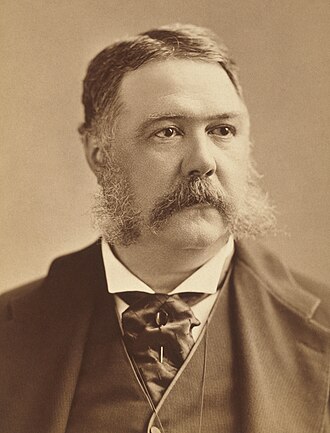
Signed by President Chester A. Arthur on October 13, 1883, this order reads: I. The President, having acceded to the request of General William T. Sherman to be relieved from the command of the Army on the 1st of November, 1883, preparatory to his retirement from active service, directs the following changes and assignments to command: General William T. Sherman will be relieved from the command of the Army on the above-mentioned date and will repair to his home, St. Louis, Mo., to await…
Constitutional Assessment: Scrutinized through Article II, Section 2, this action exercises the President's constitutional role as Commander in Chief. Early Framers recognized broad executive discretion in commanding military forces during conflict, provided it remains bounded by congressional declarations and respects civilian domestic courts.
Key Directives & Operative Actions
▪
I. The President, having acceded to the request of General William T. Sherman to be relieved from the command of the Army on the 1st of November, 1883, preparatory to his retirement from active service, directs the following changes and assignments to command: General William T. Sherman will be relieved from the command of the Army on the above-mentioned date and will repair to his home, St. Louis, Mo., to await his retirement.
▪
The General will be attended prior to his retirement by those of his aids-de-camp whom he may designate to the Adjutant-General.
▪
Lieutenant-General Philip H. Sheridan will proceed to Washington, and on the above-mentioned date assume command of the Army.
▪
Major-General John M. Schofield will proceed to Chicago, Ill., and will on the above-mentioned date assume command of the Military Division of the Missouri.
Constitutional & Societal Entities Impacted
🏛️ Armed Forces & Military Establishments
🏛️ Merchants, Importers & Commercial Enterprises
🏛️ Sovereign State Governments & Localities
🏛️ Executive Departments & Federal Civil Servants
🏛️ Private Citizens & Property Owners
Policy Areas & Topics
🏛️
The Framers' Constitutional Council
1787 PrismEvaluating this order against the constitutional debates of 1787 and the limits of Article II executive power.
⚖️✨ Zone 2 (Zone of Twilight)
§
"When the President acts in absence of either a congressional grant or denial of authority, he can only rely upon his own independent powers, but there is a zone of twilight in which he and Congress may have concurrent authority."
— Justice Robert H. Jackson, Youngstown Sheet & Tube Co. v. Sawyer (1952) Concurrent Authority / Congressional Silence
JM
James Madison
Separation of Powers & Legislative Primacy
"Power is of an encroaching nature, and it ought to be effectually restrained from passing the limits assigned to it." — Federalist No. 48 (1788)
Madison would view this order with watchful scrutiny. Operating in the 'Zone of Twilight' where Congress is silent, each such directive establishes an administrative precedent that steadily expands the executive perimeter at the expense of legislative primacy.
Madisonian Stance: Vigilant / Cautionary
AH
Alexander Hamilton
The Energetic Executive & Unified Command
"The direction of war implies the direction of the common strength; and the power of directing and employing the common strength must be under the direction of the single hand of the Executive." — Federalist No. 74 (1788)
Hamilton would forcefully champion executive discretion here. For foreign entanglements, commerce defense, and national security, deliberative assemblies are too slow and faction-ridden. A unified, energetic Executive exercising swift command is precisely what the Philadelphia Convention intended for national preservation.
Hamiltonian Stance: Strong Prerogative Support
GM
George Mason
Bill of Rights, Due Process & 10th Amendment
"The president will be surrounded by flatterers and sycophants... and the great powers of the executive will gradually absorb the liberties of the people." — Cato IV (Anti-Federalist, 1787)
The Anti-Federalist prism advises continuous democratic vigilance. Even routine administrative directives aggregate centralized federal power away from town halls and state assemblies toward a distant executive apparatus.
Anti-Federalist Stance: Eternal Vigilance Required
📐
Five Measurable "Constitutional Friction" Dimensions
An objective audit measuring potential separation-of-powers tension against the United States Constitution and established Supreme Court doctrine.
⚖️ Discretionary Twilight Zone
53 / 100 friction index
Dimension 1 • Art. I, §1 & §8
Moderate Friction
Legislative Encroachment & Purse
Administers commerce or fiscal programs requiring ongoing statutory delegation and legislative oversight.
Benchmark: Power of the purse, taxes/tariffs, and rule of law reserved to Congress.
Dimension 2 • Art. II, §1 & §3
Moderate Friction
Executive Scope & Faithfulness
Directs internal executive branch machinery, agency workflows, and federal personnel.
Benchmark: Faithfully execute laws enacted by Congress vs. unilateral decree.
Dimension 3 • 10th Amendment
High Friction
Federalism & State Sovereignty
Creates friction with the Tenth Amendment by conditioning state grants, mandating local compliance, or preempting state police powers.
Benchmark: Police powers and un-delegated responsibilities reserved to the States.
Dimension 4 • 5th & 14th Amendments
Moderate Friction
Due Process & Individual Rights
Applies regulatory or compliance standards to private contractors or commercial entities.
Benchmark: Protection of private property, contracts, liberty, and procedural justice.
Dimension 5 • Separation of Powers
Moderate Friction
Youngstown Jacksonian Tier
The order relies on inherent Article II executive discretion, civil service management, or foreign diplomacy where Congress has neither expressly approved nor prohibited action.
Benchmark: Concurrent Authority / Congressional Silence
⚖️
Audit Synthesis
This order operates within Justice Jackson’s Zone of Twilight, resting upon concurrent presidential authority or congressional silence.
Weighted composite: Art. I (25%), Art. II (25%), Federalism (15%), Due Process (15%), Youngstown (20%).
ℹ️
How to read these dimensions: Executive power expands whenever an administration acts without explicit statutory authorization from Congress (Article I), touches upon police powers historically reserved to the states (Tenth Amendment), or limits private rights and property without judicial process. A low friction score indicates strict concordance with enacted law; a high friction score highlights orders testing the limits of presidential discretion.
Total Words
1,784
11,007 characters
Estimated Read Time
9 min
@ 200 words / min
Flesch-Kincaid
17.8
Post-Graduate Legal
Text size:
Related Executive Orders
Other executive actions signed by Chester A. Arthur around this period.
Order
Nov 15, 1883
⚖️✨ Zone 2 (Zone of Twilight) Constitutional Neutral
Executive Order—Pima and Maricopa Indian Reserve
📜 Art. II §1: Executive Discretion & Internal Operations
The tract of country in the Territory of Arizona embraced within the following-described boundaries, which covers and adds to the present reservation as set apart by act of Congress approved February 28, 1859 (11 Stats., 401), and Executive orders dated August 31, 1876, June…
 Chester A. Arthur
Post-Graduate Legal • 3m
Order
Dec 5, 1883
⚖️✨ Zone 2 (Zone of Twilight) Constitutional Neutral
Executive Order
📜 Art. II §2: Commander-in-Chief Supervisory Authority
In the exercise of the power vested in the President by the Constitution, and by virtue of the seventeen hundred and fifty-third section of the Revised Statutes and of the civil-service act approved January 16, 1883, the following rule for the regulation and improvement of the…
Chester A. Arthur Post-Graduate Legal • 1m
Order
Aug 15, 1883
⚖️✨ Zone 2 (Zone of Twilight) Constitutional Neutral
Executive Order—Iowa Reserve Boundary
📜 Art. II §1: Executive Discretion & Internal Operations
The following-described tract of country in the Indian Territory, viz: Commencing at the point where the Deep Fork of the Canadian River intersects the west boundary of the Sac and Fox Reservation; thence north along said west boundary to the south bank of the Cimarron River…
Chester A. Arthur Post-Graduate Legal • 1m
Order
Dec 17, 1883
⚖️✨ Zone 2 (Zone of Twilight) Constitutional Neutral
Executive Order
📜 Art. II §2: Commander-in-Chief Supervisory Authority
The following-named officers of the Army and Navy will constitute a board to consider an expedition to be sent for the relief of Lieutenant Greely and his party, composing what is known as the "Lady Franklin Bay Expedition," and to recommend to the Secretaries of War and the…
Chester A. Arthur High School • 1m
Order
Jan 9, 1884
⚖️✨ Zone 2 (Zone of Twilight) Constitutional Neutral
Executive Order—Canceling Yuma Indian Reservation
📜 Art. II §2: Commander-in-Chief Supervisory Authority
The following-described tract of country in the State of California, except so much thereof as is embraced within the Fort Yuma military reservation, viz, beginning at a point in the channel of the Colorado River due east of the meander corner to sections 19 and 30, township 15…
Chester A. Arthur Post-Graduate Legal • 2m
Order
Jul 17, 1883
⚖️✨ Zone 2 (Zone of Twilight) Constitutional Neutral
Executive Order—Fort Reno Military Reserve
📜 Art. II §2: Commander-in-Chief Supervisory Authority
Washington City, July 17, 1883. To the PRESIDENT: SIR: Upon recommendation of the post commander, concurred in by the commanding general, Department of the Missouri, and the lieutenant-general, I have the honor to request that the following-described tract of land in the Indian…
Chester A. Arthur Post-Graduate Legal • 2m
📜
Scholarly & Legal Citations
Exec. Order (Oct. 13, 1883), https://executiveordersarchive.org/orders/app-executive-order-287.
