In the exercise of the power vested in the President by the Constitution, and by virtue of the seventeen hundred and fifty-third section of the Revised Statutes and of the civil-service act approved January 16, 1883, the following rules for the regulation and improvement of the executive civil service are hereby amended and promulgated, as follows: RULE V. There shall be three branches of the service classified under the civil-service act ( not including laborers or workmen or officers required to be confirmed by the Senate), as follows: 1. Those classified in the Departments at Washington shall be designated "The classified departmental service." 2. Those classified under any collector, naval officer, surveyor, or appraiser in any customs district shall be designated "The classified customs service." 3. Those classified under any postmaster at any post-office, including that at Washington, shall be designated "The classified postal service." 4. The classified customs service shall embrace the several customs districts where the officials are as many as fifty, now the following: New York City, N.Y.; Boston, Mass.; Philadelphia, Pa.; San Francisco, Cal.; Baltimore, Md.; New Orleans, La.; Chicago, Ill.; Burlington, Vt.; Portland, Me.; Detroit, Mich.; Port Huron, Mich. 5. The classified postal service shall embrace the several post-offices where the officials are as many as fifty, now the following: Albany, N.Y.; Baltimore, Md.; Boston, Mass.; Brooklyn, N.Y.; Buffalo, N.Y.; Chicago, Ill.; Cincinnati, Ohio; Cleveland, Ohio; Detroit, Mich.; Indianapolis, Ind.; Jersey City, N.J.; Kansas City, Mo.; Louisville, Ky.; Milwaukee, Wis.; Minneapolis, Minn.; Newark, N J.; New Orleans, La.; New York City, N.Y.; Philadelphia, Pa.; Pittsburg, Pa.; Providence, R. I.; Rochester, N.Y.; St. Louis, Mo.; St. Paul, Minn.; San Francisco, Cal.; Washington, D.C. RULE VII. 1. The general examinations under the first clause of Rule VI for admission to the service shall be limited to the following subjects: (I) Orthography, penmanship, and copying; (2) arithmetic--fundamental rules, fractions, and percentage; (3) interest, discount, and elements of bookkeeping and of accounts; (4) elements of the English language, letter writing, and the proper construction of sentences; (5) elements of the geography, history, and government of the United States. 2. Proficiency in any subject upon which an examination shall be held shall be credited in grading the standing of the persons examined in proportion to the value of a knowledge of such subject in the branch or part of the service which the applicant seeks to enter. 3. No one shall be entitled to be certified for appointment whose standing upon a just grading in the general examination shall be less than 65 per cent of complete proficiency in the first three subjects mentioned in this rule, and that measure of proficiency shall be deemed adequate. 4. For places in which a lower degree of education will suffice the Commission may limit the examinations to less than the five subjects above mentioned; but no person shall be certified for appointment under this clause whose grading shall be less than an average of 65 per cent on such of the first three subjects or parts thereof as the examination may embrace. 5. The Commission may also order examinations upon other subjects of a technical or special character to test the capacity which may be needed in any part of the classified service which requires peculiar information or skill. Examinations hereunder may be competitive or noncompetitive, and the maximum limitations of age contained in the twelfth rule shall not apply to applicants for the same. The application for and notice of these special examinations, the records thereof, and the certification of those found competent shall be such as the Commission may provide for. After consulting the head of any Department or office the Commission may from time to time designate, subject to the approval of the President, the positions therein for which applicants may be required to pass the special examination. RULE XI. 1. Every application, in order to entitle the applicant to appear for examination or to be examined, must state under oath the facts on the following subjects: (1) Full name, residence, and post-office address; (2) citizenship; (3) age; (4) place of birth; (5) health and physical capacity for the public service; (6) right of preference by reason of military or naval service; (7) previous employment in the public service; (8) business or employment and residence for the previous five years; (9) education. Such other information shall be furnished as the Commission may reasonably require touching the applicant's fitness for the public service. The applicant must also state the number of members of his family in the public service and where employed, and must also assert that he is not disqualified under section 8 of the civil-service act, which is as follows: "That no person habitually using intoxicating beverages to excess shall be appointed to or retained in any office, appointment, or employment to which the provisions of this act are applicable." No person dismissed from the public service for misconduct shall be admitted to examination within two years thereafter. 2. No person under enlistment in the Army, or Navy of the United States shall be examined under these rules except for some place in the Department under which he is enlisted requiring special qualifications, and with the consent in writing head of such Department. 3. The Commission may by regulations, subject to change at any time by the President, declare the kind and measure of ill health, physical incapacity, misrepresentation, and bad faith which may properly exclude any person from the right of examination, grading, or certification under these rules. It may also provide for medical certificates of physical capacity in the following eases, and for the appropriate certification of persons so defective in sight, speech, hearing, or otherwise as to be apparently disqualified for some of the duties of the part of the service which they seek to enter. RULE XVI. 1. Whenever any officer having the power of appointment or employment shall so request, there shall be certified to him by the Commission or the proper examining board four names for the vacancy specified, to be taken from those graded highest on the proper register of those in his branch of the service and remaining eligible, regard being had to any right of preference and to the apportionment of appointments to States and Territories; and from the said four a selection shall be made for the vacancy. But if a person is on both a general and special register he need be certified from the former only, at the discretion of the Commission, until he has remained two months upon the latter. 2. These certifications for the service at Washington shall be made in such order as to apportion, as nearly as may be practicable, the original appointments thereto among the States and Territories and the District of Columbia upon the basis of population as ascertained at the last preceding census. 3. In case the request for any such certification or any law or regulation shall call for those of either sex, persons of that sex shall be certified; otherwise sex shall be disregarded in such certification. 4. No person upon any register shall be certified more than four times to the same officer in the customs or postal service or more than twice to any Department at Washington, unless upon request of the appointing officer; nor shall anyone remain eligible more than one year upon any register; but these restrictions shall not extend to examinations under clause 5 of Rule VII. No person while remaining eligible on any register shall be admitted to a new examination, and no person having failed upon any examination shall within six months thereafter be admitted to another examination without the consent of the Commission. 5. Any person appointed to or employed in any part of the classified service, after due certification for the same under these rules, who shall be dismissed or separated therefrom without cause or delinquency on his part may be reappointed or reemployed in the same part or grade of such service at the same office, within eight months next following such dismissal or separation, without further examination. RULE XVII. 1 . Every original appointment or employment in said classified service shall be for the probationary period of six months, at the end of which time, if the conduct and capacity of the person appointed have been found satisfactory, the probationer shall be absolutely appointed or employed, but otherwise be deemed out of the service. 2. Every officer under whom any probationer shall serve during any part of the probation provided for by these rules shall carefully observe the quality and value of the service rendered by such probationer, and shall report to the proper appointing officer, in writing, the facts observed by him, showing the character and qualifications of such probationer and of the service performed by him; and such report shall be preserved on file. 3. Every false statement knowingly made by any person in his application for examination, and every connivance by him at any false statement made in any certificate which may accompany his application, and every deception or fraud practiced by him or by any person in his behalf and with his knowledge to influence his examination, certification, or appointment, shall be regarded as good cause for the removal or discharge of such person during his probation or thereafter. RULE XXI. 1. No person, unless excepted under Rule XIX, shall be admitted into the classified civil service from any place not within said service without an examination and certification under the rules; nor shall any person who has passed only a limited examination under clause 4 of Rule VII for the lower classes or grades in the departmental or customs service be appointed, or be promoted within two years after appointment, to any position giving a salary of $1,000 or upward without first passing an examination under clause I of said rule; and such examination shall not be allowed within the first year after appointment. 2. But a person who has passed the examination under said clause I and has accepted a position giving a salary of $900 or less shall have the same right of promotion as if originally appointed to a position giving a salary of $1 ,000 or more. 3. The Commission may at any time certify for a $900 or any lower place in the classified service any person upon the register who has passed the examination under clause I of Rule VII, if such person does not object before such certification is made. RULE XXII. Any person who has been in the classified departmental service for one year or more immediately previous may, when the needs of the service require it, be transferred or appointed to any other place therein upon producing a certificate from the Civil Service Commission that such person has passed at the required grade one or more examinations which are together equal to that necessary for original entrance to the place which would be secured by the transfer or appointment. RULE XXIII. The Civil Service Commission will make appropriate regulations for carrying these rules into effect. RULE XXIV. Every violation by any officer in the executive civil service of these rules, or of the eleventh, twelfth, thirteenth, or fourteenth sections of the civil-service act, relating to political assessments, shall be good cause for removal. Approved, December 5, 1884. CHESTER A. ARTHUR
Presidential Order
⚖️✨ Zone 2: Zone of Twilight Constitutional Neutral (+0.02)
📜 Art. II §2: Commander-in-Chief Supervisory Authority
Executive Order
Executive Brief • At a Glance
⏱️ 9 min read (1,898 words) •
● In Effect
🎯 Primary Mandate
In the exercise of the power vested in the President by the Constitution, and by virtue of the seventeen hundred and fifty-third section of the Revised Statutes and of the civil-service act approved January 16, 1883, the following rules for the regulation and improvement of the executive civil service are hereby amended and promulgated, as follows: RULE V. There shall be three branches of the service classified under the civil-service act ( not including laborers or workmen or officers required to be confirmed by the Senate), as follows: 1.
⚖️ Constitutional Footing
⚖️✨ Zone 2: Zone of Twilight
Concurrent Authority / Congressional Silence
📜 Art. II §2: Commander-in-Chief Supervisory Authority
🏛️ Scope & Affected Sectors
Armed Forces & Military Establishments Merchants, Importers & Commercial Enterprises Sovereign State Governments & Localities Executive Departments & Federal Civil Servants
Plain-English Translation & Framers' Constitutional Analysis
Early Statesman synthesis distilling legal jargon into practical meaning, statutory anchors, and structural constitutional impacts.
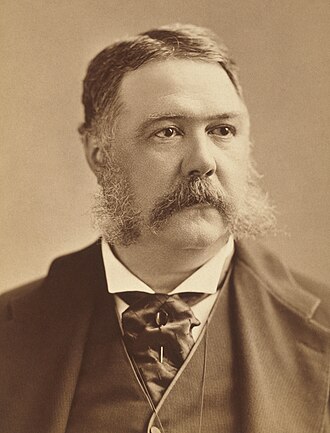
Signed by President Chester A. Arthur on December 5, 1884, this order reads: In the exercise of the power vested in the President by the Constitution, and by virtue of the seventeen hundred and fifty-third section of the Revised Statutes and of the civil-service act approved January 16, 1883, the following rules for the regulation and improvement of the executive civil service are hereby amended and promulgated, as follows: RULE V. There shall be three branches of the service classified…
Constitutional Assessment: Scrutinized through Article II, Section 2, this action exercises the President's constitutional role as Commander in Chief. Early Framers recognized broad executive discretion in commanding military forces during conflict, provided it remains bounded by congressional declarations and respects civilian domestic courts.
Key Directives & Operative Actions
▪
In the exercise of the power vested in the President by the Constitution, and by virtue of the seventeen hundred and fifty-third section of the Revised Statutes and of the civil-service act approved January 16, 1883, the following rules for the regulation and improvement of the executive civil service are hereby amended and promulgated, as follows: RULE V. There shall be three branches of the service classified under the civil-service act ( not including laborers or workmen or officers required to be confirmed by the Senate), as follows: 1.
▪
Those classified in the Departments at Washington shall be designated "The classified departmental service." 2.
▪
Those classified under any collector, naval officer, surveyor, or appraiser in any customs district shall be designated "The classified customs service." 3.
▪
Those classified under any postmaster at any post-office, including that at Washington, shall be designated "The classified postal service." 4.
Constitutional & Societal Entities Impacted
🏛️ Armed Forces & Military Establishments
🏛️ Merchants, Importers & Commercial Enterprises
🏛️ Sovereign State Governments & Localities
🏛️ Executive Departments & Federal Civil Servants
🏛️ Private Citizens & Property Owners
Policy Areas & Topics
🏛️
The Framers' Constitutional Council
1787 PrismEvaluating this order against the constitutional debates of 1787 and the limits of Article II executive power.
⚖️✨ Zone 2 (Zone of Twilight)
§
"When the President acts in absence of either a congressional grant or denial of authority, he can only rely upon his own independent powers, but there is a zone of twilight in which he and Congress may have concurrent authority."
— Justice Robert H. Jackson, Youngstown Sheet & Tube Co. v. Sawyer (1952) Concurrent Authority / Congressional Silence
JM
James Madison
Separation of Powers & Legislative Primacy
"Power is of an encroaching nature, and it ought to be effectually restrained from passing the limits assigned to it." — Federalist No. 48 (1788)
Madison would view this order with watchful scrutiny. Operating in the 'Zone of Twilight' where Congress is silent, each such directive establishes an administrative precedent that steadily expands the executive perimeter at the expense of legislative primacy.
Madisonian Stance: Vigilant / Cautionary
AH
Alexander Hamilton
The Energetic Executive & Unified Command
"The direction of war implies the direction of the common strength; and the power of directing and employing the common strength must be under the direction of the single hand of the Executive." — Federalist No. 74 (1788)
Hamilton would forcefully champion executive discretion here. For foreign entanglements, commerce defense, and national security, deliberative assemblies are too slow and faction-ridden. A unified, energetic Executive exercising swift command is precisely what the Philadelphia Convention intended for national preservation.
Hamiltonian Stance: Strong Prerogative Support
GM
George Mason
Bill of Rights, Due Process & 10th Amendment
"The president will be surrounded by flatterers and sycophants... and the great powers of the executive will gradually absorb the liberties of the people." — Cato IV (Anti-Federalist, 1787)
The Anti-Federalist prism advises continuous democratic vigilance. Even routine administrative directives aggregate centralized federal power away from town halls and state assemblies toward a distant executive apparatus.
Anti-Federalist Stance: Eternal Vigilance Required
📐
Five Measurable "Constitutional Friction" Dimensions
An objective audit measuring potential separation-of-powers tension against the United States Constitution and established Supreme Court doctrine.
⚖️ Discretionary Twilight Zone
55 / 100 friction index
Dimension 1 • Art. I, §1 & §8
High Friction
Legislative Encroachment & Purse
Touches upon core congressional prerogatives: raises appropriations reallocation, tariff imposition, or statutory preemption questions.
Benchmark: Power of the purse, taxes/tariffs, and rule of law reserved to Congress.
Dimension 2 • Art. II, §1 & §3
Moderate Friction
Executive Scope & Faithfulness
Directs internal executive branch machinery, agency workflows, and federal personnel.
Benchmark: Faithfully execute laws enacted by Congress vs. unilateral decree.
Dimension 3 • 10th Amendment
Moderate Friction
Federalism & State Sovereignty
Engages state and local partners in cooperative federalism programs.
Benchmark: Police powers and un-delegated responsibilities reserved to the States.
Dimension 4 • 5th & 14th Amendments
Moderate Friction
Due Process & Individual Rights
Applies regulatory or compliance standards to private contractors or commercial entities.
Benchmark: Protection of private property, contracts, liberty, and procedural justice.
Dimension 5 • Separation of Powers
Moderate Friction
Youngstown Jacksonian Tier
The order relies on inherent Article II executive discretion, civil service management, or foreign diplomacy where Congress has neither expressly approved nor prohibited action.
Benchmark: Concurrent Authority / Congressional Silence
⚖️
Audit Synthesis
This order operates within Justice Jackson’s Zone of Twilight, resting upon concurrent presidential authority or congressional silence.
Weighted composite: Art. I (25%), Art. II (25%), Federalism (15%), Due Process (15%), Youngstown (20%).
ℹ️
How to read these dimensions: Executive power expands whenever an administration acts without explicit statutory authorization from Congress (Article I), touches upon police powers historically reserved to the states (Tenth Amendment), or limits private rights and property without judicial process. A low friction score indicates strict concordance with enacted law; a high friction score highlights orders testing the limits of presidential discretion.
Total Words
1,898
11,685 characters
Estimated Read Time
9 min
@ 200 words / min
Flesch-Kincaid
19.2
Post-Graduate Legal
Text size:
Related Executive Orders
Other executive actions signed by Chester A. Arthur around this period.
Order
Nov 26, 1884
⚖️✨ Zone 2 (Zone of Twilight) Constitutional Neutral
Executive Order—Northern Cheyenne Reserve
📜 Art. II §1: Executive Discretion & Internal Operations
The following-described country, lying within the boundaries of the Territory of Montana, viz: Beginning at the point on the one hundred and seventh meridian of west longitude (said meridian being the eastern boundary of the Crow Indian Reservation) where the southern 40-mile…
 Chester A. Arthur
Post-Graduate Legal • 2m
Order
Nov 26, 1884
⚖️✨ Zone 2 (Zone of Twilight) Constitutional Neutral
Executive Order—Northern Cheyenne Reserve
📜 Art. II §1: Executive Discretion & Internal Operations
The following-described country, lying within the boundaries of the Territory of Montana, viz: Beginning at the point on the one hundred and seventh meridian of west longitude (said meridian being the eastern boundary of the Crow Indian Reservation) where the southern 40-mile…
Chester A. Arthur Post-Graduate Legal • 2m
Order
Nov 10, 1884
⚖️✨ Zone 2 (Zone of Twilight) Constitutional Neutral
Executive Order
📜 Art. II §3: Administrative Management & Civil Service
In the exercise of the power vested in the President by the Constitution, and by virtue of the seventeen hundred and fifty-third section of the Revised Statutes and of the civil-service act approved January 16, 1883, the following rule for the regulation and improvement of the…
Chester A. Arthur Post-Graduate Legal • 1m
Order
Jan 24, 1885
🏛️✅ Zone 1 (Maximum Authority) Constitutional Neutral
Executive Order
📜 Art. I §8: Delegated Tariff & Commerce Execution
In the exercise of the power vested in the President by the Constitution, and by virtue of the seventeen hundred and fifty-third section of the Revised Statutes and of the civil-service act approved January 16, 1883, the following rules for the regulation and improvement of the…
Chester A. Arthur Post-Graduate Legal • 5m
Order
Oct 4, 1884
⚖️✨ Zone 2 (Zone of Twilight) Constitutional Neutral
Executive Order—Defining Pueblo Industrial School Reserve Boundaries
📜 Art. II §1: Executive Discretion & Internal Operations
The, following-described tract of land in the county of Bernalillo and Territory of New Mexico, viz, all that certain piece, parcel, or tract of land situate, lying, and being in the county of Bernalillo and Territory of New Mexico, bounded on the north by lands of J. K. Basye…
Chester A. Arthur High School • 2m
Order
Feb 9, 1885
🏛️✅ Zone 1 (Maximum Authority) Constitutional Neutral
Executive Order—Returning Niobrara and Santee Sioux Land To Public Domain
📜 10th Amend: Intergovernmental Federalism Cooperation
All the lands within the Niobrara or Santee Sioux Indian Reservation, in the State of Nebraska, remaining unallotted to, and unselected by, the Indians of said reservation under the act of March 3, 1863, and the Sioux treaty of April 29, 1868, respectively, on the 15th day of…
Chester A. Arthur Post-Graduate Legal • 1m
📜
Scholarly & Legal Citations
Exec. Order (Dec. 5, 1884), https://executiveordersarchive.org/orders/app-executive-order-299.
