Early Statesman synthesis distilling legal jargon into practical meaning, statutory anchors, and structural constitutional impacts.
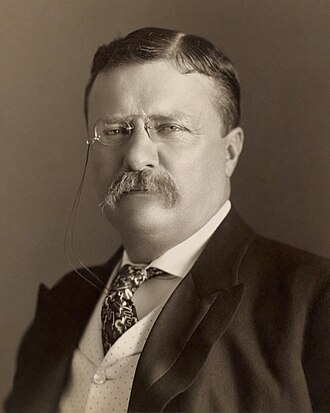
This executive order, signed by President Theodore Roosevelt on 1905-06-29, establishes federal administrative policy concerning "Executive Order." It is a direct, concise executive instruction delivering focused administrative or military commands to department leadership.
Constitutional Assessment: Reviewed under the Tenth Amendment and the principle of dual federalism, this order touches upon domains traditionally reserved to the sovereign States. The Framers would caution against any attempt to commandeer state officers or displace local police powers through federal executive fiat.
Key Directives & Operative Actions
▪Formal executive instruction issued by the President establishing official administrative policy on Executive Order.
Constitutional & Societal Entities Impacted
🏛️ Sovereign State Governments & Localities
🏛️ Executive Departments & Federal Civil Servants
Total Words
59
337 characters
Estimated Read Time
1 min
@ 200 words / min
Flesch-Kincaid
14.1
Post-Grad reading level
Constitutional Polarity
+0.02
Framers' Alignment index
📜
Scholarly & Legal Citations
Exec. Order, "Executive Order," Theodore Roosevelt (Jun 29, 1905). Available at https://executiveordersarchive.org/orders/app-executive-order-3.
Official Document Text
Source: The American Presidency Project (UCSB Archive)
Mrs. Edna K. Hoyt, who is temporarily employed as clerk in the Department of State, may be permanently appointed, without examination under the civil-service rules, with a salary at the rate of $1,200 per annum. (NOTE) Done at the request of Secretary Hay, who says she is now the best clerk of her class that he has. THEODORE ROOSEVELT.