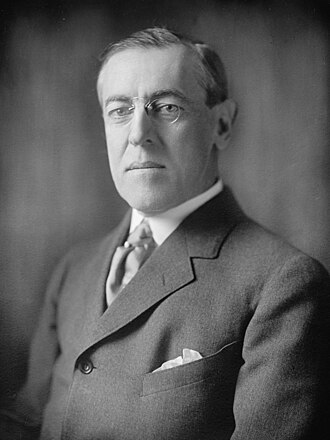
The White House, December 10, 1920. Under authority of Article of War No. 45, as amended by an Act of Congress approved June 4, 1920, the following maximum limits of punishments of soldiers are prescribed: Article I. Article II. Equivalents. Subjects to the limitations set forth elsewhere in this order, substitutions for punishments specified in Article I therefore are authorized at the discretion of the court at the rates indicated in the following table of equivalents: Forfeiture. Confinement at Hard Labor. Detention Hard labor without confinement. 1 day's pay. 1 day. ½ days' pay. 1½ days. Article III. General Limitations.
Section 1. #sec-1
A court shall not, by a single sentence which does not include dishonorable discharge, adjudge against a soldier: (a) Forfeiture of pay at a rate greater than two-thirds of his pay per month. (b) Forfeiture of pay in an amount greater than two-thirds of his pay for six months. (c) Confinement at hard labor for a period greater than, six months.
Section 2. #sec-2
A court shall not, by a single sentence, adjudge against a soldier: (a) Detention of pay at a rate greater than two-thirds of his pay per month. (b) Detention of pay in an amount greater than two-thirds of his pay for " three months. (c) Hard labor without confinement for a period greater than three months. Article IV. Noncommissioned Officers.
Section 1. #sec-1-2
No court shall adjudge confinement at hard labor or hard labor without confinement against a noncommissioned officer unless in the same sentence reduction to the grade of private shall also be adjudged.
Section 2. #sec-2-2
Upon the conviction'of a noncommissioned officer or a private first-class of an offense or offenses for which confinement at hard labor for a period of more than five days, authorized substitutions considered, may be adjudged, the court may, in addition to the punishments otherwise authorized adjudge reduction to the grade of private. Article V. Previous Convictions.
Section 1. #sec-1-3
A general or special court shall, upon conviction of the accused, be opened and shall thereupon ascertain whether there is evidence of a previous conviction or convictions, which has been referred to the court by the convening authority, and, if there be such evidence, shall receive it.
Section 2. #sec-2-3
A court may, under the authority contained in Section 1 of this article, receive evidence, in the cases of officers, warrant officers, members of the Army Nurse Corps, and field clerks, only of convictions by court-martial of an offense or offenses committed by the accused during his status as such officer, warrant officer, member of the Army Nurse Corps, or field clerk, and within three years next preceding the commission by him of an offense of which he stands convicted before the court In the cases of soldiers it will be limited to that pertaining to convictions by courts-martial of an offense or offenses committed during his current enlistment and within one year next preceding the commission by him of an offense of which he stands convicted before the court These convictions may be proved only by the records of the trials in which they were had, or by duly authenticated copies of such records, or by duly authenticated copies of orders promulgating such convictions. Article VI. Dishonorable Discharge.
Section 1. #sec-1-4
A court may, upon his conviction of an offense or offenses for none of which dishonorable discharge and forfeiture of all pay and allowances due and to become due is, in Article I of this order or by the custom of the service, authorized, upon proof of five or more previous convictions, adjudge against a soldier, in addition to the confinement at hard labor without substitution authorized in said article or by the custom of the service for the offense or offenses of which he is convicted, dishonorable discharge and forfeiture of all pay and allowances due and to become due, and, in any such case in which such confinement so authorized is less than three months, a court may adjudge, in addition to such discharge and forfeiture, confinement at hard labor for three months.
Section 2. #sec-2-4
A court may, upon his conviction upon one arraignment of two or more offenses for none of which dishonorable discharge, confinement at hard labor and forfeiture of all pay and allowances due and to become due is, in Article I of this order or by the custom of the service, authorized, but the aggregate term of confinement at hard labor for which, as' authorized in said article or by the custom of the service, without substitution, equals or exceeds six months, adjudge against a soldier, in addition to the confinement at hard labor, without substitution, authorized in said article or by the custom of the service for the offense or offenses of which he is convicted, dishonorable discharge and forfeiture of all pay and allowances due and to become due. Article VII. Effect and Application of this Order.
Section 1. #sec-1-5
This order prescribes the maximum limit of punishment for each of the offenses therein specified, and thus indicates an appropriate punishment for an offense which is attended by aggravating circumstances. Evidence of previous convictions admitted under Article V of this order may always be considered in determining the proper measure of punishment; but evidence of previous convictions of offenses materially less grave than the offense or offenses for which sentence is to be adjudged is not to be regarded as, in itself, justifying a sentence of maximum severity. In every case in which the prescribed or customary maximum penalty exceeds confinement at hard labor or forfeiture of pay for ten days and in which the offense is not attended by aggravating circumstances the punishment will be graded down according to the circumstances of the offense; and if, for any reason, the court-martial fails so to grade down the punishment it will be the duty of the reviewing authority to do so.
Section 2. #sec-2-5
Offenses not herein provided for remain punishable as authorized by statute or the custom of the service; but, in cases for which maximum punishments are not prescribed, courts will be guided by die limits of punishment prescribed for closely related offenses.
Section 3. #sec-3
Dishonorable discharge, in itself a severe punishment, should be adjudged and approved only when it is clear that the accused should be separated from the service or that he should be required to undergo a period of reformatory discipline before he can again be permitted to serve in an organization composed of honorable men. When the accused is relatively young and his record, except for the offense of which he stands convicted, is good, the reviewing authority should, in the exercise of his sound discretion, suspend the execution of the dishonorable discharge, to the end that the offender may have an opportunity to redeem himself in the military service; but he should not suspend the execution of the dishonorable discharge in any case of conviction of an offense involving that degree of moral turpitude which disqualifies for further military service.
Section 4. #sec-4
The reviewing authority should suspend the whole of a sentence when it appears to him that suck action will promote the discipline of his command. Article VIII. Administrative Rules.
Section 1. #sec-1-6
Hard labor without, confinement, when imposed as a punishment, shall be performed in addition to other duties which fall to the soldier, and no soldier shall be excused or relieved from any military duty for the purpose of performing hard labor without confinement which has been imposed as a punishment, but a sentence imposing such punishment shall be considered as satisfied when the soldier shall have performed hard labor during available time in addition to performing his military duties.
Section 2. #sec-2-6
Pay detained pursuant to the sentence of a court-martial will be detained by the Government until the soldier is discharged from the service, or mustered out of active Federal service. Article IX. Date on Which Operative. This order shall become operative on February 4, 1921, as to offenses committed on and after that date and as to criminal acts, committed prior to that date, whose maximum punishment was not prescribed in the executive order of December 15, 1916. The executive order of December 15, 1916, published in the Manual for Courts-Marshal, 1917, prescribing limits of punishment, shall remain operative as to offenses committed before February 4, 1921, except as to criminal acts whose maximum punishment has been decreased by this order, which will not be followed by severer punishment than is herein before prescribed. WOODROW WILSON.
