★
Executive Orders Historical Archive
Cite
Executive Order 3489 ⚖️✨ Zone 2: Zone of Twilight Constitutional Neutral (+0.02) 📜 5th Amend: Regulatory Execution with Due Process

Executive Order 3489—Alaskan Railroad Townsite Regulations

•
Friday, June 10, 1921
•
6 min read (1,128 words)

Executive Brief • At a Glance

⏱️ 6 min read (1,128 words) • ● In Effect
🎯 Primary Mandate

The administration of that portion of said act relating to the withdrawal, location and disposition of townsites shall be in accordance with the following regulations and provisions, to wit: RESERVATIONS.—The Alaskan Engineering Commission will file with the Secretary of the Interior, when deemed necessary, its recommendations for the reservation of such areas as in its opinion may be needed for townsite purposes.

⚖️ Constitutional Footing
⚖️✨ Zone 2: Zone of Twilight
Concurrent Authority / Congressional Silence
📜 5th Amend: Regulatory Execution with Due Process
🏛️ Scope & Affected Sectors
Executive Departments & Federal Civil Servants Private Citizens & Property Owners

Plain-English Translation & Framers' Constitutional Analysis

Early Statesman synthesis distilling legal jargon into practical meaning, statutory anchors, and structural constitutional impacts.

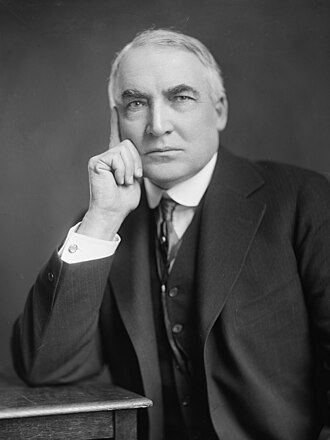
Signed by President Warren G. Harding on June 10, 1921, this order concerns Alaskan Railroad Townsite Regulations. The administration of that portion of said act relating to the withdrawal, location and disposition of townsites shall be in accordance with the following regulations and provisions, to wit: RESERVATIONS.—The Alaskan Engineering Commission will file with the Secretary of the Interior, when deemed necessary, its recommendations for the reservation of such areas as in its opinion may be needed for townsite purposes.

Constitutional Assessment: Evaluated against the Fifth Amendment, this action touches upon property or economic rights. An early statesman would insist upon strict adherence to due process of law and the constitutional guarantee that private holdings shall not be encumbered or taken for public purposes without just compensation and lawful process.

Key Directives & Operative Actions

▪

The administration of that portion of said act relating to the withdrawal, location and disposition of townsites shall be in accordance with the following regulations and provisions, to wit: RESERVATIONS.—The Alaskan Engineering Commission will file with the Secretary of the Interior, when deemed necessary, its recommendations for the reservation of such areas as in its opinion may be needed for townsite purposes.

▪

If approved by the President, the reservation will be made by Executive Order, SURVEY.—When, in the opinion of the Secretary of the Interior the public interests require a survey of any such reservation, he shall cause to be set aside such portions thereof for railroad purposes as may be selected by the Alaskan Engineering Commission, and cause the remainder, or any part thereof, to be surveyed into urban or suburban blocks and lots of suitable size, and into reservations for parks, schools, and other public purposes and for Government use.

▪

The survey will be made under the supervision of the Commissioner of the General Land Office and the plats will be approved by him and by the chairman of the Alaskan Engineering Commission.

▪

PREFERENCE RIGHT.—Any person residing in a reserved townsite at the time of the subdivisional survey thereof in the field and owning and having valuable and permanent improvements thereon, may, in the discretion of the Secretary of the Interior, be granted a preference right of entry, of not exceeding two lots on which he may have such improvements by paying the appraised price fixed by the Superintendent of sale, under such regulations as the Secretary of the Interior may prescribe.

Constitutional & Societal Entities Impacted

🏛️ Executive Departments & Federal Civil Servants 🏛️ Private Citizens & Property Owners
🏛️

The Framers' Constitutional Council

1787 Prism

Evaluating this order against the constitutional debates of 1787 and the limits of Article II executive power.

⚖️✨ Zone 2 (Zone of Twilight)
§

"When the President acts in absence of either a congressional grant or denial of authority, he can only rely upon his own independent powers, but there is a zone of twilight in which he and Congress may have concurrent authority."

— Justice Robert H. Jackson, Youngstown Sheet & Tube Co. v. Sawyer (1952) Concurrent Authority / Congressional Silence
JM

James Madison

Separation of Powers & Legislative Primacy

"Power is of an encroaching nature, and it ought to be effectually restrained from passing the limits assigned to it." — Federalist No. 48 (1788)

Madison would view this order with watchful scrutiny. Operating in the 'Zone of Twilight' where Congress is silent, each such directive establishes an administrative precedent that steadily expands the executive perimeter at the expense of legislative primacy.

Madisonian Stance: Vigilant / Cautionary
AH

Alexander Hamilton

The Energetic Executive & Unified Command

"A feeble Executive implies a feeble execution of the government; and a government ill executed, whatever it may be in theory, must be, in practice, a bad government." — Federalist No. 70 (1788)

Hamilton would view this directive as the natural and indispensable functioning of administrative leadership. Without the power to coordinate agencies, manage personnel, and resolve operational ambiguities, the modern presidency would be reduced to an impotent figurehead.

Hamiltonian Stance: Defends Vigor & Dispatch
GM

George Mason

Bill of Rights, Due Process & 10th Amendment

"The purse and the sword ought never to be in the same hands... nor the liberties of the citizen placed at the pleasure of a single magistrate." — Virginia Ratifying Convention (1788)

George Mason and the Anti-Federalists would sound a fierce warning. They feared that Article II would inevitably evolve into an elective monarchy. When an executive order impacts private rights, property, or civil liberties without individualized judicial process, Mason would see their darkest predictions verified.

Anti-Federalist Stance: High Bill of Rights Scrutiny
📐

Five Measurable "Constitutional Friction" Dimensions

An objective audit measuring potential separation-of-powers tension against the United States Constitution and established Supreme Court doctrine.

⚖️ Discretionary Twilight Zone
38 / 100 friction index
Dimension 1 • Art. I, §1 & §8

Legislative Encroachment & Purse

Moderate Friction

Administers commerce or fiscal programs requiring ongoing statutory delegation and legislative oversight.

Benchmark: Power of the purse, taxes/tariffs, and rule of law reserved to Congress.
Dimension 2 • Art. II, §1 & §3

Executive Scope & Faithfulness

Low Friction

Exercises standard supervisory executive authority to faithfully execute existing statutes.

Benchmark: Faithfully execute laws enacted by Congress vs. unilateral decree.
Dimension 3 • 10th Amendment

Federalism & State Sovereignty

Moderate Friction

Engages state and local partners in cooperative federalism programs.

Benchmark: Police powers and un-delegated responsibilities reserved to the States.
Dimension 4 • 5th & 14th Amendments

Due Process & Individual Rights

Low Friction

Focuses on internal governmental operations with no direct impairment of private rights or property.

Benchmark: Protection of private property, contracts, liberty, and procedural justice.
Dimension 5 • Separation of Powers

Youngstown Jacksonian Tier

Moderate Friction

The order relies on inherent Article II executive discretion, civil service management, or foreign diplomacy where Congress has neither expressly approved nor prohibited action.

Benchmark: Concurrent Authority / Congressional Silence
⚖️ Audit Synthesis

This order operates within Justice Jackson’s Zone of Twilight, resting upon concurrent presidential authority or congressional silence.

Weighted composite: Art. I (25%), Art. II (25%), Federalism (15%), Due Process (15%), Youngstown (20%).
ℹ️
How to read these dimensions: Executive power expands whenever an administration acts without explicit statutory authorization from Congress (Article I), touches upon police powers historically reserved to the states (Tenth Amendment), or limits private rights and property without judicial process. A low friction score indicates strict concordance with enacted law; a high friction score highlights orders testing the limits of presidential discretion.
Total Words
1,128
6,780 characters
Estimated Read Time
6 min
@ 200 words / min
Flesch-Kincaid
18.5
Post-Graduate Legal
Language Tone Score
+0.02
Constitutional Neutral
How is this scored?
Text size:

Official Archival Text

View Source Document

Under and pursuant to the provisions of the act of Congress approved March 12, 1914 (38 Stat., 305), entitled "An act to authorize the President of the United States to locate, construct, and operate railroads in the Territory of Alaska, and for other purposes," it is hereby ordered that the administration of that portion of said act relating to the withdrawal, location and disposition of townsites shall be in accordance with the following regulations and provisions, to wit: RESERVATIONS.—The Alaskan Engineering Commission will file with the Secretary of the Interior, when deemed necessary, its recommendations for the reservation of such areas as in its opinion may be needed for townsite purposes. The Secretary of the Interior will thereupon transmit such recommendations to the President with his objections thereto or concurrence therewith. If approved by the President, the reservation will be made by Executive Order, SURVEY.—When, in the opinion of the Secretary of the Interior the public interests require a survey of any such reservation, he shall cause to be set aside such portions thereof for railroad purposes as may be selected by the Alaskan Engineering Commission, and cause the remainder, or any part thereof, to be surveyed into urban or suburban blocks and lots of suitable size, and into reservations for parks, schools, and other public purposes and for Government use. Highways should be laid out, where practicable, along all shore lines, and sufficient land for docks and wharf purposes along such shore lines should be reserved in such places as there is any apparent necessity therefor. The survey will be made under the supervision of the Commissioner of the General Land Office and the plats will be approved by him and by the chairman of the Alaskan Engineering Commission. PREFERENCE RIGHT.—Any person residing in a reserved townsite at the time of the subdivisional survey thereof in the field and owning and having valuable and permanent improvements thereon, may, in the discretion of the Secretary of the Interior, be granted a preference right of entry, of not exceeding two lots on which he may have such improvements by paying the appraised price fixed by the Superintendent of sale, under such regulations as the Secretary of the Interior may prescribe. Preference right proof and entry, when granted, must be made prior to the date of the public sale. PUBLIC SALE.—The unreserved and unsold lots will be offered at public outcry to the highest bidder at such time and place, and after such publication of notice, if any, as the Secretary of the Interior may direct, and he may appoint or detail some suitable person as superintendent of sale to supervise the same and may fix his compensation and require him to give sufficient bond. SUPERINTENDENT'S AUTHORITY.—Under the supervision of the Secretary of the Interior, the superintendent of the sale will be, and he is hereby, authorized to make all appraisements of lots and at any time to reappraise any lot which in his judgment is not appraised at the proper amount, or to fix a minimum price for any lot below which it may not be sold, and he may adjourn, or postpone the sale of any lots to such time and place as he may deem proper. MANNER AND TERMS OF PUBLIC SALE.—The Secretary of the Interior shall by regulations prescribe the manner of conducting the public sale, the terms thereof and forms therefor and he may prescribe what failures in payment will subject the bidder or purchaser to a forfeiture of his bid or right to the lot claimed and money paid thereon. The Superintendent of Sale will at the completion of the public sale deposit with the receiver of the proper local land office the money received and file with its officers the papers deposited with him by said bidder, together with his certificate as to successful bidder. If it be deemed advisable, the Commissioner, of the General Land Office may direct the receiver of public moneys of the proper district to attend sales herein provided for in, which event the cash payment required shall be paid to the said receiver. ANCHORAGE, MATANUSKA, AND NENANA TOWNSITES.—Unsold and forfeited lands in the townsites of Anchorage, Matanuska, and Nenana, upon which assessments for the improvements of streets, sidewalks, alleys, and for promotion of sanitation and fire protection have been levied by the Alaskan Engineering Commission and the assessments or any portion thereof remain unpaid shall be subject to such unpaid assessments and the purchaser shall pay the same in the manner the Secretary of the Interior may by regulations provide, and the proceeds of such assessments will be deposited with the Alaskan Engineering Commission, as a reimbursement to the operating expense fund as provided in section 3 of the Act of March 12, 1914 (38 Stat., 305). See 22 Comp. Dec. 604. Hereafter no such assessments by said Commission will be levied. In cases where one of a number of joint purchasers of a lot has made or may hereafter make all payments of his pro rata share of the purchase price and assessments on the lot, such lot may, in the event of forfeiture being declared, and in the discretion of the Secretary of the Interior, be re-subdivided and a preference right of purchase given to the person who has made all payments on his portion thereof, such preference right to be confined to the portion of the original lot held and claimed by such person. This privilege may be extended to a transferee of an original purchase. Final certificate may issue in these townsites in all cases, when the purchase price and assessments are paid in full without regard to date of purchase. COMMISSION BUILDINGS ON LOTS.—Buildings belonging to the Alaskan Engineering Commission situated on a lot in any townsite may be appraised and sold separate and apart from the lot on which located, under regulations provided by the Secretary of the Interior for the same and for the removal of the buildings. The proceeds for the sale of such buildings shall be paid to the Alaskan Engineering Commission as a reimbursement to its operating account. PRIVATE ENTRY.—Lots offered at public sale and not sold and lots offered and declared forfeited in a townsite may, in the discretion of the Secretary of the Interior, be sold at private entry for the appraised price. ORDERS REVOKED.—All Executive Orders heretofore issued for the disposition of townsites along the Government railroads in Alaska are hereby revoked so far as they conflict with the foregoing provisions. This order is intended to take the place of all other orders making provisions for the sale and disposal of lots in said townsites along Government railroads in Alaska under the provisions of said act. WARREN G. HARDING

THE WHITE HOUSE, #signature

June 10, 1921.

🔗

Referenced By Later Executive Orders (1)

Subsequent presidents who cited, amended, continued, or revoked this directive in later orders.

📜

Scholarly & Legal Citations

Exec. Order No. 3489 (June 10, 1921), https://executiveordersarchive.org/orders/app-executive-order-3489-alaskan-railroad-townsite-regulations.