The Advisory Board of the civil service, having completed the grouping contemplated by the rules already adopted, have recommended certain provisions for carrying the rules into effect. The recommendations as herewith published are approved, and the provisions will be enforced as rapidly as the proper arrangements can be made; and the thirteenth of the rules adopted on the 19th day of December last is amended to read as published herewith. The utmost fidelity and diligence will be expected of all officers in every branch of the public service. Political assessments, as they are called, have been forbidden within the various Departments; and while the right of all persons in official position to take part in politics is acknowledged, and the elective franchise is recognized as a high trust to be discharged by all entitled to its exercise, whether in the employment of the Government or in private life, honesty and efficiency, not political activity, will determine the tenure of office. U.S. GRANT. By the President HAMILTON FISH, Secretary of State. (Rule 13, as amended.) 13. From these rules are excepted the heads of Departments, Assistant Secretaries of Departments, Assistant Attorneys-General, Assistant Postmasters-General, Solicitor-General, Solicitor of the Treasury, Naval Solicitor, Solicitor of Internal Revenue, examiner of claims in the State Department, Treasurer of the United States, Register of the Treasury, First and Second Comptrollers of the Treasury, other heads of bureaus in the several Departments, judges of the United States courts, district attorneys, private secretary of the President, ambassadors and other public ministers, Superintendent of the Coast Survey, Director of the Mint, governors of Territories, special commissioners, special counsel, visiting and examining boards, persons appointed to positions without compensation for services, dispatch agents, and bearers of dispatches. REGULATIONS AND CLASSIFICATION 1. No person will be appointed to any position in the civil service who shall not have furnished satisfactory evidence of his fidelity to the Union and the Constitution of the United States. 2. The evidence in regard to character, health, age, and knowledge of the English language required by the first rule shall be furnished in writing, and if such evidence shall be satisfactory to the head of the Department in which the appointment is to be made the applicant shall be notified when and where to appear for examination; but when the applicants are so numerous that the examination of all whose preliminary papers are satisfactory is plainly impracticable, the head of the Department shall select for examination a practicable number of those who are apparently best qualified. 3. Examinations to fill vacancies in any of the Executive Departments in Washington shall be held not only at the city of Washington, but also, when directed by the head of the Department in which the vacancy may exist, in the several States, either at the capital or other convenient place. 4. The appointment of persons to be employed exclusively in the secret service of the Government, also of persons to be employed as translators, stenographers, or private secretaries, or to be designated for secret service, to fill vacancies in clerkships in either of the Executive Departments at Washington, may be excepted from the operation of the rules. 5. When a vacancy occurs in a consular office of which the lawful annual compensation is $3,000 or more, it will be filled, at the discretion of the President, either by the transfer of some person already in the service or by a new appointment, which may be excepted from the operation of the rules. But if the vacancy occur in an office of which the lawful annual compensation, by salary or by fees ascertained by the last official returns, is more than $1,000 and less than $3,000, and it is not filled by transfer, applications will be addressed to the Secretary of State, inclosing proper certificates of character, responsibility, and capacity, and the Secretary will notify the applicant who upon investigation appears to be most suitable and competent to attend for examination; and if he shall be found qualified he will be nominated for confirmation, but if not found qualified, or if his nomination be not confirmed by the Senate, the Secretary will proceed in like manner with the other applicants who appear to him to be qualified. If, however, no applicants under this regulation shall be found suitable and qualified, the vacancy will be filled at discretion. The appointment of commercial agents and of consuls whose annual compensation is $1,000 or less (if derived from fees, the amount to be ascertained by the last official returns), of vice-consuls, deputy consuls, and of consular agents and other officers who are appointed upon the nomination of the principal officer, and for whom he is responsible upon his official bond, may be, until otherwise ordered, excepted from the operation of the rules. 6. When a vacancy occurs in the office of collector of the customs, naval officer, appraiser, or surveyor of the customs in the customs districts of New York, Boston and Charlestown, Baltimore, San Francisco, New Orleans, Philadelphia, Vermont (Burlington), Oswego, Niagara, Buffalo Creek, Champlain, Portland and Falmouth, Corpus Christi, Oswegatchie, Mobile, Brazos de Santiago (Brownsville), Texas (Galveston, etc. ), Savannah, Charleston, Chicago, or Detroit, the Secretary of the Treasury shall ascertain if any of the subordinates in the customs districts in which such vacancy occurs are suitable persons qualified to discharge efficiently the duties of the office to be filled; and if such persons be found he shall certify to the President the name or names of those subordinates, not exceeding three, who in his judgment are best qualified for the position, from which the President will make the nomination to fill the vacancy; but if no such subordinate be found qualified, or if the nomination be not confirmed, the nomination will be made at the discretion of the President. Vacancies occurring in such positions in the customs service in the said districts as are included in the subjoined classification will be filled in accordance with the rules. Appointments to all other positions in the customs service in said districts may be, until otherwise ordered, excepted from the operation of the rules. 7. When a vacancy occurs in the office of collector, appraiser, surveyor, or other chief officer in any customs district not specified in the preceding regulation, applications in writing from any subordinate or subordinates in the customs service of the district, or from other person or persons residing within the said district, may be addressed to the Secretary of the Treasury, inclosing proper certificates of character, responsibility, and capacity; and if any of the subordinates so applying shall be found suitable and qualified, the name or names, not exceeding three, of the best qualified shall be certified by the board of examiners to the Secretary, and from this list the nomination or appointment will be made; but if no such subordinate be found qualified, the said board shall certify to the Secretary the name or names, not exceeding three, of the best qualified among the other applicants, and from this list the nomination or appointment will be made. If, however, no applicants under this regulation shall be found suitable and qualified, the vacancy will be filled at discretion. Appointments to all other positions in the customs service in said districts may be, until otherwise ordered, excepted from the operation of the rules. 8. When a vacancy occurs in the office of postmaster in cities having, according to the census of 1870, a population of 20,000 or more, the Postmaster-General shall ascertain if any of the subordinates in such office are suitable persons qualified to discharge efficiently the duties of postmaster, and if such are found he shall certify to the President the name or names of those subordinates, not exceeding three in number, who in his judgment are best qualified for the position, from which list the President will make the nomination to fill the vacancy; but if no such subordinate be found so qualified, or if the nomination be not confirmed by the Senate, the nomination will be made at the discretion of the President. Vacancies occurring in such positions in the said post-office as are included in the subjoined classification will be filled in accordance with the rules. Appointments to all other positions in the said post-offices may be, until otherwise ordered, excepted from the operation of the rules. 9. When a vacancy occurs in the office of postmaster of a class not otherwise provided for, applications for the position from any subordinate or subordinates in the office, or from other persons residing within the delivery of the office, may be addressed to the Postmaster-General, inclosing proper certificates of character, responsibility, and capacity; and if any of the subordinates so applying shall be found suitable and qualified, the name or names of the best qualified, not exceeding three, shall be certified by the board of examiners to the Postmaster-General, and from them the nomination or appointment shall be made; but if no subordinate be found qualified, the said board shall certify to the Postmaster-General the name or names, not exceeding three, of the best qualified among the other applicants, and from them the nomination or appointment shall be made. If, however, no applicants under this regulation shall be found suitable and qualified, the vacancy will be filled at discretion. Appointments to all other positions in the said post-offices may be, until otherwise ordered, excepted from the operation of the rules. 10. Special agents of the Post-Office Department shall be appointed by the Postmaster-General at discretion from persons already in the postal service, and who shall have served therein for a period of not less than one year immediately preceding the appointment; but if no person within the service shall, in the judgment of the Postmaster-General, be suitable and qualified, the appointment shall be made from all applicants under the rules. 11. Mail-route messengers shall be appointed in the manner provided for the appointment of postmasters whose annual salary is less than $200. 12. When a vacancy occurs in the office of register or receiver of the land office, or of pension agent, applications in writing from residents in the district in which the vacancy occurs may be addressed to the Secretary of the Interior, inclosing proper certificates of character, responsibility, and capacity; and if any of the applicants shall be found suitable and qualified, the name or names, not exceeding three, of the best qualified shall be certified by the board of examiners to the Secretary, and from this list the nomination will be made. If, however, no applicants under this regulation shall be found suitable and qualified, the nomination will be made at discretion. 13. When a vacancy occurs in the office of United States marshal, applications in writing from residents in the district in which the vacancy occurs may be addressed to the Attorney-General of the United States, inclosing proper certificates of character, responsibility, and capacity; and if any of the applicants shall be found suitable and qualified, the name or names, not exceeding three, of the best qualified shall be certified by the board of examiners to the Attorney-General, and from this list the nomination will be made. If, however, no applicants under this regulation shall be found suitable and qualified, the nomination will be made at discretion. 14. Appointments to fill vacancies occurring in offices in the several Territories, excepting those of judges of the United States courts, Indian agents, and superintendents, will be made from suitable and qualified persons domiciled in the Territory in which the vacancy occurs, if any such are found. 15. It shall be the duty of the examining board in each of the Departments to report to the Advisory Board such modifications in the rules and regulations as in the judgment of such examining board are required for appointments to certain positions to which, by reason of distance, or of difficult access, or of other sufficient cause, the rules and regulations can not be applied with advantage; and if the reason for such modifications shall be satisfactory to the Advisory Board, said board will recommend them for approval. 16. Nothing in these rules and regulations shall prevent the reappointment at discretion of the incumbents of any office the term of which is fixed by law, and when such reappointment is made no vacancy within the meaning of the rules shall be deemed to have occurred. 17. Appointments to all positions in the civil service not included in the subjoined classification, nor otherwise specially provided for by the rules and regulations, may, until otherwise ordered, be excepted from the operation of the rules.
Presidential Order
🏛️✅ Zone 1: Maximum Authority Constitutional Neutral (+0.02)
📜 Art. I §8: Delegated Tariff & Commerce Execution
Executive Order
Executive Brief • At a Glance
⏱️ 11 min read (2,103 words) •
● In Effect
🎯 Primary Mandate
The recommendations as herewith published are approved, and the provisions will be enforced as rapidly as the proper arrangements can be made; and the thirteenth of the rules adopted on the 19th day of December last is amended to read as published herewith.
⚖️ Constitutional Footing
🏛️✅ Zone 1: Maximum Authority
Express or Implied Congressional Authorization
📜 Art. I §8: Delegated Tariff & Commerce Execution
🏛️ Scope & Affected Sectors
Merchants, Importers & Commercial Enterprises Sovereign State Governments & Localities Executive Departments & Federal Civil Servants Private Citizens & Property Owners
Plain-English Translation & Framers' Constitutional Analysis
Early Statesman synthesis distilling legal jargon into practical meaning, statutory anchors, and structural constitutional impacts.
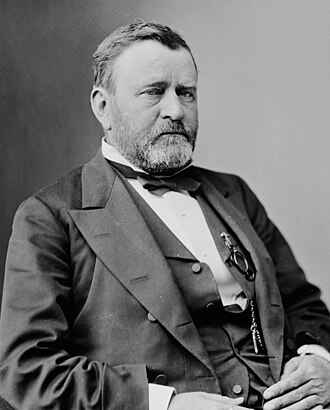
Signed by President Ulysses S. Grant on April 16, 1872, this order reads: The Advisory Board of the civil service, having completed the grouping contemplated by the rules already adopted, have recommended certain provisions for carrying the rules into effect. The recommendations as herewith published are approved, and the provisions will be enforced as rapidly as the proper arrangements can be made; and the thirteenth of the rules adopted on the 19th day of December last is amended to…
Constitutional Assessment: This action represents an orderly exercise of Article II administrative discretion, managing the internal machinery and personnel of the executive branch without abridging the ancient liberties of the people.
Key Directives & Operative Actions
▪
The recommendations as herewith published are approved, and the provisions will be enforced as rapidly as the proper arrangements can be made; and the thirteenth of the rules adopted on the 19th day of December last is amended to read as published herewith.
▪
From these rules are excepted the heads of Departments, Assistant Secretaries of Departments, Assistant Attorneys-General, Assistant Postmasters-General, Solicitor-General, Solicitor of the Treasury, Naval Solicitor, Solicitor of Internal Revenue, examiner of claims in the State Department, Treasurer of the United States, Register of the Treasury, First and Second Comptrollers of the Treasury, other heads of bureaus in the several Departments, judges of the United States courts, district attorneys, private secretary of the President, ambassadors and other public ministers, Superintendent of the Coast Survey, Director of the Mint, governors of Territories, special commissioners, special counsel, visiting and examining boards, persons…
▪
No person will be appointed to any position in the civil service who shall not have furnished satisfactory evidence of his fidelity to the Union and the Constitution of the United States. 2.
▪
The evidence in regard to character, health, age, and knowledge of the English language required by the first rule shall be furnished in writing, and if such evidence shall be satisfactory to the head of the Department in which the appointment is to be made the applicant shall be notified when and where to appear for examination; but when the applicants are so numerous that the examination of all whose preliminary papers are satisfactory is plainly impracticable, the head of the Department shall select for examination a practicable number of those who are apparently best qualified. 3.
Constitutional & Societal Entities Impacted
🏛️ Merchants, Importers & Commercial Enterprises
🏛️ Sovereign State Governments & Localities
🏛️ Executive Departments & Federal Civil Servants
🏛️ Private Citizens & Property Owners
🏛️ Financial Institutions & Monetary Authorities
Policy Areas & Topics
🏛️
The Framers' Constitutional Council
1787 PrismEvaluating this order against the constitutional debates of 1787 and the limits of Article II executive power.
🏛️✅ Zone 1 (Maximum Authority)
§
"When the President acts pursuant to an express or implied authorization of Congress, his authority is at its maximum, for it includes all that he possesses in his own right plus all that Congress can delegate."
— Justice Robert H. Jackson, Youngstown Sheet & Tube Co. v. Sawyer (1952) Express or Implied Congressional Authorization
JM
James Madison
Separation of Powers & Legislative Primacy
"The constitutional magistracy was designed not to invent policy, but to be the faithful instrument of the laws passed by the people's representatives." — Speech in the First Congress (1789)
Madison would approve the structural posture of this order. The President acts strictly in subordination to statutory authority granted under Article II, Section 3 ("take Care that the Laws be faithfully executed"). The checks and balances hold firm because the policy origin remains with the legislature.
Madisonian Stance: Concurring (Statutory)
AH
Alexander Hamilton
The Energetic Executive & Unified Command
"The direction of war implies the direction of the common strength; and the power of directing and employing the common strength must be under the direction of the single hand of the Executive." — Federalist No. 74 (1788)
Hamilton would forcefully champion executive discretion here. For foreign entanglements, commerce defense, and national security, deliberative assemblies are too slow and faction-ridden. A unified, energetic Executive exercising swift command is precisely what the Philadelphia Convention intended for national preservation.
Hamiltonian Stance: Supportive of Execution
GM
George Mason
Bill of Rights, Due Process & 10th Amendment
"The president will be surrounded by flatterers and sycophants... and the great powers of the executive will gradually absorb the liberties of the people." — Cato IV (Anti-Federalist, 1787)
The Anti-Federalist prism advises continuous democratic vigilance. Even routine administrative directives aggregate centralized federal power away from town halls and state assemblies toward a distant executive apparatus.
Anti-Federalist Stance: Eternal Vigilance Required
📐
Five Measurable "Constitutional Friction" Dimensions
An objective audit measuring potential separation-of-powers tension against the United States Constitution and established Supreme Court doctrine.
⚖️ Discretionary Twilight Zone
43 / 100 friction index
Dimension 1 • Art. I, §1 & §8
Moderate Friction
Legislative Encroachment & Purse
Administers commerce or fiscal programs requiring ongoing statutory delegation and legislative oversight.
Benchmark: Power of the purse, taxes/tariffs, and rule of law reserved to Congress.
Dimension 2 • Art. II, §1 & §3
Moderate Friction
Executive Scope & Faithfulness
Directs internal executive branch machinery, agency workflows, and federal personnel.
Benchmark: Faithfully execute laws enacted by Congress vs. unilateral decree.
Dimension 3 • 10th Amendment
High Friction
Federalism & State Sovereignty
Creates friction with the Tenth Amendment by conditioning state grants, mandating local compliance, or preempting state police powers.
Benchmark: Police powers and un-delegated responsibilities reserved to the States.
Dimension 4 • 5th & 14th Amendments
Low Friction
Due Process & Individual Rights
Focuses on internal governmental operations with no direct impairment of private rights or property.
Benchmark: Protection of private property, contracts, liberty, and procedural justice.
Dimension 5 • Separation of Powers
Low Friction
Youngstown Jacksonian Tier
The President operates strictly as the constitutional Chief Executive, carrying out policy established by Congress with strong statutory backing.
Benchmark: Express or Implied Congressional Authorization
⚖️
Audit Synthesis
This order operates within Justice Jackson’s Zone of Twilight, resting upon concurrent presidential authority or congressional silence.
Weighted composite: Art. I (25%), Art. II (25%), Federalism (15%), Due Process (15%), Youngstown (20%).
ℹ️
How to read these dimensions: Executive power expands whenever an administration acts without explicit statutory authorization from Congress (Article I), touches upon police powers historically reserved to the states (Tenth Amendment), or limits private rights and property without judicial process. A low friction score indicates strict concordance with enacted law; a high friction score highlights orders testing the limits of presidential discretion.
Total Words
2,103
13,136 characters
Estimated Read Time
11 min
@ 200 words / min
Flesch-Kincaid
25.7
Post-Graduate Legal
Text size:
Related Executive Orders
Other executive actions signed by Ulysses S. Grant around this period.
Order
May 27, 1872
⚖️✨ Zone 2 (Zone of Twilight) Constitutional Neutral
Executive Order
📜 Art. II §2: Commander-in-Chief Supervisory Authority
Sir:* The President directs me to say that the several Departments of the Government will be closed on the 30th instant, in order to enable the employees of the Government to participate, in connection with the Grand Army of the Republic, in the decoration of the graves of the…
 Ulysses S. Grant
College Level • 1m
Order
Sep 12, 1872
⚖️✨ Zone 2 (Zone of Twilight) Constitutional Neutral
Executive Order—Approving Lands for Snake or Piute Indians
📜 Art. II §2: Commander-in-Chief Supervisory Authority
Office Indian Affairs, Washington, September 4, 1872. Sir: I have, the honor to inclose herewith a report, dated the 22d ultimo (and accompanying map), received from T. B. Odeneal, esq., superintendent Indian affairs for Oregon, reciting the action taken by him relative to the…
Ulysses S. Grant College Level • 2m
Order
Nov 14, 1871
⚖️✨ Zone 2 (Zone of Twilight) Constitutional Neutral
Executive Order—Evaluation and Indian Relocation of Bitter Root Valley Reserve
📜 Art. II §2: Diplomatic & Foreign Policy Prerogative
Executive Mansion, November 14, 1871. The Bitter Root Valley, above the Loo-lo fork, in the Territory of Montana, having been carefully surveyed and examined in accordance with the eleventh article of the treaty of July 16, 1855, concluded at Hell Gate, in the Bitter Root…
Ulysses S. Grant Post-Graduate Legal • 2m
Order
Oct 11, 1872
🏛️✅ Zone 1 (Maximum Authority) Constitutional Neutral
Executive Order
📜 Art. I §8: Delegated Tariff & Commerce Execution
The undersigned is charged by the President with the painful duty of announcing to the people of the United States the death of an illustrious citizen.
Ulysses S. Grant High School • 1m
Order
Oct 26, 1872
⚖️✨ Zone 2 (Zone of Twilight) Constitutional Neutral
Executive Order—Drawing Boundaries for Makah Indians
📜 Art. II §2: Diplomatic & Foreign Policy Prerogative
There be withdrawn from sale and set apart for the use of the said Makah and other Indians a tract of country in the said Territory of Washington, described and bounded as follows, viz.: Commencing on the beach at the mouth of a small brook running into Neah Bay next to the…
Ulysses S. Grant Post-Graduate Legal • 1m
Order
Dec 14, 1872
⚖️✨ Zone 2 (Zone of Twilight) Constitutional Neutral
Executive Order—Establishment and Modification of Apache and White Mountain Indian Reservations in Arizona
📜 Art. II §1: Executive Discretion & Internal Operations
The following tract of country be, and the same is hereby, withheld from sale and set apart as a reservation for certain Apache Indians in the Territory of Arizona, to be known as the “Chiricahua Indian Reservation,” viz: Beginning at Dragoon Springs, near Dragoon Pass, and…
Ulysses S. Grant Post-Graduate Legal • 2m
📜
Scholarly & Legal Citations
Exec. Order (Apr. 16, 1872), https://executiveordersarchive.org/orders/app-executive-order-360.
